
Crispy Pan-Fried Fish in Zesty Basil Lemon Butter Sauce: An Easy & Irresistible Recipe
Prepare for a culinary revelation! This recipe introduces you to deliciously easy pan-fried fish, exquisitely coated in a vibrant basil lemon butter sauce. It’s a versatile dish, allowing you to use virtually any white fish you prefer, and it captures all the bright, fresh flavors you associate with a perfect summer meal, all on one plate.
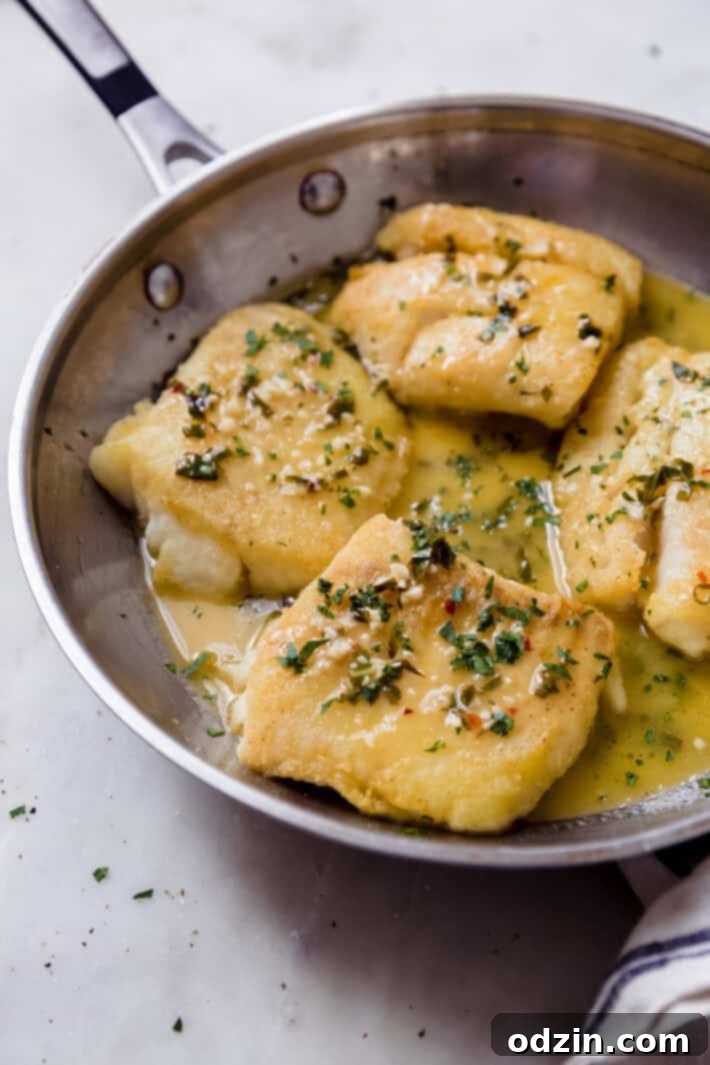
Imagine mastering the art of pan-frying fish, achieving that perfectly crispy exterior and succulent interior, all while bathing it in an aromatic basil lemon butter sauce. Sounds like something a professional chef would prepare, right? Well, it’s absolutely within your reach, even if you’re new to cooking seafood.
To be completely transparent, it took me a good four years in my cooking journey to truly gather the confidence to pan-fry delicate fish like salmon. But once I did, a whole new world of simple, delicious, and quick meals opened up. I discovered just how effortless it is to achieve a shallow-fried masterpiece with only a few tablespoons of oil.
If you’ve never pan-fried anything before, there’s no need to worry. This comprehensive guide will walk you through every step, demystifying the process. By the time you’re done, you’ll be able to confidently serve a sophisticated, restaurant-quality summer dish—like pan-fried cod in basil lemon butter sauce—to impress your significant other, family, or closest friends!
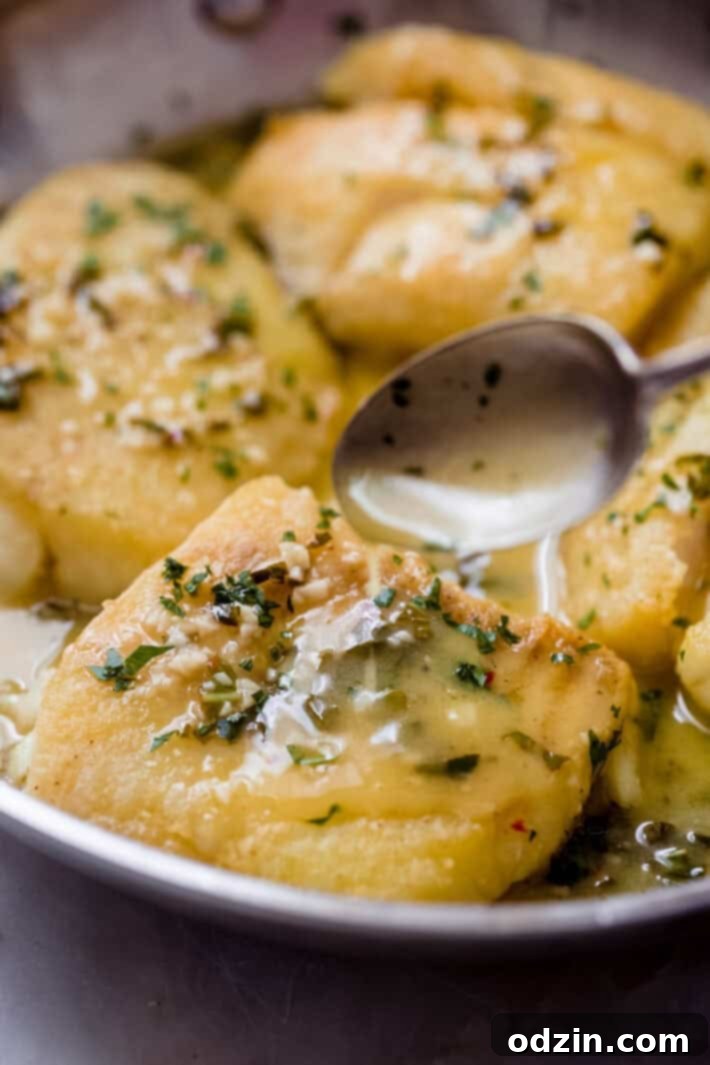
Essential Ingredients for Perfect Pan-Fried Fish
Crafting exceptional pan-fried fish starts with selecting the right ingredients. Here’s a breakdown of what you’ll need to create that coveted crispy exterior and tender, flaky interior:
- Your Choice of White Fish: Cod is an excellent choice for this recipe, often sold as thick, meaty loins at the fish counter. Its firm texture holds up beautifully to pan-frying. For the best results, I strongly recommend using fresh cod. Unfortunately, I’ve found that frozen cod can often be “waterlogged” – meaning it contains excess moisture that makes it difficult to achieve a crisp crust and can result in a soggy texture. Other fantastic alternatives include tilapia, rockfish, halibut, or Dover sole. Whichever you choose, aim for fillets of similar thickness to ensure even cooking.
- Simple Seasonings: We keep it straightforward to let the fish’s natural flavor shine. You’ll need fine sea salt to season the fish directly, enhancing its taste from within. Additionally, garlic salt is used to flavor the flour coating, adding an extra layer of savory depth to the crust. If you don’t have garlic salt, a mixture of half a teaspoon of salt and a quarter teaspoon of garlic powder will work perfectly.
- All-Purpose Flour: Just a third of a cup of standard all-purpose flour is all you need. This fine coating creates a protective barrier that helps the fish crisp up beautifully in the hot oil. It also provides a base for the seasonings to adhere to, forming a flavorful crust.
- Quality Olive Oil: Extra virgin olive oil is ideal for frying the fish fillets. Its moderate smoke point makes it suitable for the medium-high heat required for pan-frying, and it imparts a subtle, pleasant flavor. You’ll need enough to create a shallow layer in your pan, ensuring the fish gets proper contact with the heat for an even, golden-brown crust.
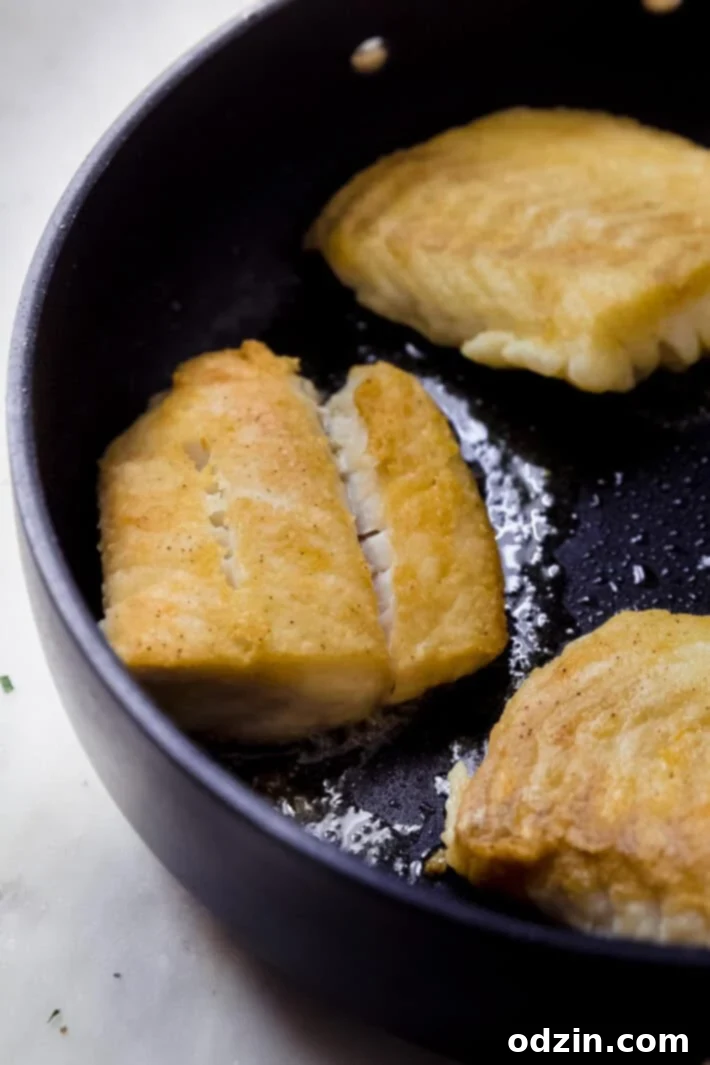
Achieving Professional-Grade Pan-Fried Fish – Flawless Every Time!
Pan-frying fish doesn’t have to be intimidating. With these simple yet crucial steps, you’ll achieve a perfectly crispy and tender fillet every single time. Forget soggy, bland fish; it’s time to fry like a true pro!
- Thoroughly Pat the Fish Dry: This step is non-negotiable for achieving a crispy crust. Use paper towels to pat both sides of your fish fillets until they are as dry as possible. Any residual moisture on the fish’s surface will turn into steam when it hits the hot pan, preventing the flour coating from crisping up and instead causing it to become soggy. Think of it as creating a blank, dry canvas for your crust.
- Shake Off Excess Flour: After dredging the fish in your seasoned flour, gently shake off any excess. A heavy, thick layer of flour can lead to a pasty, unappetizing crust that might even fall off the fish during cooking. You only want a thin, even coating that adheres lightly to the surface, just enough to create that beautiful golden-brown crispness.
- Choose the Right Pan – Heavy-Duty Nonstick is Best for Beginners: While some experienced cooks swear by stainless steel pans for the perfect sear, a heavy-duty nonstick sauté pan or skillet is your best friend when you’re first learning to pan-fry fish. Nonstick surfaces minimize the risk of the delicate fish sticking to the pan, making flipping much easier and preserving the integrity of your crispy crust. If you’re looking for a reliable option, a high-quality nonstick pan will provide consistent results and a stress-free cooking experience.
- Allow the Oil to Heat Properly – Patience is Key: Rushing this step is a common mistake. First, place your dry pan over medium-high heat and let it heat through for at least 5 minutes before adding any oil. This ensures the pan itself is evenly hot. Once the pan is hot, add your olive oil and let it heat for another minute or so until it shimmers slightly. A properly heated pan and oil are crucial for immediate searing, which prevents sticking and guarantees that perfect, golden, crispy crust on your fish.
- Resist the Urge to Flip Too Soon: This is perhaps the most important rule of pan-frying fish. Once you place the fish in the hot oil, do not touch it, move it, or try to flip it until it’s ready. Constantly checking or moving the fish will tear the delicate crust and prevent it from developing properly. To determine when it’s ready to flip, observe the sides of the fillet: you’ll see the opaque, cooked portion of the fish gradually move up from the bottom. Once the fish appears opaque at least halfway up the thickness of the fillet, it’s time to consider flipping. Many chefs, myself included, prefer to cook the first side (often the presentation side) a little longer to achieve a deeper golden color and maximum crispness, then cook the second side for a slightly shorter duration. However, for first-timers, flipping when it’s opaque halfway through is a safe and reliable method to ensure it’s cooked without overdoing it.
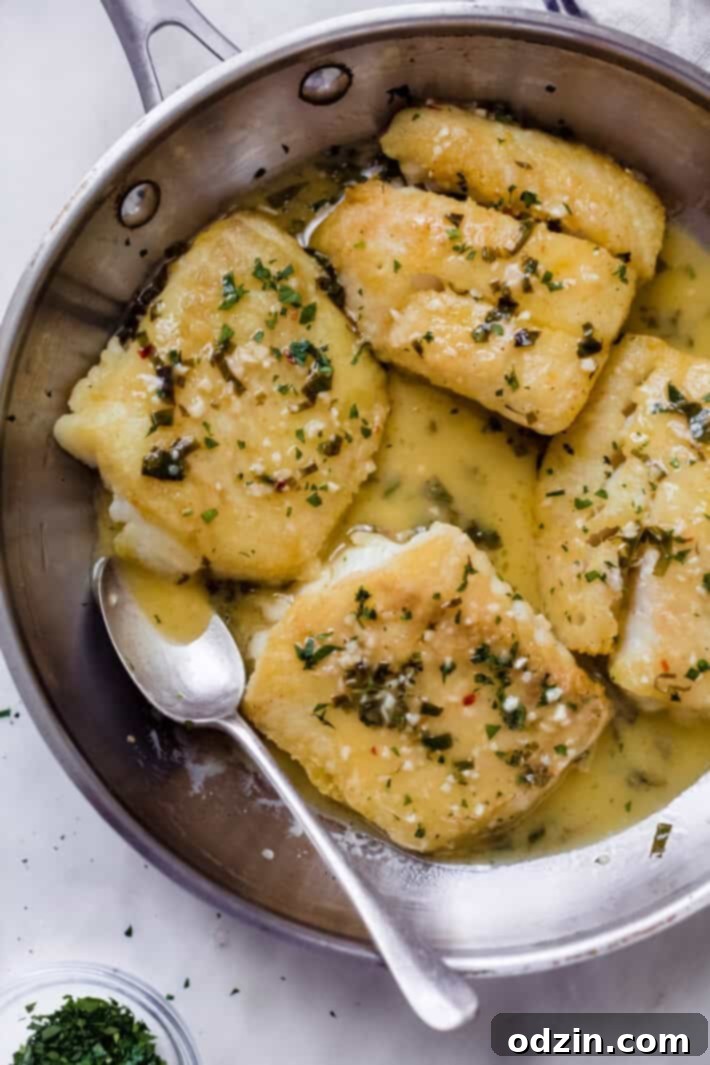
Crafting the Irresistible Lemon Basil Butter Sauce
The star of this dish, beyond the crispy fish, is the bright, herbaceous, and utterly decadent lemon basil butter sauce. This sauce elevates the fish to an extraordinary level, and it’s surprisingly simple to prepare. If you’ve ever made my lemon butter sauce for stuffed salmon, this will feel incredibly familiar and easy for you!
- Fresh Minced Garlic: Garlic is the aromatic foundation of our sauce. Four cloves, finely minced, will infuse the butter sauce with a robust, savory flavor that complements the lemon and basil beautifully. Fresh garlic is always superior for its pungent flavor.
- Red Pepper Flakes: A small pinch of red pepper flakes adds a subtle, gentle kick that brightens the sauce without overpowering it. If you prefer a milder flavor profile or are sensitive to spice, feel free to omit them entirely. For those who enjoy more heat, you can increase the amount to your liking.
- Low Sodium Chicken Stock: Chicken stock provides a liquid base that helps emulsify the butter and brings body to the sauce. Opting for low sodium chicken stock is crucial here, as it allows you to control the overall saltiness of the dish, especially since butter and seasonings already contribute flavor. Vegetable stock or even a light fish stock can also be used.
- Freshly Squeezed Lemon Juice: This is where the sauce gets its vibrant, zesty character. Using fresh lemon juice is non-negotiable for this recipe. Bottled lemon juice simply doesn’t compare in terms of natural brightness and intense flavor. The acidity of the lemon cuts through the richness of the butter, creating a perfectly balanced sauce.
- Cold Cubed Butter: This is a key technique for achieving a beautifully emulsified, velvety sauce. Take 4 tablespoons of cold butter and cut each tablespoon into 4 small cubes, totaling 16 cubes. Adding cold butter gradually, in small increments, allows it to melt slowly and incorporate smoothly into the hot liquid, preventing the sauce from breaking and ensuring a luxurious, thickened consistency.
- Fresh Chopped Basil: Basil adds a wonderful, fragrant, and slightly peppery herbal note that ties all the flavors together. Be sure to use fresh basil for the best aroma and taste; dried basil will not yield the same vibrant results. Roughly chop the basil just before adding it to preserve its freshness. If basil isn’t your favorite or isn’t available, other fresh herbs like tarragon, parsley, or chives would also make delightful substitutions.
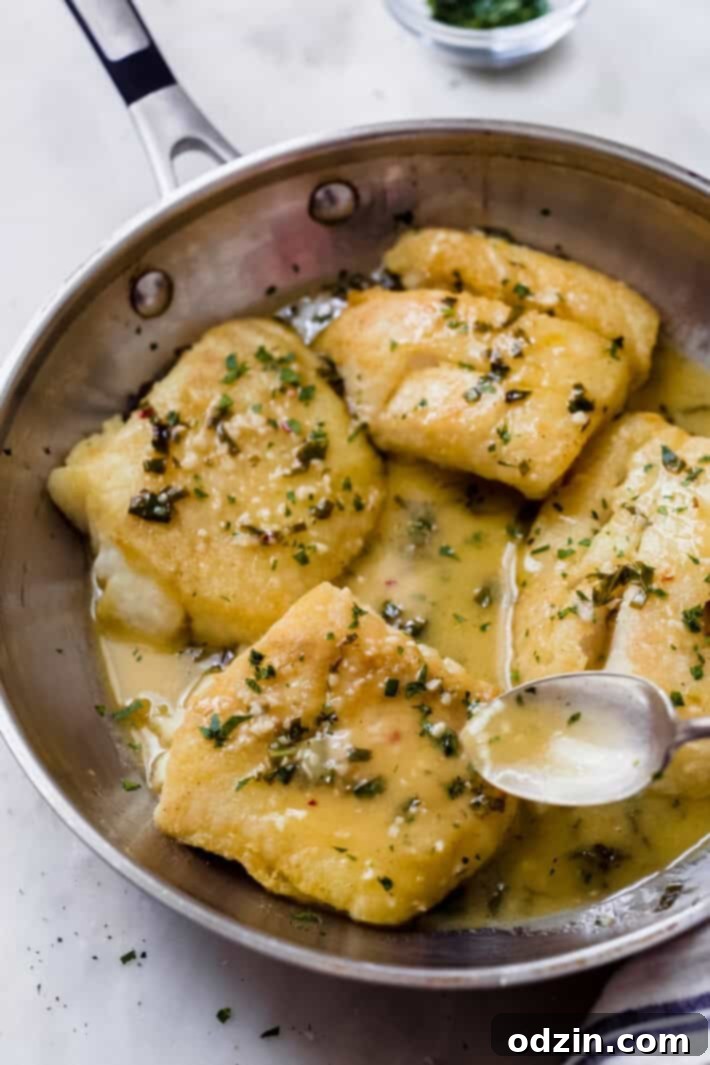
How to Prepare the Luminous Lemon Basil Butter Sauce for Pan-Fried Fish
Creating this flavorful sauce is the final step to culinary perfection, transforming your perfectly pan-fried fish into an unforgettable meal. This method is similar to the lemon butter sauce I often make, ensuring a smooth and delightful experience.
- Prepare the Pan After Frying: Once your fish fillets are beautifully pan-fried to a golden crisp, carefully remove them from the skillet and transfer them to a waiting plate. Set them aside while you prepare the sauce. At this point, there should ideally be about a tablespoon of oil remaining in your pan, imbued with delicious fish flavor. If there’s significantly more, gently pour out the excess, leaving just enough to sauté the garlic. Add your minced garlic to the skillet and sauté for a brief 15 seconds. You want to cook it just until fragrant, but not browned, as burnt garlic can impart a bitter taste. Immediately season with the red pepper flakes, allowing their warmth to bloom in the hot oil.
- Build the Liquid Base: Pour in the low sodium chicken stock and the freshly squeezed lemon juice into the pan. Increase the heat to its highest setting and bring the liquid to a rapid boil. Once boiling vigorously, allow the sauce to reduce for approximately two minutes. This reduction process concentrates the flavors and begins to thicken the liquid slightly, forming a more intense base for your butter.
- Emulsify the Butter Gradually: This is the key to a silky, rich sauce. Reduce the heat to the lowest possible setting. Now, begin adding your cold, cubed butter, two small cubes at a time. As you add each batch, swirl the pan gently by the handle or stir with a whisk/spoon to help the butter melt slowly and incorporate into the hot liquid. Place the skillet back on the heat for just a few seconds if needed to fully melt the butter, then add another couple of cubes. Continue this methodical process until you’ve used all the butter and the sauce has visibly thickened to a glossy, emulsified consistency. It’s crucial not to rush this step; slow incorporation of cold butter is what prevents the sauce from separating and ensures a smooth, luxurious texture.
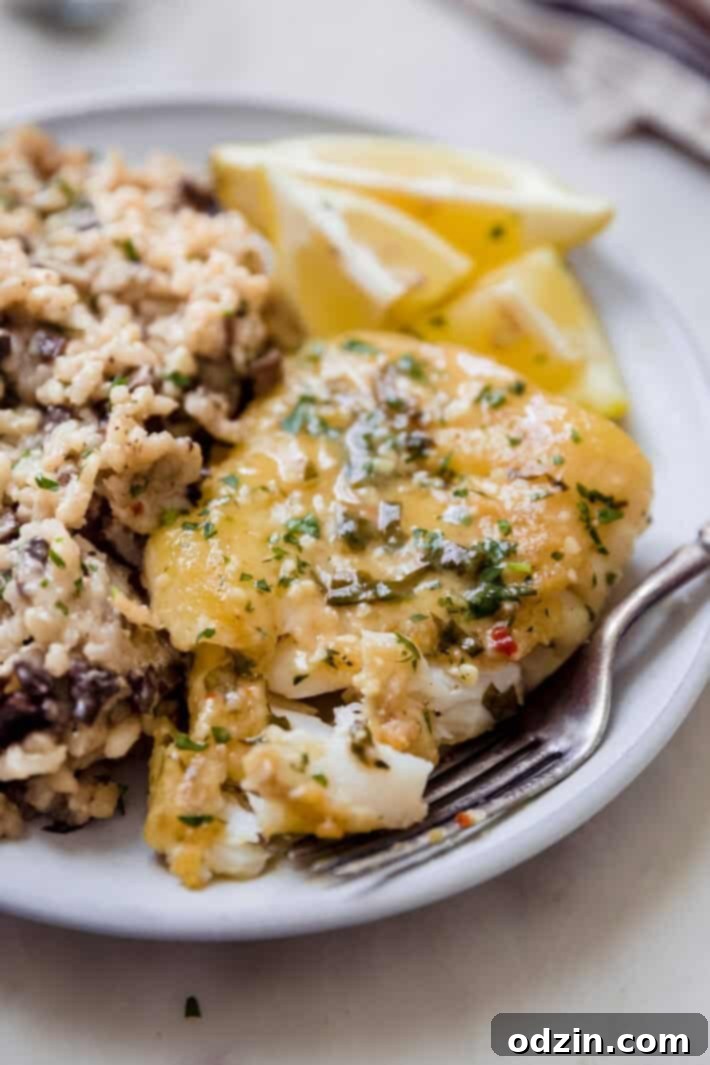
- Finish and Serve: Once all the butter is incorporated and the sauce is beautifully thickened, stir in the fresh chopped basil. Allow it to combine for just a moment to release its fragrance into the warm sauce. Taste the sauce and adjust the seasoning with salt and freshly ground black pepper if necessary. Now, arrange your prepared pan-fried fish fillets on individual plates. Generously spoon the luscious basil lemon butter sauce over the fish. For a complete and satisfying meal, I love serving this dish with fluffy rice on the side, which perfectly soaks up the extra sauce, and a medley of roasted seasonal vegetables for added freshness and texture.
Frequently Asked Questions About Pan-Fried Fish
Here are some common questions to help you master this delicious pan-fried fish recipe and confidently tackle any seafood cooking challenges:
- What other types of fish can I use besides cod? While cod is fantastic for its firm, flaky texture, this recipe is incredibly versatile. You can confidently substitute cod with other mild white fish varieties such as tilapia, rockfish, halibut, snapper, or Dover sole. The key is to choose fillets of a similar thickness so they cook evenly and within the suggested timeframe. Avoid very thin fillets, as they can overcook quickly.
- Why do I need to season both the fish and the flour? Seasoning the fish directly with salt is essential because it allows the salt to penetrate deep into the fillet, enhancing its natural flavor from within. This is distinct from simply seasoning the exterior. However, we also season the flour coating. This ensures that the outer crust, which will become crispy and golden, doesn’t taste bland or raw. The garlic salt in the flour adds an extra “oomph” of savory flavor, making every bite of the crispy coating truly delicious.
- How can I tell when the fish is ready to flip without disturbing it? The best way to determine when your fish is ready to flip is by observing the sides of the fillet as it cooks. As the heat penetrates, you’ll notice the translucent, raw flesh gradually turn opaque. When the opaque, cooked portion of the fish has traveled approximately halfway up the thickness of the fillet from the bottom, it’s generally safe to flip. At this point, the crust on the first side should be beautifully golden and firm enough to release easily from the pan.
- Why is it recommended to use cold, cubed butter for the sauce? Using small cubes of cold butter is a classic French culinary technique called “montage au beurre” (mounting with butter). The coldness and small size of the butter pieces allow them to melt slowly and gradually emulsify into the warm liquid base of the sauce. This slow process creates a stable emulsion, resulting in a beautifully thick, glossy, and velvety sauce without the need for flour or cornstarch. If you were to add all the butter at once or use soft, warm butter, the sauce is more likely to break and become greasy.
- Does this recipe yield enough sauce to serve with sides like rice or vegetables? Absolutely! Over the years, I’ve learned that most people, myself included, truly appreciate a generous amount of delicious sauce. This recipe is specifically designed to produce ample lemon basil butter sauce, not just for drizzling over the pan-fried fish, but also for spooning lavishly over accompanying side dishes such as steamed or roasted vegetables, fluffy rice, or even pasta. Enjoy every flavorful drop!
- Can I prepare any components of this recipe ahead of time? The fish is best pan-fried and served immediately for optimal crispness. However, you can mince the garlic and chop the basil for the sauce a few hours in advance, storing them separately in airtight containers in the refrigerator. The sauce itself is best made just before serving, as the butter emulsion can sometimes separate if reheated too aggressively.
- Is this recipe gluten-free? As written, the recipe uses all-purpose wheat flour for dredging the fish. To make it gluten-free, simply substitute the all-purpose flour with a gluten-free all-purpose flour blend or rice flour. Ensure your chicken stock is also gluten-free if you have sensitivities.
If you like this recipe, you might also like these delightful seafood dishes:
- Garlic Honey Chipotle Salmon – A perfect blend of sweet, spicy, and savory.
- Crispy Coconut Shrimp – Irresistibly crunchy with a tropical twist.
- Garlicky Orzo Shrimp Scampi – A comforting and flavorful pasta dish.
- Garlic Butter Baked Salmon in Foil – An incredibly easy and mess-free dinner.
- Garlicky Hawaiian Shrimp Scampi – A vibrant and zesty take on a classic.
- Creamy Spinach Artichoke Stuffed Salmon – A truly decadent and impressive meal.
- Mushroom Parmesan Shrimp Risotto – Creamy, rich, and full of umami.
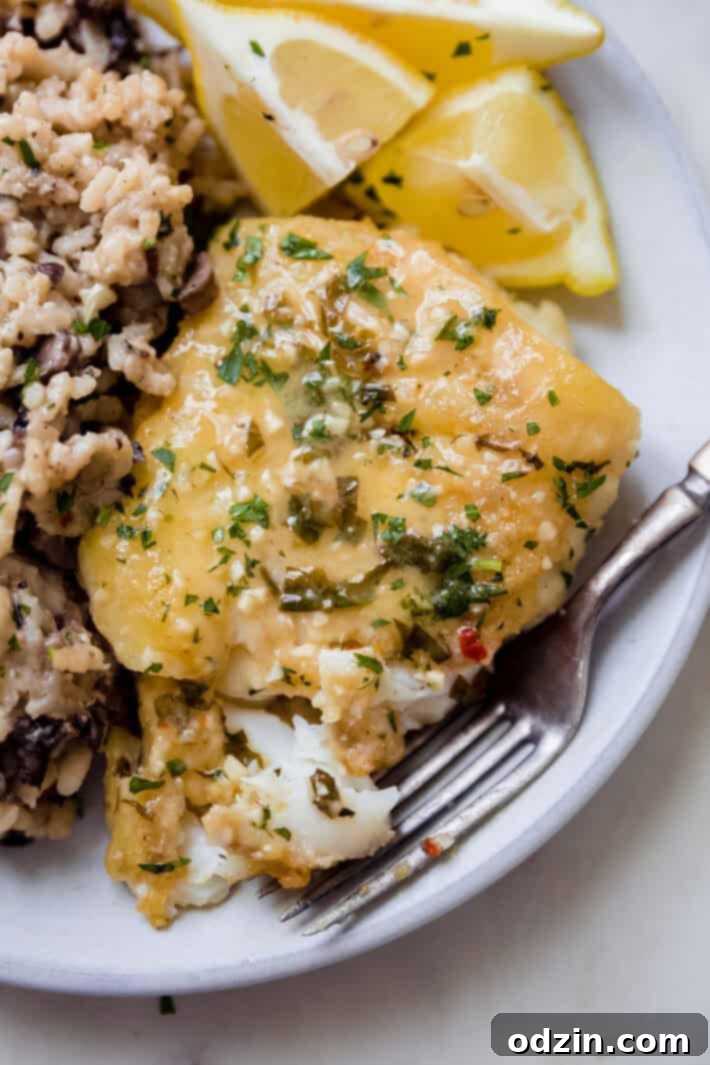
Perfect Pan-Fried Fish in Basil Lemon Butter Sauce
10 minutes
10 minutes
20 minutes
This deliciously easy pan-fried fish in basil lemon butter sauce is a summer dream on a plate. It’s quick to prepare, incredibly flavorful, and perfectly showcases the versatility of any white fish you love.

Ingredients
- 1 ½ pounds cod, tilapia, rockfish, or any other white fish you like (preferably fresh fillets, about 1-inch thick)
- ¾ teaspoon garlic salt (or ½ teaspoon fine sea salt + ¼ teaspoon garlic powder)
- ⅓ cup all-purpose flour
- ¼ cup good quality olive oil
- 4 cloves fresh garlic, finely minced
- Pinch of red pepper flakes (optional, for a gentle kick)
- ¾ cup low sodium chicken stock
- 4 tablespoons unsalted butter, very cold and cut into 16 small cubes
- 3 tablespoons fresh lemon juice (from about 1 large lemon)
- 3 tablespoons fresh basil, finely chopped, for finishing the sauce
- Salt and freshly ground black pepper to taste
Instructions
- PREP & SEASON FISH: Begin by patting both sides of your chosen fish fillets thoroughly dry with paper towels. This crucial step ensures a crispy crust. Season the dried fish with a small pinch of salt on both sides. In a shallow dish, combine the all-purpose flour with the garlic salt, whisking until well mixed. Dredge each fish fillet in the seasoned flour, ensuring an even coating on both sides, then gently shake off any excess flour. A thin, even layer is what we’re looking for.
- PAN-FRY THE FISH: Heat the olive oil in a heavy-bottomed nonstick skillet over medium-high heat. Allow the pan to heat for about 5 minutes, then add the oil and let it shimmer for another minute. Once hot, carefully place the flour-dusted fish fillets into the skillet. Fry for 3-4 minutes per side. For a perfectly crispy exterior and tender interior, avoid moving or flipping the fish until you see the opaque cooked portion extend about halfway up the thickness of the fillet. Depending on the thickness of your fish, you might need to cook a minute longer per side. Once cooked through and golden brown, remove the fish to a clean plate and set aside.
- PREPARE THE LEMON BASIL BUTTER SAUCE: There should be approximately one tablespoon of oil remaining in the skillet. If there’s more, carefully drain the excess. Reduce the heat to medium-low. Add the minced garlic to the skillet and sauté for only 15 seconds until fragrant, being careful not to burn it. Stir in the pinch of red pepper flakes (if using). Immediately pour in the chicken stock and fresh lemon juice. Increase the heat to the highest setting, bring the sauce to a rapid simmer, and allow it to reduce for 2 minutes to concentrate the flavors.
- FINISH THE SAUCE: Lower the heat to the absolute lowest setting. Begin adding the cold butter cubes, two at a time. Swirl the pan gently or stir constantly with a whisk or wooden spoon, allowing each addition of butter to melt slowly and emulsify into the sauce before adding the next. This gradual process is key to achieving a thick, glossy, and stable butter sauce. Take your time here – patience will be rewarded with a velvety texture. Once all the butter is incorporated and the sauce has thickened, stir in the fresh chopped basil. Taste the sauce and adjust with salt and freshly ground black pepper as needed.
- SERVE: Carefully place the pan-fried fish fillets onto serving plates. Spoon a generous amount of the warm, luscious basil lemon butter sauce over each fillet. This dish pairs wonderfully with cooked rice, roasted asparagus, or steamed green beans. Serve immediately and enjoy!
Recommended Products
- 68 Oz. Olive Oil
- Turner Spatula
- 9-Inch Whisk
- Citrus Juicer
- Pie Plate
- Saute Pan
Have you made this recipe?
If you enjoyed this recipe, please consider leaving a ⭐️⭐️⭐️⭐️⭐️ rating and a comment below. You can also share a picture on Instagram with the hashtag #LITTLESPICEJAR, I’d love to see what you made!