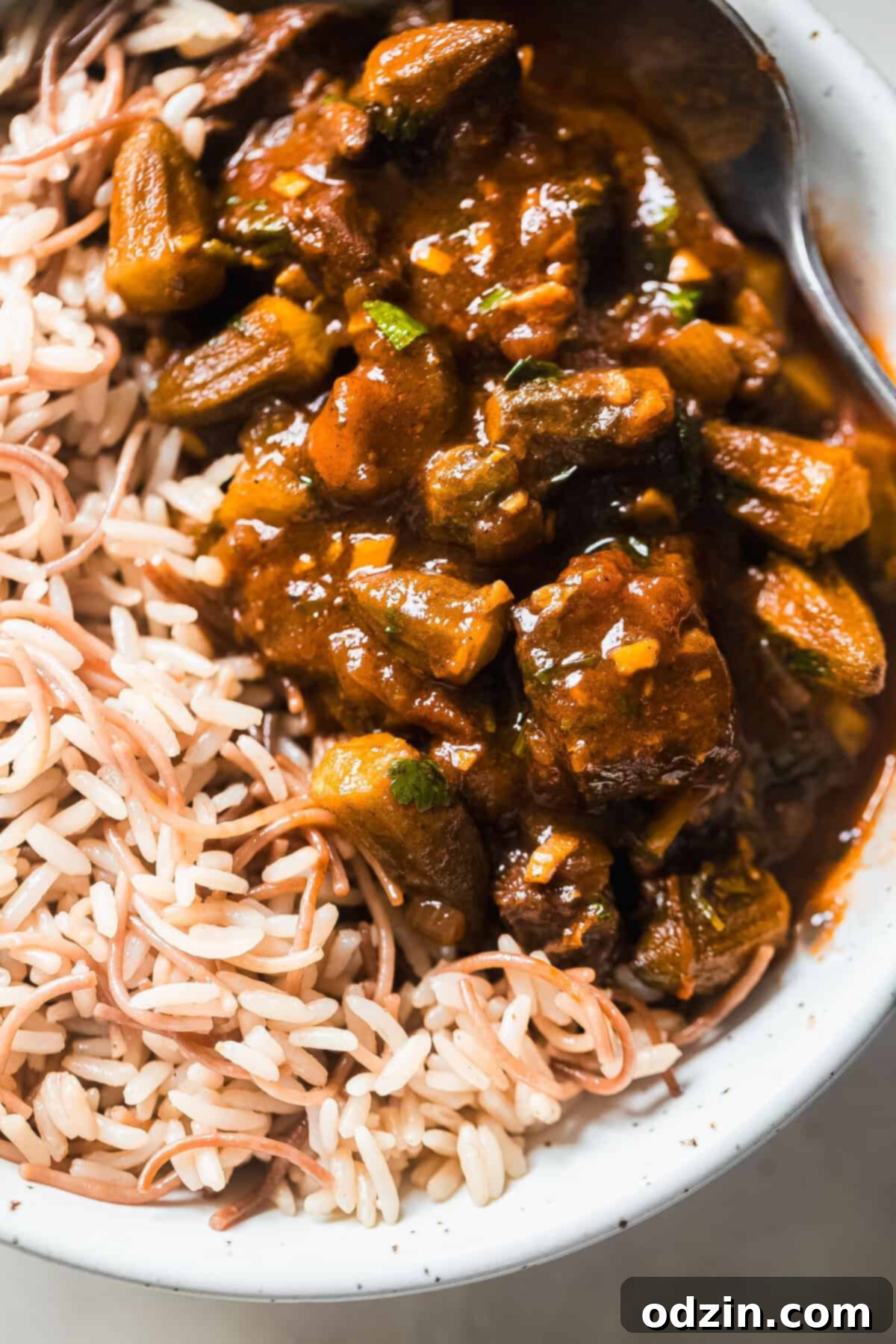
Authentic Bamya: The Ultimate Middle Eastern Okra and Beef Stew Recipe
Embark on a culinary journey to the heart of the Middle East with Bamya – a soul-warming okra and beef stew that perfectly blends tender meat, vibrant tomatoes, and aromatic spices. This traditional dish, cherished across countless homes in Egypt, Lebanon, and Palestine, is more than just a meal; it’s a comforting embrace, reminiscent of family gatherings and cherished traditions. Forget any preconceived notions about okra; our recipe unveils a rich, non-slimy stew that will undoubtedly become a new family favorite. Served ideally with fluffy vermicelli rice, Bamya offers a deeply satisfying experience, transforming a once-overlooked vegetable into a star ingredient.
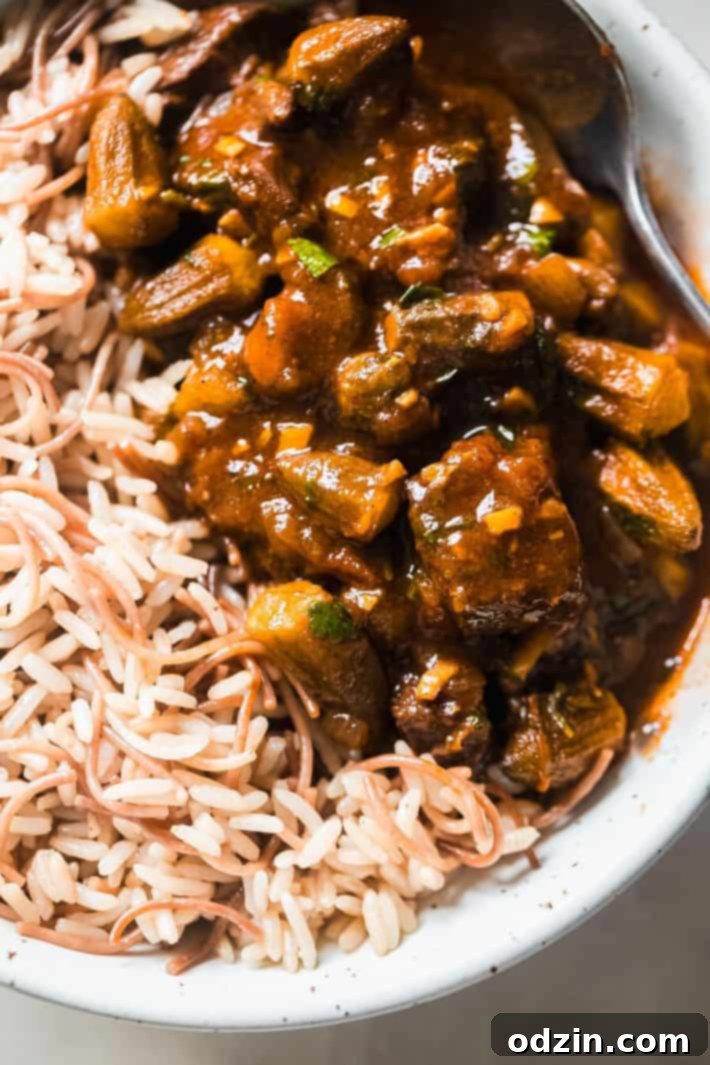
There’s nothing quite like a generous ladleful of perfectly cooked Bamya. For many, including myself, okra stew wasn’t always a childhood favorite. The unique texture of okra often made it a dish to be politely avoided. However, as palates mature and culinary curiosity grows, some dishes reveal their true magic. What was once on my ‘least favorite’ list is now a highly requested meal whenever I visit my mother, a testament to how profoundly our food perceptions can evolve. It’s truly amazing how the dishes we take for granted as children can become absolute delights in adulthood.
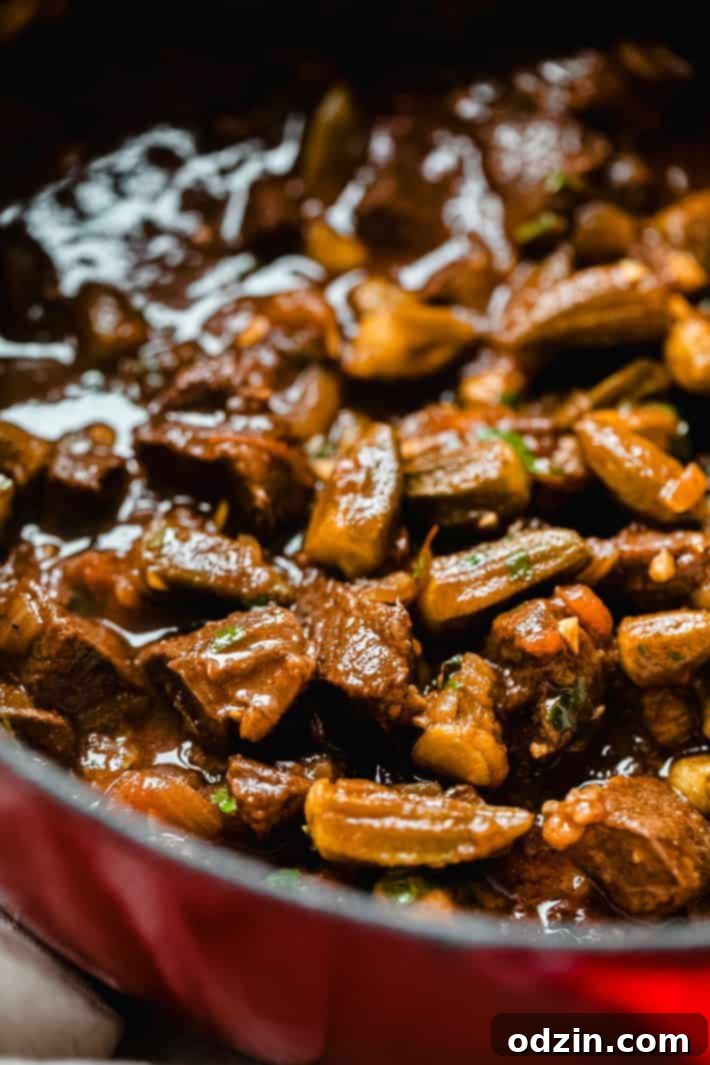
The beauty of okra lies in its incredible ability to absorb the flavors of the ingredients it’s cooked with. In this traditional Middle Eastern Bamya recipe, the okra soaks up the rich essence of warming spices like coriander, cumin, and allspice, mingling beautifully with tangy tomatoes, pungent garlic cloves, and savory beef broth. We let the stew gently simmer on the stove for an extended period, allowing the beef chuck roast to transform into incredibly tender, fall-apart morsels, all while infusing the entire dish with unparalleled depth of flavor. The onions, garlic, and tomato paste create a robust base that sings with authenticity.
And for those who are wary of okra’s notorious ‘slimy texture,’ rest assured! I’m excited to share a clever trick that ensures your Bamya turns out perfectly, with firm, delightful okra pieces. This simple technique will change your perspective on okra forever, making you fall in love with this cozy bowl of Middle Eastern okra stew, a staple enjoyed with passion across vibrant cultures. The final touch, a bright splash of fresh lemon juice and a generous sprinkle of chopped cilantro, elevates the stew, adding a layer of freshness that balances the rich, earthy flavors. The results are nothing short of phenomenal – a deeply comforting meal that feels like a warm hug, especially on a chilly evening. Even my husband, a self-proclaimed ‘meat and potatoes’ man, can’t stop raving about this stew, which speaks volumes about its irresistible appeal.
Essential Ingredients for an Authentic Bamya
Crafting the perfect Bamya requires a thoughtful selection of fresh, high-quality ingredients, each playing a crucial role in building the stew’s complex and comforting flavor profile. Here’s a detailed look at what you’ll need:
- Olive Oil: More than just a cooking medium, a good quality olive oil forms the flavorful foundation of this stew. You’ll use it to beautifully brown the beef cubes, gently sauté the aromatics, and crucially, to prepare the okra, ensuring a perfect texture.
- Stew Meat: For the most succulent results, opt for well-marbled beef stew meat or a chuck roast. Cut it into uniform 1 ¼-inch cubes, as this size allows the meat to become incredibly tender during the long simmer without disintegrating. Searing the meat in batches is a non-negotiable step; it creates a flavorful crust through the Maillard reaction, developing a rich depth that will permeate the entire tomato base.
- Yellow Onion: A medium-sized chopped yellow onion is the backbone of the stew’s aromatic base. As it cooks down, it releases natural sweetness, mellowing the flavors and providing a critical layer of savory complexity.
- Garlic: Fresh garlic is indispensable for Bamya. Approximately 6 cloves, finely minced, will infuse the stew with its pungent, warm aroma, enhancing the overall savory profile. Avoid pre-minced garlic for the best flavor.
- Tomato Paste: This concentrated ingredient serves multiple purposes. It deepens the color of the beef, imparts a rich, umami flavor, and acts as a thickening agent, creating a luscious sauce. Cooking the tomato paste briefly in oil before adding liquids “blooms” its flavor, intensifying its contribution.
- Roma Tomatoes: Instead of relying solely on canned tomato sauce, fresh Roma tomatoes are preferred here. Their natural sweetness and acidity break down beautifully during the simmering process, contributing a fresh, bright tomato flavor that canned products often lack. This lengthy cooking time is key to extracting their full, rich essence.
- Seasonings: The heart of Bamya’s Middle Eastern character lies in its carefully selected blend of spices. You’ll need kosher salt (to taste), ground coriander, ground cumin, turmeric, allspice, ground cinnamon, white pepper, and black pepper. This combination closely mirrors the traditional Lebanese 7-spice blend. If you have 7-spice on hand, it can be a convenient substitute (approximately 1½ teaspoons, omitting white pepper). However, using individual spices as written allows for precise flavor control, yielding a more nuanced and authentic taste. These warming spices are what truly elevate the stew, making it so comforting.
- Beef Broth: A couple of cups of high-quality beef broth are essential for cooking the beef chunks to melting tenderness and building the rich liquid base of the stew. While some recipes suggest boiling beef separately or using an Instant Pot for speed, allowing the meat to cook directly in the seasoned broth and tomatoes for a longer period dramatically enhances the depth and complexity of the final dish. It might not be the fastest method, but the resulting flavor is absolutely worth the wait.
- Pomegranate Molasses: This unique ingredient is a game-changer for Bamya. Its distinctive sweet-tart profile beautifully complements the acidity of the tomatoes, adding a layer of tangy complexity and natural sweetness that balances the rich, savory components of the stew. A little goes a long way in adding that authentic Middle Eastern touch. You can find quality pomegranate molasses in most Middle Eastern or specialty stores.
- Baby Okra: For the best texture and to minimize sliminess, baby okra is highly recommended. Many Middle Eastern grocery stores stock frozen baby okra in their freezer sections, which is perfect for this recipe. While fresh okra pods can be used, finding them in the small size can be challenging, and larger okra, if chopped, carries a higher risk of becoming slimy. If using fresh, ensure they are small and whole, or follow our trick for preparing them.
- Lemon Juice: Added at the very end, fresh lemon juice provides a crucial burst of brightness and acidity, cutting through the richness of the stew and lifting all the flavors. It’s a vital finishing touch.
- Cilantro: Freshly chopped cilantro offers both visual appeal and a delicate, earthy, herbaceous note that wonderfully complements the stew’s spices. It’s added right before serving to preserve its vibrant flavor and color.
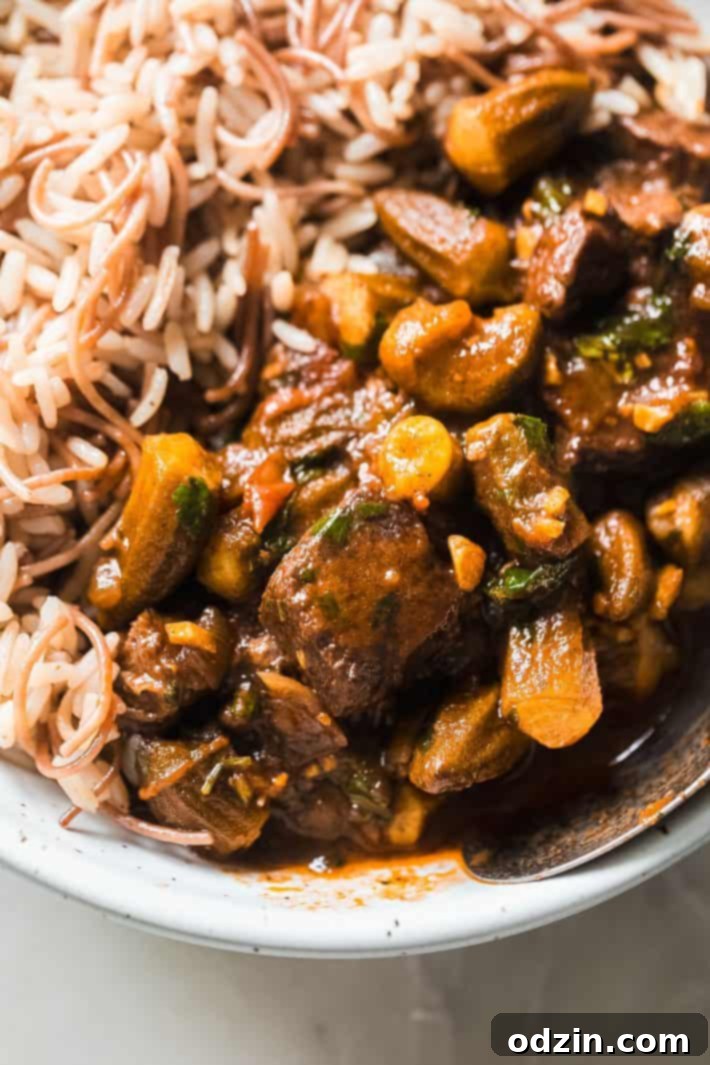
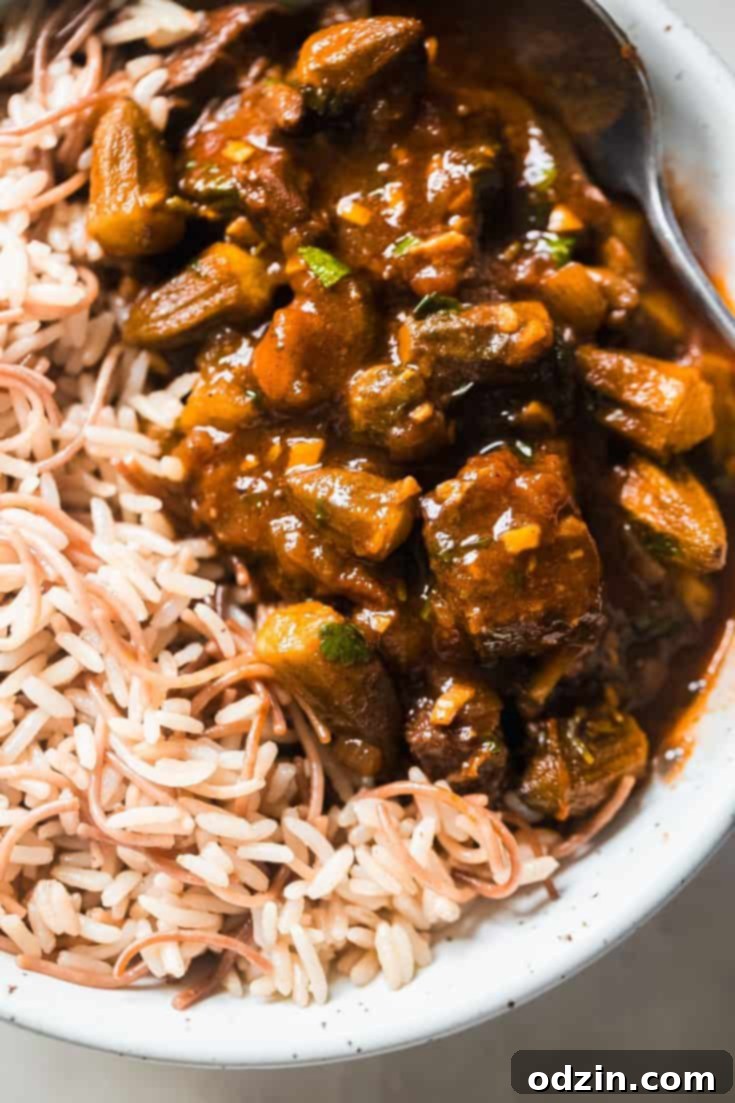
- Vermicelli Rice: This stew is traditionally, and ideally, served with homemade vermicelli rice. The process involves sautéing thin vermicelli noodles in a touch of ghee until golden, then adding rice and continuing to sauté before simmering it in chicken broth until perfectly fluffy. The slightly toasted noodles add a wonderful texture and flavor contrast to the stew. You can find the full vermicelli rice recipe here to complete your meal.
Mastering Middle Eastern Okra and Beef Stew: Step-by-Step
Follow these detailed steps to create a rich, flavorful, and perfectly textured Bamya that will impress even the most discerning palates. Precision in each stage ensures the best outcome.
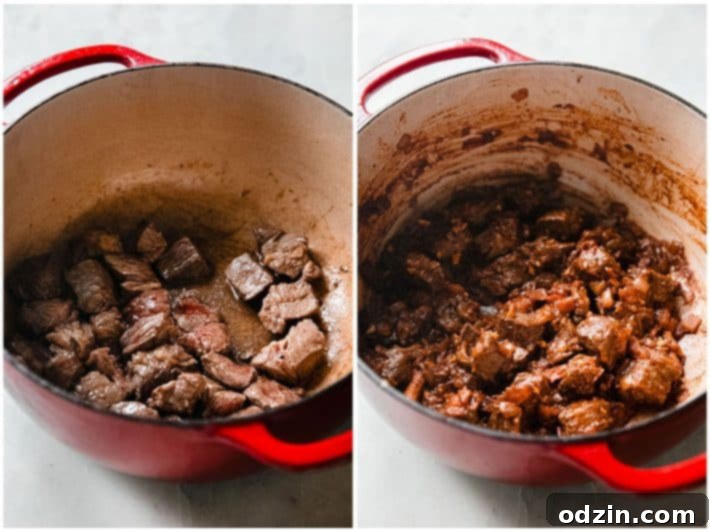
- Sear the Beef to Perfection: Begin by heating a tablespoon of olive oil in a large, heavy-bottomed pot or Dutch oven over medium-high heat. Season your 1 ¼-inch beef cubes generously with kosher salt. Work in batches to avoid overcrowding the pan; this ensures a deep, rich brown crust forms on all sides of the meat, typically 2-3 minutes per batch. This crucial searing step creates a complex depth of flavor through the Maillard reaction, far superior to simply boiling the meat. Once beautifully browned, remove the seared beef to a plate and set aside, reserving all those delicious fond bits in the pot.
- Build the Aromatic Foundation: With the pot retaining the flavorful remnants from searing, add another tablespoon of olive oil. Reduce the heat slightly to medium and add the diced yellow onions. Sauté them patiently for 5-7 minutes, stirring occasionally, until they become tender, translucent, and slightly caramelized. Next, add the minced garlic and cook for just 30 seconds until fragrant – be careful not to burn it. Immediately stir in the tomato paste and cook it for another 30-60 seconds, allowing its flavors to “bloom” in the hot oil. Finally, add the diced Roma tomatoes, cooking them for about 5 minutes until they begin to soften and release their juices. If they start to stick or brown too quickly, add a couple of tablespoons of water to deglaze the pan. Now, it’s time to stir in all the individual spices – coriander, cumin, turmeric, allspice, cinnamon, white pepper, and black pepper. Letting these spices toast briefly in the hot oil before adding liquid further enhances their aroma and flavor, ensuring a truly vibrant stew.
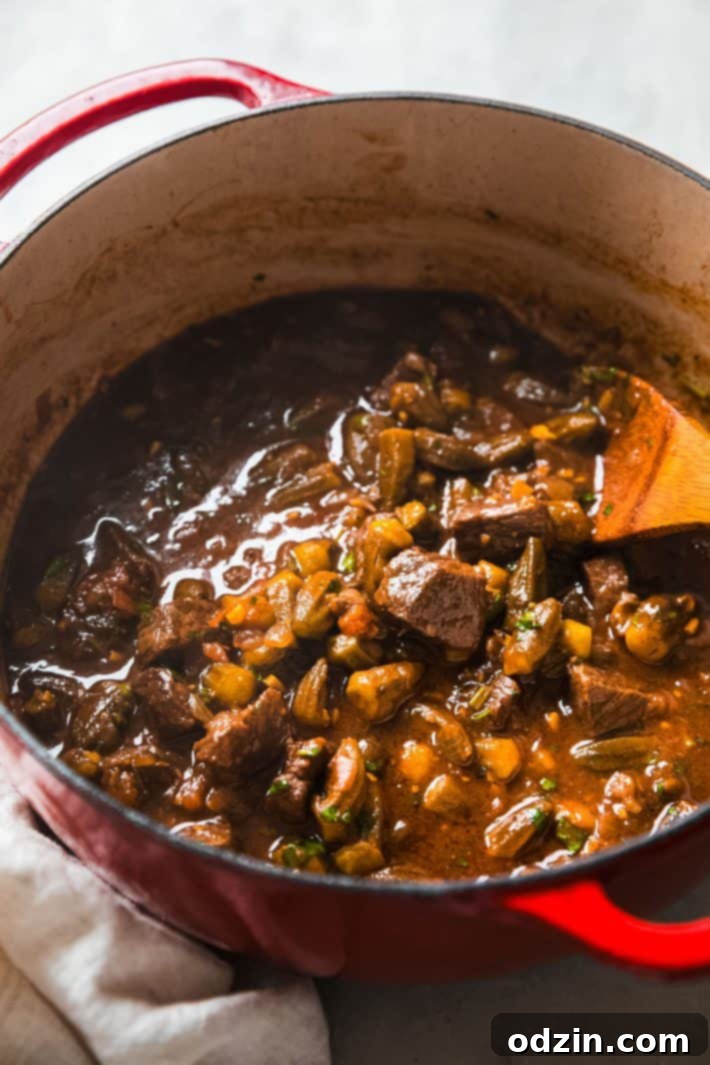
- Long Simmer for Tender Perfection: Return the seared beef chunks to the Dutch oven, ensuring they are nestled among the aromatics. Add the cinnamon stick, beef broth, 1 cup of water, and the pomegranate molasses. Give everything a good stir, making sure to scrape the bottom of the pot to loosen any flavorful bits (fond) that may be stuck – this deglazing step adds immense flavor. Bring the stew to a rolling boil, then reduce the heat to low, cover the pot tightly, and let it simmer gently for 45-60 minutes. The exact time will depend on your meat, but the goal is fork-tender beef. This “low and slow” cooking method is paramount for achieving melt-in-your-mouth beef and allowing all the flavors to meld beautifully.
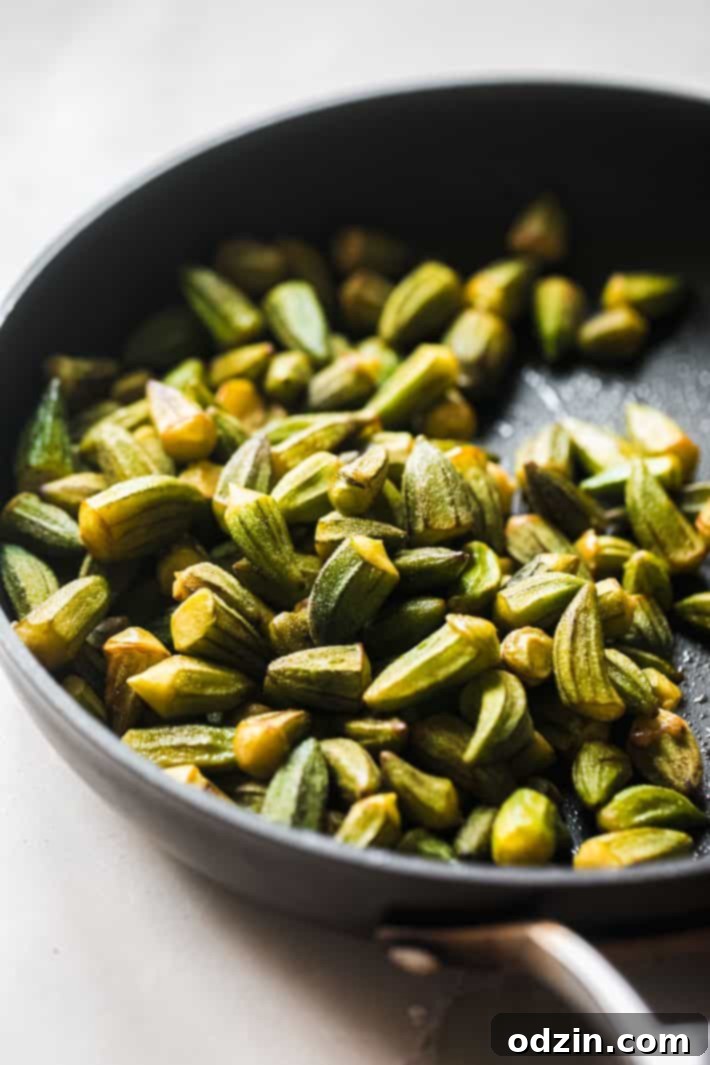
- Prepare the Okra (No Sliminess Here!): While the stew is simmering and nearing completion, prepare your okra. This step is key to preventing sliminess. Heat the remaining tablespoon of olive oil in a separate skillet over medium-high heat. If using frozen baby okra, ensure it is defrosted, thoroughly drained, and patted dry to prevent splattering. Add the okra to the hot oil and sauté for 2-3 minutes, stirring occasionally, until it is lightly browned and slightly softened on all sides. This quick fry seals the okra, locking in its texture and preventing it from releasing its mucilage into the stew. Once the beef stew has finished its simmer and the meat is tender, gently fold the sautéed okra into the pot. Stir to combine, ensuring the okra is submerged in the rich sauce. Increase the heat back to medium and let the stew simmer, uncovered, for another 10 minutes to allow the okra to fully absorb the flavors without becoming overcooked. Taste the stew and adjust with additional kosher salt as needed; the seasoned beef and broth should provide a good base.
- Finish and Serve Your Masterpiece: Once the final simmer is complete, turn off the stove. Stir in the fresh lemon juice – this brightens the entire dish, providing a wonderful contrast to the rich flavors. Finally, fold in the freshly chopped cilantro for a burst of herbaceous freshness and a vibrant visual appeal. Ladle the hearty Bamya generously into bowls, serving it immediately over perfectly cooked basmati or, for the most authentic experience, homemade vermicelli rice. Each spoonful promises a symphony of flavors and textures, a true testament to traditional Middle Eastern cooking.
Frequently Asked Questions About Bamya
Bamya is the Arabic word for okra, and it refers to this traditional, beloved Middle Eastern stew featuring okra, meat (often beef or lamb), and a rich tomato-based sauce.
Leftover okra stew (Bamya) should be transferred to airtight containers and stored in the refrigerator for up to 3-4 days. It often tastes even better the next day as the flavors have more time to meld. You can reheat it gently on the stovetop or in the microwave until warmed through.
While pressure cooking (like in an Instant Pot) can tenderize beef quickly, this specific recipe is designed for stovetop simmering to allow for deeper flavor development from cooking the meat directly with the aromatics and spices. Adapting it for a pressure cooker would require different cooking techniques and potentially adjusted ingredient amounts (e.g., less beef broth, different cooking times for the okra). For the best authentic flavor and texture as intended, we recommend following the stovetop method first before experimenting with modifications. If you do use a pressure cooker for the beef, you would typically cook the beef first, then transfer it back to a pot to finish with the okra and other ingredients.
The primary trick is to sauté or fry the okra in a separate pan with a bit of olive oil until it’s lightly browned on all sides before adding it to the stew. This seals the okra and helps prevent the release of its mucilage, ensuring a firm, pleasant texture in your Bamya. Using small, baby okra also significantly helps, as larger okra tends to be slimier.
Yes, you can adapt this recipe to be vegetarian. Omit the beef and replace the beef broth with vegetable broth. You could also add other hearty vegetables like potatoes, carrots, or chickpeas for added substance. The cooking time will be significantly reduced as there’s no meat to tenderize.
Pomegranate molasses adds a unique sweet-tart depth that is characteristic of authentic Bamya. If you absolutely cannot find it, a mixture of a small amount of honey or sugar with a splash of lemon juice or a tiny bit of balsamic vinegar can offer a similar sweet and acidic balance, though it won’t replicate the exact flavor profile. However, it’s highly recommended to seek it out for the best results.
Other Soul-Warming Stews to Explore:
If you loved the comforting flavors of Bamya, you might enjoy exploring these other hearty and flavorful stew recipes from various cuisines:
- Ghormeh Sabzi (Persian Herb Stew)
- Soul-Warming Chicken Tagine
- Chipotle Chicken Stew with Chickpeas and Kale
- Hearty Poblano Beef Stew
- Ropa Vieja (Cuban Shredded Beef)
This Bamya recipe is more than just a dish; it’s an invitation to experience the rich culinary heritage of the Middle East. With its tender beef, vibrant okra, and a symphony of warming spices, it promises a meal that’s both deeply comforting and incredibly satisfying. We encourage you to try this authentic recipe and savor every spoonful. Whether it’s for a cozy family dinner or to share with friends, this Middle Eastern okra and beef stew is sure to leave a lasting impression. Don’t forget to serve it with a generous side of vermicelli rice for the ultimate experience!
Bamya (Middle Eastern Okra Stew with Beef)
10 minutes
1 hour
1 hour 10 minutes
Learn how to make Bamya – a delicious and authentic Middle Eastern okra stew with hearty, fall-apart chunks of beef. The flavors of this meal are deeply cozy, rich, and warm from a thoughtful blend of traditional spices. It’s perfect to serve with fluffy vermicelli rice for a truly comforting and satisfying culinary experience!
Ingredients
- 3 tablespoons olive oil
- 1 teaspoon kosher salt, plus more to taste
- 1¼ pound stew meat (or chuck roast), cut into 1 ¼ inch pieces
- 1 medium yellow onion, diced
- 6 cloves fresh garlic, minced
- 2 tablespoons tomato paste
- 3 medium Roma tomatoes, diced
- ½ teaspoon ground coriander
- ½ teaspoon ground cumin
- ¼ teaspoon ground turmeric
- ¼ teaspoon allspice
- ¼ teaspoon ground cinnamon
- ¼ teaspoon white pepper
- ¼ teaspoon black pepper
- 1 cinnamon stick (optional, for extra depth)
- 2 cups beef broth (low sodium preferred)
- 1 cup water
- 1 tablespoon pomegranate molasses
- 1 (14 ounce) bag baby okra, frozen (see notes for preparation)
- 2 tablespoons fresh lemon juice
- ¼ cup fresh cilantro, chopped
- Prepared vermicelli rice, for serving
Instructions
- SEAR THE BEEF: Heat a tablespoon of olive oil in a large heavy-bottomed pot or Dutch oven over medium-high heat. Season the stew meat cubes generously with kosher salt. Working in batches to prevent overcrowding, sear the beef on all sides until deeply browned, about 2-3 minutes per batch. This creates a flavorful crust. Remove the seared meat to a plate and set aside, leaving any browned bits in the pot.
- SAUTE AROMATICS & SPICES: Add 1 tablespoon of olive oil to the Dutch oven. Add the diced yellow onions and cook over medium heat for 5-7 minutes until they are tender and translucent. Stir in the minced garlic and cook for an additional 30 seconds until fragrant. Add the tomato paste and cook, stirring constantly, for 30-60 seconds to deepen its flavor. Then, add the diced Roma tomatoes and cook for 5 minutes until they begin to soften; add a splash of water if needed to prevent sticking. Stir in the ground coriander, cumin, turmeric, allspice, ground cinnamon, white pepper, and black pepper, allowing them to bloom in the hot oil for about 1 minute until fragrant.
- SIMMER THE STEW BASE: Return the seared beef to the Dutch oven. Add the cinnamon stick, beef broth, 1 cup of water, and pomegranate molasses. Stir well, scraping the bottom of the pot to incorporate any flavorful browned bits. Bring the mixture to a boil, then reduce the heat to low, cover the pot tightly, and simmer for 45-60 minutes, or until the beef is incredibly tender and easily pierced with a fork.
- PREPARE & ADD OKRA: While the stew simmers, heat the remaining tablespoon of olive oil in a separate skillet over medium-high heat. If using frozen baby okra, ensure it is thoroughly defrosted, drained, and patted dry. Add the okra to the hot skillet and sauté for 2-3 minutes until lightly browned on all sides. This step is crucial for preventing sliminess. Once the beef is tender, gently stir the sautéed okra into the stew. Bring the heat back to medium and let the stew simmer, uncovered, for another 10 minutes, allowing the okra to absorb the flavors and finish cooking without becoming mushy. Taste and adjust with additional kosher salt as needed.
- FINISH & SERVE: Turn off the heat. Stir in the fresh lemon juice and the freshly chopped cilantro. Serve the warm Bamya immediately over prepared vermicelli rice for a complete and utterly comforting Middle Eastern meal. Enjoy!
Notes for the Perfect Bamya
- Spice Blend Customization: We’ve listed individual spices to achieve the most authentic and nuanced flavor profile for this Bamya. However, if you have Lebanese 7-spice blend on hand, you can use it as a convenient substitute. Replace all the individual spices (coriander, cumin, turmeric, allspice, cinnamon, black pepper) with approximately 1½ teaspoons of 7-spice, but still include the white pepper separately as it’s not always prominent in 7-spice blends.
- Preparing Baby Okra: For this recipe, frozen baby okra is often easier to source and works wonderfully. Before sautéing, it’s essential to defrost the okra, drain any excess liquid thoroughly, and pat it dry with paper towels. This prevents excessive splattering when it hits the hot oil and contributes to its crispier texture, which is key to avoiding sliminess in the final stew.
- Beef Tenderness: The simmering time of 45-60 minutes is a guideline. Depending on your cut of beef and the pot, it might take a little longer. The beef should be fork-tender, meaning it can be easily pierced and pulled apart. Patience here yields the best results!
- Pomegranate Molasses: This ingredient adds a distinctive tangy sweetness that is crucial to the authentic flavor of Bamya. If you can’t find it locally, check online or at specialty Middle Eastern grocery stores. A small amount goes a long way.
Nutrition Information:
Yield:
6
Serving Size:
1
Amount Per Serving:
Calories: 286Total Fat: 14gCarbohydrates: 9gFiber: 2gProtein: 33g
The nutrition information is provided as a courtesy and is just an estimate. To get the most accurate information, please input the ingredients you’ve used into a nutrition calculator.
Have you made this recipe?
If you enjoyed this authentic Bamya recipe, please consider leaving a ⭐️⭐️⭐️⭐️⭐️ rating and a comment below to share your experience. You can also share a picture of your delicious creation on Instagram with the hashtag #LITTLESPICEJAR – we’d absolutely love to see what you made and how you enjoyed this comforting Middle Eastern stew!