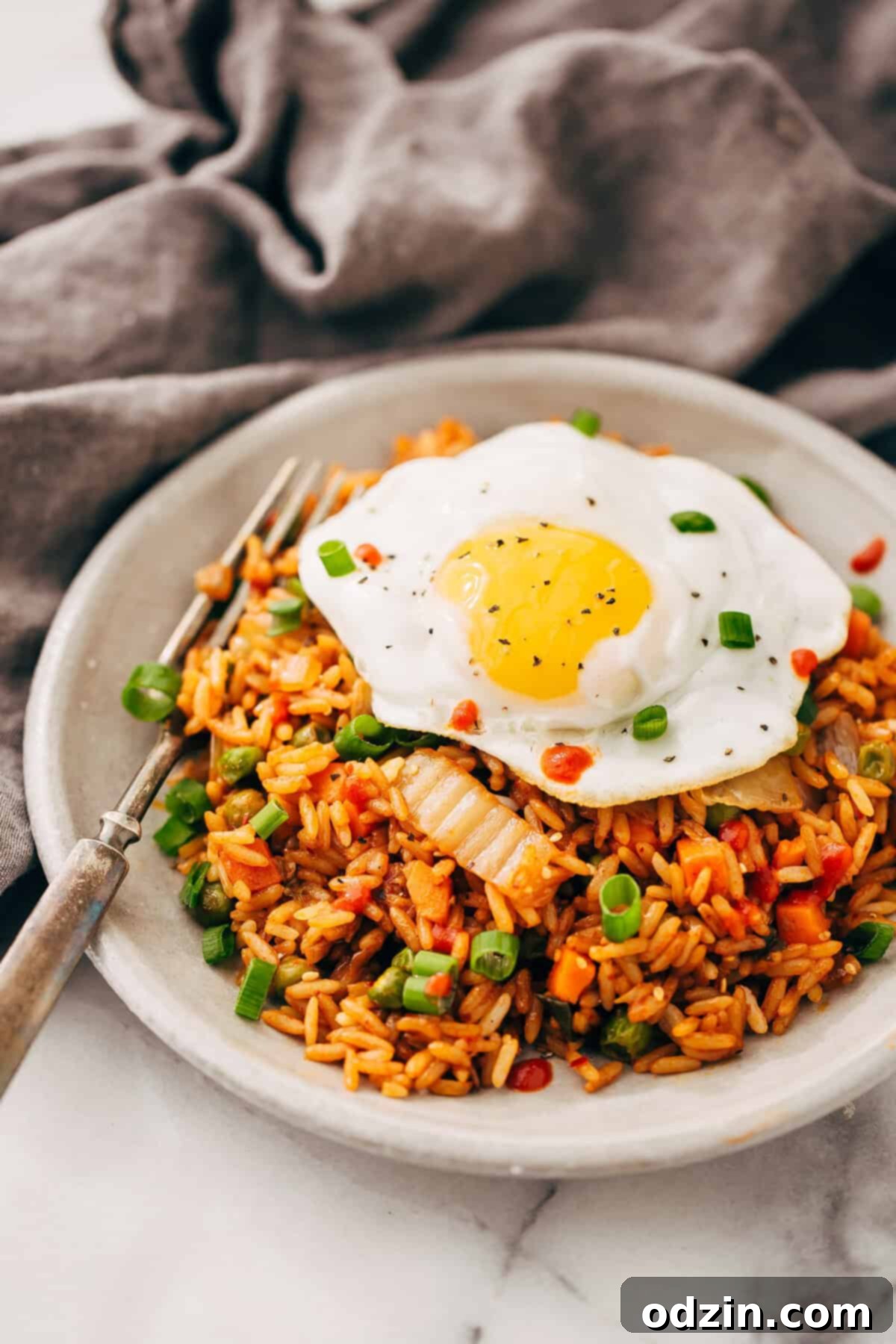
Effortless Kimchi Fried Rice: Your Ultimate Guide to a Quick, Flavorful Meal with Leftovers
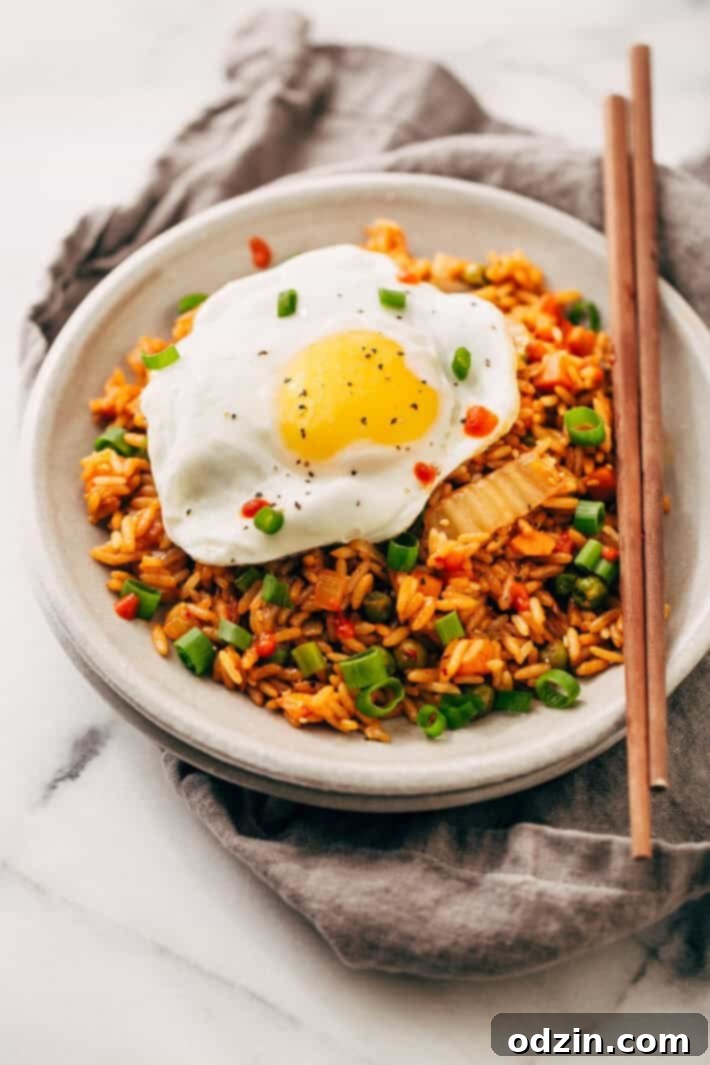
Looking for a versatile and incredibly delicious dish to transform your leftover rice? Dive into the vibrant world of Kimchi Fried Rice! With just a handful of staple ingredients and minimal effort, you can create a satisfying meal that’s perfect on its own or elevated with a perfectly fried egg on top.
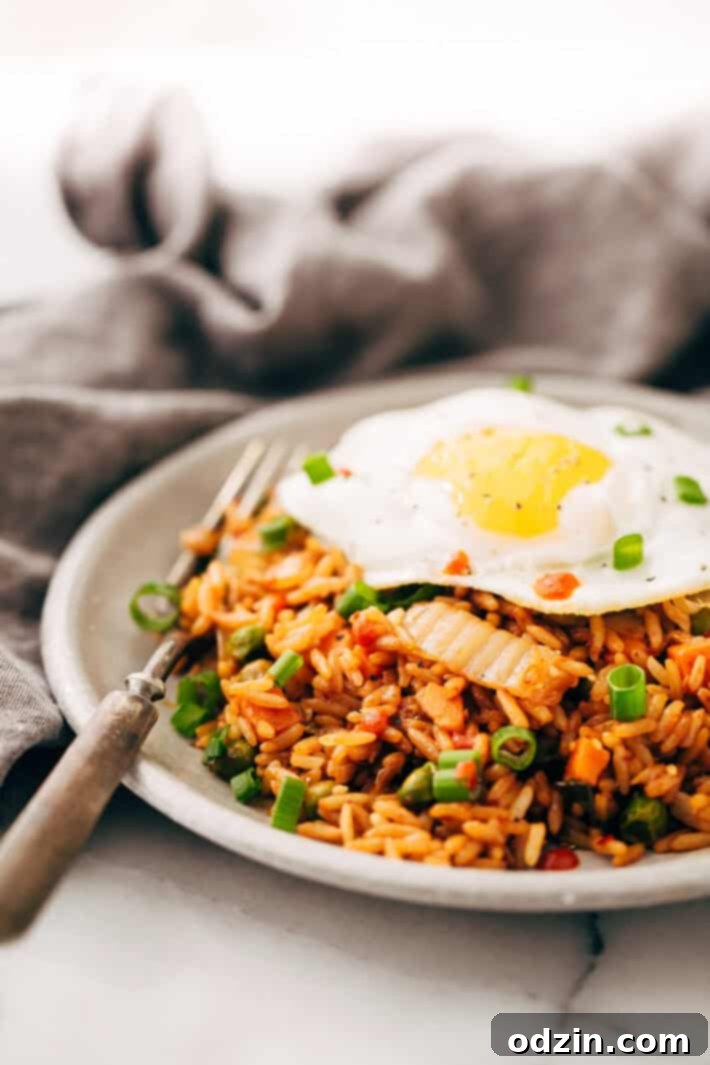
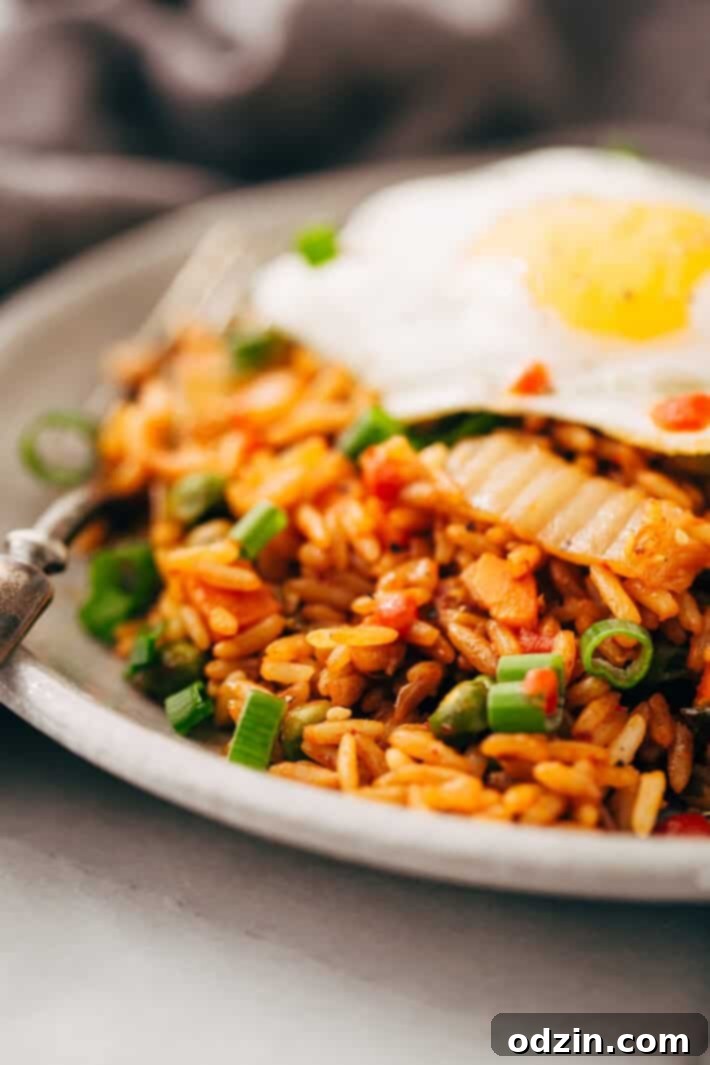
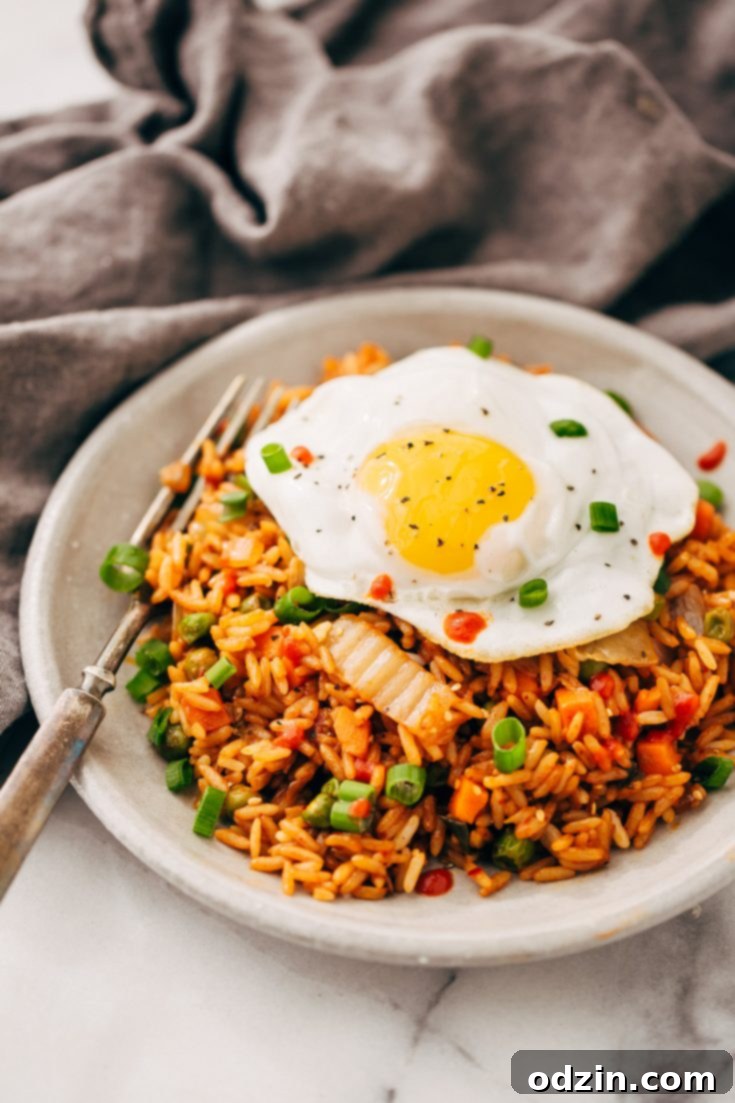
Kimchi fried rice, or Kimchi Bokkeumbap, might not always win awards for its aesthetic appeal, but its flavor profile is undeniably stellar. This Korean culinary delight masterfully blends savory, spicy, and tangy notes into a comforting dish that’s incredibly satisfying. Imagine tender sautéed onions, crisp peas and carrots, day-old rice, and the distinctive punch of kimchi, all harmonized with a splash of soy sauce and a hint of spice. The result? A flavorful meal ready in minutes, ideal for a quick lunch or a hearty dinner. Topping it with a runny fried egg transforms it into a restaurant-quality experience you can easily recreate in your own kitchen in under 15 minutes.
This dish is a true revelation for anyone seeking a quick, flavorful, and budget-friendly meal. Beyond its speed and ease, kimchi fried rice offers a unique taste adventure, making it a standout choice whether you’re a seasoned chef or a beginner in the kitchen. It’s a brilliant way to use up ingredients you likely already have on hand, proving that some of the most delicious meals are born from simplicity and clever use of leftovers.
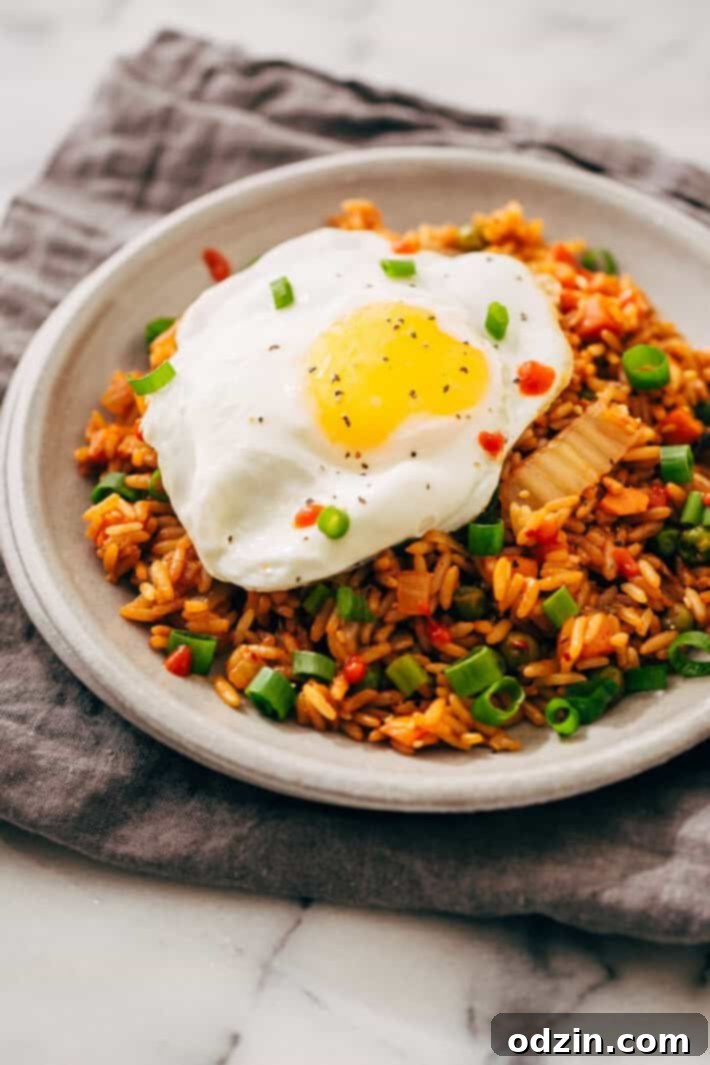
The Irresistible Allure of Kimchi Fried Rice
There’s a reason kimchi fried rice has become a global favorite. Its appeal lies in its dynamic flavor, incredible versatility, and the sheer ease of preparation. This dish is not just food; it’s an experience. The umami-rich flavors from the kimchi and soy sauce, combined with the gentle heat from gochujang or sriracha, create a symphony for your taste buds. It’s a dish that can stand alone as a satisfying main course or serve as a delicious accompaniment to other Korean staples. For instance, if you’ve tried our Instant Pot Korean Beef recipe, imagine swapping out plain white or brown rice for this flavorful kimchi fried rice – a guaranteed explosion of flavor!
What makes this dish a true weeknight hero is its ability to transform mundane leftovers into something extraordinary. Leftover rice, often overlooked, becomes the perfect canvas for the bold flavors of kimchi. This means less food waste and more delicious, spontaneous meals. Whether you’re cooking for one or feeding a family, kimchi fried rice is an adaptable recipe that never disappoints, proving that gourmet flavors don’t have to come with a hefty price tag or extensive cooking time.
Diving Deeper into Kimchi: The Star Ingredient
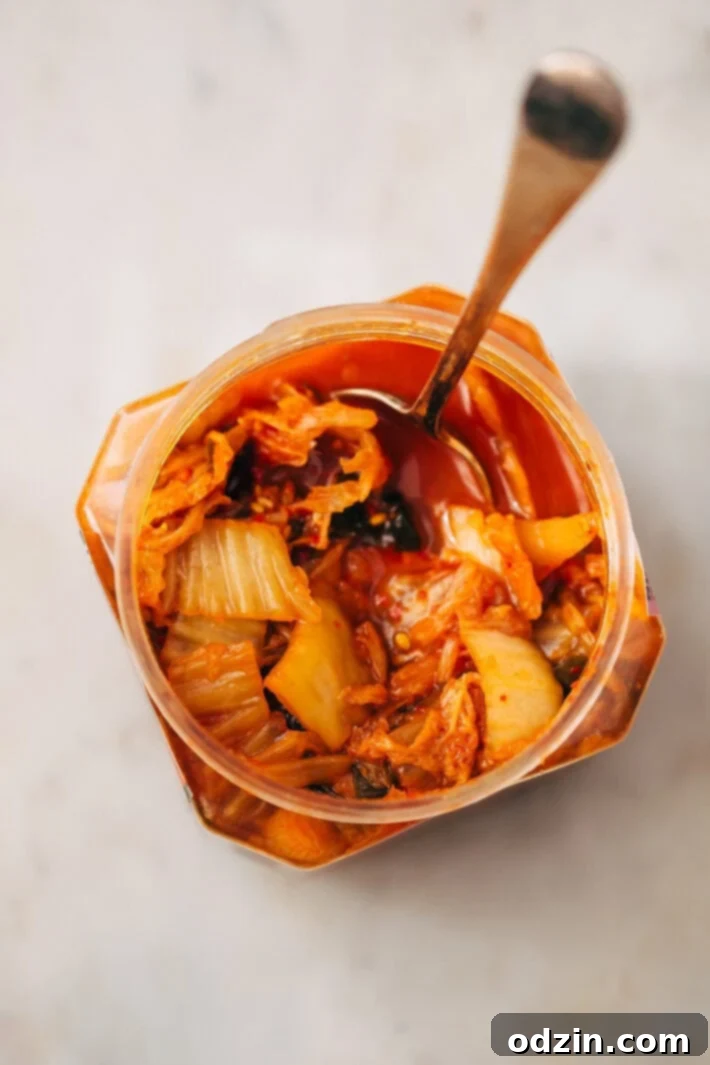
At the heart of this incredible dish is kimchi, a staple of Korean cuisine. If you’re new to it, prepare to be amazed. Kimchi is a traditional Korean side dish made of salted and fermented napa cabbage and Korean radish, seasoned with a variety of spices including gochugaru (Korean chili powder), garlic, ginger, and scallions. The fermentation process gives kimchi its characteristic tangy, spicy, and umami-rich flavor, along with numerous health benefits.
What is Kimchi?
Kimchi’s journey from humble ingredients to a complex flavor powerhouse is fascinating. It’s not just a condiment; it’s a cultural icon in Korea, served with almost every meal. While napa cabbage kimchi (Baechu Kimchi) is the most common variety, there are hundreds of types, each with its own unique blend of vegetables and seasonings. The fermentation not only preserves the vegetables but also develops deep, nuanced flavors that are both refreshing and robust.
The Health Benefits of Kimchi
Beyond its incredible taste, kimchi is renowned for its health benefits. As a fermented food, it’s packed with probiotics, beneficial bacteria that support gut health, aid digestion, and boost the immune system. It’s also a rich source of vitamins (A, B, C), dietary fiber, and antioxidants. Eating kimchi regularly can contribute to a healthier digestive system, improved immunity, and even weight management. It’s a flavorful way to incorporate more nutrient-dense vegetables into your diet.
Sourcing and Selecting Your Kimchi
Finding good quality kimchi is crucial for a delicious fried rice. You can typically purchase kimchi from Asian grocery stores, specialty food markets, or even larger supermarkets like Whole Foods, usually found in the refrigerated section near fresh produce. When selecting kimchi, consider the level of spice and fermentation you prefer. Younger kimchi is milder and crisper, while older, more fermented kimchi will be tangier and have a deeper, more pungent flavor – which is often preferred for fried rice as its robust taste holds up well against other ingredients.
An important note for those with dietary restrictions: if you follow a strict vegan or vegetarian diet, always double-check the ingredient label. Some traditional kimchi recipes use fish sauce or bone broth, which are not vegan-friendly. Fortunately, many brands now offer vegan kimchi options. For example, the Wildbrine brand is often a reliable choice, known for being vegan and offering a balanced spice level.
Mastering the Art of Kimchi Fried Rice
Making truly great kimchi fried rice involves a few key techniques that elevate it from a simple stir-fry to a culinary masterpiece. It all starts with the right ingredients and understanding how to layer flavors and textures.
The Secret to Perfect Fried Rice: Day-Old Grains
The foundation of any good fried rice is, of course, the rice itself. For the best results, always use day-old (or even two-day-old) cooked rice. Why? Freshly cooked rice is too moist and tends to clump together, resulting in a soggy fried rice. Leftover rice, having dried out in the refrigerator, separates beautifully and achieves that desirable slightly crispy texture when stir-fried in a hot pan. If you don’t have leftover rice, you can spread freshly cooked rice on a baking sheet and let it cool in the fridge for an hour or two to dry it out.
Crafting the Signature Sauce
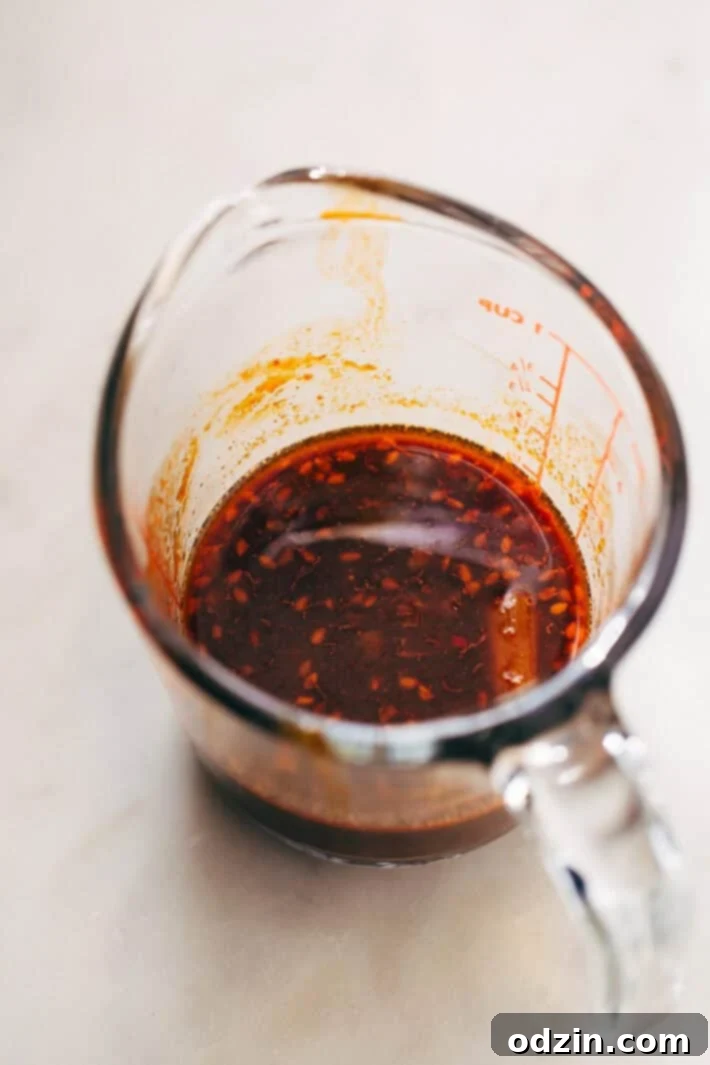
The sauce is where much of the kimchi fried rice’s magic happens. It’s a simple yet potent blend that combines the tanginess of kimchi juice with the depth of soy sauce, the rich nuttiness of sesame oil, and the spicy kick of gochujang or sriracha. Preparing this sauce in advance ensures that all the flavors meld together and allows for a smooth cooking process.
Before mixing the sauce, you’ll want to drain some of the liquid from your kimchi. Place your kimchi in a sieve over a bowl and gently press down to extract the vibrant, flavorful juice. This step is crucial for two reasons: it prevents excess liquid from making your fried rice soggy, and it provides the base for your incredibly flavorful sauce. Once you have your kimchi juice, combine it with gochujang (or sriracha for a similar heat), low-sodium soy sauce, and a touch of sesame oil. Stir well and set aside.
The Cooking Process: A Step-by-Step Guide
With your ingredients prepped, the cooking itself is incredibly fast – truly a 15-minute meal from start to finish. The key is to work quickly and keep the pan hot.
- **Aromatics First:** Heat a splash of neutral oil in a large skillet or wok over medium-high heat. Add your diced onions and sauté them until they are tender, translucent, and fragrant, typically about 4-5 minutes.
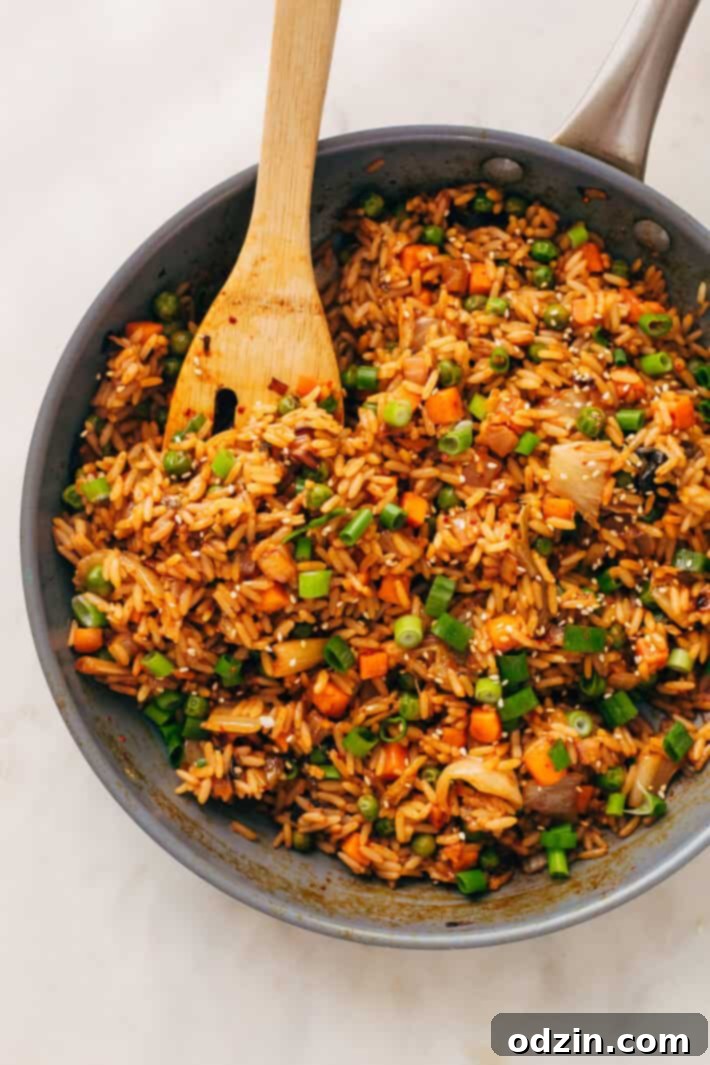
- **Add Kimchi and Veggies:** Stir in the chopped kimchi (if the pieces are large, chop them a bit smaller before adding) along with the frozen peas and carrots. Allow them to cook until the vegetables are tender-crisp and the frozen peas and carrots have defrosted.
- **Egg Integration (Optional):** This is where you decide on your egg preference.
- **Scrambled Eggs within:** If you prefer your eggs scrambled and mixed into the rice, push the vegetables to one side of the skillet, create a well in the center, and pour in 3 beaten eggs. Scramble the eggs until just set, then break them into smaller pieces and mix them with the vegetables.
- **Fried Egg Topping:** For those who love a runny yolk cascading over their fried rice (highly recommended!), omit this step. You’ll fry the eggs in a separate skillet at the very end.
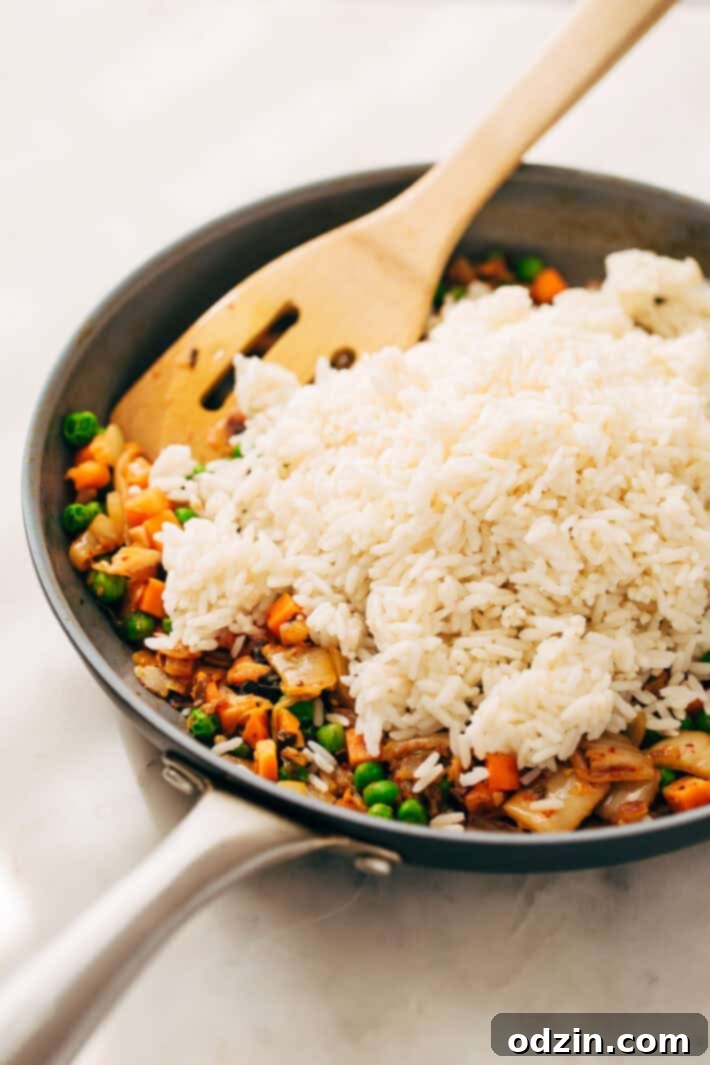
- **The Rice Takes the Stage:** Add the day-old cooked rice to the skillet. Break up any clumps with your spoon or spatula and stir everything together thoroughly, ensuring the vegetables and kimchi are evenly distributed throughout the rice.
- **Sauce and Sizzle:** Pour the prepared sauce mixture (kimchi juice, gochujang, soy sauce, sesame oil) over the rice. Stir continuously until every grain of rice is beautifully coated in the vibrant red sauce. Continue to cook for a few more minutes, pressing the rice against the hot pan occasionally, until you hear it start to sizzle and some of the grains get slightly crispy. This indicates that the flavors have intensified and the moisture has evaporated, giving you perfect fried rice.
- **Garnish and Serve:** Remove from heat and stir in the chopped scallions. If you opted for fried eggs, quickly fry 1-2 eggs per serving in a separate pan until the whites are set and the yolk is still runny. Top each serving of kimchi fried rice with a freshly fried egg. Serve immediately and enjoy!
Customizing Your Kimchi Fried Rice Experience
One of the best aspects of kimchi fried rice is its flexibility. It’s an excellent base for various additions and can be easily adapted to suit your taste, dietary needs, or whatever ingredients you have on hand.
- **Protein Power-Ups:** Enhance your fried rice with your favorite protein. Diced chicken, thinly sliced beef, shrimp, or even leftover pulled pork can be cooked and added to the pan after the onions. For a vegetarian option, scrambled tofu or edamame work wonderfully.
- **More Veggies:** Feel free to bulk up your fried rice with more vegetables. Sliced mushrooms, bell peppers, corn, spinach, or even broccoli florets can be added alongside the peas and carrots. Just ensure they are chopped into small, bite-sized pieces for even cooking.
- **Spice Level Adjustments:** The amount of gochujang or sriracha in the sauce is entirely up to you. For a milder flavor, use less; for a fiery kick, don’t hesitate to add more. A pinch of red chili flakes can also amplify the heat.
- **Low-Carb Twist:** If you’re watching your carbohydrate intake, this recipe can be easily modified. Replace half or even all of the cooked rice with cauliflower rice (riced cauliflower). It will absorb the flavors beautifully, and you might not even notice the difference!
- **Cheese, Please!** For an indulgent twist, sprinkle some shredded mozzarella or cheddar cheese over the hot fried rice just before serving. The melting cheese adds a creamy, savory layer that pairs surprisingly well with the kimchi.
Whether you stick to the classic recipe or get creative with additions, kimchi fried rice is designed to be a customizable and enjoyable cooking experience. Don’t be afraid to experiment and make it your own!
Quick Kimchi Fried Rice
5 minutes
10 minutes
15 minutes
Looking for a side dish or a main meal to make with your leftover rice? Make kimchi fried rice! You only need a handful of ingredients for this and it tastes great with a fried egg on top!
Ingredients
- 1/2 cup packed kimchi + 3 tablespoons juice
- 2 teaspoons gochujang or sriracha (or more to taste)
- 3 tablespoons low sodium soy sauce
- 2 teaspoons sesame oil
- splash of oil
- 1/2 cup diced onions
- 1 cup frozen peas and carrots
- 2 – 2 1/2 cups cooked rice
- 3-5 eggs
- 3 scallions, chopped (greens only)
Instructions
- Sauce Preparation: Begin by placing a sieve over a small bowl. Add the kimchi to the sieve and gently press down with a spoon to extract about 3 tablespoons of its liquid, which is referred to as ‘kimchi juice.’ If you need more liquid, simply get it from the kimchi container. To this juice, stir in the gochujang (or sriracha), low-sodium soy sauce, and sesame oil until well combined. If your kimchi pieces are quite large, chop them into smaller, more manageable pieces. Set the sauce aside.
- Sauté Vegetables: Heat a splash of cooking oil in a large skillet or wok over medium-high heat. Add the diced onions and sauté for about 4-5 minutes, or until they become tender and fragrant. Next, add the chopped kimchi and the frozen peas and carrots to the skillet. Continue to cook, stirring occasionally, until the frozen vegetables have defrosted and all the vegetables are tender-crisp.
- Scramble Eggs (Optional): If you prefer to have scrambled eggs mixed into your fried rice, crack 3 eggs into a bowl and lightly beat them. Create a clear space in the center of the skillet by pushing the vegetables to the sides. Pour the egg mixture into the well and scramble until cooked through but still soft. Once scrambled, break the eggs into smaller pieces and mix them in with the vegetables. If you plan to serve your kimchi fried rice with a fried egg on top, skip this step.
- Combine and Finish: Add the cooked, day-old rice to the skillet with the vegetables and kimchi. Stir vigorously to combine all the ingredients thoroughly. Pour the prepared sauce evenly over the rice mixture. Continue to stir and toss everything together until every grain of rice is coated with the sauce and a uniform color is achieved. Cook for another few minutes, stirring occasionally, until the rice begins to sizzle and develop a slightly crispy texture. Remove the skillet from the heat. Top the kimchi fried rice with the chopped scallion greens. If you opted for fried eggs, quickly fry them in a separate pan to your desired doneness and place one on top of each serving. Serve immediately.
Notes
- ‘Kimchi juice’ simply refers to the liquid that kimchi is packed in. It’s full of flavor!
- For those following a vegan or vegetarian diet, you can easily omit the eggs from the recipe. Consider adding scrambled tofu for a protein boost if desired. Always ensure to check the ingredient label of your kimchi purchase, as some brands may contain fish sauce or bone broth. Wildbrine is a recommended vegan-friendly brand.
Have you made this recipe?
If you enjoyed this recipe, please consider leaving a ⭐️⭐️⭐️⭐️⭐️ rating and a comment below. You can also share a picture on Instagram with the hashtag #LITTLESPICEJAR, I’d love to see what you made!
Frequently Asked Questions About Kimchi Fried Rice
Can I use freshly cooked rice for kimchi fried rice?
While technically possible, using day-old or even two-day-old cooked rice is highly recommended. Freshly cooked rice has too much moisture, which can make your fried rice soggy and clumpy. Older rice is drier, allowing the grains to separate beautifully and achieve a slightly crispy texture when stir-fried.
What kind of kimchi should I use?
You can use any type of napa cabbage kimchi you prefer. Well-fermented kimchi often yields the most robust and delicious flavor for fried rice, as its tanginess holds up well against the other ingredients. Just remember to check labels for vegan/vegetarian options if needed.
How can I make my kimchi fried rice spicier?
To increase the heat, simply add more gochujang (Korean chili paste) or sriracha to the sauce mixture. You can also sprinkle in some Korean chili flakes (gochugaru) or fresh chopped chilies during the sautéing process for an extra kick.
Can I add other vegetables to this recipe?
Absolutely! Kimchi fried rice is very adaptable. Feel free to add thinly sliced mushrooms, bell peppers, corn, spinach, or snap peas. Add them to the skillet with the onions or frozen peas and carrots, ensuring they are cooked until tender-crisp.
Is kimchi fried rice a healthy meal?
Yes, it can be! Kimchi itself is a probiotic-rich, vitamin-packed superfood. When combined with vegetables and rice, it forms a balanced meal. You can enhance its nutritional value by adding lean proteins like chicken or tofu, and by incorporating a wider variety of vegetables. For a lower-carb version, consider substituting some of the white rice with cauliflower rice.
How do I store leftover kimchi fried rice?
Leftover kimchi fried rice can be stored in an airtight container in the refrigerator for up to 3-4 days. Reheat it in a skillet over medium heat or in the microwave until thoroughly warm. Adding a splash of water or broth can help rehydrate it if it seems too dry.
Conclusion: Your New Favorite Weeknight Meal
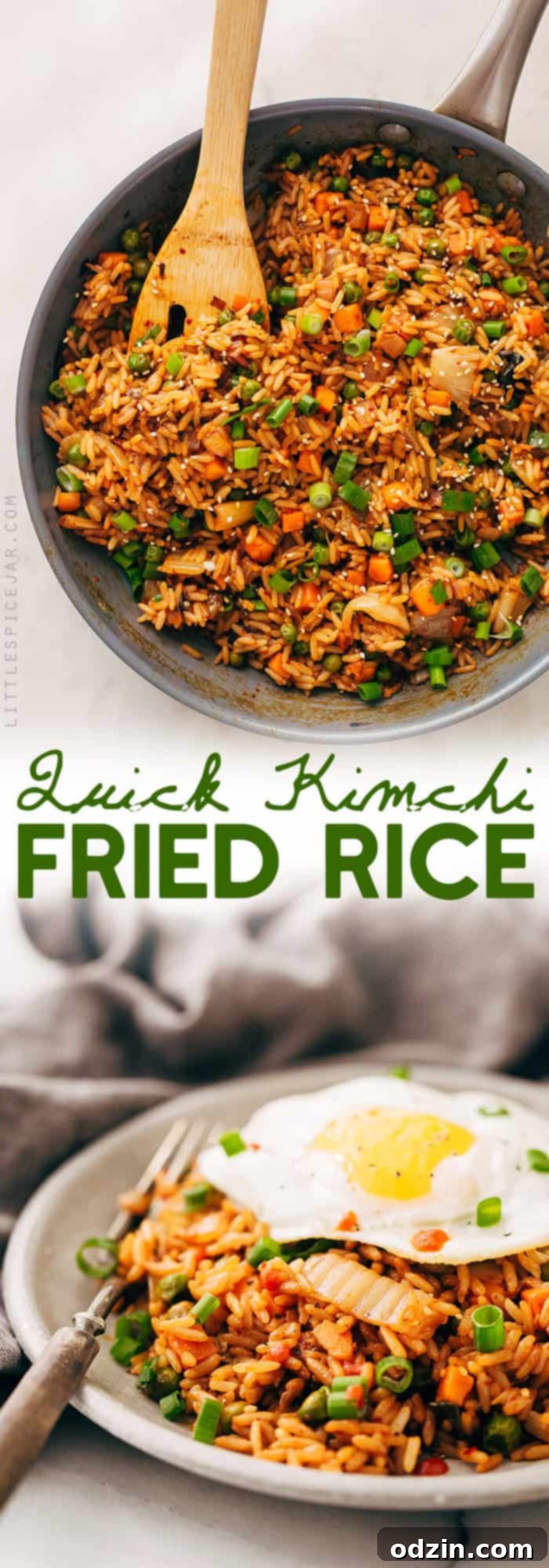
There you have it – a comprehensive guide to making quick and easy kimchi fried rice. This dish is truly a marvel in its simplicity and profound in its flavor. It’s the perfect answer to those busy weeknights when you crave something comforting, spicy, and satisfying, but don’t have hours to spend in the kitchen. The magic of fermented kimchi combined with humble rice and everyday vegetables creates a meal that is both exotic and familiar, wholesome and utterly delicious.
Whether you’re making it to utilize leftover rice, introduce a new flavor to your family, or simply indulge in a wonderfully savory and spicy treat, this kimchi fried rice recipe is sure to become a cherished addition to your culinary repertoire. Don’t underestimate the power of a few simple ingredients to create something truly extraordinary. So go ahead, gather your ingredients, fire up your skillet, and prepare to embark on a delightful flavor journey that you’ll want to revisit again and again!