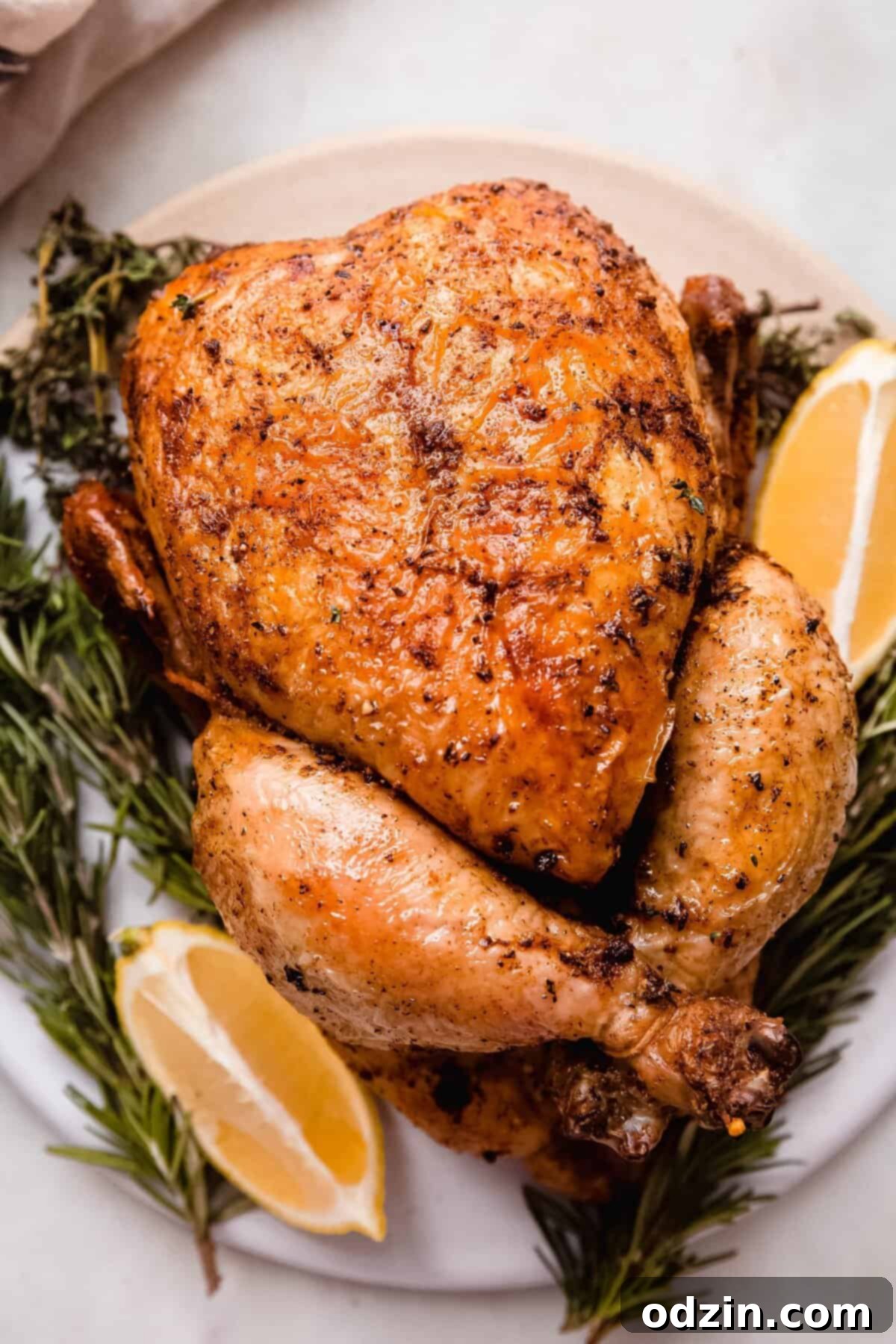
The Ultimate Homemade Oven Rotisserie Chicken: Crispy Skin, Juicy Meat, and Endless Flavor
Unlock the secret to restaurant-quality rotisserie chicken right in your own kitchen! This detailed guide will show you how to create an incredibly juicy, tender, and crispy-skinned whole chicken using simple ingredients and a conventional oven. Perfect for a show-stopping Sunday dinner or for effortless meal prep throughout the week, this “faux-tisserie” method is a game-changer for any home cook.
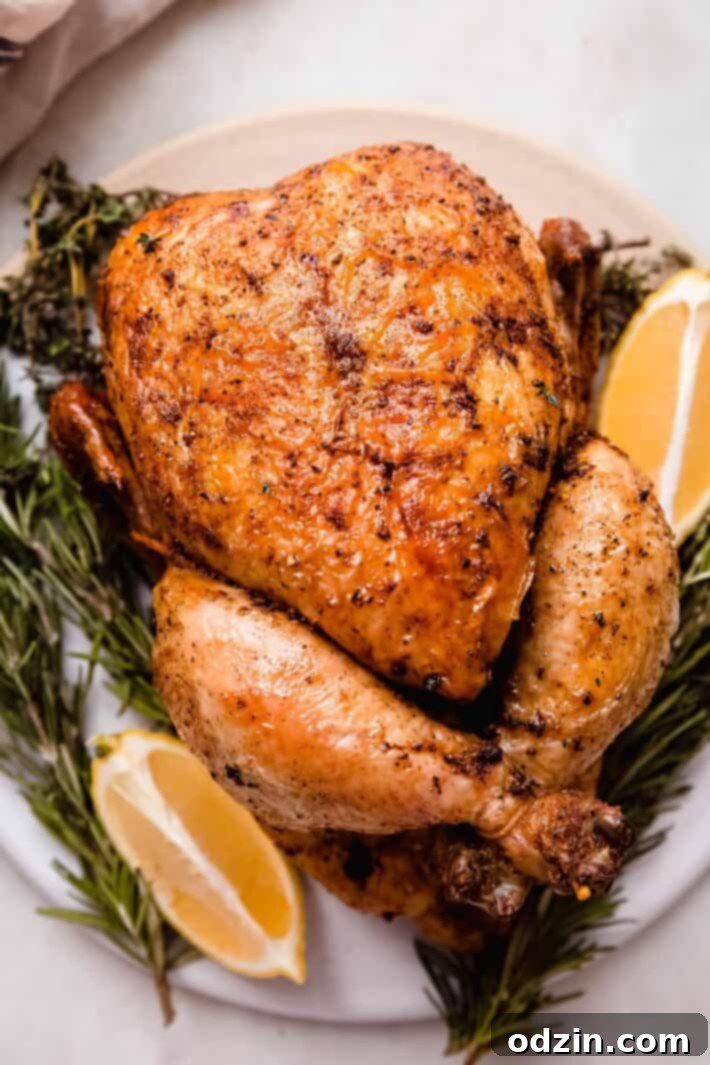
There’s something undeniably appealing about a perfectly roasted rotisserie chicken. The golden, crispy skin, the succulent meat, and the incredible aroma fill the kitchen, promising a satisfying meal. While store-bought options are convenient, making your own “faux-tisserie” chicken in the oven offers a level of flavor and freshness that simply can’t be matched. This recipe transforms a simple whole chicken into a culinary masterpiece, tasting infinitely better than anything you’d buy from your favorite grocery store.
Our journey to the perfect oven-roasted chicken begins with a crucial step: dry brining with salt and a touch of baking soda. This technique is the secret weapon for achieving that coveted crisp skin and deeply flavored, fall-apart tender meat. After brining, we’ll generously rub the chicken with a high-heat oil and a carefully crafted blend of pantry staples and fresh herbs. The result? A stunning roast chicken that emerges from your oven with an irresistible golden hue and unparalleled juiciness.
The versatility of this homemade rotisserie chicken is truly remarkable. Serve it as the star of your Sunday supper alongside classic accompaniments like creamy garlic herb mashed potatoes and your favorite steamed or roasted vegetables. But the magic doesn’t stop there! Any leftovers can be effortlessly transformed into a myriad of exciting dishes throughout the week. Imagine savory BBQ chicken nachos, comforting chicken tortilla soup, hearty white chicken chili, or a bright and flavorful lemon chicken orzo soup. This single chicken provides the foundation for an entire week of delicious, easy meals.
For those who love to maximize every ingredient, the chicken bones offer another incredible opportunity. Don’t discard them! They are the base for a rich, homemade chicken stock that will elevate all your future cooking endeavors. Simply sauté a few aromatic vegetables, add the roasted bones, and let them simmer gently with black peppercorns, bay leaves, and fresh sprigs of thyme or rosemary. After a couple of hours, strain out the solids, and allow the stock to simmer further to concentrate its flavor. This golden elixir can then be used to make extraordinary dishes like my homemade chicken corn soup or the decadent roasted garlic white chicken lasagna soup. Truly, homemade rotisserie chicken is the gift that keeps on giving, providing multiple delicious meals and a wealth of culinary possibilities!
Essential Ingredients for Your Perfect Oven Rotisserie Chicken
Crafting the best oven rotisserie chicken requires a careful selection of fresh, quality ingredients that work together to create incredible flavor and texture. Here’s what you’ll need:
- Whole Chicken: The foundation of our meal! For optimal results and even cooking, we recommend a smaller whole chicken, ideally weighing between 3.5 to 4 pounds. Before seasoning, remember to remove the neck and any giblets from the cavity. It is crucial to use a skin-on chicken for this recipe; skinless chicken will dry out excessively in the oven and won’t develop the desired crispy texture.
- Seasonings: A harmonious blend of spices is key to a flavorful bird. You’ll need a generous amount of kosher salt for the dry brining process, which ensures deep seasoning. Additionally, baking soda plays a critical role in enhancing skin crispiness (more on this science later!). Rounding out the flavor profile are freshly ground black pepper, aromatic garlic powder, and rich smoked paprika, which adds a beautiful color and a subtle smoky note.
- Fresh Herbs: Elevate your chicken with the vibrant essence of fresh herbs. We call for fresh thyme and rosemary, which infuse the chicken with an earthy, aromatic fragrance. If fresh herbs aren’t available, you can substitute them with dried versions. Just remember that dried herbs are more potent, so use approximately one-third less than the quantity specified for fresh herbs.
- Lemon: A bright and acidic touch. A whole lemon, cut into wedges, will be placed inside the chicken’s cavity during roasting. As it heats, the lemon releases its aromatic juices, moistening the chicken from the inside out and adding a subtle, refreshing tang to the meat.
- High Heat Oil (or Ghee): To achieve that irresistible golden, crispy skin, a good fat is essential. While a high-heat oil like avocado oil or grapeseed oil works wonderfully, I personally prefer using melted ghee. Ghee, clarified butter, offers a rich, nutty flavor that complements the chicken beautifully and has a high smoke point, making it ideal for roasting. Both options will help render the fat and achieve that perfect crust.
Crafting the Best Oven Rotisserie Chicken: A Step-by-Step Guide
Achieving a perfectly roasted chicken is simpler than you might think. Follow these steps for a truly exceptional homemade “faux-tisserie” chicken:
- Brine That Bird for Ultimate Flavor and Crispiness. The dry brining method is our secret weapon for a deeply seasoned, incredibly juicy chicken with spectacularly crispy skin. Begin by thoroughly patting the chicken dry with paper towels – this is crucial for crispy skin. Remove the neck and any other giblets from the cavity. Take 1 teaspoon of kosher salt and rub it generously inside the chicken’s cavity. Next, in a small bowl, combine the remaining 3 teaspoons of kosher salt with the baking soda. Rub this mixture all over the exterior of the chicken, ensuring you get into every crevice, under the wings, and around the thighs. This salt draws moisture out, then reabsorbs it, while the baking soda aids in browning and crisping the skin. Place the seasoned chicken on a wire rack set over a baking sheet, uncovered, in the refrigerator for at least 10 hours, and ideally up to 24 hours. This extended resting time allows the brine to work its magic. If you choose to skip the dry brining step (though highly recommended!), omit the baking soda entirely and increase the salt by 1 teaspoon.
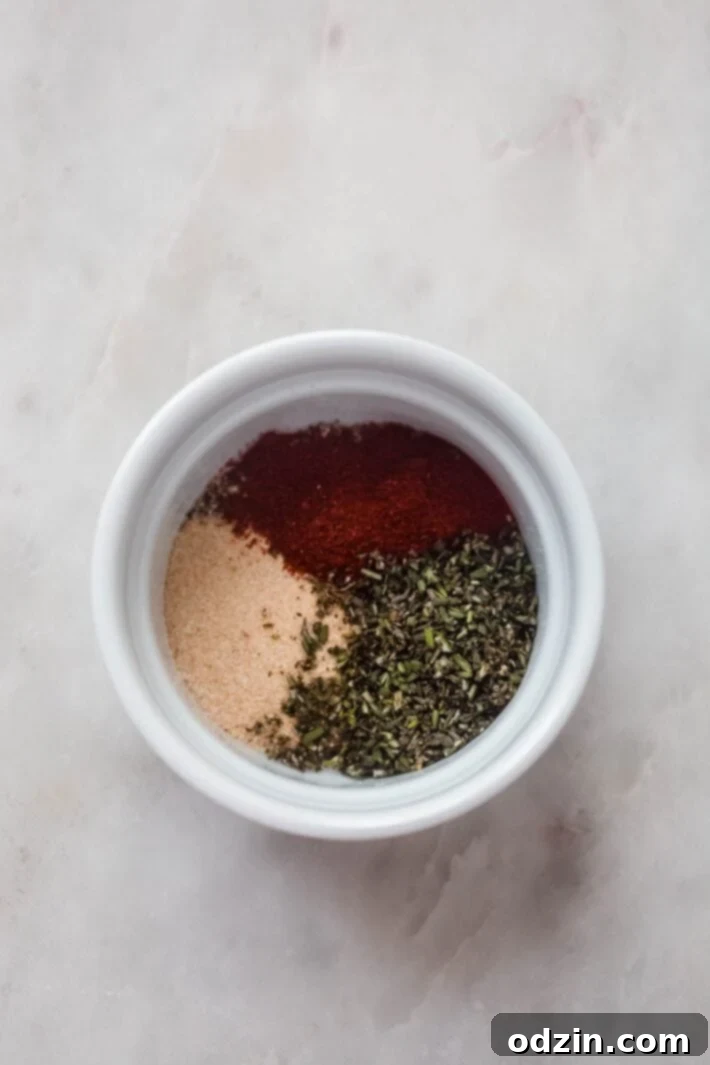
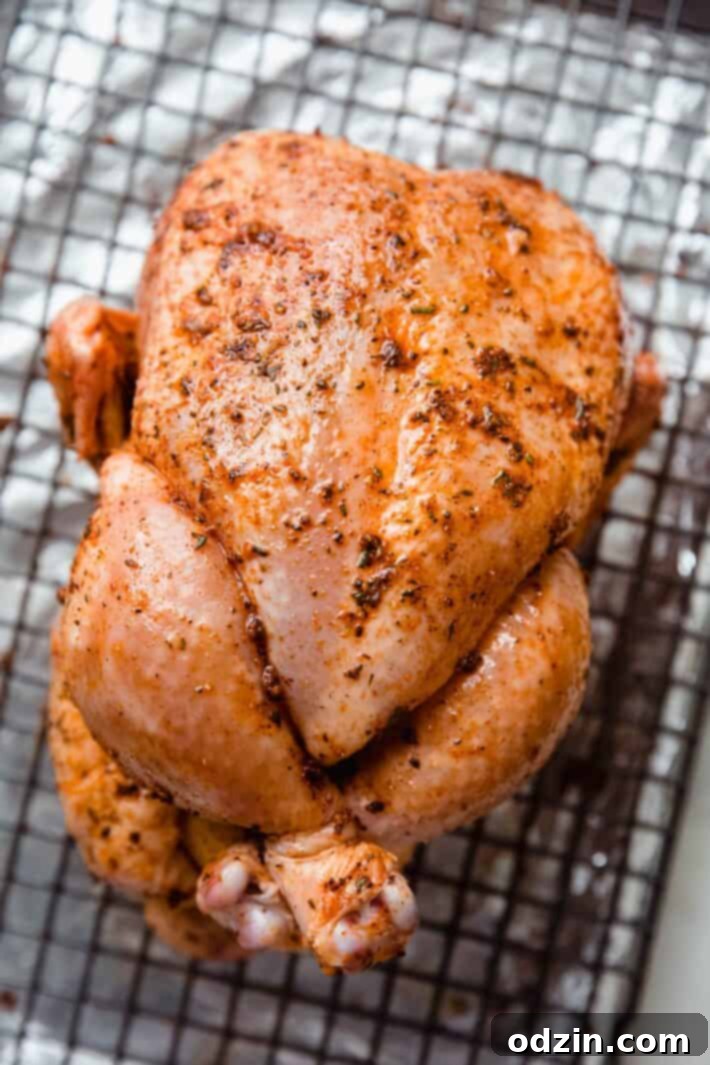
- Prep for Perfection. Approximately 30 minutes before you plan to roast, remove the chicken from the refrigerator to allow it to come closer to room temperature for more even cooking. Preheat your oven to a high heat of 450ºF (230ºC). Prepare a sturdy sheet pan by lining it with a piece of aluminum foil for easier cleanup. Then, place a durable wire rack on top of the foil-lined pan. This rack is vital as it elevates the chicken, allowing hot air to circulate evenly around all sides, mimicking the rotisserie effect and preventing a soggy bottom. Using fresh paper towels, wipe down the chicken one last time to remove any residual moisture on the skin, both inside and out. In a small bowl, combine your chosen dried spices: rosemary, fresh thyme, black pepper, smoked paprika, and garlic powder. Now, rub the entire chicken, including the inside of the cavity, with the melted ghee or high-heat oil. This fat helps the seasoning adhere and promotes browning. Generously sprinkle and rub the spice mix all over the chicken, ensuring a thorough coating. Cut your whole lemon into quarters and place them inside the chicken’s cavity. Finally, for a more compact and evenly cooked bird, use kitchen twine to tie the legs together and tuck the wing tips underneath the body. This prevents the delicate wing tips from burning and helps the chicken cook uniformly.
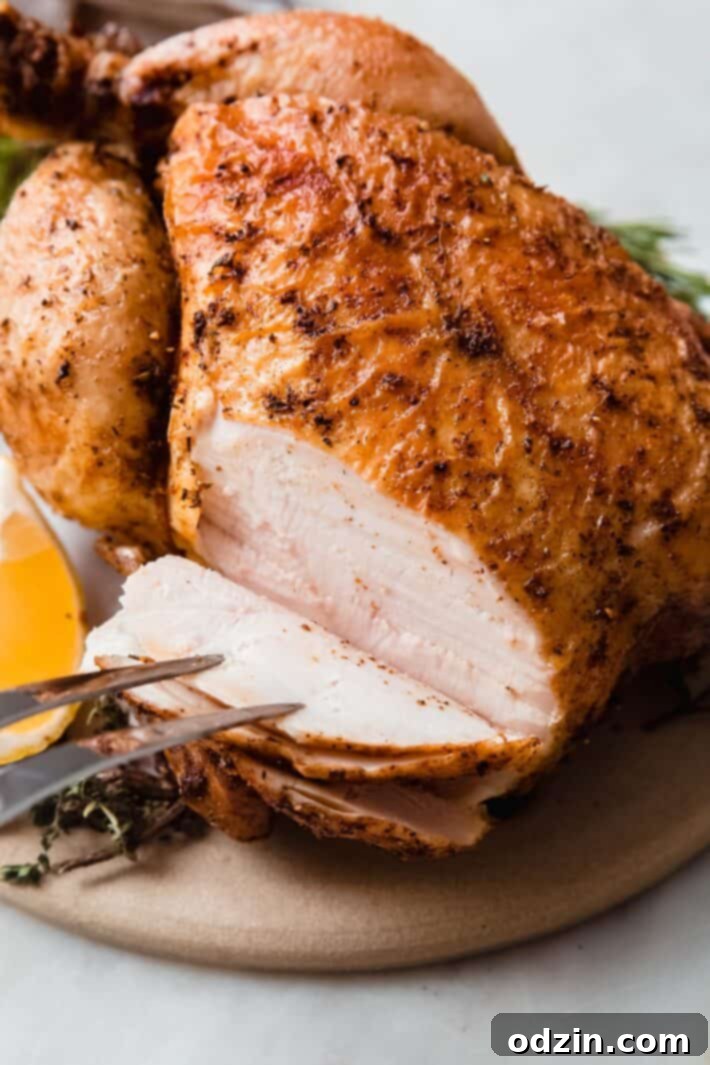
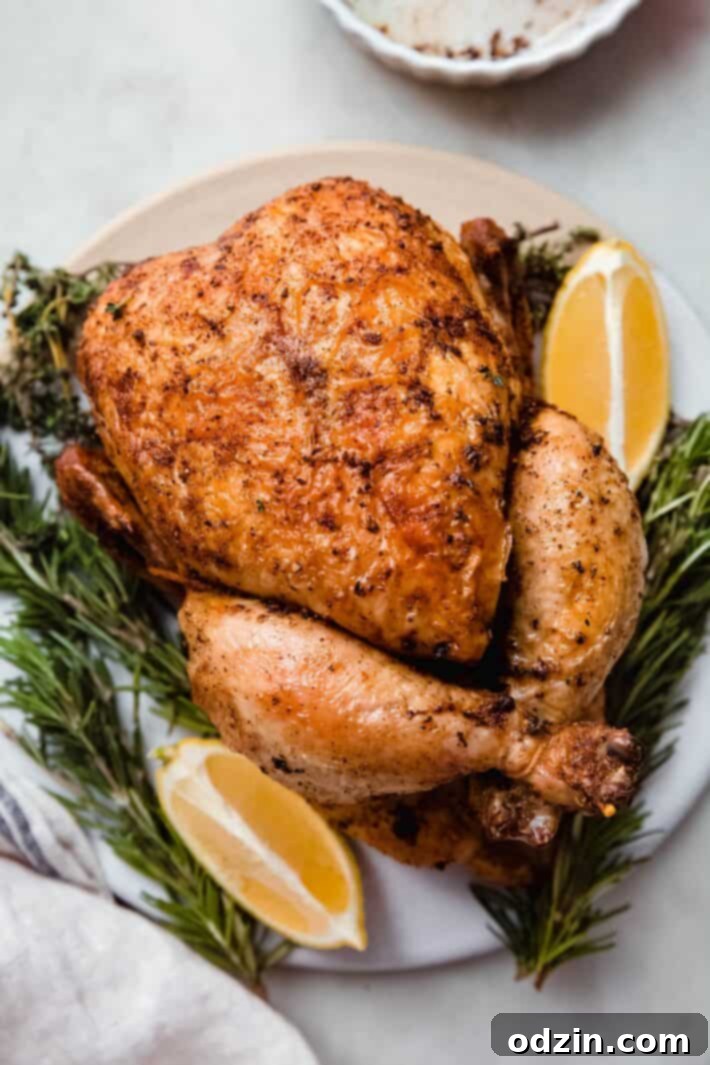
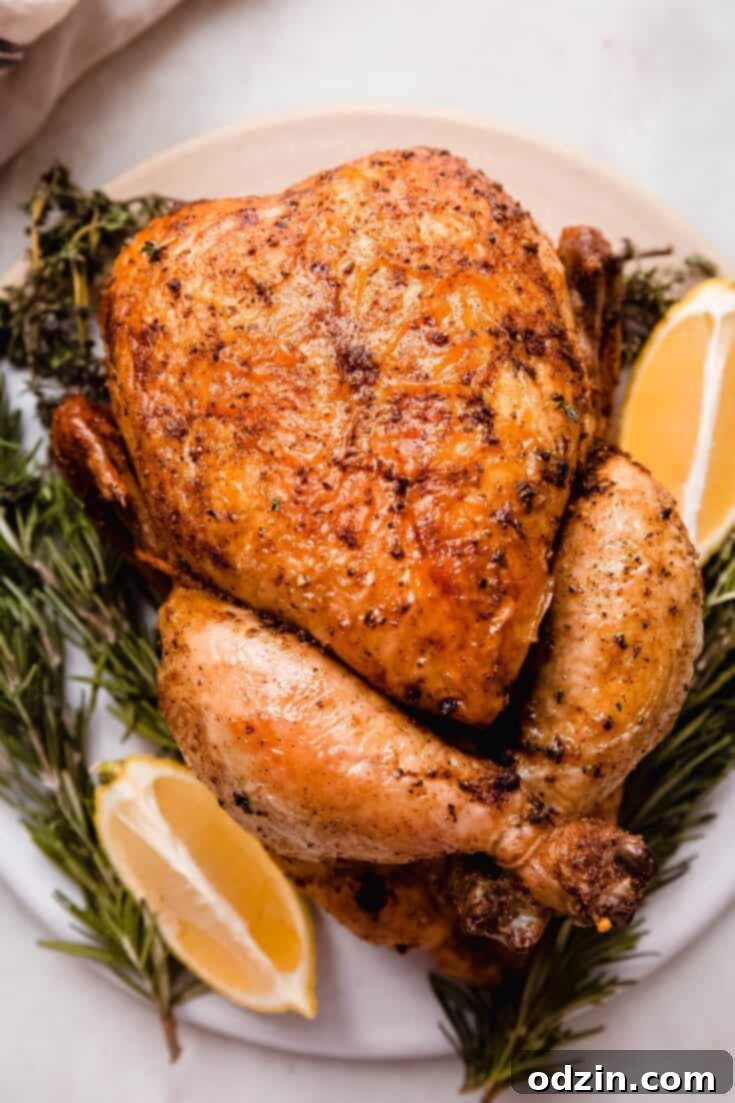
- Roast Like a Boss. Place the prepped chicken on the wire rack in the preheated 450ºF (230ºC) oven. Roast for an initial 12 minutes at this high temperature. This crucial step jumpstarts the cooking process, quickly rendering some of the fat from the skin and developing that beautiful initial golden color. After 12 minutes, reduce the oven temperature to 350ºF (175ºC) without opening the oven door (if possible, or open briefly to adjust). Continue roasting for an additional 50-70 minutes. The exact time will depend on your oven and the size of your chicken. The most reliable way to determine doneness is by using a digital thermometer. Insert it into the thickest part of the thigh, avoiding the bone. You’re aiming for an internal temperature of around 163ºF (73ºC). Remember, carryover cooking will cause the temperature to rise a few degrees as the chicken rests, bringing it to the safe internal temperature of 165ºF (74ºC). Once the desired temperature is reached, carefully remove the chicken from the oven and transfer it to a carving board. Allow it to rest, uncovered, for at least 15 minutes before carving. This resting period is essential; it allows the juices to redistribute throughout the meat, resulting in an incredibly moist and flavorful chicken.
Why Dry Brine with Baking Soda? The Science of Crispy Skin
The combination of dry brining with kosher salt and baking soda is not just a culinary trick; it’s a scientific method for achieving unparalleled results in roasted chicken. Dry brining involves salting the exterior of the bird and allowing it to rest uncovered in the refrigerator. The salt initially draws moisture out of the chicken’s skin and muscle. Over time, this salty liquid is reabsorbed, carrying the salt deeper into the meat, leading to a more flavorful and juicy chicken by denaturing muscle proteins and helping them retain moisture during cooking. But the real magic for crispy skin comes from the baking soda. Baking soda, when applied to the skin, raises its pH level. This alkalinity helps to break down the protein structure in the chicken skin more effectively. During roasting, this altered protein structure reacts more readily with heat, resulting in enhanced browning and an incredibly crisp, almost glass-like texture. For this chemical reaction to fully take effect and deliver maximum crispiness, it is absolutely essential to allow the chicken to rest, uncovered, in the refrigerator for a minimum of 10 hours. This exposure to air also helps to dry out the skin, further contributing to its crispiness. The result is a profoundly flavorful chicken with irresistibly golden and crackling skin.
Top Tips for Homemade Oven Rotisserie Chicken Perfection
Elevate your oven rotisserie chicken from great to absolutely extraordinary with these expert tips:
- To Truss or Not to Truss, That is the Question. The idea of trussing a chicken, meticulously wrapping it with kitchen twine to create a perfect, compact shape, can seem daunting. While a beautifully trussed bird does cook more evenly and looks fantastic, don’t let it intimidate you! You absolutely do not have to truss the chicken fully if you prefer not to. My usual approach for home cooking is to simply tie the legs together and tuck the wing tips under the bird. This minimal trussing prevents the leg and wing tips from burning and helps maintain a somewhat even shape, ensuring a great result without the fuss.
- Embrace the Dry Brine – It’s Worth Every Minute. I know, the waiting part can be tough when you’re eager to get cooking, but please, trust me on this: taking the time to dry brine is a game-changer. Allowing the chicken to dry brine with salt and baking soda for at least 10 hours (or up to 24) before roasting will infuse it with unparalleled flavor and create that magical crispy skin. If you’re planning to roast your chicken for Sunday dinner, set yourself a reminder to dry brine it on Saturday afternoon or evening. This small investment of time will pay off immensely in a moist, tender, and incredibly delicious chicken.
- Double Up for Effortless Meal Prep. If you’re going to the effort of making one incredible roast chicken, why not make two? Roasting two chickens simultaneously takes virtually the same amount of active preparation time and the same amount of oven time. This strategy is fantastic for busy weeknights: serve one chicken for dinner as is, and use the other for various meals throughout the week. I recommend using at least a half sheet pan for this, as it provides ample space for both birds to roast side by side without overcrowding.
- Don’t Guess, Check the Temperature. Overcooked chicken is dry and disappointing; undercooked chicken is unsafe. Eliminate guesswork entirely by investing in and using a reliable digital meat thermometer. Insert the thermometer into the thickest part of the thigh, making sure it doesn’t touch any bone. You’re looking for an internal temperature of 163ºF (73ºC) when it comes out of the oven. The chicken will continue to cook as it rests, reaching the safe temperature of 165ºF (74ºC). This small tool is your best friend for perfectly cooked chicken every single time.
- For the True Rotisserie Enthusiasts. If you are fortunate enough to own a dedicated rotisserie oven or a rotisserie attachment for your outdoor grill, this recipe can be adapted to deliver an even more authentic rotisserie experience. The continuous turning on a rotisserie ensures incredibly even cooking and browning. My recommendation is to follow the manufacturer’s specific instructions for your rotisserie unit, adjusting based on the weight of your chicken. Regardless of the cooking method, always allow plenty of time for the chicken to rest after cooking to ensure maximum juiciness.
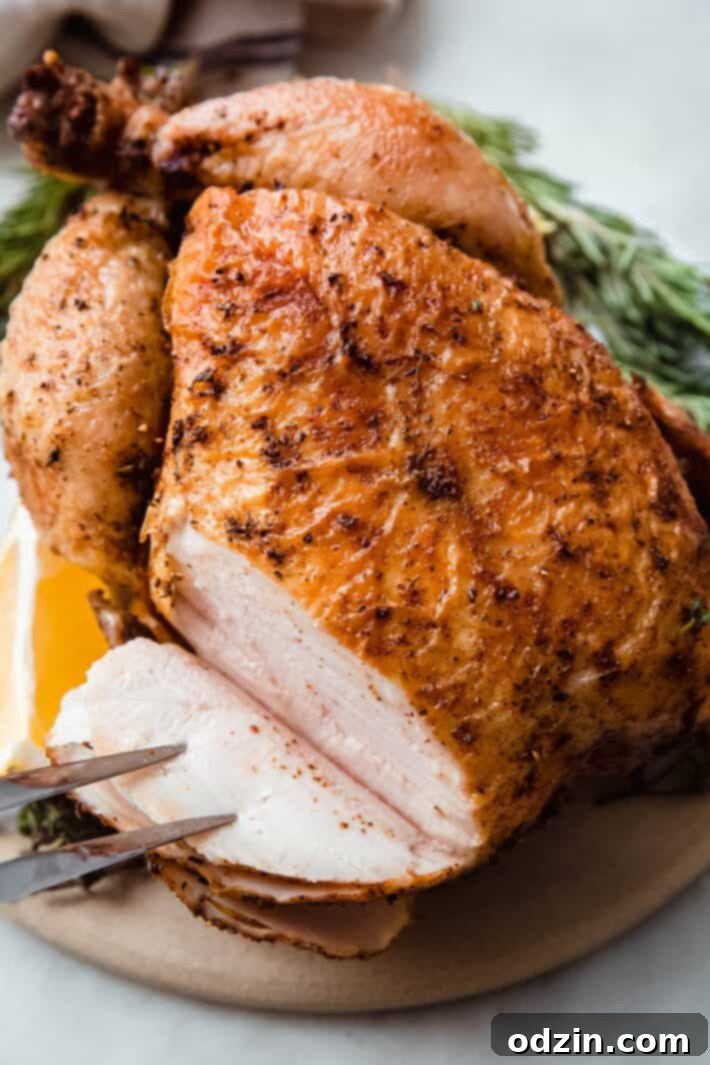
- Master the Carve for Perfect Portions. Once your beautifully roasted chicken has rested, it’s time to carve! A sharp carving knife (the same kind you might use for a holiday turkey) will make this task effortless. First, remove any kitchen twine. To remove the legs, gently pull a leg away from the body and cut through the joint connecting the thigh to the body. The wings should pop right off with a simple twist at the joint. To carve the breast, make a slice down the center of the breastbone, then turn your knife almost 90 degrees and slice outwards, following the contour of the rib cage. And remember, don’t discard those bones – they are liquid gold for making a delicious, nutrient-rich chicken stock!
What to Serve with Your Delicious Slow-Roasted Chicken
A perfectly roasted chicken deserves equally delicious sides to create a complete and satisfying meal. Here are some of my favorite pairings:
- Seriously Amazing Cheddar Mashed Potatoes: Creamy, cheesy, and utterly comforting – the perfect complement to tender chicken.
- Bubbly, Cheesy Cauliflower Casserole: A decadent and savory casserole that adds a rich vegetable component to your meal.
- Golden Brown Garlic Butter Roasted Carrots: Sweet, tender carrots infused with garlic and butter, offering a beautiful color and flavor contrast.
- Autumn Crisp Apple Sweet Potato Salad: A vibrant and refreshing salad with a delightful mix of sweet and savory notes, perfect for adding a touch of fall flavor.
- Crunchy Parmesan Toasted Bread Kale Caesar Salad: A hearty and flavorful salad with a wonderful crunch, bringing freshness and a zingy dressing to the table.
And for even more inspiration, you can find tons of other side dish ideas here!
Creative Ways to Use Leftover Rotisserie Chicken
One of the best things about making a whole chicken is the delicious leftovers! Repurpose your cooked chicken into these fantastic, easy-to-make dishes:
- Chicken Tetrazzini: A classic, creamy pasta bake that’s incredibly comforting and uses shredded chicken beautifully.
- Fried or Baked Chicken Taquitos: Crispy, cheesy, and packed with flavor, these taquitos make for a fun appetizer or light meal.
- Winter Lemon Chicken Barley Soup: A warming and hearty soup, perfect for chilly days, with a bright lemon zest.
- Chicken Pot Tater Tot Hotdish: A fun and family-friendly casserole that combines creamy chicken filling with a crispy tater tot topping.
- Mexican Chicken Noodle Soup: A comforting twist on classic chicken noodle soup, with vibrant Mexican flavors.
Oven Rotisserie Chicken (Faux-tisserie Chicken)
15 minutes
1 hour 5 minutes
10 hours
11 hours 20 minutes
This oven rotisserie chicken recipe uses simple ingredients and a dry brining technique to create an incredibly juicy chicken with unbelievably crispy, golden skin. Perfect for any meal!
Ingredients
- 1 (3.5-4 pound) small whole chicken
- 4 teaspoons kosher salt (up the salt by 1 teaspoon if not dry brining)
- 1 teaspoon baking soda
- 1 whole lemon
- 1 teaspoon EACH: fresh chopped thyme AND rosemary
- ½ teaspoon black pepper
- 1 teaspoon EACH: smoked paprika AND garlic powder
- 2 tablespoons melted ghee (or high heat oil)
Instructions
- DRY BRINE: Ideally 10-24 hours before making this recipe, dry brine the chicken. Place the chicken on clean surface. Remove the neck, giblets, and wipe down the bird using paper towels. You’ll want to take 1 teaspoon of salt and rub the inside cavity of the chicken with the salt. Take the remaining 3 teaspoons of kosher salt combine with the baking soda and dry rub the outside of the chicken, including the underside, with this mixture. Be sure to get under the wings, and all around the thighs. Place the chicken on a wire rack set on top of a baking sheet and place in the lowest rack of the refrigerator.
- SEASON: Position a rack in the enter of the oven and preheat the oven to 450ºF. Line a sheet pan with foil, top with a wire rack and set aside for now. Remove the chicken from the refrigerator while the oven is preheating. Wipe the entire chicken down with a paper towel to remove any moisture that might be on the skin, including the inside cavity. In a bowl, combine the rosemary, fresh thyme, black pepper, paprika and garlic powder. Rub the bird with the high heat oil (or ghee.) Sprinkle the inside cavity with a bit of the seasoning. Rub the spice mix all over the outside of the chicken. Cut the lemon into quarters. Place the lemon inside the cavity. Place the chicken on the wire rack. Using kitchen twine, tie the legs of the bird together and tuck the wings under the bird so that the tips don’t burn.
- BAKE: Roast the chicken for 12 minutes at 450ºF, then drop the oven temperature down to 350ºF and continue roasting the chicken for 50-70 minutes or until the chicken reads 163ºF on an instant read thermometer when tested in the thickest part. At that point, remove the chicken from the oven, carryover cooking will cook the chicken as it rests and it will hit 165ºF. Let the chicken rest for at least 15 minutes before carving. The chicken will retain its juiciness better this way!
Notes
- For best results, I do suggest dry brining the chicken. Please see the post for why it’s important to dry brine the chicken. If you do not dry brine the chicken, omit the baking soda.
- A larger chicken will also work for this recipe, however, you’ll want to increase 1 teaspoon of salt for every pound of chicken you use over what is listed and you’ll also need to roast the chicken for longer; about 15-20 minutes more per pound.
Recommended Products
- Bakers/Butchers Twine
- Ghee
- Digital Meat Thermometer
- Carving Set
- Wilton Cooling Rack, Black
- Half Sheet Pan
Have you made this recipe?
If you enjoyed this recipe, please consider leaving a ⭐️⭐️⭐️⭐️⭐️ rating and a comment below. You can also share a picture on Instagram with the hashtag #LITTLESPICEJAR, I’d love to see what you made!
There you have it – a comprehensive guide to mastering the art of homemade oven rotisserie chicken. By following these steps and tips, you’ll be able to create a consistently delicious, tender, and crispy chicken that will impress your family and friends. This recipe not only provides a fantastic main course but also opens up a world of culinary possibilities for effortless meal planning throughout the week. Say goodbye to store-bought rotisserie chicken and hello to your new favorite homemade classic!