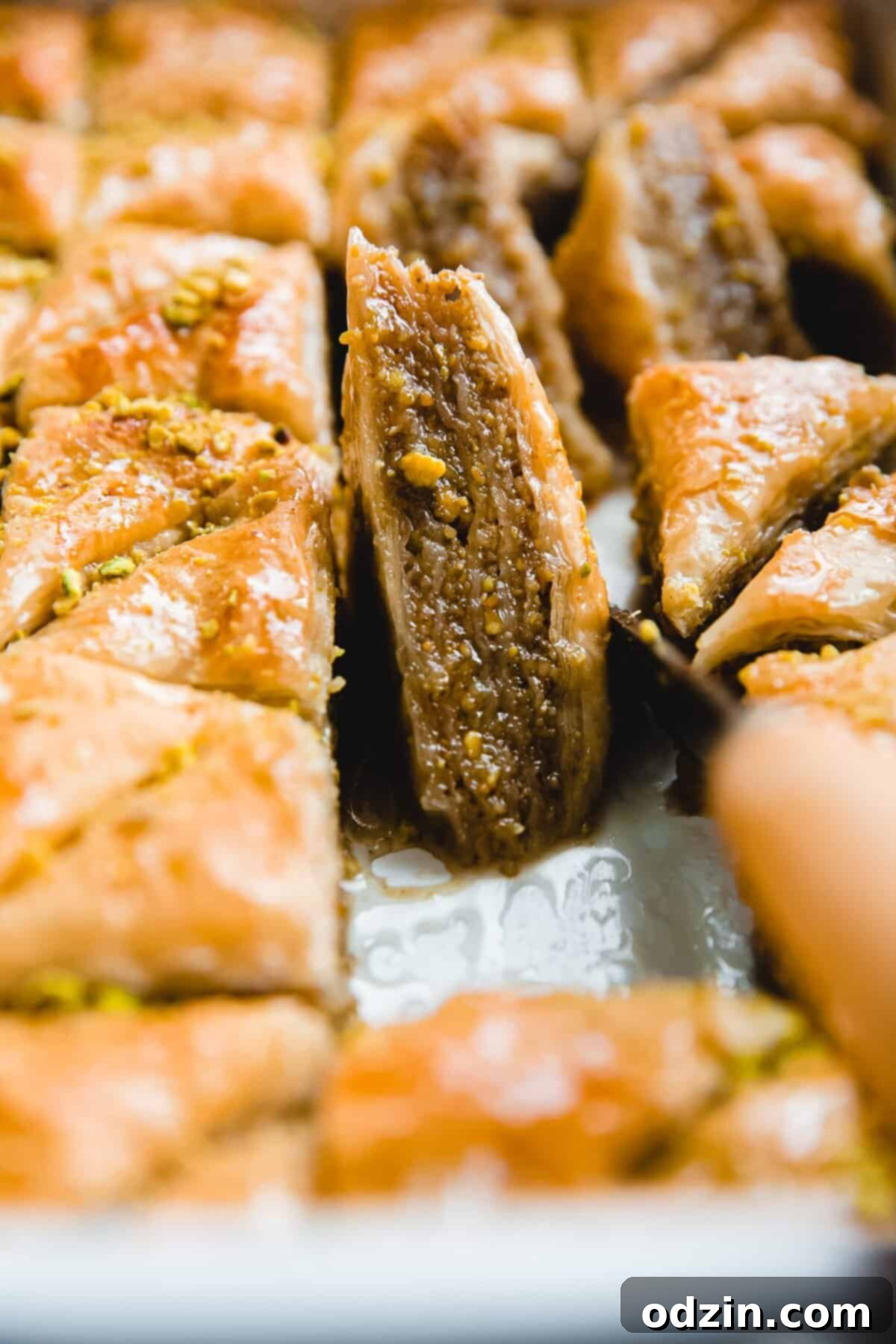
The Ultimate Guide to Authentic Homemade Baklava: Crispy Layers and Sweet Syrup Perfection
Embark on a culinary journey to create the most exquisite homemade baklava, featuring delicate layers of crispy, golden phyllo pastry generously filled with a rich mixture of ground walnuts and pistachios. Each bite is a symphony of textures, drenched in a fragrant, homemade simple syrup infused with honey, bright lemon juice, warm cinnamon, and exotic hints of orange blossom and rose water. Prepare to redefine your baklava expectations – this recipe promises an unforgettable experience!
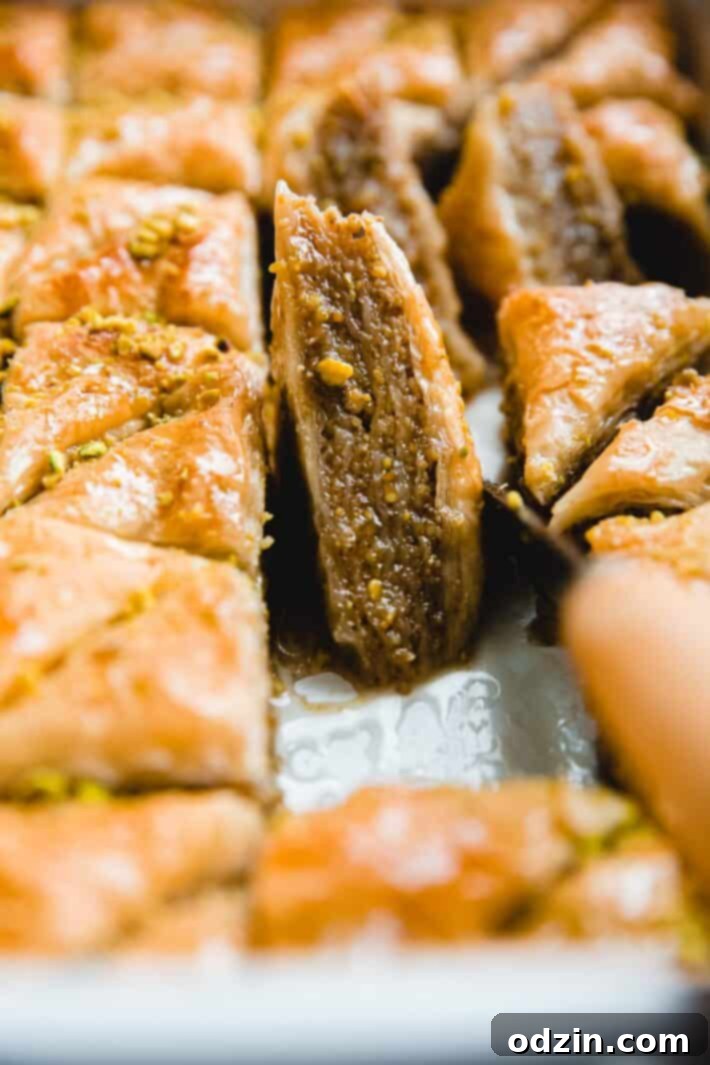
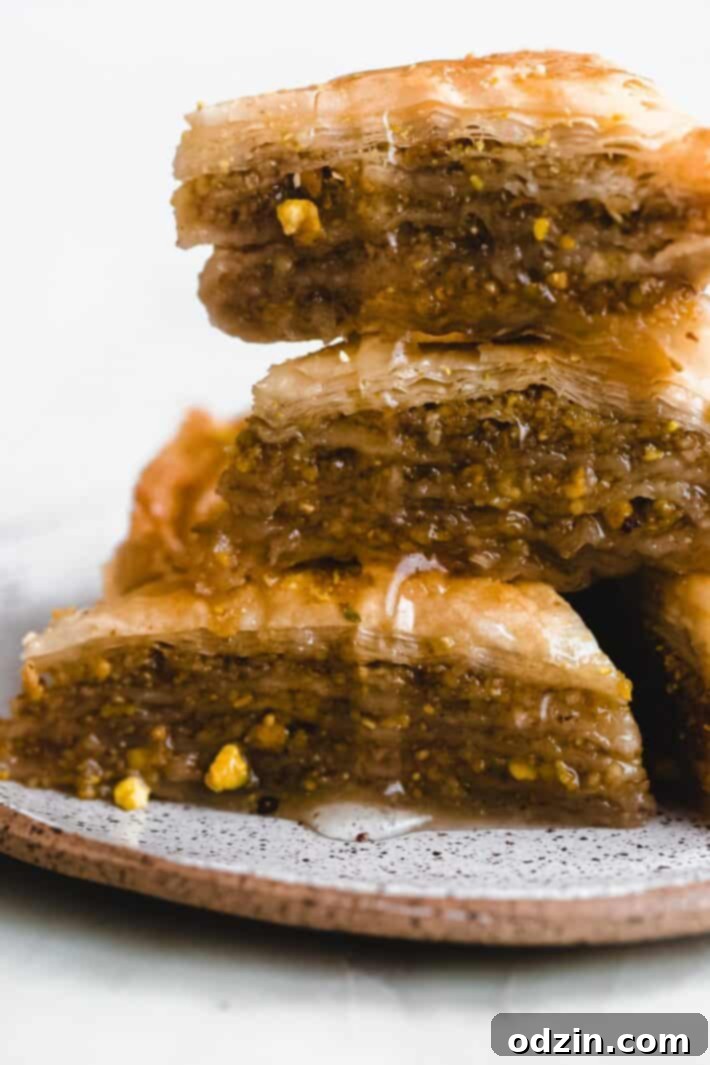
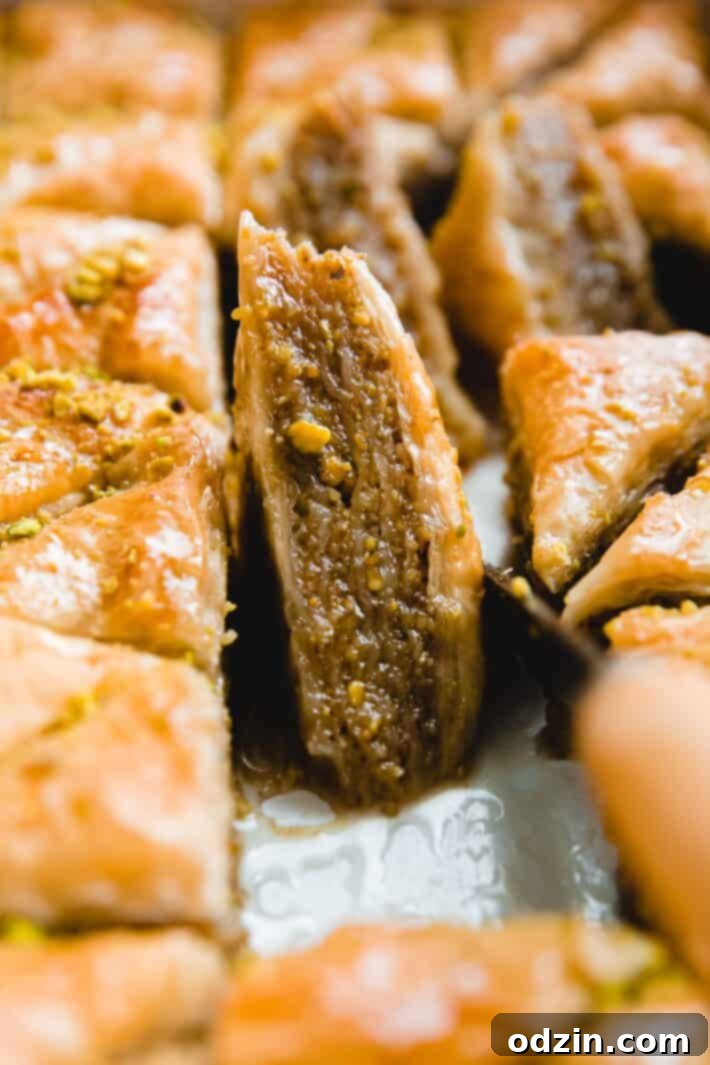
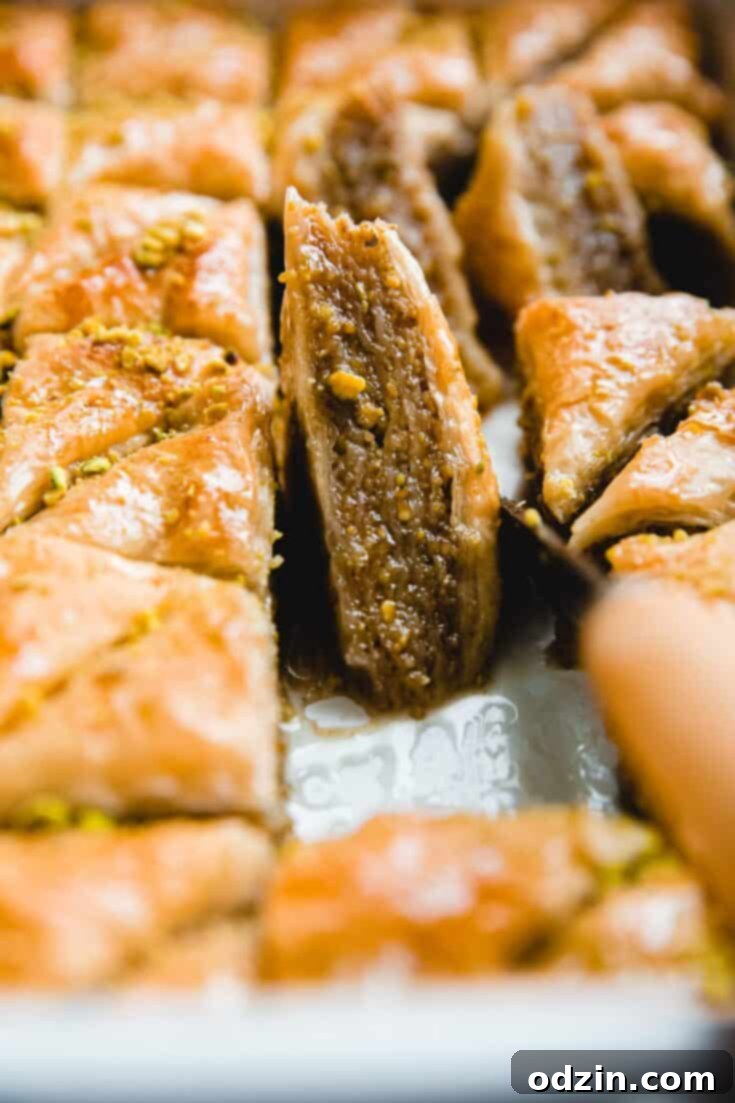
Baklava holds a revered spot among my all-time favorite desserts. Its allure lies in the masterful combination of butter-basted, impossibly thin phyllo dough layers, cradling a warmly spiced ground nut mixture. The sheer satisfaction of slicing into those perfectly segmented diamond or square pieces, revealing distinct layers of nuts and golden, flaky phyllo, is enough to make any dessert lover’s heart sing.
It’s important to acknowledge upfront that baklava, a dessert with deep historical roots across the Middle East, Balkans, and Mediterranean, boasts a multitude of regional variations. Each style carries its unique signature, often reflecting local ingredients and culinary traditions.
For instance, traditional Greek Baklava often features a more pronounced honey flavor in its simple syrup and a broader array of spices within the nut filling. Lebanese Baklava, or ‘Baklawa’ as it’s often called, frequently incorporates the delicate floral notes of orange blossom and rose water, creating a distinctly aromatic profile. The list of variations goes on, from the rich nut combinations of Turkish Baklava to various regional twists. While I cherish all forms of baklava, this particular recipe leans more towards a Lebanese-style baklava, subtly fragrancing its simple syrup with a delicate touch of orange blossom and a generous splash of rose water. If you’re searching specifically for a classic Greek rendition, this might not be your exact match, but I assure you, you won’t be disappointed by this alternative.
This recipe isn’t just a fleeting experiment; it’s a tried-and-true favorite that I’ve been perfecting and sharing for nearly a decade. It consistently garners rave reviews from everyone who tastes it. It’s become a cherished tradition in my home, a must-make during festive occasions like Thanksgiving, Christmas gatherings, and Eid celebrations. The result is consistently golden-brown, glistening squares, generously soaked in that captivating, honey-kissed syrup. The depth of flavor in this homemade baklava is truly unparalleled – it’s an experience that transcends the ordinary and transports you with every delicious bite!
Essential Ingredients for Crafting Baklava at Home
Creating authentic baklava from scratch requires a few key ingredients, each playing a crucial role in achieving that perfect balance of crispiness, sweetness, and aroma:
- Phyllo Dough Sheets: The foundation of baklava, phyllo (or ‘filo’) pastry is readily available in the frozen dessert aisle of most grocery stores. It’s vital to distinguish phyllo from puff pastry; while both are layered doughs, phyllo consists of extremely thin, almost transparent sheets with minimal fat, whereas puff pastry incorporates layers of butter, creating a much more significant puff when baked. For this recipe, ensure you procure genuine phyllo dough.
- Raw Nuts: The classic baklava filling traditionally utilizes a blend of walnuts and pistachios. For an extra decadent treat, I occasionally opt for 100% pistachios, a family favorite. However, a balanced 50:50 ratio of walnuts and pistachios delivers a truly beautiful flavor and texture. Using raw nuts is key, as they develop a richer, nuttier flavor as they toast gently during the baking process, unlike pre-roasted nuts which can become overly dark or bitter.
- Sugar: You’ll need a substantial amount of granulated sugar for two purposes: to create the luscious simple syrup that drenches the baked baklava, and a smaller quantity to sweeten and bind the ground nut mixture, enhancing its flavor.
- Melted Butter: Generous amounts of butter are essential for basting each delicate phyllo layer, contributing to the baklava’s signature crispiness and golden hue. Melted unsalted butter, clarified butter, or ghee are all suitable options. Clarified butter is often favored for its pure butterfat content and lack of water, which helps prevent sogginess. I often reach for European butter due to its lower water content compared to regular butter, which yields a flakier result.
- Ground Cinnamon: A generous pinch of aromatic cinnamon is incorporated into the ground nut mixture, lending a warm, comforting spice note. While you could double the amount for a bolder flavor, I find ½ teaspoon strikes the perfect balance, ensuring it enhances rather than overpowers the other ingredients.
- Lemon Juice: Freshly squeezed lemon juice is a vital component of the simple syrup. It not only adds a bright, zesty counterpoint to the sweetness but also helps prevent the syrup from crystallizing, ensuring a smooth, glossy finish.
- Honey: A couple of tablespoons of honey are added to the simple syrup, contributing a beautiful depth of flavor and a natural sweetness. While Greek baklava typically features a higher ratio of honey, this recipe finds that two tablespoons are more than sufficient to impart its distinctive character without overwhelming the other delicate flavors.
- Exotic Spices & Flavorings: To achieve the unique aromatic profile of this Lebanese-style baklava, I include a couple of cardamom pods in the simple syrup as it simmers. Cardamom, with its sweet and pungent notes, is optional but highly recommended for an authentic touch. Additionally, a splash of fragrant rose water and the delicate floral essence of orange blossom water are stirred into the cooled syrup. The orange blossom water is also optional, but together, these two floral waters evoke the enchanting flavors of my favorite Middle Eastern dessert shops in Houston, elevating the baklava to another level of deliciousness. You can find my preferred brand for both of these exquisite ingredients linked here.
Step-by-Step Guide: Crafting Homemade Baklava
Follow these detailed steps to create a truly spectacular baklava right in your own kitchen:
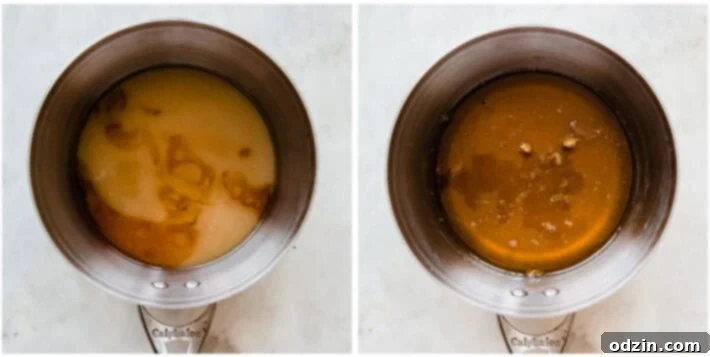
- Prepare the Aromatic Simple Syrup: Begin by combining 2 cups of sugar, 1 cup of water, lemon juice, honey, and the optional cardamom pods (lightly crushed to release their flavor) in a medium saucepan. Bring the mixture to a rolling boil over medium-high heat. Once boiling, reduce the heat to medium-low, allowing it to gently simmer for 12 minutes. This simmering process concentrates the flavors and thickens the syrup. Remove the saucepan from the heat, stir in the orange blossom water and rose water, then carefully remove the cardamom pods. Allow the simple syrup to cool completely to room temperature. It will continue to thicken as it cools. Note: My syrup often appears slightly darker than typical white sugar syrups because I prefer to use cane sugar in all my recipes, which imparts a deeper caramel hue.
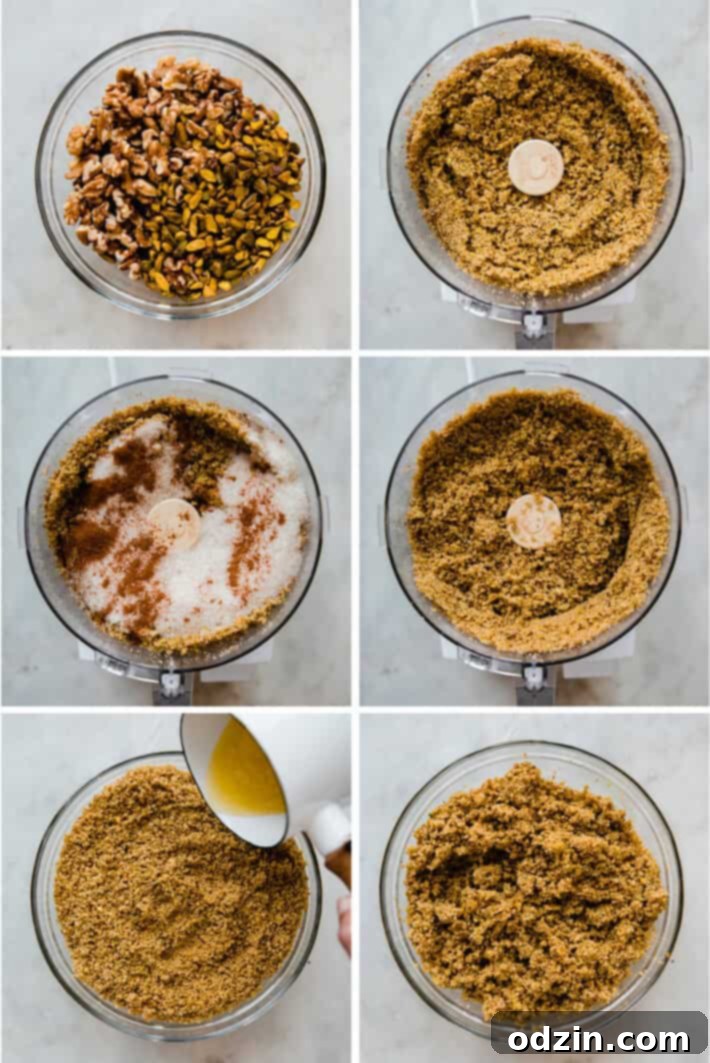
- Ready the Baking Dish and Nut Filling: While the syrup cools, position an oven rack in the center and preheat your oven to 350°F (175°C). Lightly spray a 13×9 inch baking pan with cooking spray and set it aside. In a food processor, pulse the raw nuts until they achieve a coarsely ground texture – you want small pieces with some bite, not a fine powder. This texture is crucial for a superior baklava. Transfer the ground nuts to a medium bowl, then add ½ cup of sugar, 4 tablespoons of melted butter, and the ground cinnamon. Stir well or pulse for just a few seconds more in the food processor to ensure all ingredients are evenly combined.
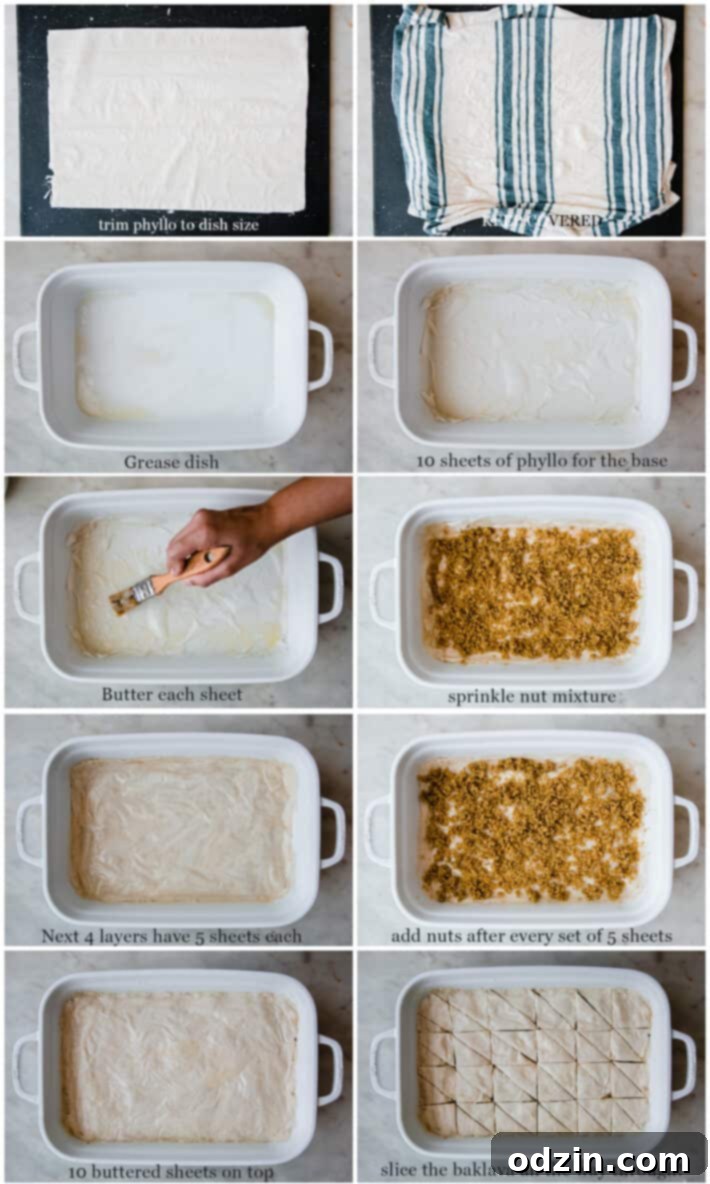
- Assemble the Phyllo Layers: Carefully remove the thawed phyllo dough from the refrigerator and lay it flat on a clean, dry work surface. Place your baking pan on top of the phyllo sheets to measure and trim any excess dough that extends beyond the pan’s dimensions. Do not discard these trimmings; they can be useful later! Immediately cover the stack of phyllo dough with a lightly damp kitchen towel to prevent it from drying out and becoming brittle while you work.
Now, begin layering: Place the first sheet of phyllo into the prepared baking dish. Using a pastry brush, generously brush the entire surface with melted butter. Repeat this process for 9 more sheets, ensuring each layer is individually buttered (for a total of 10 buttered phyllo sheets at the base). Evenly sprinkle ¾ cup of the prepared nut mixture over the 10th phyllo layer. Continue layering with 5 sheets of buttered phyllo, followed by ¾ cup of nut mixture, repeating this sequence four times. The top layer will conclude with another 10 sheets of buttered phyllo, mirroring the base. (Detailed layering structure is provided in the “How to Make Layers” section below for clarity.)
- Cut and Bake to Golden Perfection: Once all layers are assembled, generously brush the very top phyllo sheet with any remaining melted butter. Before baking, it’s crucial to cut the baklava. Using a sharp knife, carefully cut the baklava into 4 even strips lengthwise. Then, turn the pan and cut diagonally across these strips to create traditional diamond shapes, or make 6 crosswise cuts and then cut diagonally through those for more triangular pieces, as I often do. This pre-cutting step is essential because the baked phyllo layers become incredibly crispy and difficult to slice cleanly. Bake in the preheated oven for 40-50 minutes, or until the top layers are beautifully golden brown and crispy.
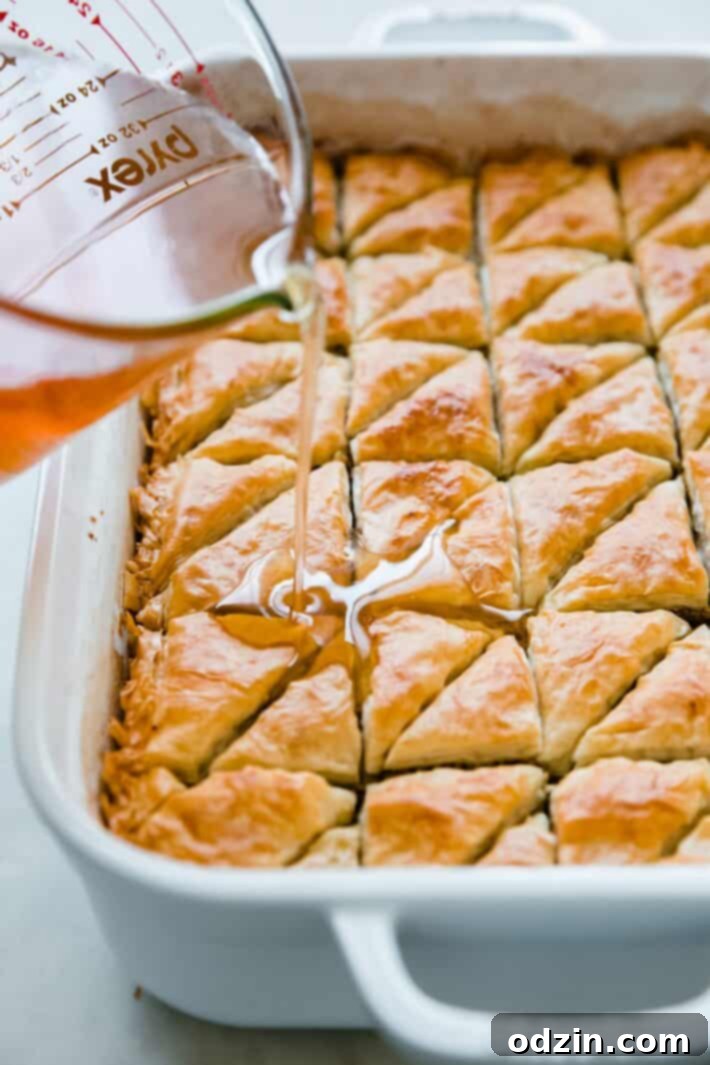
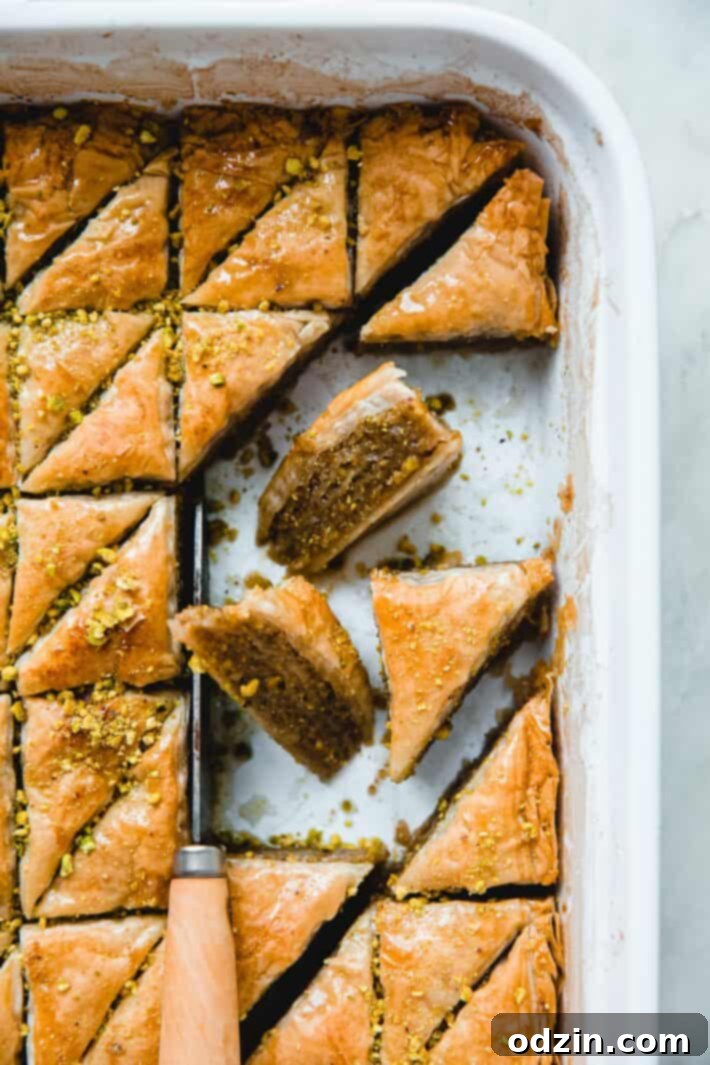
- Saturate with Syrup and Rest: Immediately upon removing the hot baklava from the oven, evenly pour the cooled, room-temperature simple syrup over the entire surface. The sizzling sound confirms the hot baklava is eagerly absorbing the cool syrup, a crucial step for achieving that perfect texture. Allow the baklava to sit undisturbed for at least 6 hours – for the absolute best results, I highly recommend letting it rest overnight. This extended resting period allows the syrup to fully penetrate and soften the nuts while keeping the phyllo layers wonderfully crisp. Once the baklava has cooled to room temperature, loosely drape it with a clean cloth to protect it. Garnish with additional chopped nuts or delicate dried rose petals before serving. Leftover baklava can be stored, loosely covered, at room temperature for up to 1½ weeks, maintaining its delightful crispiness.
Expert Tips for Making the Best Baklava Recipe:
Achieving baklava perfection is within reach with these helpful tips:
- Phyllo vs. Puff Pastry – Know the Difference: These two doughs are distinct, even if found near each other in the freezer aisle. Puff pastry contains butter laminated between its layers, yielding a significant rise. Phyllo, however, is incredibly thin, delicate, and has very little fat, creating crisp, separate sheets. Always use phyllo for baklava.
- Start with the Simple Syrup (and Mind the Temperature!): Always make your simple syrup first and allow it to cool completely to room temperature. The golden rule for baklava is: hot baklava, room-temperature syrup. Pouring hot syrup over hot baklava can lead to a soggy result because the hot pastry cannot absorb the syrup properly.
- Choose Raw Nuts for Superior Flavor: Opt for raw, unroasted nuts. As they bake within the baklava, these raw nuts toast gently, developing a rich, nuanced nutty flavor and aroma that perfectly complements the dessert. Roasted nuts, on the other hand, might over-darken or develop an overly strong flavor during the 40-50 minutes of baklava baking.
- Keep Phyllo Dough Covered with a Damp Towel: Phyllo dough dries out incredibly quickly when exposed to air, becoming brittle and prone to tearing. To prevent this, keep your stack of phyllo sheets covered with a lightly damp (not wet) kitchen towel at all times while you are working on layering.
- Mastering the Art of Layering Phyllo: The very first phyllo sheet after you’ve sprinkled nuts can sometimes be tricky to brush with butter due to the slightly uneven surface. My secret is to gently ‘stipple’ the brush over this layer, dabbing the butter on rather than using a broad brushstroke. From the second sheet onwards, it should be much easier to brush smoothly.
- Don’t Discard Phyllo Trimmings Prematurely: Hold onto every scrap of phyllo until you’ve successfully completed the layering process. Occasionally, a box might be short a sheet or two, or a sheet might tear beyond repair. In such cases, trimmings can be carefully combined to form makeshift layers, ensuring you have enough for your masterpiece.
- Pre-Cut Baklava Before Baking: This is a non-negotiable step! Baked phyllo layers become incredibly crisp and difficult to cut cleanly without shattering. Scoring and cutting your baklava into desired shapes (diamonds, squares) before it goes into the oven ensures clean, perfect pieces once it’s baked.
- Optimal Baklava Storage for Crispiness: To maintain the crisp, flaky texture of your baklava, avoid covering the baking dish tightly with plastic wrap. This traps moisture, which can lead to soggy phyllo layers. Instead, loosely drape a clean tea towel over the top of the dish. This allows for some air circulation while keeping the baklava fresh.
Detailed Baklava Layering Structure:
For a perfectly balanced baklava with distinct layers of phyllo and nuts, follow this precise layering guide:
- 10 sheets phyllo (butter between each layer)
- ¾ cup nut filling
- 5 sheets phyllo (butter between each layer)
- ¾ cup nut filling
- 5 sheets phyllo (butter between each layer)
- ¾ cup nut filling
- 5 sheets phyllo (butter between each layer)
- ¾ cup nut filling
- 5 sheets phyllo (butter between each layer)
- ¾ cup nut filling
- 10 sheets phyllo (butter between each layer)
Recommended Kitchen Equipment for Homemade Baklava:
Having the right tools can make the baklava-making process much smoother and more enjoyable:
- 12×9 or 13×9 inch Baking Dish: A sturdy, rectangular baking dish is essential for assembling and baking your baklava. A standard 13×9 inch pan works perfectly for this recipe.
- Damp Kitchen Towel: Crucial for keeping your delicate phyllo dough covered and pliable, preventing it from drying out as you meticulously butter each layer.
- Food Processor: An indispensable tool for quickly and efficiently pulsing the nuts into the ideal coarse consistency for your baklava filling.
- Sharp Knife: A good quality, sharp knife is paramount for cleanly cutting the baklava into its characteristic shapes before baking, ensuring crisp edges and preventing crumbling.
How to Make Baklava (Baklawa)
30 minutes
40 minutes
6 hours
7 hours 10 minutes
This exquisite homemade baklava begins with delicate layers of crispy, golden phyllo pastry, generously filled with a rich, cinnamon-scented blend of ground walnuts and pistachios. Each piece is then drenched in a fragrant, homemade simple syrup, beautifully infused with honey, bright lemon juice, and exotic hints of orange blossom and rose water. Trust me, this isn’t just baklava; it’s an unforgettable culinary experience!
Ingredients
- 1 lb. (approx. 40 sheets) phyllo dough, thawed thoroughly in the refrigerator overnight
- 1 lb. raw nuts (a blend of 50% walnuts and 50% pistachios is recommended, or all pistachios for a richer flavor)
- 2 ½ cups granulated sugar, divided
- 1 ¼ cups unsalted butter, melted (clarified butter or ghee can also be used for optimal results)
- ½ teaspoon ground cinnamon
- 2 tablespoons fresh lemon juice
- 2 tablespoons honey
- 2 whole cardamom pods, lightly smashed (optional, but highly recommended for authentic flavor)
- 1 tablespoon orange blossom water (optional, but enhances the Middle Eastern aroma)
- 2 tablespoons rose water
Instructions
- FOR THE SYRUP: In a medium saucepan, combine 2 cups of sugar, 1 cup of water, lemon juice, honey, and the smashed cardamom pods (if using). Place the saucepan over medium-high heat and bring the mixture to a rolling boil. Once boiling, reduce the heat to medium-low to maintain a gentle simmer. Allow the syrup to simmer for 12 minutes. Remove the saucepan from the heat, then stir in the orange blossom water and rose water. Carefully remove and discard the cardamom pods. Set the syrup aside to cool completely to room temperature; it will thicken further as it cools.
- PREPARATION: Adjust an oven rack to the center position and preheat your oven to 350ºF (175ºC). Lightly spray a 13×9 inch baking dish with cooking spray; set this prepared dish aside.
- FOR THE NUT FILLING: Using a food processor, pulse the raw nuts until they are finely ground but still retain some texture, avoiding over-processing into a powder. Transfer the ground nuts to a medium bowl. Add the remaining ½ cup of sugar, 4 tablespoons of melted butter, and the ground cinnamon. Stir well to ensure all ingredients are thoroughly combined.
- PHYLLO DOUGH HANDLING: Lay the thawed phyllo dough flat on a clean work surface. Use your baking pan as a guide to trim any phyllo sheets that are larger than the pan dimensions; retain these trimmings for potential use. Crucially, keep the entire stack of phyllo covered with a lightly damp kitchen towel as you work to prevent it from drying out and becoming brittle.
- LAYER THE BAKLAVA: Place the first sheet of phyllo into the prepared baking dish. Brush generously and evenly with melted butter. Repeat this step for 9 more sheets (creating a base of 10 buttered phyllo sheets). Evenly sprinkle ¾ cup of the prepared ground nut mixture over the 10th phyllo layer. For the next four sections, alternate with 5 sheets of buttered phyllo (buttering each sheet individually) followed by ¾ cup of nut filling. The final top layer will consist of 10 sheets of phyllo, each buttered, just like the bottom layer. (Refer to the “Detailed Baklava Layering Structure” section above for a precise guide.)
- CUT AND BAKE: After assembling all layers, brush the very top phyllo sheet generously with any remaining melted butter. Using a sharp knife, carefully cut the baklava into 4 strips lengthwise. Then, turn the pan and cut diagonally to create traditional diamond shapes, or make 6 crosswise cuts and then cut those down the center for triangular pieces. Bake for 40-50 minutes, or until the top is beautifully golden brown and crisp. Remove the baklava from the oven immediately.
- SYRUP AND REST: While the baklava is still hot from the oven, immediately and evenly pour the cooled, room-temperature simple syrup over the entire surface. This temperature difference is crucial for perfect absorption. Allow the baklava to sit and absorb the syrup for at least 6 hours, or ideally, overnight, for the best possible results. Once the baklava reaches room temperature, loosely cover the dish with a clean cloth to prevent sogginess. Before serving, you can garnish with additional chopped nuts or delicate dried rose petals. Leftover baklava can be stored, loosely covered, at room temperature for up to 1½ weeks, maintaining its delightful crispiness.
Notes
Baklava Layers (for clarity):
10 sheets phyllo (butter in between)
¾ cup filling
5 sheets phyllo (butter in between)
¾ cup filling
5 sheets phyllo (butter in between)
¾ cup filling
5 sheets phyllo (butter in between)
¾ cup filling
5 sheets phyllo (butter in between)
¾ cup filling
10 sheets phyllo (butter in between)
- Cardamom Alternatives: If you don’t have whole cardamom pods, you can substitute with a pinch (about ⅛ to ¼ teaspoon) of ground cardamom in the simple syrup.
- A Touch of Salt: For an enhanced flavor profile, consider adding a tiny pinch of fine sea salt to both the nut mixture when processing and to the melted butter that you brush between the phyllo layers. This optional addition helps to subtly cut through the sweetness and allows the other flavors to truly shine.
Recommended Products
- Cardamom Pods
- Rose + Orange Blossom
- Chef’s Knife
- Flour Sack Towels
- 9 x 13 Baking Pan
- 1½ Qt Saucepan
Have you made this recipe?
If you enjoyed this recipe, please consider leaving a ⭐️⭐️⭐️⭐️⭐️ rating and a comment below. You can also share a picture on Instagram with the hashtag #LITTLESPICEJAR, I’d love to see what you made!