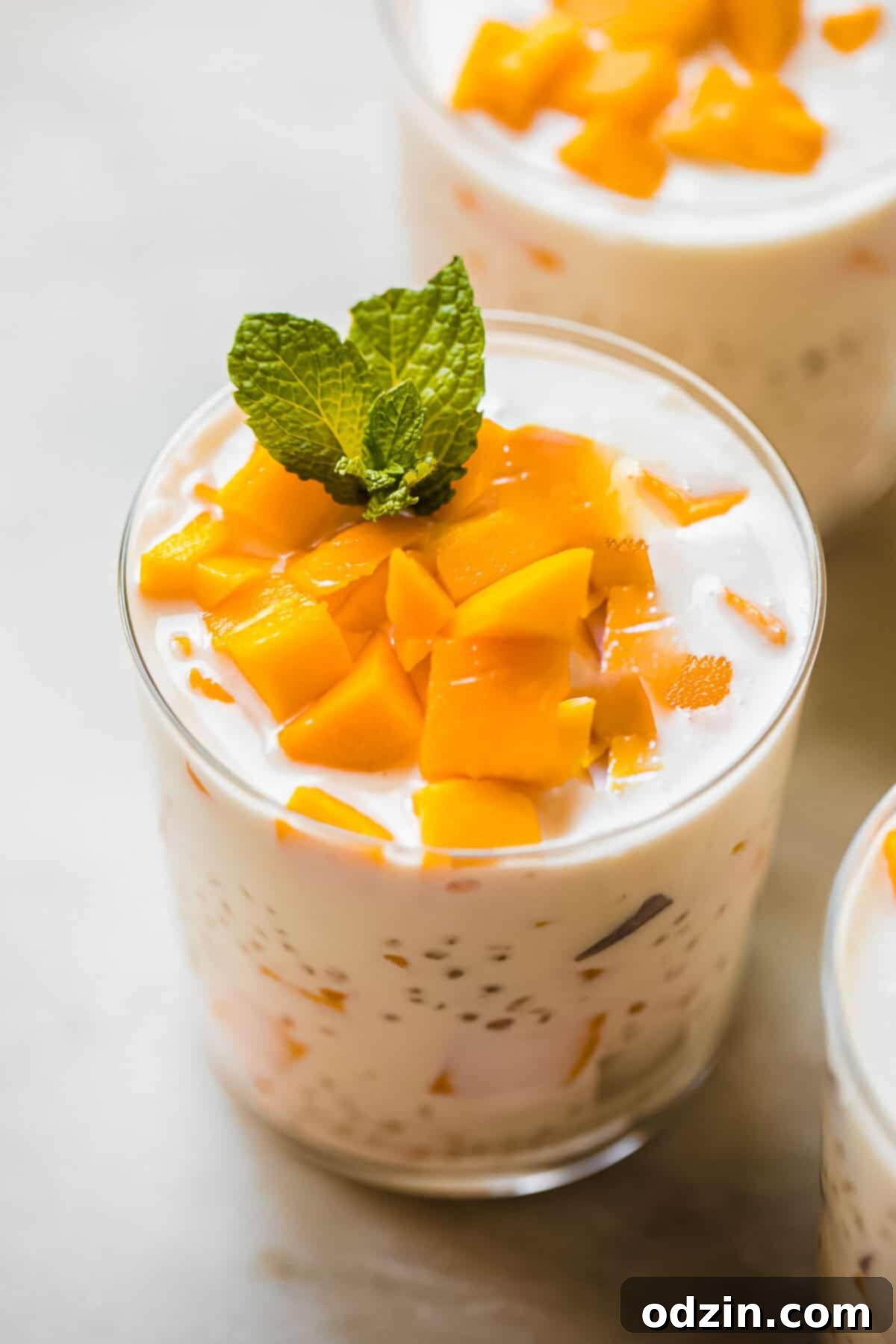
Indulge in Creamy Mango Sago (Mango Bango): The Ultimate Tropical Dessert Recipe
Prepare your taste buds for an unforgettable journey with Mango Bango, also known as Mango Sago Dessert! This exquisite creation is a lusciously creamy, coconut milk-based pudding, generously studded with chewy tapioca pearls, delightful coconut jelly, and an abundance of freshly diced, sweet mangoes. It’s truly the most delightful, spoonable dessert you never knew you needed, promising a burst of tropical flavors in every bite!
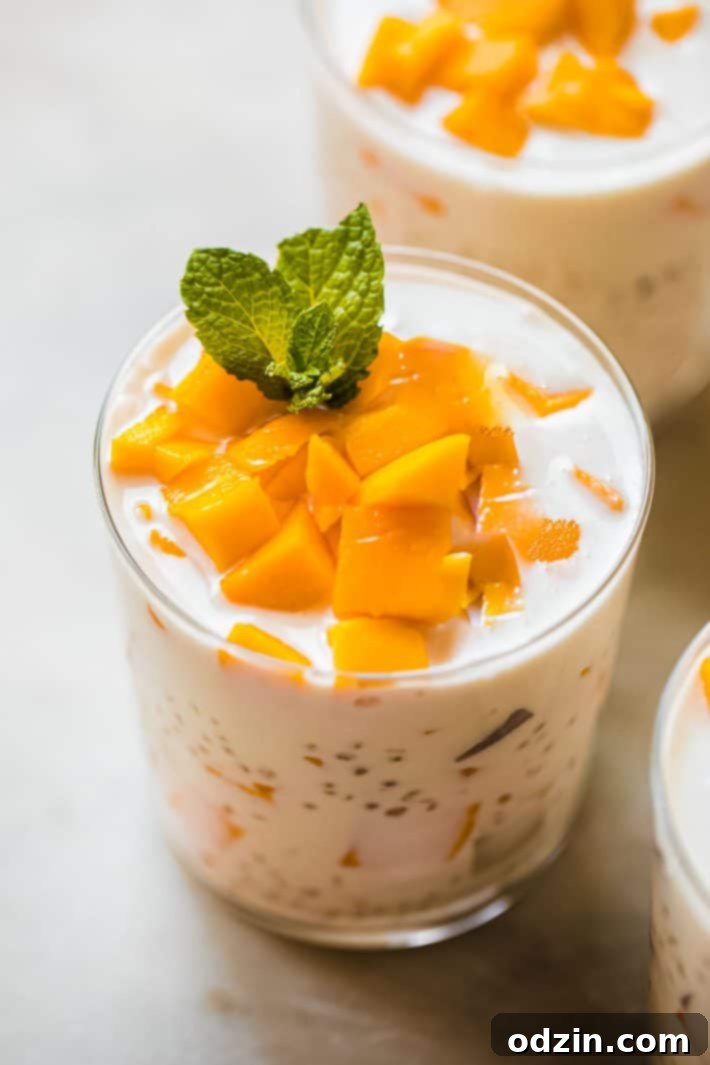
If only the mango season lasted all year round! For those of us who adore this golden fruit, the arrival of ripe, juicy mangoes is a cause for celebration. There’s something undeniably magical about the sweet, fragrant flesh of a perfectly ripened mango that instantly transports you to a tropical paradise.
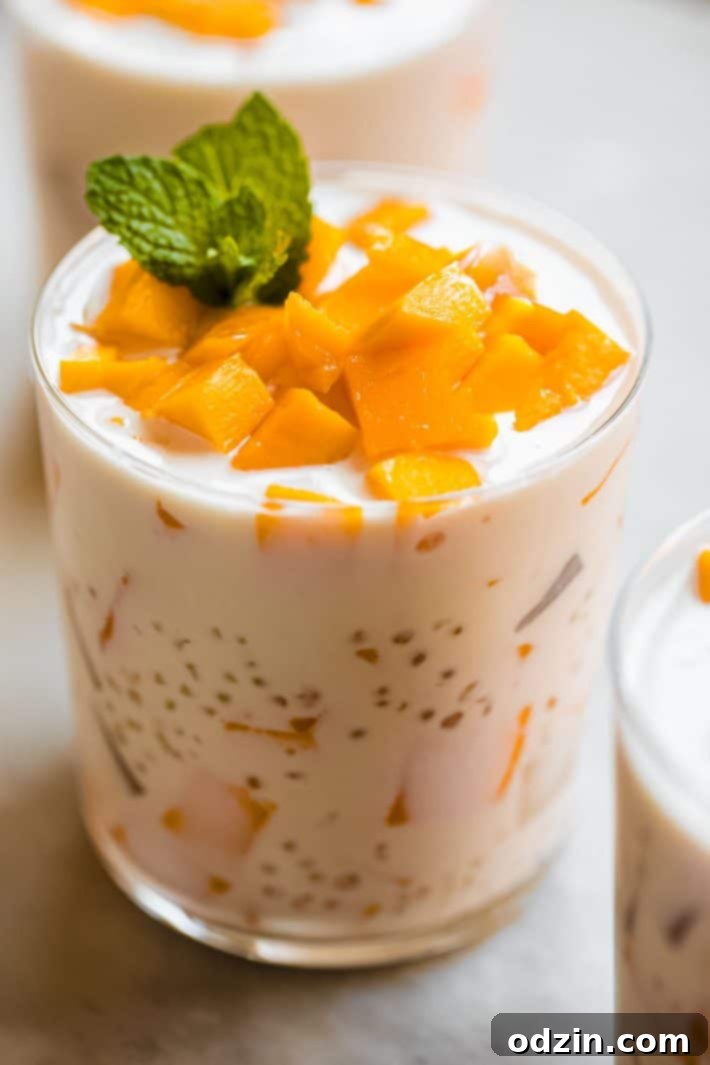
Perhaps it’s my deeply rooted Asian heritage, but I could genuinely enjoy a mango every single day without ever growing tired of its vibrant flavor. Especially when that mango is expertly diced and delicately placed atop a heavenly cup of condensed milk-sweetened coconut tapioca pudding. This irresistible base is further enhanced with bouncy nata de coco (coconut jelly) pieces and, of course, brimming with extra-sweet, succulent mango cubes, ensuring a truly immersive mango experience.
Mango Bango, fondly referred to as Mango Sago, is more than just a dessert; it’s an experience. Originating from Hong Kong and widely embraced across Southeast Asia, particularly in the Philippines, this refreshing pudding is guaranteed to become your new favorite dessert, perfect for any occasion, from casual gatherings to elegant dinner parties.
Key Ingredients for the Perfect Mango Sago
Crafting this delightful Mango Sago dessert requires a handful of simple yet essential ingredients. Each component plays a crucial role in achieving the perfect balance of texture, sweetness, and tropical flavor. Let’s delve into what you’ll need and some tips for selecting the best quality.
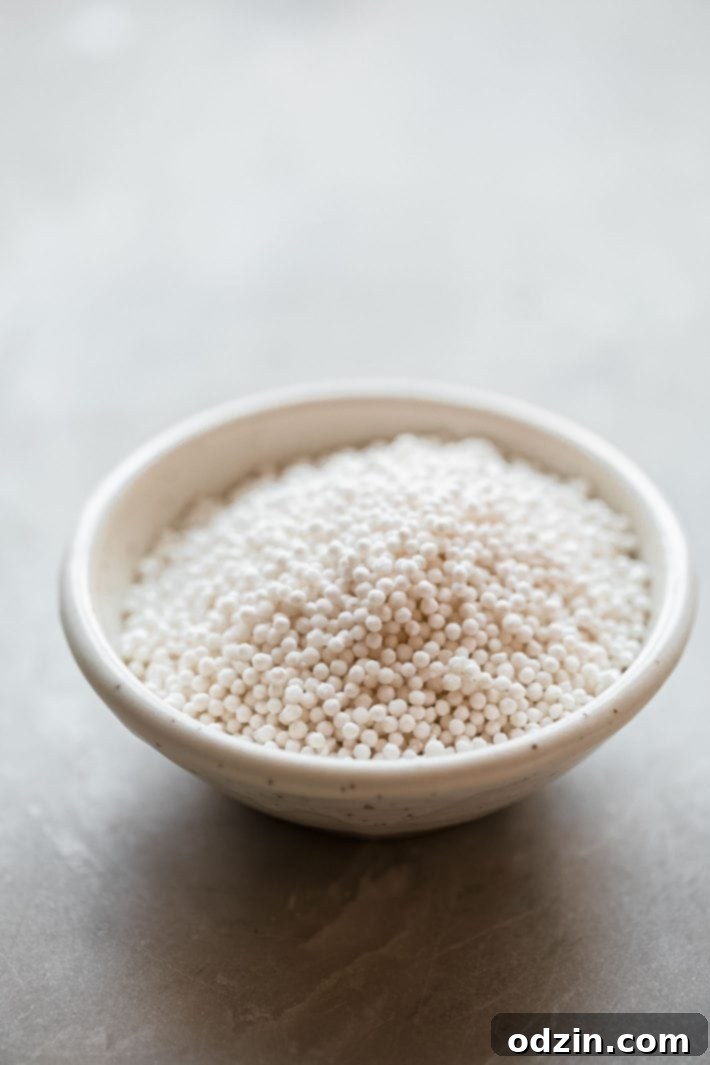
- Tapioca Pearls: The star of the pudding’s texture, tapioca pearls add a wonderfully chewy and gelatinous consistency. For this recipe, mini sago or small tapioca pearls are highly recommended as they integrate seamlessly into the pudding, making each spoonful effortless and enjoyable. While larger pearls can be used, smaller ones offer a more delicate mouthfeel. You can easily purchase small tapioca pearls online here or find them in most Asian grocery stores. Be sure to check the cooking instructions on the package as cooking times can vary based on size.
- Fresh Mangoes: The heart and soul of Mango Bango, fresh, ripe mangoes are non-negotiable for an authentic taste. Manila mangoes (also known as Ataulfo or Honey mangoes) are the traditional choice due to their incredibly sweet, non-fibrous flesh and vibrant color. If Manila mangoes are hard to find in your region, Champagne mangoes are an excellent substitute, offering a similar sweetness and smooth texture. Always choose mangoes that are slightly soft to the touch and have a fragrant aroma for the best results.
- Nata de Coco (Coconut Jelly): This unique ingredient introduces another layer of delightful chewiness and a subtle coconut flavor. Nata de Coco is a chewy, translucent, jelly-like food product made from fermented coconut water. Its slightly firm yet yielding texture provides a fantastic contrast to the soft tapioca pearls and creamy pudding. You can typically find jars of coconut gel in syrup at most Asian specialty stores or conveniently order it online here. Remember to drain it thoroughly before adding to the dessert.
- Milk Products: The creamy base of this dessert is incredibly versatile, allowing you to customize it to your preference. I personally love a rich blend of full-fat coconut milk (sometimes boosted with a dollop of coconut cream) to infuse that distinct tropical flavor, then thinned with half and half for a silky-smooth consistency. Other popular variations include using evaporated milk, or a combination of coconut milk and regular dairy milk.
For our dairy-free and vegan friends, this recipe is easily adaptable! Simply substitute the half and half with a plant-based alternative like soy half and half, and use a high-quality dairy-free condensed milk to maintain the sweetness and texture. - Condensed Milk: Beyond just sweetness, condensed milk plays a crucial role in achieving the perfect creamy texture for Mango Bango. Its thick, syrupy consistency enriches the pudding without diluting it, unlike granulated sugar which can thin out the mixture. Feel free to use regular sweetened condensed milk or opt for a non-dairy variety if you’re making a vegan version. Always taste and adjust the amount to suit your desired level of sweetness, as mangoes can vary in their natural sugar content.
Tips for Success! Have leftover condensed milk and looking for delicious ways to use it up? Don’t let it go to waste! Try these fantastic recipes: Classic Banana Pudding, Creamy Coconut Popsicles, Zesty Lemon Squares, Refreshing Key Lime Pie Bars, and Rich Homemade Fudge.
Crafting Your Own Mango Bango: A Step-by-Step Guide
Making Mango Bango is surprisingly simple and requires no baking, making it an ideal make-ahead dessert. Follow these detailed steps to create this refreshing tropical treat that will impress everyone.
- Prepare the Tapioca Pearls: Begin by boiling water in a medium saucepan. Once boiling, add the tapioca pearls. Cook them for approximately 8-10 minutes over medium-high heat, stirring frequently to prevent sticking. The pearls should become mostly translucent with a tiny white dot in the center. After cooking, remove the pot from the heat, cover it with a tight-fitting lid, and let the pearls rest for another 10-15 minutes. This crucial step allows them to plump up and cook through without becoming mushy.
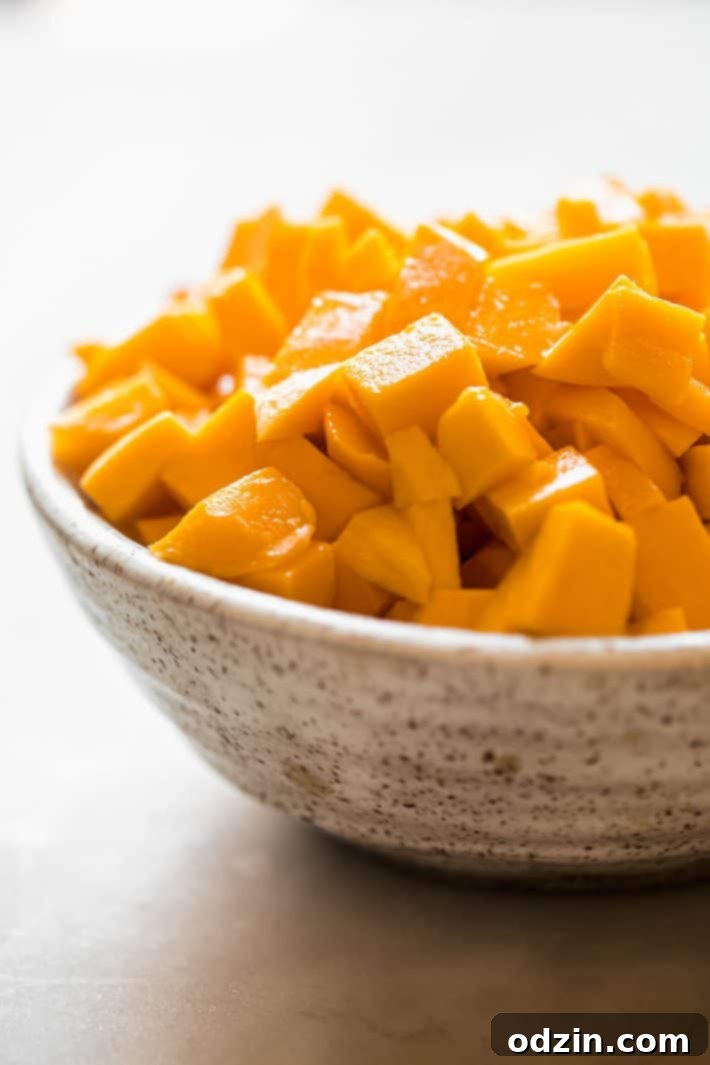
- Dice the Mango: While your tapioca pearls are resting and expanding, take this time to prepare your mangoes. First, carefully peel the mangoes using a vegetable peeler. Then, slice the smooth flesh away from the pit. Dice the mango flesh into small, bite-sized cubes. Reserve some for garnish if desired.
- Rinse the Tapioca Pearls: This step is vital for achieving the perfect texture. Gently drain the cooked tapioca pearls into a fine-mesh colander. Rinse them thoroughly under cold running water, stirring gently with your hands. Continue rinsing until the water runs clear and most of the excess starch has been washed away. You’ll notice the pearls become perfectly spherical and less sticky. This process also cools them down to room temperature.
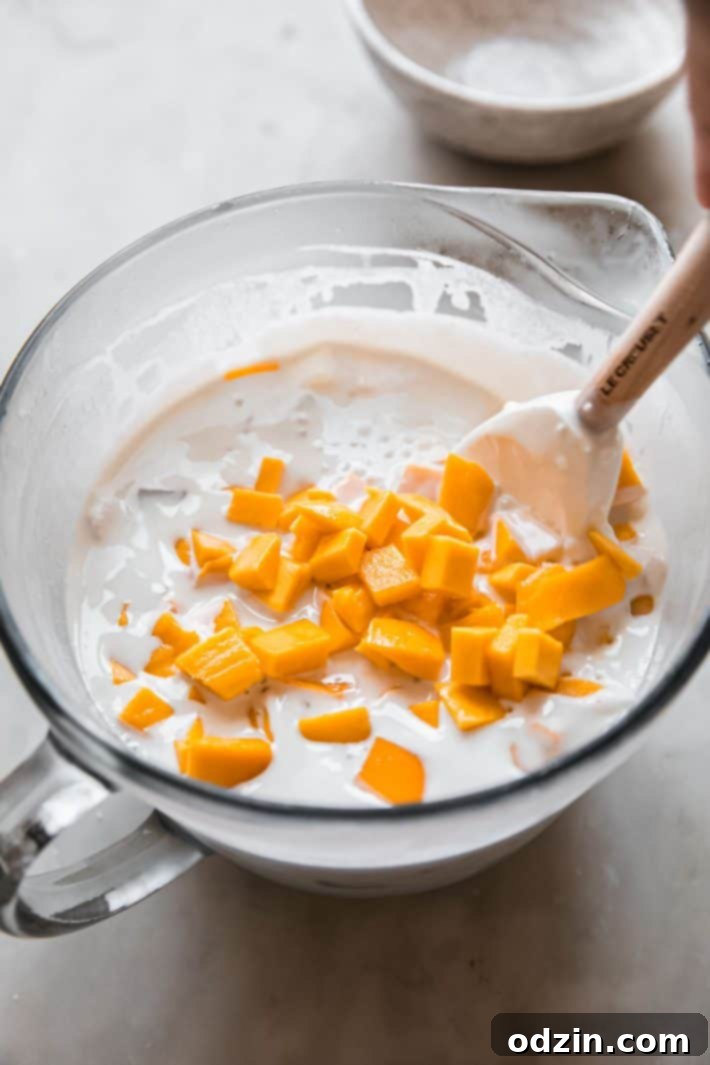
- Assemble the Mango Bango Base: Transfer the rinsed and cooled tapioca pearls to a large mixing bowl. Add the drained nata de coco, full-fat coconut milk, half and half, and the initial amount of condensed milk. Stir all the ingredients together until well combined and the mixture is smooth. Now, taste the pudding. This is your chance to adjust the sweetness! Add more condensed milk, a tablespoon at a time, until it reaches your desired level of sweetness.
- Incorporate Mango and Chill: Once the pudding base is perfectly sweetened and textured to your liking, gently fold in the majority of the diced fresh mangoes. Stir just enough to distribute them evenly throughout the pudding. Cover the bowl tightly with plastic wrap and transfer it to the refrigerator. Allow the dessert to chill for at least 4 hours, or ideally 6-8 hours. This chilling time is essential for the pudding to thicken and for the flavors to meld beautifully, making it an ideal make-ahead dessert!
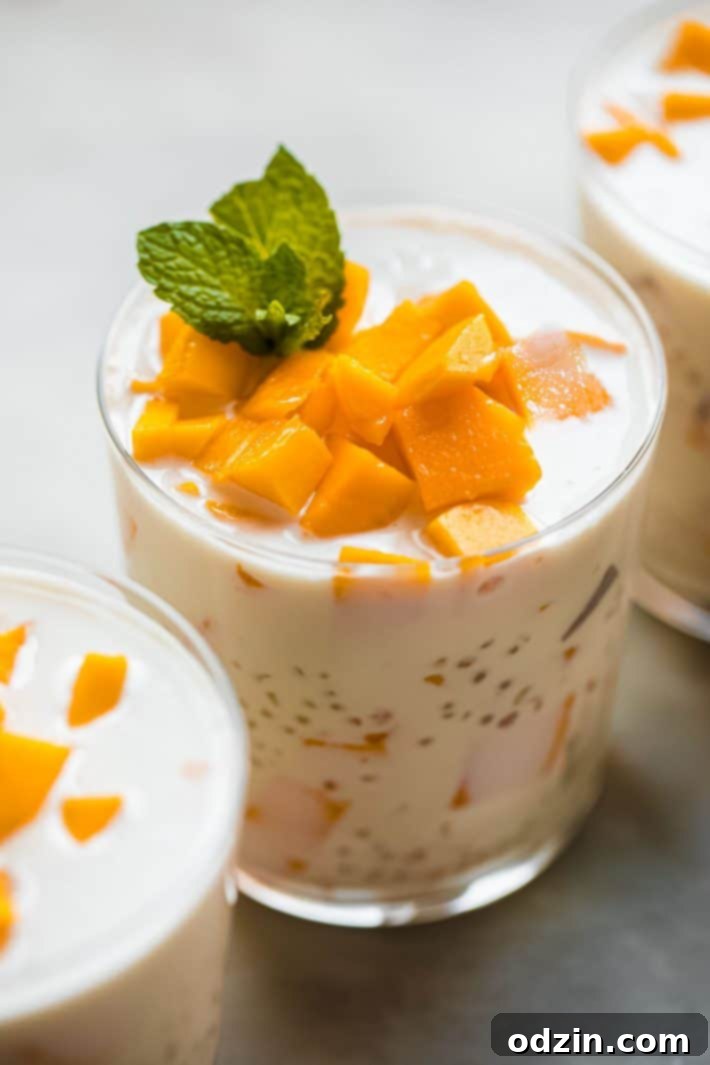
- Serve it Up: Once thoroughly chilled and thickened, your Mango Sago is ready to be enjoyed! Spoon this delectable dessert into your favorite individual dessert cups or bowls. For an extra touch of elegance and flavor, garnish each serving with additional fresh mango chunks, a vibrant sprig of mint, or a sprinkle of toasted coconut flakes. Serve immediately and savor the tropical delight!
For precise measurements and a printable recipe card, please refer to the section below.
Expert Tips for a Flawless Mango Sago
While Mango Bango is relatively straightforward to make, a few insider tips can elevate your dessert from good to absolutely extraordinary:
- Choose Ripe Mangoes: This cannot be stressed enough. The success of this dessert hinges on the quality and sweetness of your mangoes. Avoid under-ripe or overly fibrous varieties.
- Don’t Overcook Tapioca: Pay attention to the tapioca pearls. Overcooking can make them mushy and lose their delightful chew. The resting period off the heat is crucial for them to finish cooking gently.
- Thorough Rinsing is Key: Rinsing the tapioca well removes excess starch, preventing the pudding from becoming gummy and ensuring each pearl remains distinct and chewy.
- Chill Time is Essential: Do not rush the chilling process. The pudding needs ample time in the refrigerator to thicken properly and for all the flavors to deepen and meld together. It truly tastes best when thoroughly cold.
- Taste and Adjust: Always taste the base mixture before chilling and adjust the condensed milk to your preference. Mangoes vary in sweetness, so your pudding might need a little more or less.
Variations and Customizations for Your Mango Sago
While the classic Mango Sago is a timeless delight, don’t hesitate to get creative and personalize your dessert with these exciting variations:
- Tropical Fruit Medley: Enhance the tropical vibe by adding other diced fruits like lychees, passion fruit pulp, or pineapple chunks alongside the mango.
- Spice it Up: A tiny pinch of cardamom or a drop of vanilla extract can add an interesting depth of flavor to the coconut milk base.
- Extra Richness: For an even creamier, more decadent pudding, incorporate a small amount of heavy cream or extra coconut cream into the mixture.
- Sweetened Coconut Milk: Some recipes call for a combination of plain coconut milk and sweetened coconut milk for an even richer coconut flavor.
- Textural Additions: Garnish with toasted coconut flakes, a sprinkle of chopped pistachios, or even a drizzle of mango puree for an extra layer of flavor and texture.
Frequently Asked Questions About Mango Sago
Mango Bango, interchangeably known as Mango Sago, is a beloved creamy, cold dessert originating from Southeast Asia. It typically features small tapioca pearls, sweet fresh mangoes, rich coconut milk, and often includes nata de coco (coconut jelly) for added chewiness, all sweetened with condensed milk. It’s a refreshing and vibrant treat, particularly popular during warmer months.
The precise origin of Mango Sago is often debated, with strong claims pointing to Hong Kong. It is widely believed that the dessert was first popularized in the early 1980s by a renowned Hong Kong restaurant called Lei Garden. However, variations of sago-based desserts exist across South Africa and Southeast Asia, with Mango Sago being a particularly cherished dessert in the Philippines, where it is often referred to as ‘Mango Tapioca’.
Sago or tapioca pearls have a very mild, almost neutral flavor on their own. Their primary contribution to the dessert is their delightful texture: lightly chewy, bouncy, and slightly gelatinous. They readily absorb the flavors of the liquid they are steeped in, making them the perfect vehicle for the creamy coconut and sweet mango notes in this dessert. When cooked correctly, they should be soft yet have a slight resistance when bitten.
Absolutely! Mango Sago is an excellent make-ahead dessert. In fact, it tastes even better after it has had several hours to chill in the refrigerator, allowing the flavors to meld and the pudding to thicken. You can prepare it up to 24 hours in advance. Just be sure to cover it tightly with plastic wrap to prevent a skin from forming and keep it fresh.
When stored properly in an airtight container in the refrigerator, Mango Sago typically lasts for 2-3 days. After this time, the mangoes might start to soften too much, and the texture of the tapioca pearls can change slightly. It is best enjoyed within the first 48 hours for optimal freshness and texture.
If You Love Tropical Desserts, You Might Also Enjoy These:
If the creamy, sweet, and refreshing flavors of Mango Sago have captured your heart, then you’re in for a treat! Explore more delightful recipes that bring the sunshine of the tropics right to your kitchen:
- Glowing Berry Fruit Salad with Mangoes: A vibrant and refreshing salad packed with fresh berries and sweet mango.
- Creamy and Sweet Mango Lassi: A classic Indian drink, thick and luscious, made with yogurt and ripe mango.
- Sweet and Tangy Green Thai Mango Salad: A savory and zesty salad that balances sweet, sour, and spicy notes with unripe mango.
- Mangonadas (Mango Sorbet with Chamoy): A Mexican street food sensation featuring sweet mango sorbet, tangy chamoy, and spicy chili powder.
- Tropical Breakfast Smoothie Bowl: A healthy and delicious way to start your day, blending tropical fruits into a thick, satisfying bowl.
Mango Bango (or Mango Sago Dessert)
15 minutes
10 minutes
2 minutes
27 minutes
Mango Bango or Mango Sago Dessert is a tropical dream come true! This no-bake, creamy coconut milk-based pudding is filled with chewy tapioca pearls, delightful coconut jelly, and an abundance of freshly diced, sweet mangoes. It’s the perfect refreshing treat for warm weather or any time you crave a taste of paradise!
Ingredients
- ½ cup small tapioca pearls (refer to notes for cooking variations based on size)
- ~2 cups (4 small or 2 large) fresh, ripe diced mangoes (Manila or Honey mangoes recommended)
- 1 (10.5 ounce) jar Nata de Coco, thoroughly drained (coconut gel in syrup)
- 1 (14 ounce) can full-fat coconut milk
- 1 cup half and half (or dairy-free alternative like soy half and half)
- ¾-1 cup sweetened condensed milk (use dairy-free condensed milk for vegan option), adjusted to taste
Instructions
- PREPARE TAPIOCA: In a medium saucepan, bring 4 cups of water to a rolling boil. Add the tapioca pearls and cook for 8-10 minutes on medium-high heat, stirring frequently to prevent sticking. Lower the heat if the water boils too vigorously. The pearls should become mostly translucent. Remove the pot from heat immediately, cover with a tight-fitting lid, and let them sit undisturbed for an additional 10-15 minutes to fully plump up.
- PREP MANGOES: While the tapioca pearls are resting, use a peeler to remove the skin from your fresh mangoes. Carefully slice the flesh from the pit, then dice the mango into small, uniform cubes. Set aside.
- RINSE TAPIOCA: Place a fine-mesh strainer or colander in the sink. Gently drain the cooked tapioca pearls into the strainer. Rinse them thoroughly under cold running water, stirring gently, until the tapioca cools to room temperature and all excess starch is washed away. You will notice the pearls become perfectly spherical and separate once the starch is gone.
- COMBINE INGREDIENTS: In a large mixing bowl, combine the thoroughly drained nata de coco, the cooled and rinsed tapioca pearls, ¾ cup of the full-fat coconut milk, the half and half (or dairy-free alternative), and ¾ cup of the condensed milk. Stir all ingredients together until well combined and creamy. Taste the mixture and add 1-4 more tablespoons of condensed milk, or more to your preference, to achieve desired sweetness. Gently stir in the majority of the diced mango pieces, reserving some for garnish if desired.
- CHILL DESSERT: Cover the bowl tightly with plastic wrap to prevent a skin from forming. Refrigerate the Mango Bango for at least 4 hours, or ideally 6-8 hours, to allow the dessert to thicken and for the flavors to fully meld together. This chilling time is crucial for the best taste and texture.
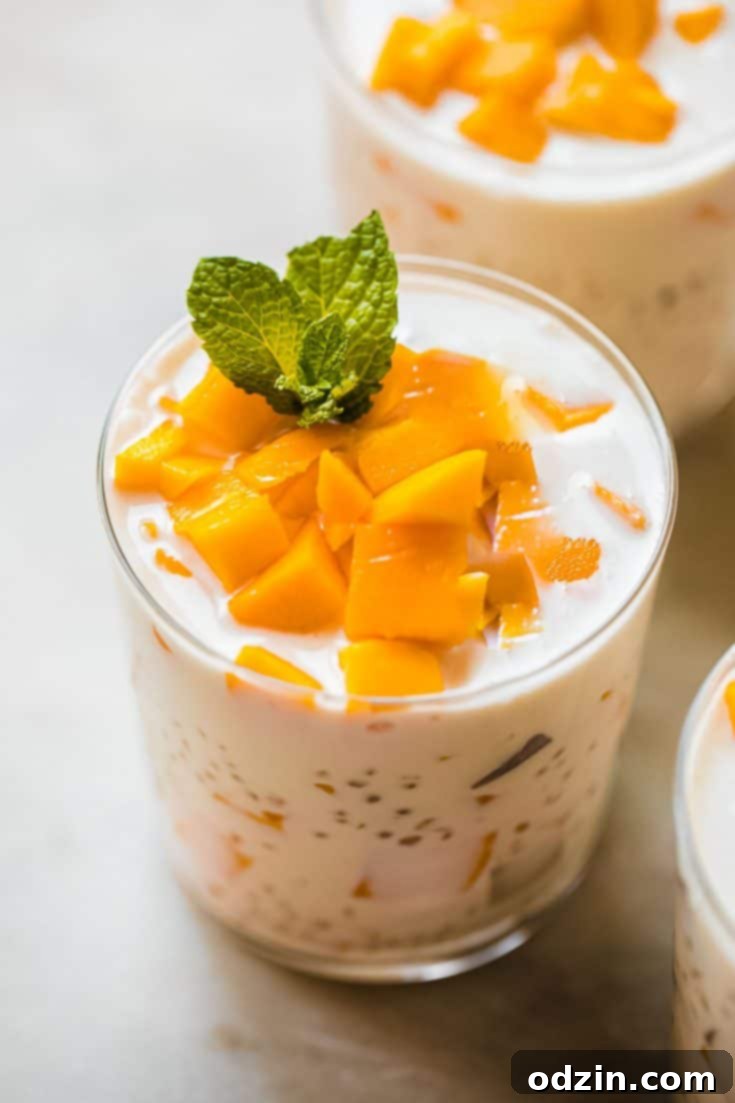
- SERVE & ENJOY: Once thoroughly chilled, spoon the creamy Mango Sago into individual serving bowls or elegant dessert glasses. Garnish each serving with the remaining fresh mango chunks, a sprig of mint, or a sprinkle of toasted coconut flakes for an extra touch of freshness and visual appeal. Serve cold and enjoy this ultimate tropical delight!
Notes
Updated 9/2025: Tapioca pearls come in a delightful variety of sizes! When this recipe was first published, medium-sized pearls were more common, typically requiring about 10 minutes to cook and another 10 minutes to rest. However, I’ve recently been using small tapioca pearls, which generally simmer for around 8 minutes and then need only 7-8 minutes to rest. To ensure the best results, it is always recommended to check the specific cooking directions provided on your tapioca pearl packaging first. Use those instructions if available, as cooking times can vary greatly based on the size and brand of tapioca pearls. The general guides in this recipe serve as a reliable starting point.
Recommended Products
- Small Tapioca Pearls
- Nata De Coco (Coconut Gel)
- OXO Good Grips Swivel Peeler
- OXO Good Grips 6-Inch Strainer
- ZWILLING Spirit 4 Quart Ceramic Nonstick Saucepan
Nutrition Information:
Yield:
8
Serving Size:
1
Amount Per Serving:
Calories: 247Total Fat: 12gCarbohydrates: 33gFiber: 1gProtein: 4g
The nutrition information is provided as a courtesy and is just an estimate. To get the most accurate information, please input the ingredients you’ve used into a nutrition calculator.
Have you made this recipe?
If you enjoyed this recipe, please consider leaving a ⭐️⭐️⭐️⭐️⭐️ rating and a comment below. You can also share a picture on Instagram with the hashtag #LITTLESPICEJAR, I’d love to see what you made!