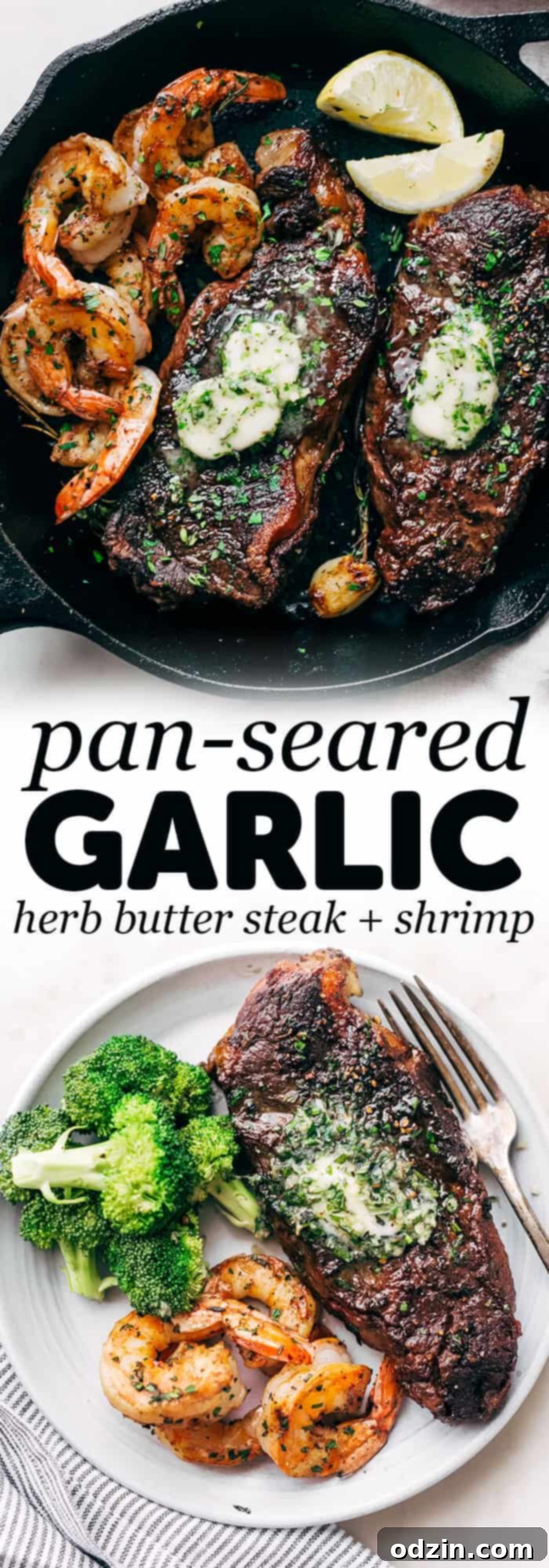
Ultimate Garlic Butter Skillet Steak and Shrimp: An Easy & Impressive Surf and Turf Recipe
Experience the luxury of a restaurant-quality meal right in your own kitchen! Learn how to create the most tender pan-seared garlic butter skillet steak and shrimp – a sensational surf & turf that’s surprisingly easy to master. Skip the reservations and enjoy this gourmet dish at home.
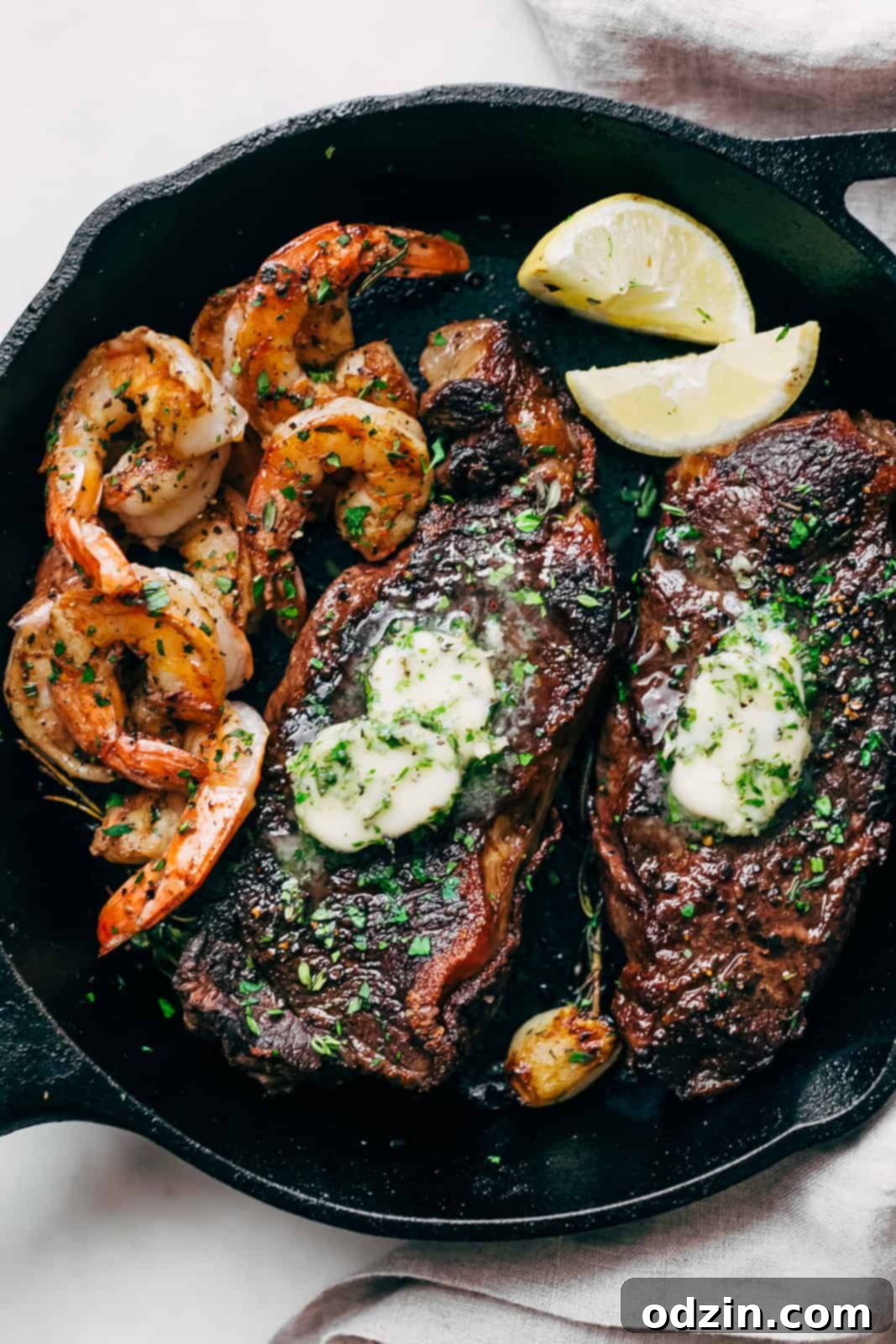
Forget the notion that gourmet dining is reserved for special occasions or expensive restaurants. With this incredible garlic butter skillet steak and shrimp recipe, you can elevate any meal into a luxurious experience. This isn’t just a seasonal treat; it’s a year-round delight! Made entirely indoors on a skillet, it’s perfect for bustling weeknights, relaxing weekends, or any time you crave something truly delicious and impressive.
The beauty of this recipe lies in its simplicity and speed. Imagine being able to prepare a fancy skillet steak and shrimp dinner in approximately 20 minutes. It’s truly that easy! This recipe proves that you don’t need to be a seasoned chef to create a show-stopping meal that will impress your family and friends. For those who appreciate a hearty meal, this pan-seared steak and shrimp offers an unbeatable combination of rich flavors and satisfying textures.
As a devoted fan of a good steak dinner, I’ve always preferred beef over chicken when dining out. So, it came as a pleasant surprise when I realized I hadn’t yet shared a dedicated, easy surf and turf recipe with you, beyond my popular steak fajitas. Today, we’re fixing that with a recipe that brings together perfectly cooked steak and juicy shrimp, all enhanced by a luscious homemade garlic herb butter, making it the ultimate skillet steak experience.
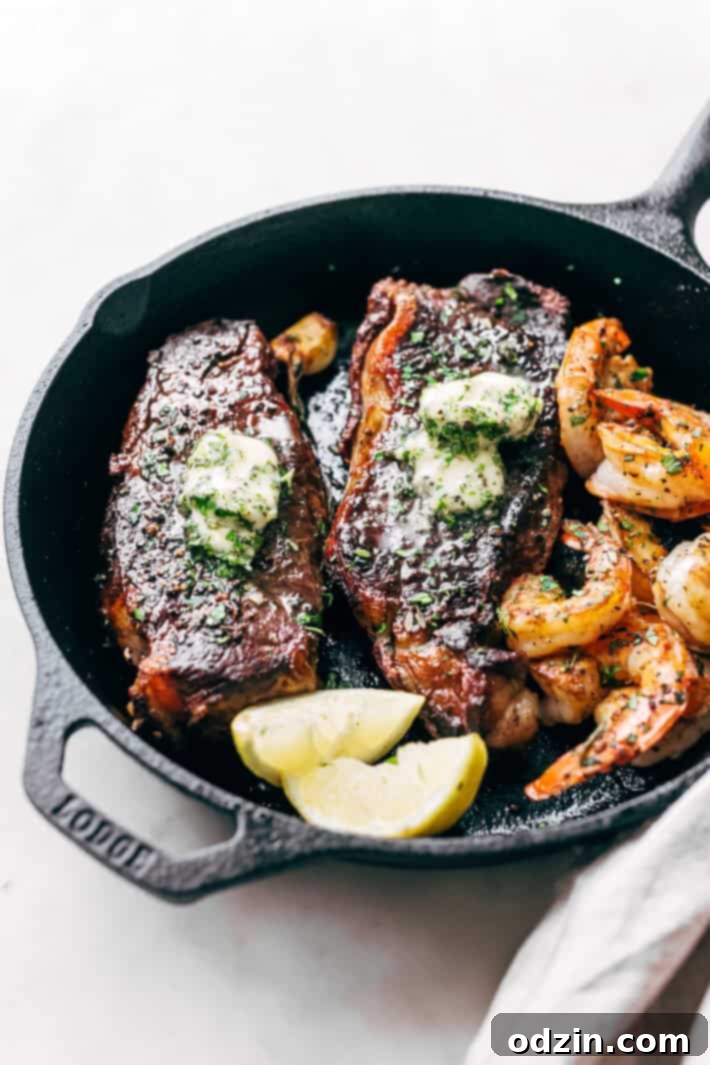
Why Skillet Cooking is Ideal for Steak and Shrimp
When it comes to achieving that coveted, crusty sear on your steak and perfectly cooked shrimp, a good skillet—especially cast iron—is your best friend. Cast iron skillets are renowned for their exceptional heat retention and even heat distribution. This means they can get incredibly hot, creating a consistent surface that locks in juices and forms a beautiful, flavorful crust on your pan-seared steak. Unlike other pans, cast iron maintains its temperature even when food is added, preventing the temperature drops that can lead to steamed rather than seared results. For succulent shrimp, a hot skillet ensures a quick cook, preventing them from becoming rubbery.
The Secret Weapon: Homemade Garlic Herb Butter
The star of this surf and turf ensemble is undoubtedly the homemade garlic herb butter. It’s what transforms ordinary steak and shrimp into an extraordinary culinary experience. This isn’t just a topping; it’s a flavor enhancer that permeates every bite, creating a rich, aromatic finish. Best of all, it’s incredibly versatile and can also be used on roasted vegetables, pasta, or even spread on crusty bread. This garlic butter is truly the backbone of our garlic butter skillet steak and shrimp, infusing it with irresistible savory notes.
Crafting Your Signature Garlic Herb Butter:
Making this incredible garlic butter requires just a handful of fresh ingredients, and the process is quick and straightforward. Each component plays a vital role in achieving that perfect, balanced flavor profile.
- Softened Butter: The foundation of our butter. Using softened (but not melted) butter is crucial as it allows all the other ingredients to mix in quickly and evenly, creating a smooth, homogenous blend that melts beautifully over your hot steak and shrimp. This ensures a consistent flavor in every dollop.
- Pressed or Finely Minced Garlic: Garlic is essential for flavor, but consistency matters. Large chunks of raw garlic can be overpowering or even burn during basting. I highly recommend using a garlic press (like this one (affiliate link)) or finely mincing the garlic by hand to ensure an even distribution of garlicky goodness without any harsh, raw bites.
- Freshly Chopped Herbs: Herbs add a layer of freshness and complexity. While you can use any herbs you prefer or have on hand, my absolute go-to for steak is a combination of fresh thyme and rosemary. Their earthy, slightly peppery notes complement the richness of seared beef and the sweetness of shrimp perfectly. Other great options include flat-leaf parsley (which we’ll also use for garnish), chives, or even a touch of tarragon for an anise-like hint. Using fresh herbs elevates the garlic butter to a new level.
- Maldon Sea Salt & Coarse Black Pepper: These aren’t just for seasoning; they’re for texture and depth. The flaky, coarse texture of Maldon sea salt provides a delightful crunch and burst of salinity, a perfect contrast to the tender meat. Coarse black pepper, freshly ground, adds a robust, pungent flavor that is indispensable for a truly flavorful steak. Don’t be shy – a generous amount of freshly cracked pepper makes a huge difference in layering flavor!
Selecting the Best Steak and Shrimp for Your Skillet
The quality of your main ingredients significantly impacts the final dish. Taking a moment to select superior steak and shrimp will pay dividends in flavor and texture for your garlic butter skillet steak and shrimp.
Choosing Your Steak:
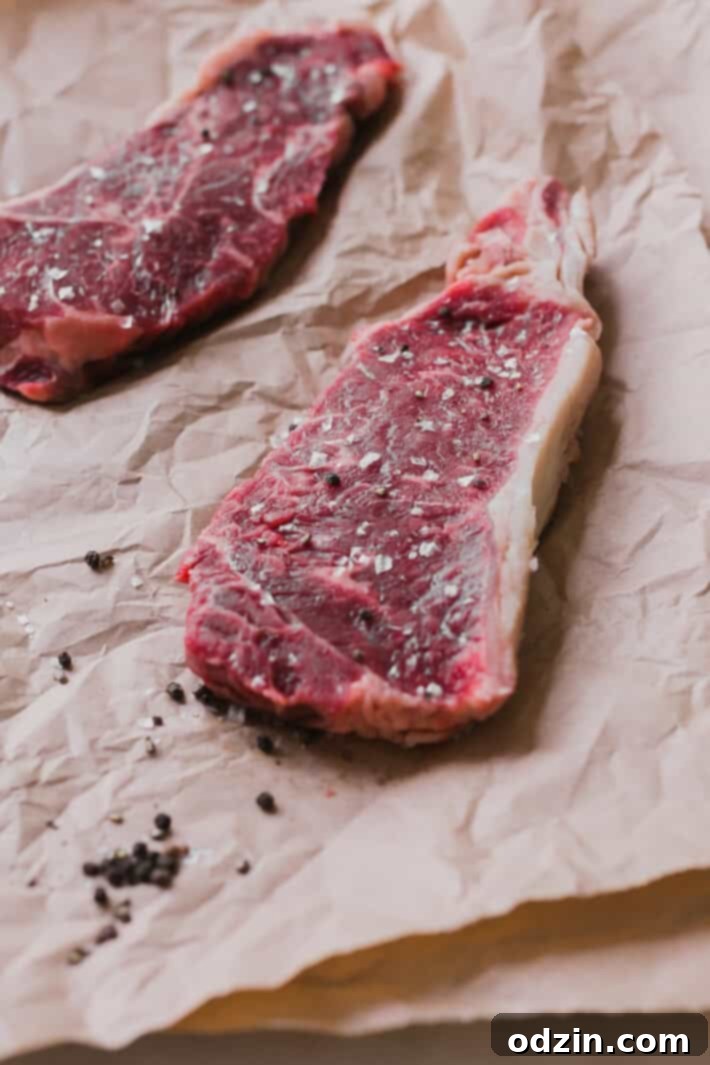
- Cut Matters: The original recipe suggests New York strip steaks, which are excellent for pan-searing due to their good balance of tenderness and flavor. Ribeye is another fantastic choice, known for its abundant marbling and rich taste. Sirloin can also work, offering a leaner but still flavorful option.
- Marbling is Key: As discussed, look for steaks with fine, even streaks of white fat (marbling) throughout the red meat. This fat renders down during cooking, keeping the steak moist, tender, and flavorful. Avoid steaks that look uniformly red with no visible fat.
- Thickness: Aim for steaks that are at least 1 to 1.5 inches thick. Thicker steaks allow you to achieve a beautiful, dark sear on the outside while maintaining a juicy, less-cooked interior. Thinner steaks cook too quickly, making it harder to control doneness.
- Source: Whenever possible, buy your steak from a reputable butcher. They can offer insights into the cuts, suggest the best options for your needs, and often provide higher quality meat than pre-packaged supermarket selections.
Picking Your Shrimp:
- Fresh vs. Frozen: Fresh shrimp is always ideal if available. However, high-quality frozen shrimp can be an excellent alternative, especially if flash-frozen shortly after being caught. If using frozen, ensure it’s completely thawed and thoroughly patted dry before cooking to prevent steaming.
- Size: Medium to large shrimp (around 21/25 count or larger) work best for this dish. They offer a satisfying bite and are less prone to overcooking compared to smaller shrimp.
- Preparation: Opt for peeled and deveined shrimp to save prep time. If you buy them with shells on, be sure to peel and devein them yourself. Removing the vein ensures a cleaner taste and texture.
Mastering Steak Doneness: Timing and Temperature Are Everything
Achieving your desired steak doneness is a critical component of a perfect skillet meal. Overcooking is the most common pitfall, so keeping a close eye on both time and temperature is paramount. My absolute favorite tool for this is a digital meat thermometer (affiliate link) – it’s an invaluable asset for any home cook and guarantees precision every time, ensuring your pan-seared steak is exactly how you like it.
Here’s a quick guide to steak doneness and their corresponding internal temperatures:
- Rare: Features beautifully seared edges with a vibrant, bright red interior. When pressed, it will feel distinctly soft and spongy. This level offers the most tender texture and a deep, beefy flavor. (Internal temperature: 120-130ºF)
- Medium-Rare: The exterior is perfectly seared, leading to a warm, pinkish-red interior. It retains some softness but also has a noticeable springy firmness. This is often considered the ideal doneness for many steak lovers due to its perfect balance of tenderness and flavor, allowing the meat’s natural juices to shine. (Internal temperature: 130-140ºF)
- Medium: Presents with pink centers, gradually fading to brown meat around the edges. It will feel less springy and firmer than a medium-rare steak. This level offers a good compromise for those who prefer less red while maintaining juiciness. (Internal temperature: 140-150ºF)
- Medium-Well: You’ll find only a faint hint of pink color concentrated right in the very center. The steak will feel quite firm to the touch. While still palatable, it starts to lose some of its inherent juiciness at this stage. (Internal temperature: 150-160ºF)
- Well Done: Cooked all the way through, resulting in a solid brown interior with no pink remaining. It will feel very firm, almost stiff, when pressed. At this level, much of the moisture has cooked out, leading to a drier, chewier texture. (Internal temperature: 160-170ºF)
It’s crucial to remember the concept of “carryover cooking.” After you remove the steak from the hot pan or grill, its internal temperature will continue to rise by an additional 5 degrees Fahrenheit or so. This is because the residual heat within the steak continues to cook it. Therefore, if your preference is for a perfect medium-rare, pull your steak off the heat when it reaches around 125ºF; it will then comfortably reach 130ºF by the time it’s ready to be enjoyed after resting. Always account for this carryover cooking to avoid overshooting your desired doneness, especially with a thick-cut steak.
Tips for Achieving the Most Tender Garlic Butter Skillet Steak and Shrimp
Crafting a truly memorable garlic butter skillet steak and shrimp meal involves a few key techniques and considerations. Follow these tips to ensure your dish is as tender, juicy, and flavorful as possible, yielding restaurant-quality results in your own home:
- Buy a Well-Marbled Steak: Marbling refers to the delicate white streaks of intramuscular fat distributed throughout the steak. This fat is the secret to a tender, juicy, and incredibly flavorful steak as it melts during cooking, basting the meat from within. When shopping, avoid prepackaged steaks unless you trust your grocery store’s quality implicitly. Your local butcher is often the best resource for selecting high-quality, well-marbled cuts like New York strip or ribeye. This marbling is crucial for a tender skillet steak.
- Bring Steak to Room Temperature: Remove your steaks from the refrigerator 20-30 minutes prior to cooking. This seemingly small step is vital because it allows the steak to cook more evenly throughout. A cold center requires more time to heat up, often leading to an overcooked exterior and an inconsistent doneness.
- Salt the Steaks Early: Immediately after taking your steaks out of the refrigerator, season them generously with salt (especially coarse salt like Maldon) and freshly cracked black pepper. Salting early helps draw moisture to the surface, where it dissolves the salt, which is then reabsorbed into the meat. This process results in an incredible, flavorful crust on the outside and ensures the steak is seasoned deeply, not just on the surface.
- Consider Steak Thickness: Thicker steaks will naturally require a longer cooking time than thinner ones. If you’re particular about achieving a rare or medium-rare doneness, a thicker cut (1-1.5 inches) will be more forgiving and easier to manage, especially if this is your first time pan-searing a steak.
- Use the Touch Test (and then a Thermometer!): While a digital thermometer is your best friend for precise doneness, a tactile test can also help gauge doneness as you become more experienced. Gently poke the steak with your finger: Does it feel soft and spongy (rare), slightly springy (medium-rare), or quite firm (medium-well to well done)? When you believe it’s approaching your desired doneness, always confirm with a meat thermometer for accuracy.
- Let the Steak Rest: The Crucial Step This is perhaps the most crucial step often overlooked! Once cooked, transfer your steak to a plate and let it rest, uncovered, for 5-7 minutes. During cooking, the muscle fibers contract, pushing the juices to the center of the steak. Resting allows these juices to redistribute evenly throughout the meat, resulting in a far juicier and more tender steak. Don’t rush this step!
- Avoid Wrapping in Foil: Contrary to popular belief, wrapping a perfectly seared steak in foil during its resting period can cause it to steam and lose its beautiful, crispy outer crust. Just let it relax uncovered on a plate; those 5-7 minutes will preserve that delicious sear and texture.
- Don’t Overcrowd the Pan: When searing, cook steaks one or two at a time, depending on the size of your skillet. Overcrowding the pan lowers the temperature and steams the meat instead of searing it, preventing that coveted crust from forming. Give each piece ample space to sear properly.
- High Heat is Your Friend: A screaming hot skillet is essential for a proper sear. This creates a flavorful, crusty exterior quickly while keeping the interior tender. Ensure your pan is very hot before adding any meat or oil.
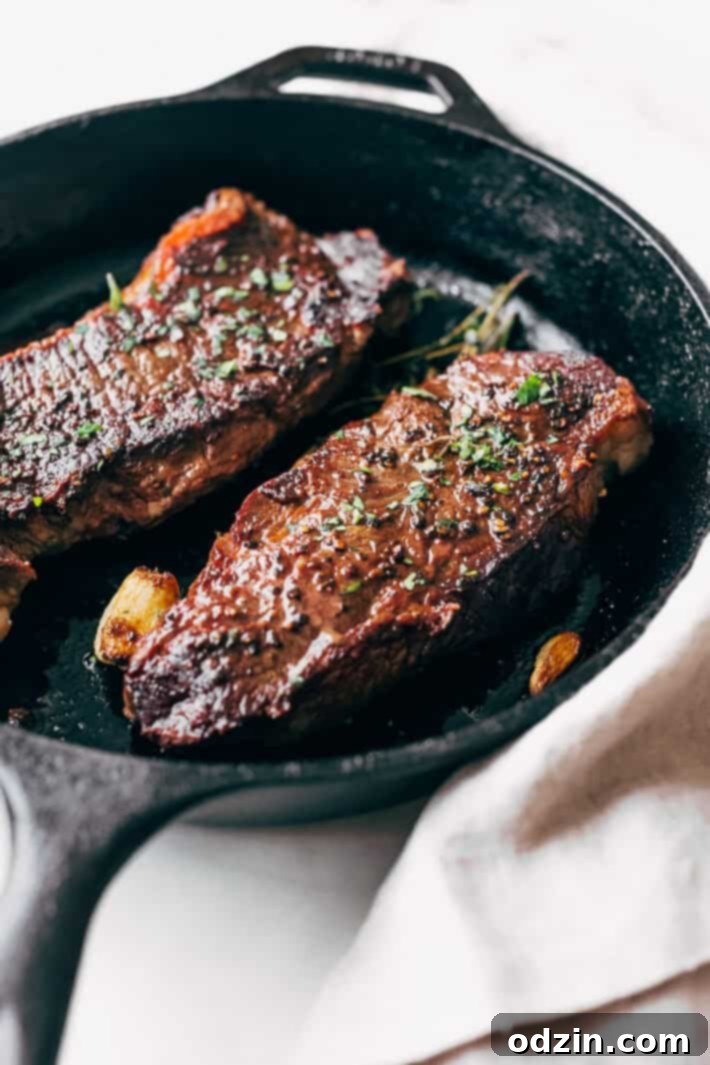
- Baste for Flavor: During the last minute or two of cooking the steak, tilt the pan slightly and spoon some of the melted garlic butter and pan juices over the steak. This technique, known as basting, adds incredible flavor and helps to even out the cooking, resulting in a truly rich pan-seared steak.
- Shrimp Cook Fast: Remember that shrimp cooks incredibly quickly, usually just 1-2 minutes per side. Overcooked shrimp become rubbery and tough, so keep a close eye on them and remove them from the heat as soon as they turn opaque and curl into a ‘C’ shape.
Essential Equipment for Skillet Steak and Shrimp Success
Having the right tools can make all the difference in ensuring a smooth cooking process and a delicious outcome. Here are a few pieces of equipment that will come in handy for your garlic butter skillet steak and shrimp:
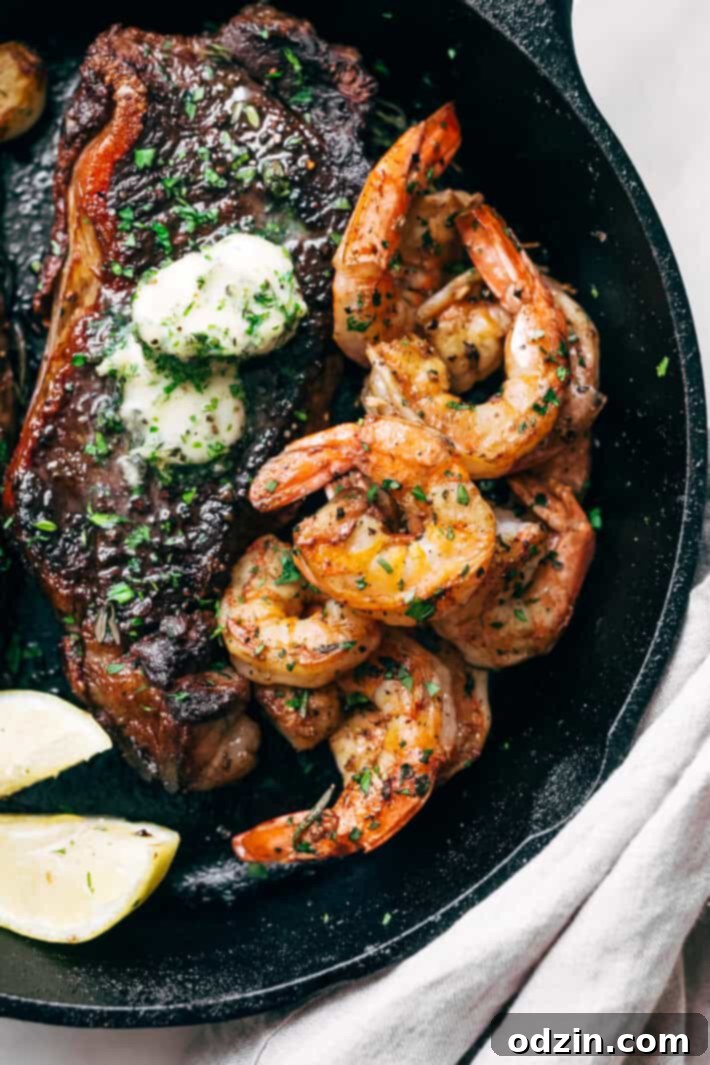
- Cast Iron Skillet (affiliate link): A well-seasoned cast iron skillet is crucial for achieving that perfect, even sear and retaining heat, essential for both the steak and shrimp.
- Tongs (affiliate link): Essential for safely flipping steaks and shrimp without piercing them, helping to retain their precious juices. Long-handled tongs are ideal for working with hot skillets.
- Digital Meat Thermometer (affiliate link): Your best friend for precision cooking, ensuring your steak is cooked to your exact preferred doneness every time, taking the guesswork out of gourmet cooking.
- Garlic Press: As mentioned earlier, a good garlic press ensures finely minced garlic for even flavor distribution in your butter, preventing any unwanted large chunks.
- Cutting Board: A sturdy cutting board is needed for prep and for resting/slicing the steak.
- Paper Towels: Indispensable for patting both steak and shrimp dry, a critical step for a good sear.
Why This Garlic Butter Skillet Steak and Shrimp Will Be Your New Go-To Recipe:
There are countless reasons to add this incredible garlic butter skillet steak and shrimp recipe to your regular rotation. It truly ticks all the boxes for a fantastic meal, making it an ideal choice for any occasion:
- Quick with Minimal Prep Work: From start to finish, you’re looking at about 20 minutes of active cooking. Most of that time is hands-off, making it ideal for busy schedules where you still crave something extraordinary.
- Not Intimidating in the Least Bit: If you’re new to cooking steak or seafood, this recipe is incredibly approachable. The clear steps and robust flavors ensure success, even for beginners, building confidence in the kitchen.
- Generous Portions & Fantastic Leftovers: This recipe makes a satisfying meal for four, and any leftover steak can be wonderfully repurposed. For example, use it to make this amazing Philly Cheese Steak Pizza, or simply toss it into a salad or sandwich the next day!
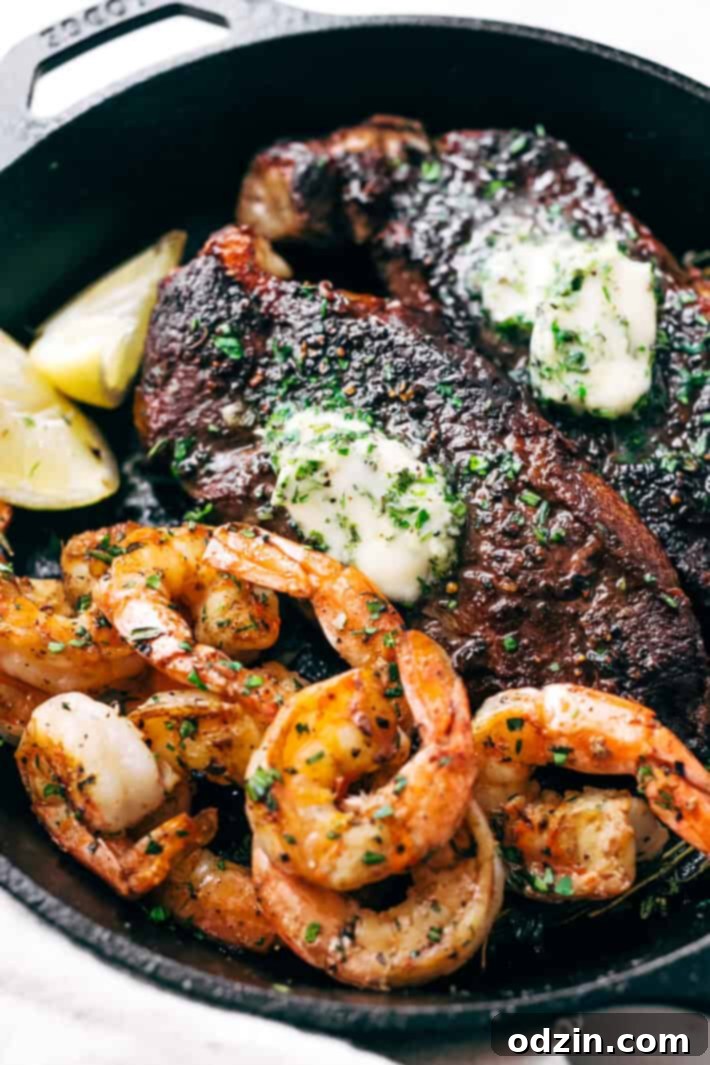
- SUPER DELICIOUS: This one speaks for itself. The rich, savory garlic butter perfectly complements the tender steak and succulent shrimp, creating an unforgettable flavor profile that will have everyone asking for more. It’s truly a highlight of homemade surf and turf.
- Impressive for Guests, Easy for Weeknights: While it tastes like it took hours to prepare, its quick nature makes it perfect for a busy weeknight meal after a long day. Yet, its gourmet appeal means it’s equally suitable for impressing guests at a dinner party or setting the mood for a romantic date night.
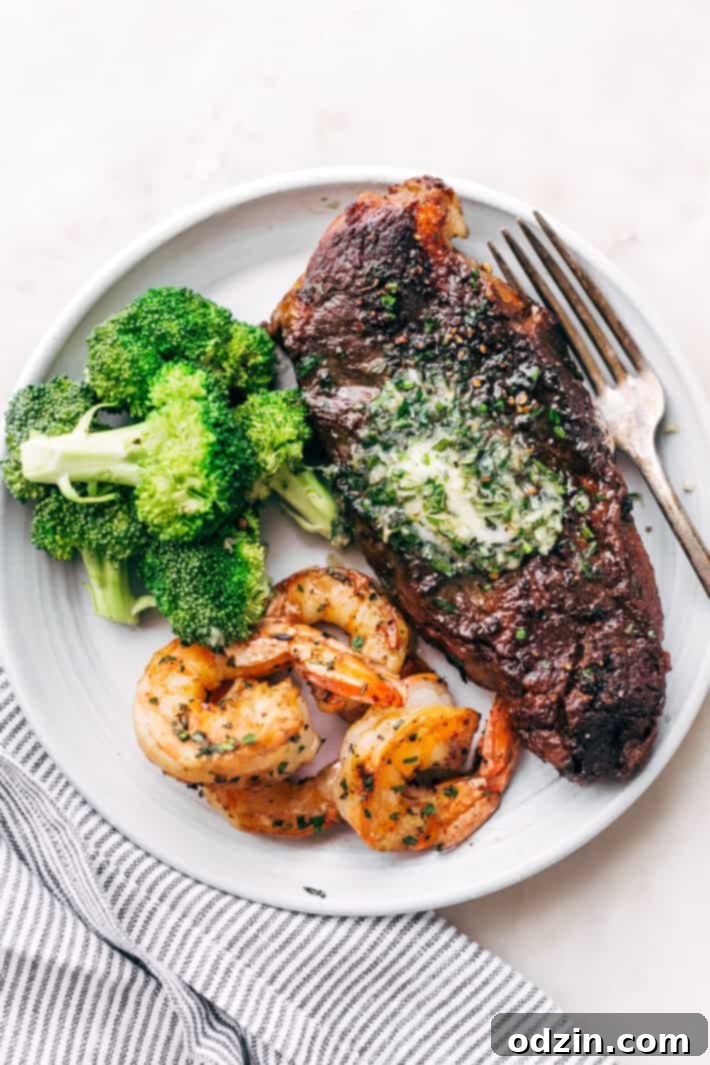
- Versatile Pairing: This dish pairs beautifully with a variety of sides. Serve it with simple roasted asparagus, creamy mashed potatoes, a crisp green salad, or even some crusty bread to soak up all that delicious garlic butter. A light, crisp white wine or a medium-bodied red would also complement the flavors wonderfully.
There you have it! This garlic butter skillet steak and shrimp recipe is a true game-changer, offering gourmet flavors with home-cooked ease. Head to the store tonight, grab a couple of quality steaks and some shrimp, and get ready to create a masterpiece in your own kitchen. You won’t regret diving into this tender, juicy, and flavor-packed surf and turf sensation!
Garlic Butter Skillet Steak and Shrimp
5 minutes
15 minutes
20 minutes
Learn how to make the most tender pan-seared garlic butter skillet steak and shrimp. You won’t have to go out to get good surf & turf when you can make it at home!
Ingredients
Steak and Shrimp:
- 2 large New York strip steaks (or 4 small)
- 8 ounces shrimp, peeled and deveined
- Salt and pepper, to taste
- 2 tablespoons olive oil, divided
- 2-3 tablespoons cold unsalted butter, divided
- 2 whole cloves of garlic, lightly smashed (for infusing flavor)
Garlic Herb Butter:
- 4 tablespoons (½ stick) softened unsalted butter
- 1 tablespoon garlic, pressed or finely minced
- 2 teaspoons fresh thyme, finely chopped (or rosemary, tarragon)
- 1 tablespoon fresh flat leaf parsley, finely chopped
- A big pinch of Maldon sea salt (or other coarse sea salt)
- Coarse black pepper, freshly ground, to taste
Instructions
- MAKE THE GARLIC HERB BUTTER: In a small bowl, combine the softened butter, pressed/minced garlic, chopped parsley, chopped thyme, a generous pinch of Maldon sea salt, and coarse black pepper. Mix thoroughly until well combined. Cover the bowl and refrigerate the butter until you are ready to use it, allowing the flavors to meld.
- PREP THE STEAKS: Remove the steaks from the refrigerator at least 20 minutes before cooking to allow them to come closer to room temperature for even cooking. Pat the steaks thoroughly dry with paper towels to ensure a good sear. Lightly brush both sides of the steaks with about 1 tablespoon of olive oil. Generously season your steaks with salt and freshly ground black pepper on both sides, pressing the seasoning firmly into the meat.
- SEAR THE STEAKS: Heat a large cast iron skillet (or other heavy-bottomed pan) over high heat until it’s smoking slightly. Add 1 tablespoon of olive oil and 1 tablespoon of cold butter to the hot pan, swirling to coat. Once the butter is melted and sizzling, carefully add the seasoned steaks to the pan, along with the two whole, smashed cloves of garlic (these will infuse flavor). Cook the steaks for roughly 3-7 minutes per side, depending on the thickness of the steak and your desired level of doneness (refer to the temperature guide above). For an enhanced crust, you can flip the steak every 1-2 minutes. During the last minute of cooking, you can add another tablespoon of butter and baste the steaks. Use a meat thermometer to check the internal temperature. Once it reaches your desired doneness, remove the steaks to a clean plate and let them rest, uncovered, for 5-7 minutes.
- COOK THE SHRIMP: While the steak is resting, if there’s a lot of excess grease in the pan from the steak, carefully discard most of it, leaving about 1 tablespoon of fat. Add the remaining 1 tablespoon of cold butter (if needed) to the skillet over medium-high heat. Add the peeled and deveined shrimp to the pan. Season them with a pinch of salt and pepper. Cook the shrimp for only 1-1½ minutes, stirring frequently, until they curl into a ‘c’ shape and turn opaque pink. Be careful not to overcook them, as they can become rubbery quickly. Remove the shrimp from the pan immediately.
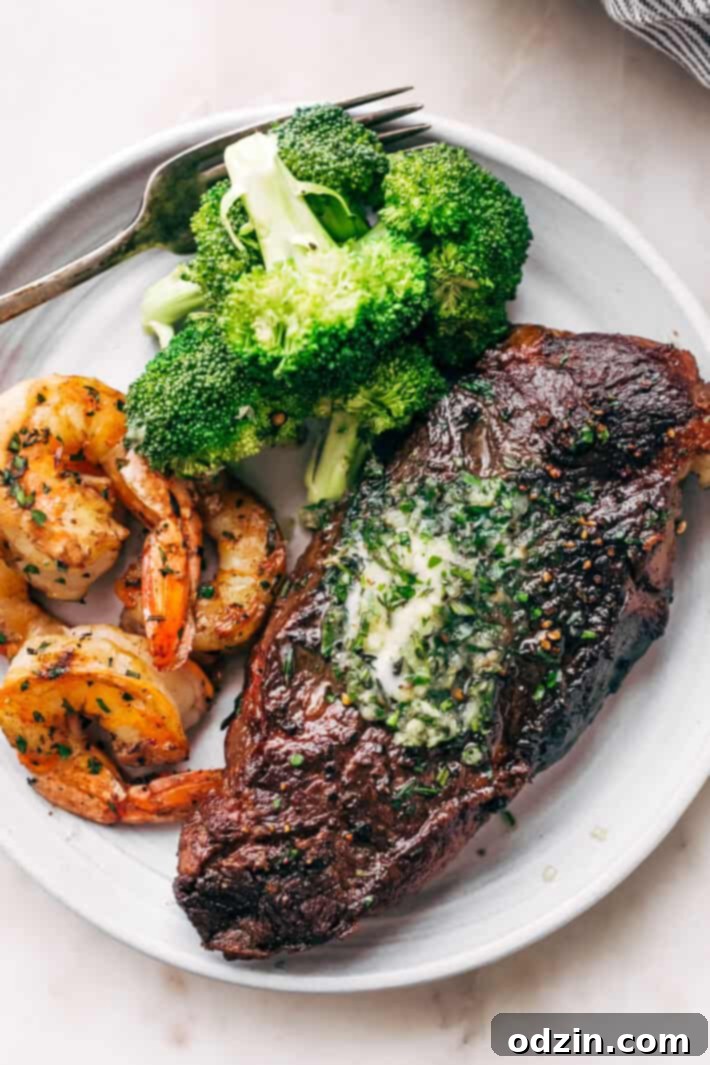
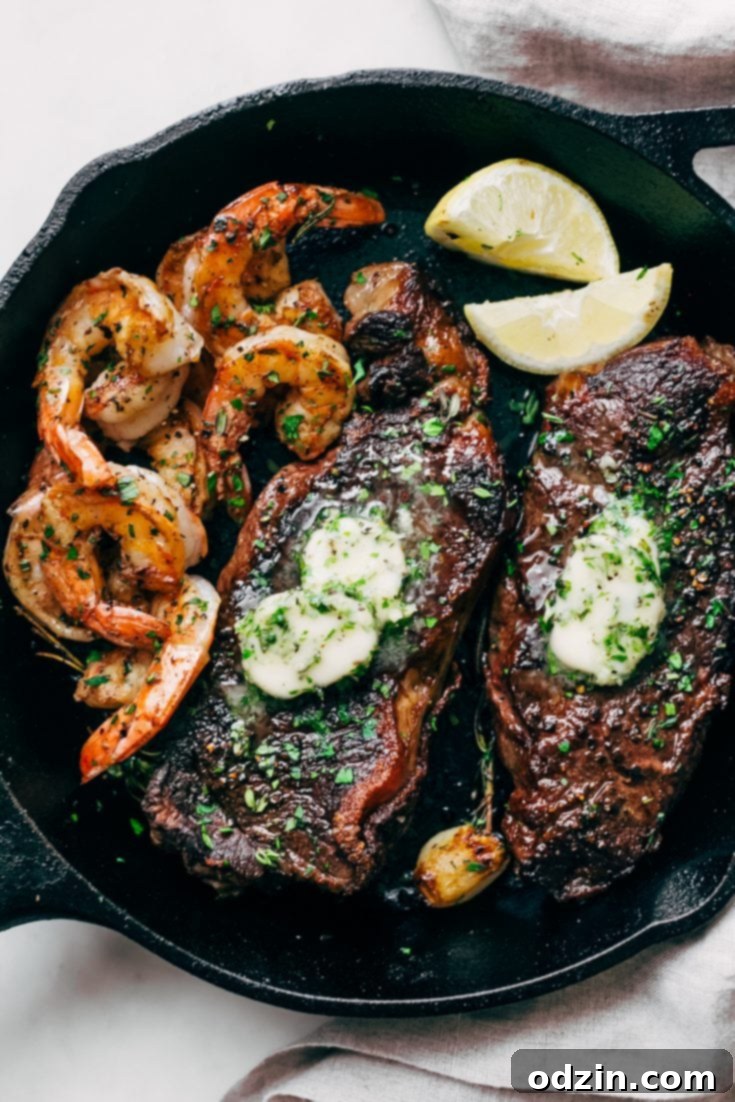
- SERVE: Once the steak has rested, slice it against the grain (if preferred). Arrange the sliced steak and cooked shrimp on serving plates. Top generously with a dollop of the prepared garlic herb butter, allowing it to melt into the hot steak and shrimp. Serve warm with your favorite side dishes like roasted vegetables, mashed potatoes, or a fresh green salad.
Notes
- If you’re using frozen shrimp, be sure to defrost them completely and pat them thoroughly dry with a paper towel before adding them to the skillet. This prevents them from steaming instead of searing.
- Should you have any leftover steak (a rare occurrence!), I highly suggest using it to create this fantastic Philly Cheese Steak Pizza!
- Feel free to experiment with different herb combinations in your garlic butter, such as oregano or sage, to customize the flavor to your liking.
Have you made this recipe?
If you enjoyed this recipe, please consider leaving a ⭐️⭐️⭐️⭐️⭐️ rating and a comment below. You can also share a picture on Instagram with the hashtag #LITTLESPICEJAR, I’d love to see what you made!