Homemade Crispy Coconut Shrimp: Air Fryer & Deep Fry Methods with Killer Dipping Sauce
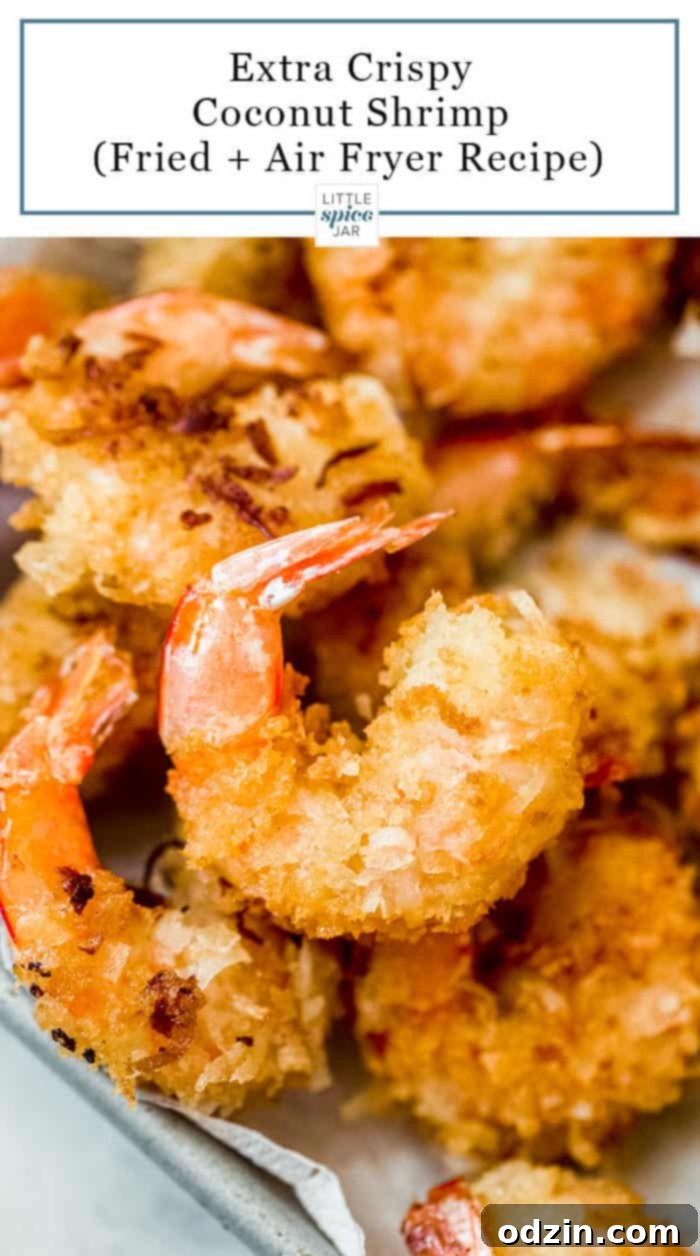
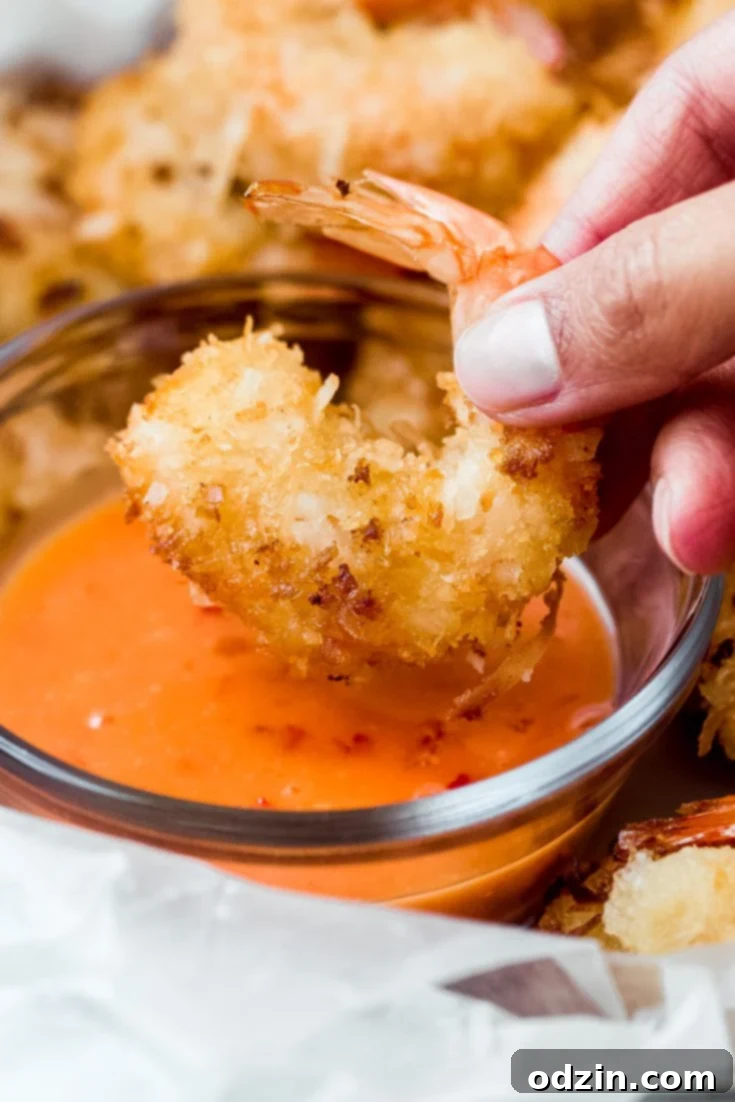
Crunchy, crispy coconut shrimp that are just so delicious! Experience tropical bliss with tender, juicy shrimp coated in a delightful mix of sweet coconut flakes and panko, perfectly golden whether air-fried or deep-fried. These irresistible bites are taken to the next level with a tangy, creamy dipping sauce!
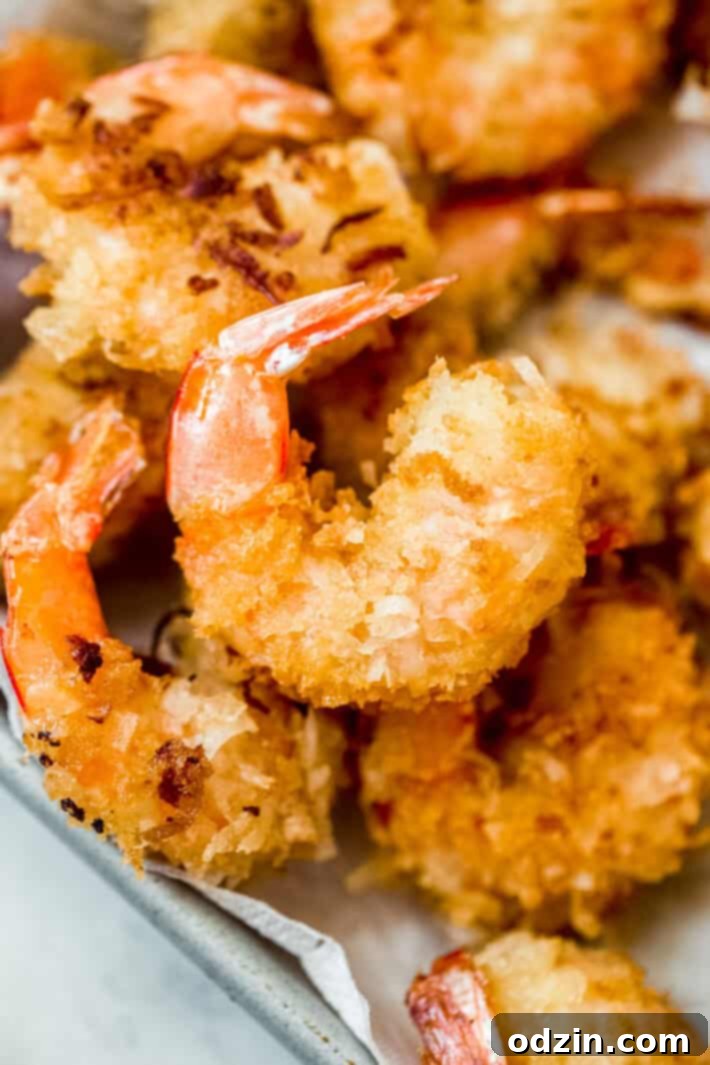
My love affair with coconut shrimp began on the sun-kissed shores of Maui years ago. Before that trip, I admit I didn’t quite grasp the hype surrounding this popular appetizer. However, one bite into those perfectly cooked, sweet, and savory morsels changed everything. I can still vividly recall the succulent, tender shrimp encased in a perfectly crunchy, subtly sweet coconut coating – a truly unforgettable culinary experience.
Even now, years later, a single taste of these homemade coconut-crusted shrimp instantly transports me back to that island paradise. It’s like a mini tropical vacation packed into every crispy, flavorful bite. Seriously, I often find myself dreaming about these golden, fried coconut-crusted shrimp!
Since returning from our Hawaiian adventure, I’ve been on a mission to recreate all the delectable flavors we discovered there. My culinary journey started with those amazing garlic noodles, then moved onto the savory Hawaiian shrimp scampi, and now, I’m thrilled to circle back to the dish that started it all: the incredible coconut shrimp we enjoyed as our first dinner in Hawaii.
If you’ve ever ordered coconut shrimp at a restaurant, you know they can be one of the pricier appetizers on the menu. Even the frozen varieties from the grocery store often come with a surprisingly hefty price tag. The good news? You can effortlessly make a generous batch of these homemade Hawaiian-style coconut shrimp for a fraction of the cost, yielding a far more satisfying quantity and quality than what you’d typically get elsewhere.
Why Choose Homemade Coconut Shrimp?
Beyond the cost savings, making coconut shrimp at home offers several advantages. You have complete control over the freshness of ingredients, from the quality of the shrimp to the type of oil used for frying. This also allows for customization – you can adjust the seasoning, the thickness of the coating, and even experiment with different dipping sauces to perfectly match your preferences. Plus, there’s an undeniable satisfaction that comes from preparing such a delicious, restaurant-quality dish right in your own kitchen.
I’ll also share invaluable tips and tricks along the way, ensuring you can easily prep these ahead of time for any occasion. Whether it’s a festive New Year’s Eve party, a casual game night, or any gathering where you want to impress your guests with a crowd-pleasing appetizer, these homemade coconut shrimp are guaranteed to be a hit!
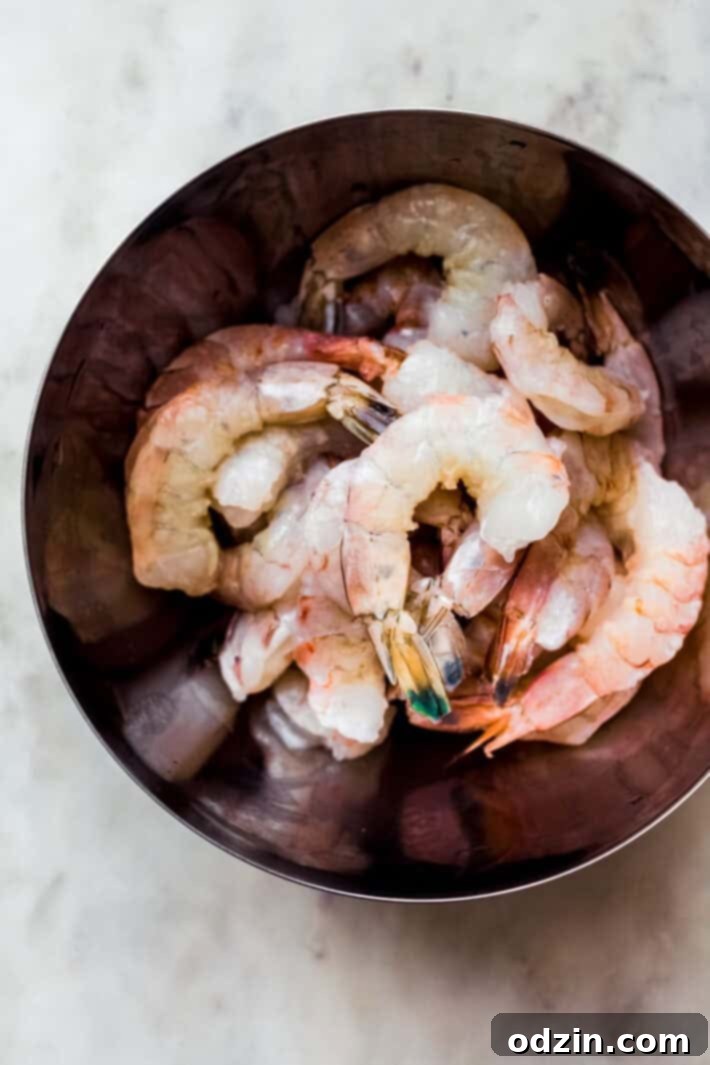
Essential Ingredients for Perfect Coconut Shrimp
Creating crispy, flavorful coconut shrimp requires a few key components. Here’s what you’ll need and why each ingredient plays a crucial role:
- Peeled and Deveined Shrimp: The foundation of our dish! While various sizes from medium to extra-jumbo will work, remember that cooking times will vary significantly. For this recipe, I typically use jumbo shrimp (21-25 count per pound) for a satisfying bite. If you opt for extra-large (26-30 count per pound), expect a slightly shorter cooking time, perhaps by 30 seconds or so. Always ensure your shrimp are fresh or properly thawed, and thoroughly patted dry for the best coating adhesion.
- Sweetened Shredded Coconut Flakes: These flakes are essential for that characteristic sweet and crunchy exterior. They can usually be found in the baking aisle of most grocery stores, often alongside chocolate chips and other baking supplies. Be sure to grab *sweetened* shredded coconut, as it contributes significantly to the irresistible flavor profile of the final dish.
- Panko Bread Crumbs: To achieve an exceptionally light and crispy crust, we use Panko breadcrumbs in combination with the coconut flakes. Panko, a Japanese-style breadcrumb, is renowned for its airy, flaky texture, which results in a crunchier coating compared to regular breadcrumbs.
- All-Purpose Flour: This forms the first layer of our dredging station. Coating the shrimp in flour helps create a dry surface that the egg wash can cling to, ensuring the subsequent coconut-panko mixture adheres beautifully.
- Garlic Powder + Salt: These seasonings are whisked into the flour to infuse our shrimp with a foundational layer of savory flavor, complementing the sweetness of the coconut.
- Eggs: Beaten eggs serve as the crucial “glue” in our dredging process. After the flour, the shrimp are dipped into the egg wash, which then provides a sticky surface for the final breading to adhere firmly.
Step-by-Step: How to Prepare Your Coconut Shrimp
Before we dive into the cooking methods, let’s establish the proper preparation steps. A well-organized dredging station is key to success:
- Shrimp Preparation: First, ensure your shrimp are properly cleaned. If you purchased shrimp that are already peeled and deveined, you can skip this step! Otherwise, carefully peel the shells off, leaving the tails on for a convenient handle. Then, make a shallow slit along the back of each shrimp with a knife to expose the vein. Rinse the vein out under cold running water and pat the shrimp thoroughly dry with paper towels. Repeat this process for all remaining shrimp.
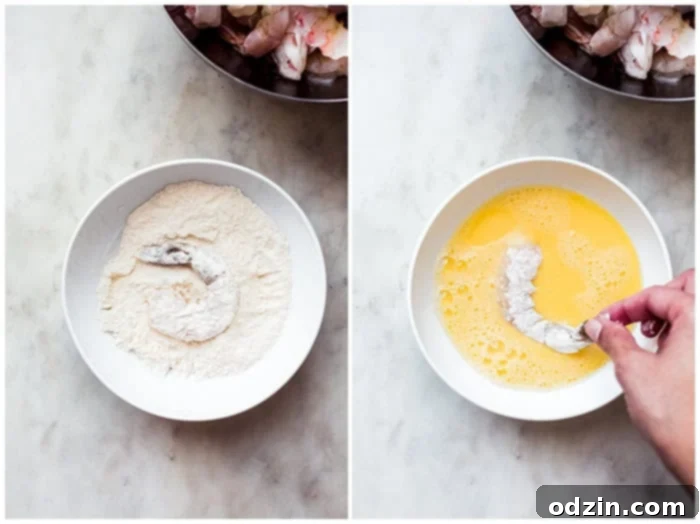
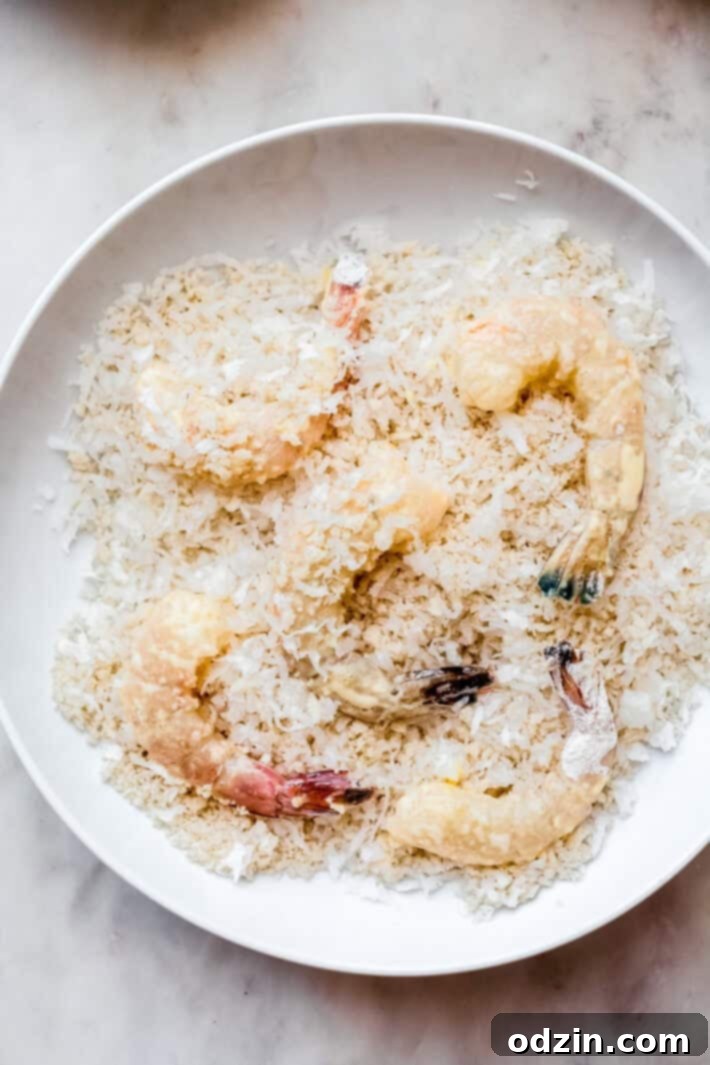
- Setting Up the Dredging Station: Arrange three shallow bowls in a row. In the first bowl, whisk together the all-purpose flour, garlic powder, and salt. In the second bowl, lightly beat the two large eggs until well combined. In the third and final bowl, combine the Panko breadcrumbs and the sweetened shredded coconut flakes, mixing them thoroughly. This organized setup will make the coating process smooth and efficient.
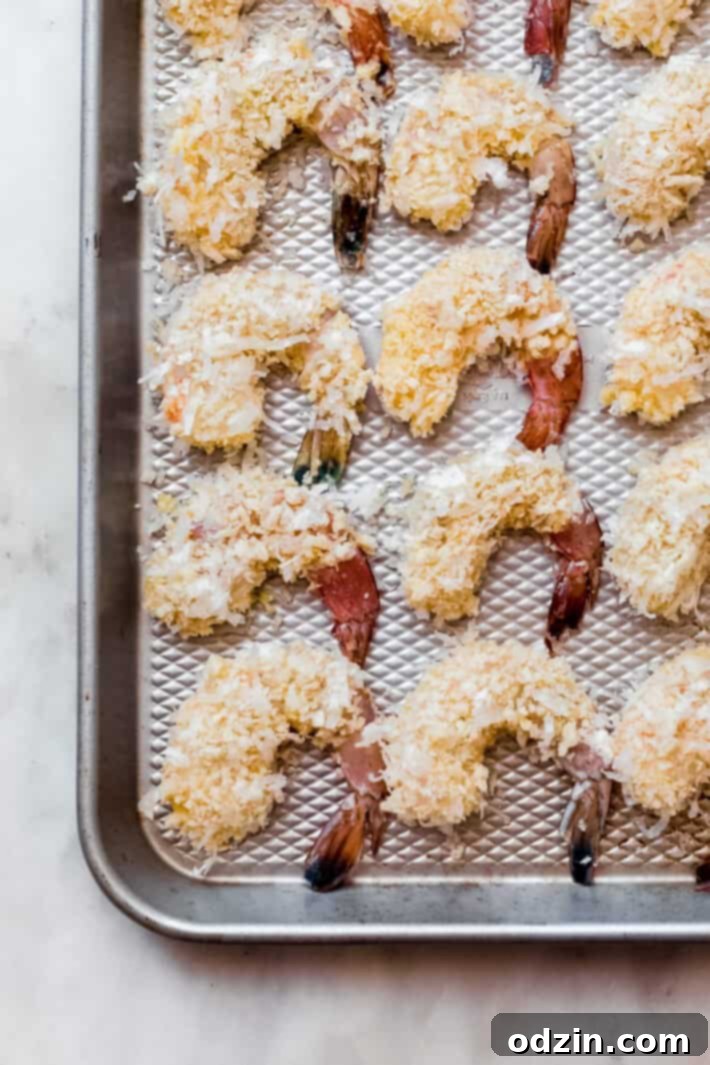
- Coating the Shrimp: Take each shrimp by the tail, first dredge it completely in the flour mixture, shaking off any excess. Next, dip it into the beaten egg mixture, ensuring it’s fully coated. Finally, transfer the shrimp to the coconut and Panko mixture, pressing gently with your hands to ensure a thick, even layer of crumbs adheres to all sides. Place the coated shrimp on a clean baking sheet and continue with the rest. At this point, you can freeze them for 30 minutes to help the coating set, or proceed directly to cooking.
Crispy Coconut Shrimp in the Air Fryer
Great news for those seeking a lighter option: you can absolutely make perfectly crispy coconut shrimp in an air fryer! We’ve tested both methods extensively and found the air-fried version to be equally delicious, with the added benefit of being less greasy. If you haven’t yet, I highly recommend investing in an air fryer – I recently purchased this model and can’t believe I waited so long to join the air fryer revolution!
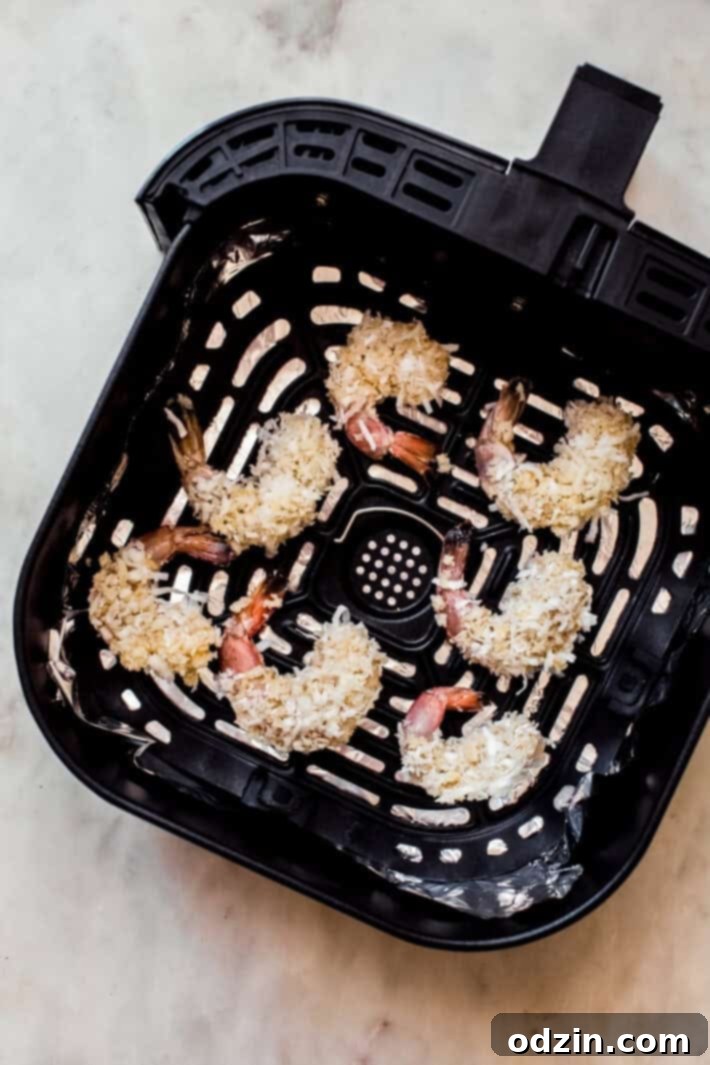
- Preheat and Prepare: Begin by preheating your air fryer according to your manufacturer’s specific directions, typically to 375ºF (190ºC). While it preheats, arrange your coated shrimp on a clean surface. Lightly spray one side of the shrimp with coconut cooking spray or your preferred cooking oil.
- Air Frying: Carefully place the sprayed-side-down shrimp in a single layer in the air fryer basket, ensuring not to overcrowd it. Work in batches if necessary. Then, lightly spray the top side of the shrimp. Cook at 375ºF (190ºC) for 6-8 minutes. For even crispiness and browning, be sure to flip the shrimp about halfway through the cooking time. The shrimp should be golden brown and cooked through when done.
How to Make Traditional Deep-Fried Coconut Shrimp
For those who love the classic, rich flavor and texture of deep-fried food, this method will deliver perfectly golden and crispy coconut shrimp:
- Heat the Oil: Add about 1-1 ½ inches of a neutral-flavored oil (like vegetable, canola, or peanut oil) to a heavy-bottomed pot or large skillet. Place it over medium-high heat. You want the oil to reach approximately 350ºF (175ºC). Using a kitchen thermometer is highly recommended for accuracy, as maintaining the correct temperature is crucial for preventing soggy or burnt shrimp.
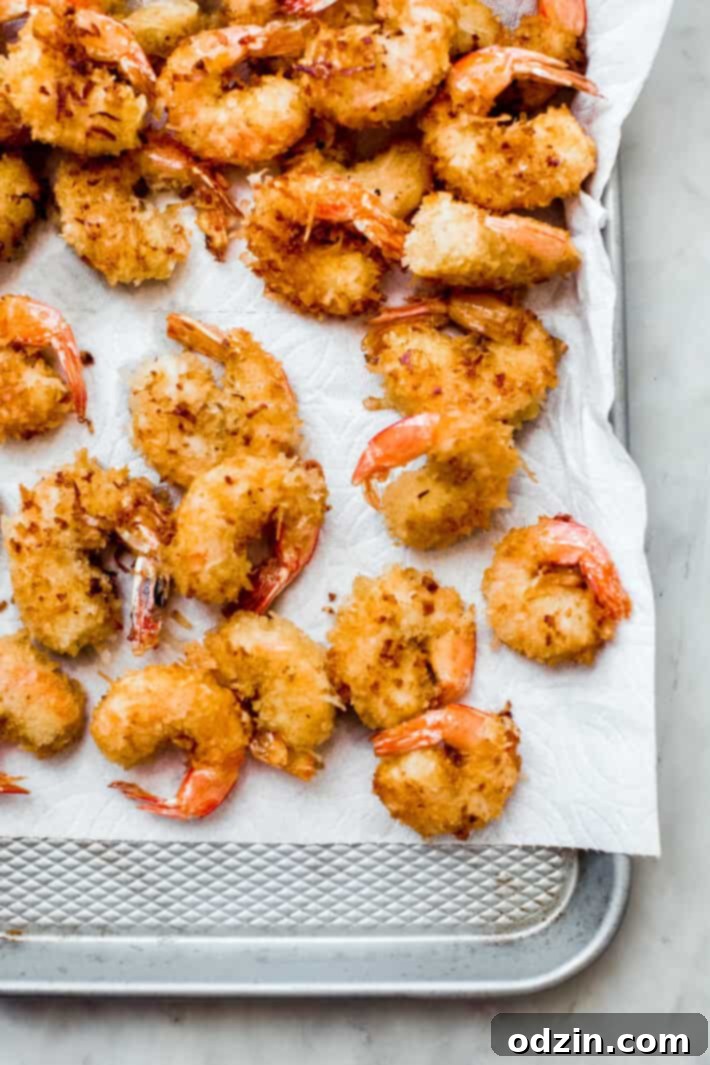
- Fry in Batches: Once the oil is hot and shimmering (you can test by dropping a tiny pinch of Panko – it should sizzle immediately), carefully add one or two shrimp to gauge the oil temperature. Then, add 4-5 additional pieces, depending on the size of your skillet, ensuring you do not overcrowd the pan. Overcrowding will lower the oil temperature and result in greasy, less crispy shrimp. Cook the shrimp for approximately 2 minutes per side (4-5 minutes total) or until they are beautifully golden brown and have curled into a ‘C’ shape, indicating they are cooked through.
- Drain and Serve: Using a slotted spoon or tongs, carefully remove the cooked shrimp from the oil. Transfer them to a plate lined with paper towels to drain any excess oil. This step is important for maintaining their crispiness.
Crafting the Most Killer Sweet and Tangy Dipping Sauce
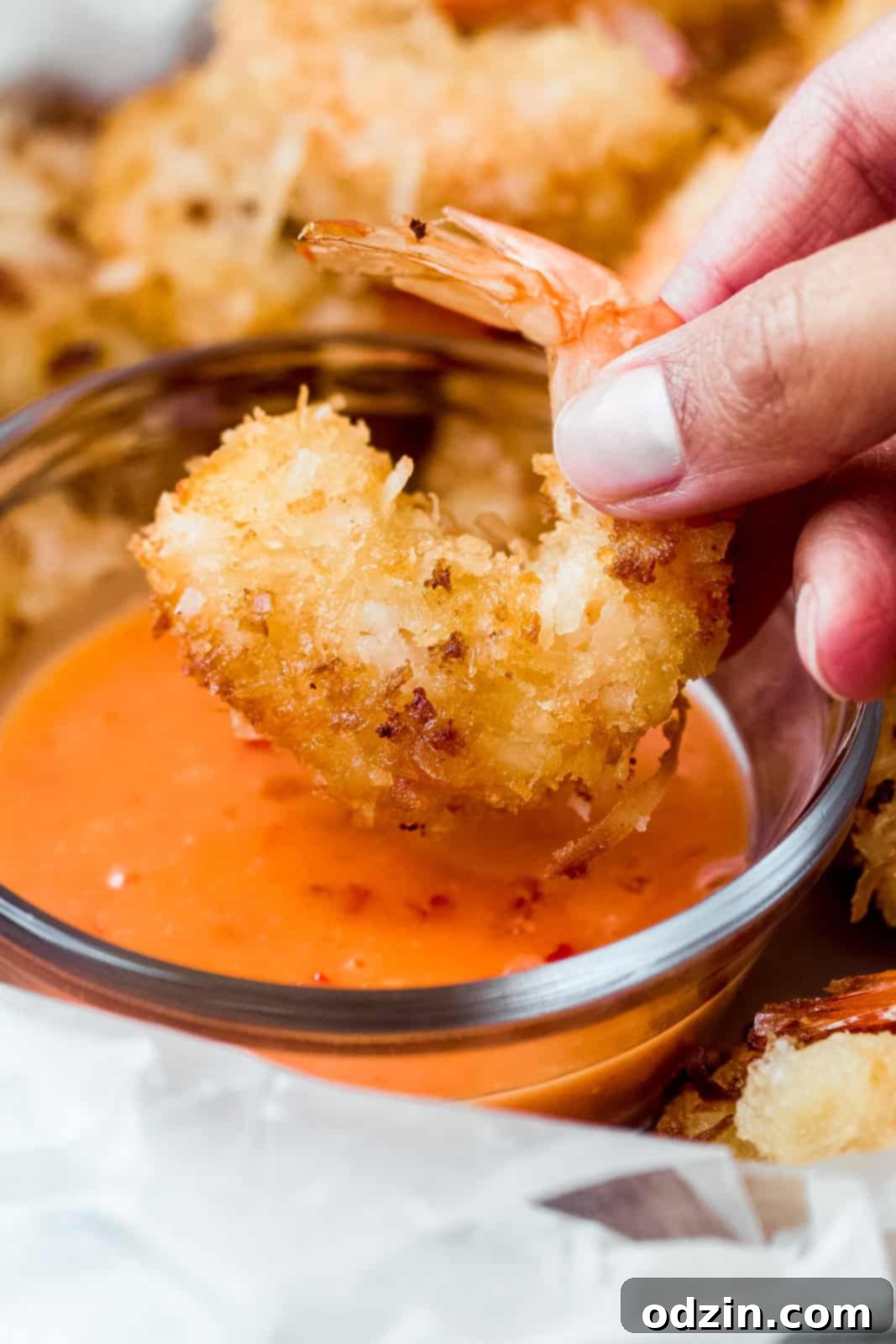
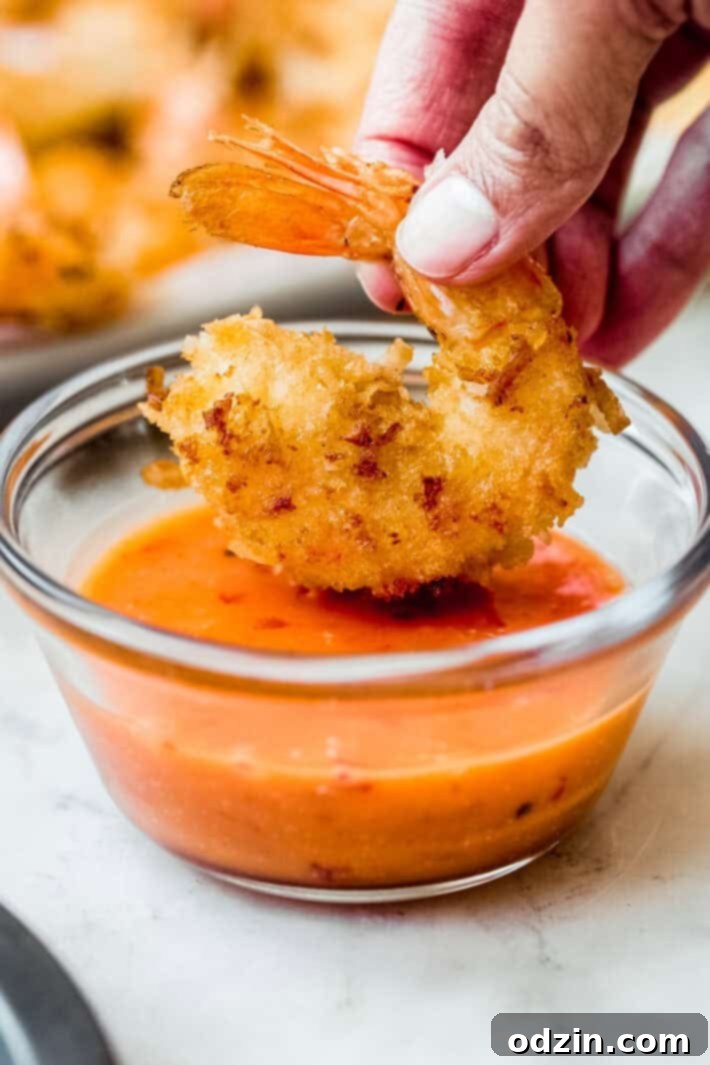
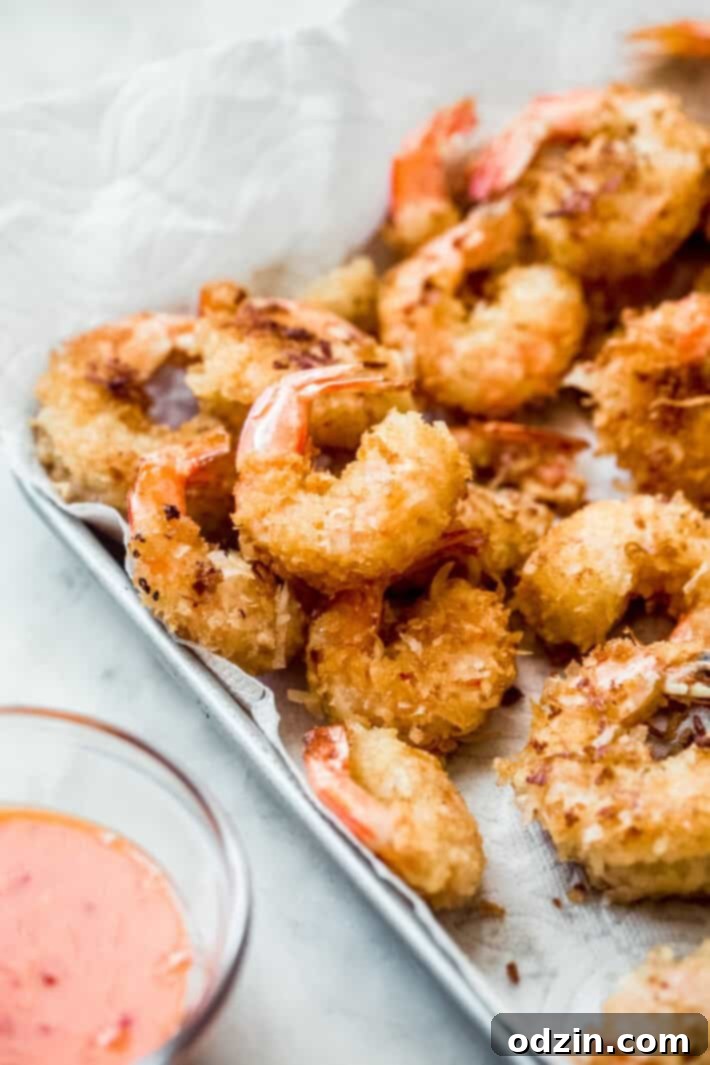
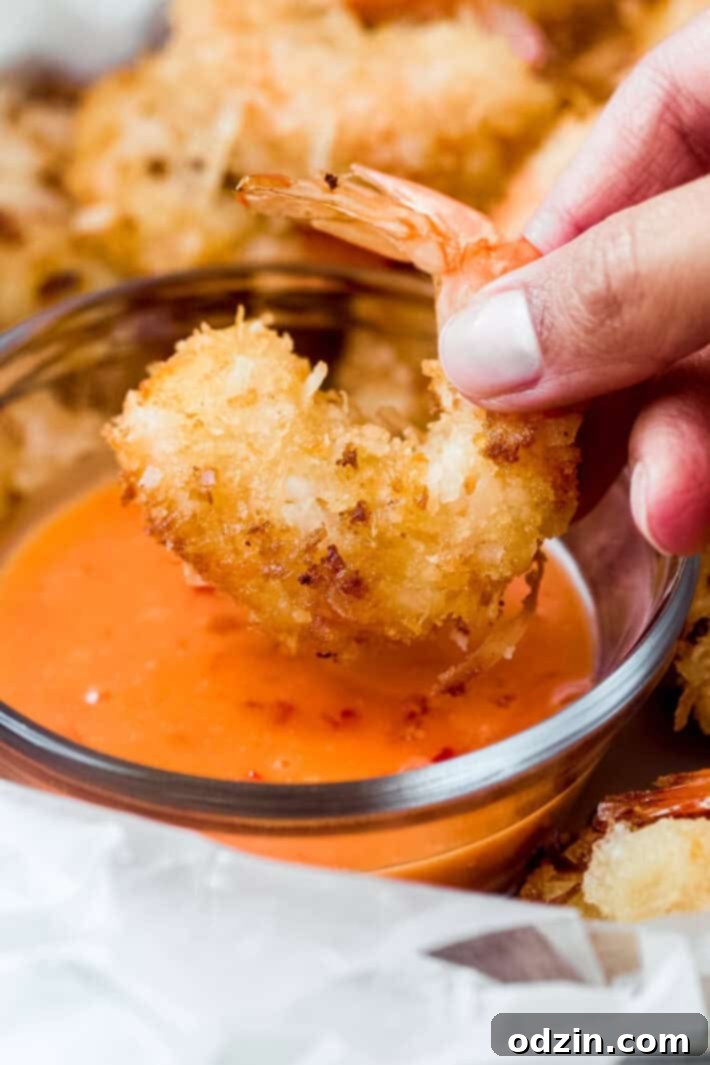
Let’s be honest, half the magic of coconut shrimp lies in the dipping sauce! This sauce is truly a game-changer – sweet, wonderfully creamy, and with just the right amount of tang. It reminds me of a delightful “dynamite sauce” but without any heat, making it universally appealing and absolutely addicting. I’m a firm believer that the perfect dipping sauce elevates coconut shrimp from great to unforgettable.
For this incredibly simple yet flavorful sauce, you’ll need just a few ingredients:
- Sweet Chili Sauce: This is the backbone of the sauce, providing its characteristic sweetness and mild chili flavor. You can typically find sweet chili sauce in the international aisle of your grocery store, often with other Asian condiments.
- Mayonnaise: A couple of teaspoons of regular mayonnaise (from the condiment aisle) add a creamy richness that balances the sweetness and tang.
- Fresh Lime Juice: A generous squeeze of fresh lime juice is essential for that bright, zesty tang. Freshly squeezed lime juice truly makes a difference here compared to bottled varieties, so don’t skip it!
Simply combine all the ingredients in a small bowl and whisk them together until smooth. Make sure to work out any lumps from the mayo. Taste and adjust the lime juice to your preference for that perfect balance of sweet and tangy. You’re now ready to serve! Fair warning: if you’re a big fan of dipping sauces in general, you’ll automatically want to double this recipe – it’s that good!
Expert Tips for Making the Best Coconut Shrimp
Achieve restaurant-quality coconut shrimp with these helpful tips and tricks:
- Pre-freeze for Superior Adherence: This is my number one secret for preventing the coconut coating from separating during cooking! After dredging all your shrimp, arrange them in a single layer on a baking sheet and freeze them for about 30 minutes before frying or air frying. This quick chill helps the coating adhere firmly to the shrimp, resulting in a perfectly intact and crispy crust. While optional, it makes a significant difference.
- Skillet Frying vs. Deep Fryer: Although you can certainly deep fry coconut shrimp in a dedicated deep fryer, I often prefer using a large skillet with about 1-1 ½ inches of oil. This method allows you to easily see and manage the shrimp, cooking them in a single layer and flipping as needed for even browning. However, choose the method that you are most comfortable with! The key is to maintain a consistent oil temperature for optimal crispness.
- Make Ahead and Freeze: These coconut shrimp are perfect for meal prepping or preparing for a party in advance. After coating, instead of freezing for just 30 minutes, you can freeze them for 2-3 hours until solid. Then, transfer the frozen shrimp to a zip-top freezer bag or an airtight plastic container. They can be stored in the freezer for up to a month, ready to be cooked straight from frozen on the day you plan to serve them. This makes them an ideal appetizer for New Year’s, dinner parties, or any spontaneous gathering!
- Reheating Leftover Coconut Shrimp: To bring leftover coconut shrimp back to life and restore their crispiness, avoid the microwave! I recommend reheating them in an air fryer on the ‘reheat’ setting until warmed through and crisp. Alternatively, you can use a traditional oven preheated to 400ºF (200ºC) and bake them for approximately 8-10 minutes, or until hot and crispy.
- Monitor Oil Temperature (for deep frying): For truly crispy, non-greasy fried shrimp, maintaining the correct oil temperature is critical. If the oil is too cool, the coating will absorb too much oil, becoming soggy. If it’s too hot, the coating will burn before the shrimp cooks through. Aim for 350ºF (175ºC) and use a thermometer for precision.
- Don’t Overcrowd the Pan: Whether air frying or deep frying, cook the shrimp in batches. Overcrowding lowers the temperature and steams the shrimp instead of frying or crisping them, leading to a less desirable texture.
Crispy Coconut Shrimp (Air Fryer + Fried)
20 minutes
20 minutes
40 minutes
Crunchy, crispy coconut shrimp that are just so delicious! Crunchy and slightly sweet coconut flakes on the outside, tender, juicy shrimp on the inside. And they are just irresistible with that dipping sauce! Make coconut shrimp in the air fryer or deep fry them!
Ingredients
For the Coconut Shrimp:
- 1 ¼ pound jumbo raw shrimp (peeled + deveined, tails on)
- 1 cup sweetened shredded coconut flakes
- 1 cup Panko breadcrumbs
- 1/3 cup all-purpose flour
- 2 large eggs, whisked
- ½ teaspoon garlic powder
- ½ teaspoon salt
- Cooking oil for deep frying (e.g., vegetable, canola) OR coconut cooking spray for air frying
For the Sweet and Tangy Dipping Sauce:
- 1/3 cup sweet chili sauce
- 2 teaspoons mayonnaise
- ~ 1/2 lime, squeezed (adjust to taste for desired tanginess)
Instructions
- PREP THE SHRIMP: Rinse the peeled and deveined shrimp under cold running water, then thoroughly pat them dry with paper towels. Set up your dredging station: In the first shallow bowl, whisk together the all-purpose flour, garlic powder, and ½ teaspoon of salt. In the second bowl, whisk the two large eggs until smooth. In the third bowl, combine the shredded sweetened coconut flakes and the Panko breadcrumbs, tossing or stirring to mix them evenly.
- DREDGE: Holding each shrimp by its tail, first dredge it completely in the flour mixture, shaking off any excess. Next, dip it into the beaten egg mixture, ensuring an even coating. Finally, transfer the shrimp to the coconut and Panko mixture, pressing gently with your hands to help the crumbs adhere firmly. Place the fully coated shrimp on a clean baking sheet. Continue this process with the remaining shrimp. At this stage, you have the option to freeze the shrimp for 30 minutes to make them easier to fry, or refrigerate them until you’re ready to cook. You can also fry or air fry them immediately.
- COOKING METHODS:
DEEP FRYING: Heat a large skillet (or deep fryer) over medium-high heat. Add a generous 1-1 ½ inches of neutral cooking oil to the skillet and heat it to approximately 350ºF (175ºC). If using a deep fryer, set it to 350ºF (175ºC). Once the oil is at temperature, carefully add 4-5 shrimp, ensuring not to overcrowd the pan. The oil around the shrimp should begin bubbling immediately. Cook for roughly 2 minutes per side (4-5 minutes total) or until the coating is golden brown and the shrimp curl into a ‘c’ shape. Remove the cooked shrimp with a slotted spoon and transfer them to a plate lined with paper towels to drain excess oil. Repeat with remaining shrimp.
AIR FRYING: Preheat your air fryer according to the manufacturer’s directions, typically to 375ºF (190ºC). Place the coated shrimp on a clean surface and lightly spray one side with coconut cooking spray (or any cooking spray you prefer). Arrange the sprayed-side-down shrimp in a single layer in the air fryer basket, ensuring adequate space between each. Lightly spray the top side of the shrimp. Cook at 375ºF (190ºC) for 6-8 minutes, or until the shrimp are cooked through and golden brown. Remember to flip the shrimp halfway through the cooking time to ensure even crisping on both sides.
- MAKE THE SAUCE: In a small bowl, combine the sweet chili sauce, mayonnaise, and the juice from ½ a lime. Whisk vigorously until all ingredients are thoroughly combined and the sauce is smooth, with no lumps from the mayo. Taste the sauce and adjust with additional lime juice if you desire a tangier flavor. Serve immediately with your freshly cooked coconut shrimp!
Notes
- Reheating: If you have leftover coconut shrimp and want to restore their crispy texture, avoid microwaving. I recommend reheating them in an air fryer on the ‘reheat’ setting until warmed through, or in a traditional oven preheated to 400ºF (200ºC) for about 6-10 minutes.
- Freezing for later: After coating the shrimp, you can freeze them solid on a baking sheet for 2-3 hours, then transfer to a freezer-safe bag or container for up to 1 month. Cook directly from frozen, adding a couple of minutes to the cooking time.
- Shrimp size: This recipe uses jumbo shrimp (21-25 count). If using extra-large (26-30 count), reduce cooking time slightly by about 30 seconds to a minute to prevent overcooking.
Have you made this recipe?
If you enjoyed this recipe, please consider leaving a ⭐️⭐️⭐️⭐️⭐️ rating and a comment below. You can also share a picture on Instagram with the hashtag #LITTLESPICEJAR, I’d love to see what you made!