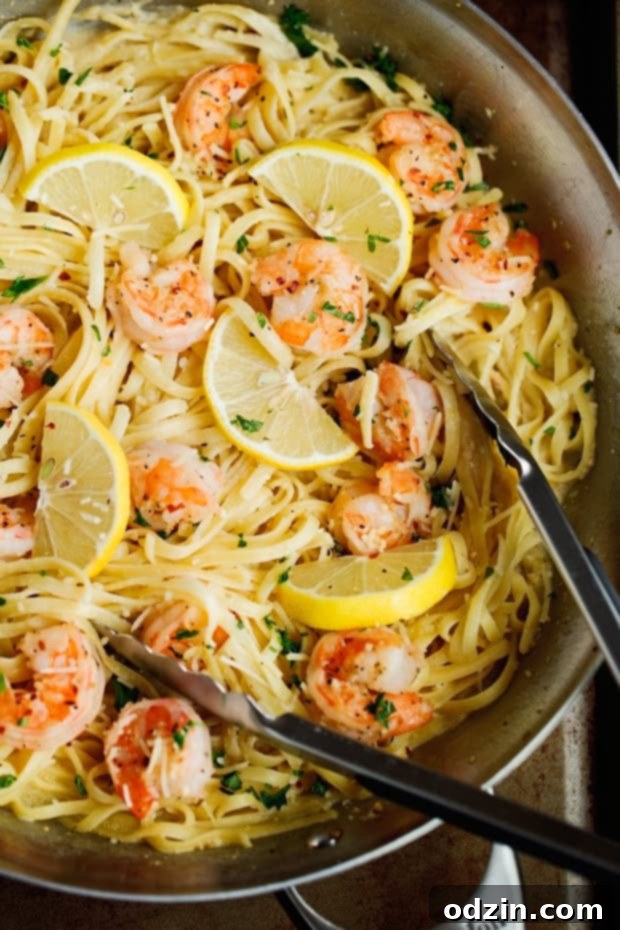
Zesty Lemon Garlic Shrimp Pasta: An Irresistible Creamy Linguine Recipe for Weeknights
Experience a burst of fresh flavors with this simple yet incredibly satisfying shrimp pasta! The vibrant lemon cream sauce delivers a bold, irresistible zing, perfectly balanced by a rich, luxurious finish. Garnished with fresh parmesan and aromatic basil, this dish promises a delightful culinary escape with every twirl.
Welcome, food lovers! Today, we’re diving headfirst into what I consider the ultimate midweek indulgence: a truly exceptional creamy lemon garlic shrimp pasta. For my husband, Anees, and I, pasta holds a special place in our hearts. While we try to savor these delightful carb-filled meals a few times a month, recipes like this one often sweep us off our feet, making moderation a delightful challenge. Imagine succulent shrimp, perfectly cooked linguine, bright lemon zest, rich cream, fragrant basil, and a generous sprinkle of Parmesan – it’s a symphony of flavors starring some of my all-time favorite ingredients. This isn’t just a meal; it’s an experience that’s impossible not to adore.
Why This Lemon Cream Shrimp Pasta Will Become Your New Favorite
What makes this creamy shrimp linguine truly stand out? It’s the impeccable balance within its signature lemon cream sauce. This isn’t just any sauce; it’s a beautifully crafted concoction that feels incredibly luxurious on the palate, yet bursts with a wonderfully bright and tangy zing from fresh lemons. It’s a flavor profile that’s both comforting and invigorating, ensuring every bite is a delightful surprise. Beyond its exquisite taste, this dish boasts an impressive quick prep and cook time, making it an ideal candidate for busy weeknights when you crave something extraordinary without spending hours in the kitchen.
Given its rich and creamy nature, I love to serve this shrimp pasta with a substantial side of peppery arugula. I often toss the fresh greens right onto the plate, letting them mingle with the warm pasta and shrimp. The crisp, slightly bitter notes of the arugula provide a brilliant contrast to the sweetness of the shrimp and the richness of the sauce, transforming it into a vibrant, textural feast. Arugula and shrimp truly are a match made in culinary heaven; the peppery bite complements the natural sweetness of the shrimp in a way that’s simply divine. Are your taste buds tingling yet? Mine certainly are as I type – I can almost taste these incredible flavors!
Crafting the Perfect Flourless Lemon Cream Sauce
This recipe draws inspiration from my popular one-skillet chicken with lemon garlic cream sauce. One of the key innovations I’ve truly embraced recently is creating these magnificent cream sauces without a drop of flour. And for good reason! I’m not a fan of the unpleasantly sticky, glue-like consistency that flour can sometimes impart when it soaks up liquids. It often feels irreversible, no matter how much milk or water you try to add. A flourless sauce, however, offers incredible flexibility. It can be effortlessly loosened with a touch more milk, water, or cream, bringing it right back to its original silky-smooth perfection. This approach ensures a consistently velvety texture that beautifully coats every strand of pasta without any heavy, gummy residue.
Building Layers of Flavor: Shrimp and Beyond
While this lemon cream pasta could certainly be adapted with leftover rotisserie chicken for convenience, the shrimp truly elevates the dish, contributing a unique depth of flavor that’s hard to replicate. To prepare the shrimp, I simply season it with a touch of finely minced garlic – because, let’s be honest, who doesn’t love garlic? – and a pinch of fiery red pepper flakes for a subtle kick. That’s all it takes! A quick sauté in the very same pan you’ll use for the sauce is key. Those beautiful browned bits left at the bottom of the pan after cooking the shrimp are pure gold; they form the foundational base of our incredibly flavorful sauce, adding an umami richness. Another crucial tip: always remember to reserve about one cup of the starchy pasta cooking water before draining your pasta. This liquid gold will prove invaluable later, helping you achieve the perfect sauce consistency and ensuring it beautifully coats every single noodle.
Now, let’s talk about that sauce – it’s an absolute cinch to create! This vibrant lemon cream sauce is built from a few simple, everyday ingredients: rich butter, aromatic garlic, bright lemon zest, tangy lemon juice, savory broth, and a touch of half-and-half or heavy cream for lusciousness. Each component plays a vital role in bringing the entire dish together. The lemons provide that signature bright, zesty zing, while the cream delivers an incredibly smooth, velvety finish. It’s definitely a “sometimes” food in our household, given our infrequent use of half-and-half or heavy cream, but when we do make it, it’s a cherished treat. I opted for half-and-half in this particular recipe because it’s what I had readily available, but rest assured, heavy cream will work just as beautifully, offering an even richer texture.
Finishing Touches and Serving Suggestions
When it comes to Parmesan cheese, feel free to sprinkle on as much or as little as your heart desires. In my opinion, more Parmesan is almost always a good thing, adding a wonderful salty, nutty depth to the dish! A generous scattering of fresh basil or parsley not only brightens the visual appeal but also infuses the pasta with an incredible burst of fresh, herbaceous flavor. These fresh herbs are truly the finishing touch that elevates the entire meal.
This lemon cream sauce-loaded shrimp pasta is truly designed for easy weeknight dinners, promising gourmet taste with minimal effort. And if you’re lucky enough to have any leftovers, they transform into a truly perfect lunch the next day. Once you experience the incredible flavors of this creamy lemon sauce, you’ll understand exactly why it’s such a consistent hit and a highly requested dish around here!
Shrimp Pasta with Lemon Cream Sauce
15 minutes
15 minutes
30 minutes
A simple shrimp pasta with tons of flavor! The lemon cream sauce adds such a nice, bold zing to this pasta. I finished it off with some parmesan and chopped basil to make it even more delicious!
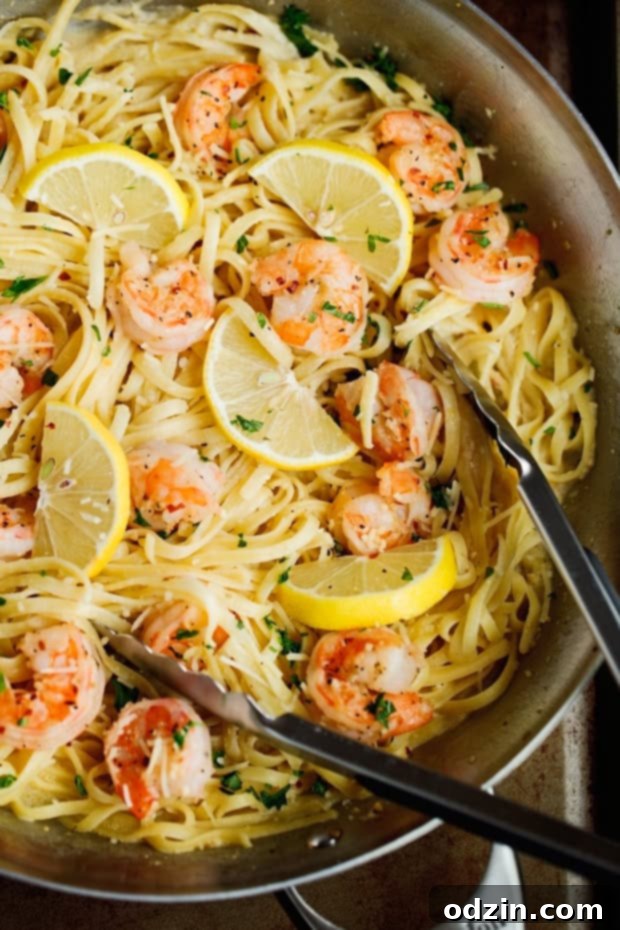
Ingredients
- 10 ounces linguine
- 1 lb. medium/large shrimp, peeled/deveined (tail can be left on or off)
- 1 tablespoon olive oil
- 3 teaspoons minced garlic, divided
- ¼ teaspoon red pepper flakes
- 1 tablespoon butter
- zest of 2 lemons (about 1 tablespoon)
- ⅓ cup lemon juice
- 1 cup chicken or vegetable broth
- ½ cup half and half (or heavy cream)
Optional Garnishes:
- Parmesan cheese, freshly grated, for sprinkling
- ¼ cup chopped fresh basil or parsley, for garnish
Instructions
- Cook the Pasta: In a large pot of generously salted boiling water, cook the linguine according to package directions until al dente. Before draining, reserve 1 cup of the starchy pasta cooking water. Drain the pasta and return it to the pot.
- Sauté the Shrimp: While the pasta cooks, heat 1 tablespoon of olive oil in a large skillet over medium heat. Add 1 teaspoon of the minced garlic along with the red pepper flakes and the prepared shrimp. Cook until the shrimp turn opaque and pink, typically about 3-5 minutes, depending on their size. Be careful not to overcook. Remove the cooked shrimp from the skillet and set aside on a plate.
- Prepare the Lemon Cream Sauce: To the same skillet (without cleaning it – those brown bits add flavor!), add the chicken or vegetable broth, the remaining 2 teaspoons of garlic, and the lemon juice. Bring the mixture to a gentle simmer. Using a whisk, vigorously deglaze the pan, scraping up any browned bits from the bottom. Allow the sauce to simmer gently for about 5 minutes, letting the flavors meld.
- Finish the Sauce: Stir in the butter until it has completely melted, then add the fresh lemon zest and the half-and-half (or heavy cream). Bring the sauce back to a gentle simmer, but do not boil.
- Combine and Serve: Add the cooked linguine and the sautéed shrimp back into the skillet with the sauce. Toss everything together thoroughly until the pasta and shrimp are beautifully coated in the creamy lemon sauce. Taste for seasonings and adjust salt and black pepper as desired. If the sauce seems too thick, gradually add some of the reserved pasta water, a tablespoon at a time, until it reaches your preferred consistency. Serve immediately, garnished generously with freshly grated Parmesan cheese and chopped fresh basil or parsley. Enjoy!
Have you made this recipe?
If you enjoyed this recipe, please consider leaving a ⭐️⭐️⭐️⭐️⭐️ rating and a comment below. You can also share a picture on Instagram with the hashtag #LITTLESPICEJAR, I’d love to see what you made!
Tips for Success & Variations
- Don’t Overcook Shrimp: Shrimp cook very quickly. Overcooked shrimp become tough and rubbery. Remove them from the pan as soon as they turn pink and opaque.
- Fresh Lemon is Key: For the best flavor, always use fresh lemon zest and juice. Bottled lemon juice simply won’t provide the same vibrant tang.
- Pasta Water is Your Friend: That reserved pasta water contains starch that helps the sauce emulsify and cling beautifully to the pasta. It’s essential for achieving the perfect consistency.
- Herb Power: While basil is fantastic, fresh parsley is also an excellent choice for garnish, offering a slightly different but equally delightful fresh note.
- Spice Level: For those who love a bit more heat, feel free to increase the amount of red pepper flakes. For less spice, omit them entirely.
- Vegetable Additions: Consider adding some sautéed spinach, asparagus, or cherry tomatoes to the dish for extra nutrients and color. Add them with the shrimp or just before combining with the pasta.
Storage and Reheating
Leftover lemon cream shrimp pasta can be stored in an airtight container in the refrigerator for up to 2-3 days. When reheating, it’s best to do so gently on the stovetop over low to medium heat. You may need to add a splash of milk, cream, or chicken broth to help loosen the sauce and bring it back to its creamy consistency, as pasta tends to absorb sauce as it sits. Avoid microwaving on high heat, as this can cause the shrimp to become rubbery.