Authentic Lebanese Rice Pilaf: Your Guide to Easy Arabic Vermicelli Rice
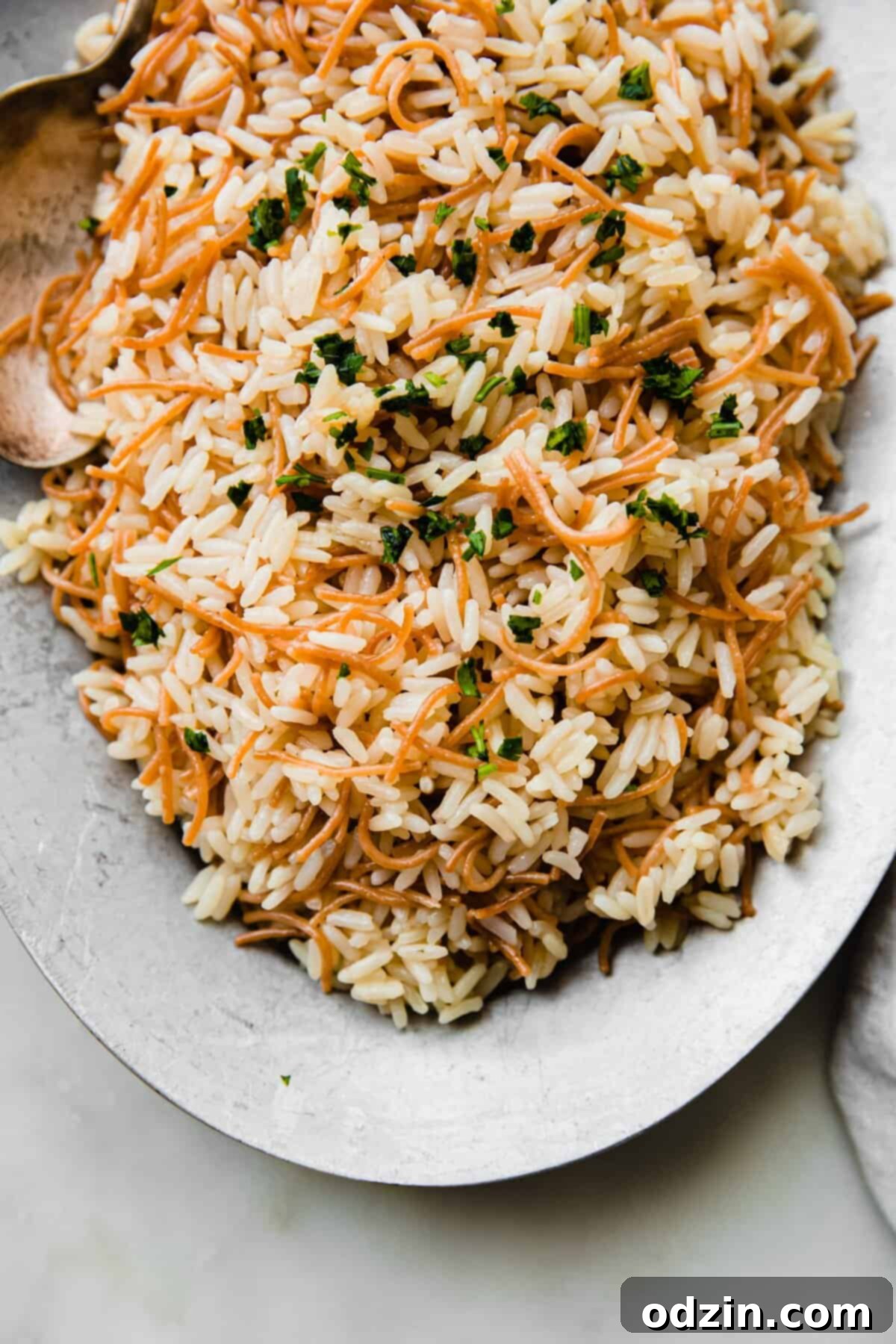
This easy Lebanese Rice (Arabic rice) pilaf is a celebrated staple in Middle Eastern cuisine, cherished for its aromatic profile and incredible versatility. Crafted with golden, toasted vermicelli noodles, fluffy long-grain rice, and rich chicken stock, this dish transforms simple ingredients into an extraordinary side that complements an array of main courses. Whether served alongside succulent kabobs, savory shawarma, hearty stews, or a variety of other delicious meals, this vermicelli rice pilaf promises a delightful culinary experience that is both comforting and deeply flavorful.
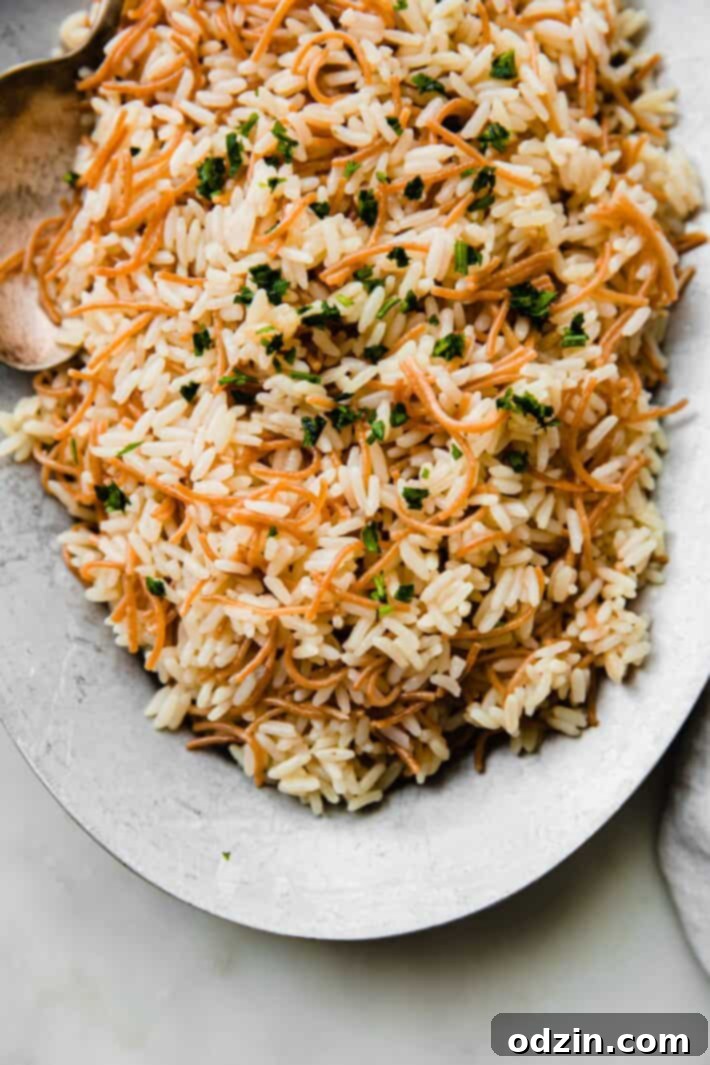
The secret to this beloved dish lies in the perfectly toasted vermicelli. It’s an element I personally adore, often adding a generous amount to my Lebanese rice – perhaps even a little overboard, but the resulting texture and flavor are simply irresistible! While widely known as Lebanese rice, this pilaf is celebrated across many Middle Eastern countries, often referred to as “Arabic rice” or, in Egypt, “Masri rice,” showcasing its universal appeal.
This heartwarming rice dish is a personal favorite, standing proudly alongside other classics like mujaddara. Its preparation begins with dry vermicelli pasta, which is gently toasted in luxurious ghee until it achieves a beautiful, inviting golden-brown hue. Next, thoroughly rinsed long-grain rice is added to the pan, where it’s lightly toasted in the ghee until the grains become translucent and begin to “pop” ever so slightly. The key to its tender, perfectly cooked consistency is the addition of precisely twice the amount of rich chicken stock as rice. The mixture then simmers gently, allowing the rice to absorb all the flavorful liquid. A quick fluff with a fork after resting, and it’s ready to be savored.
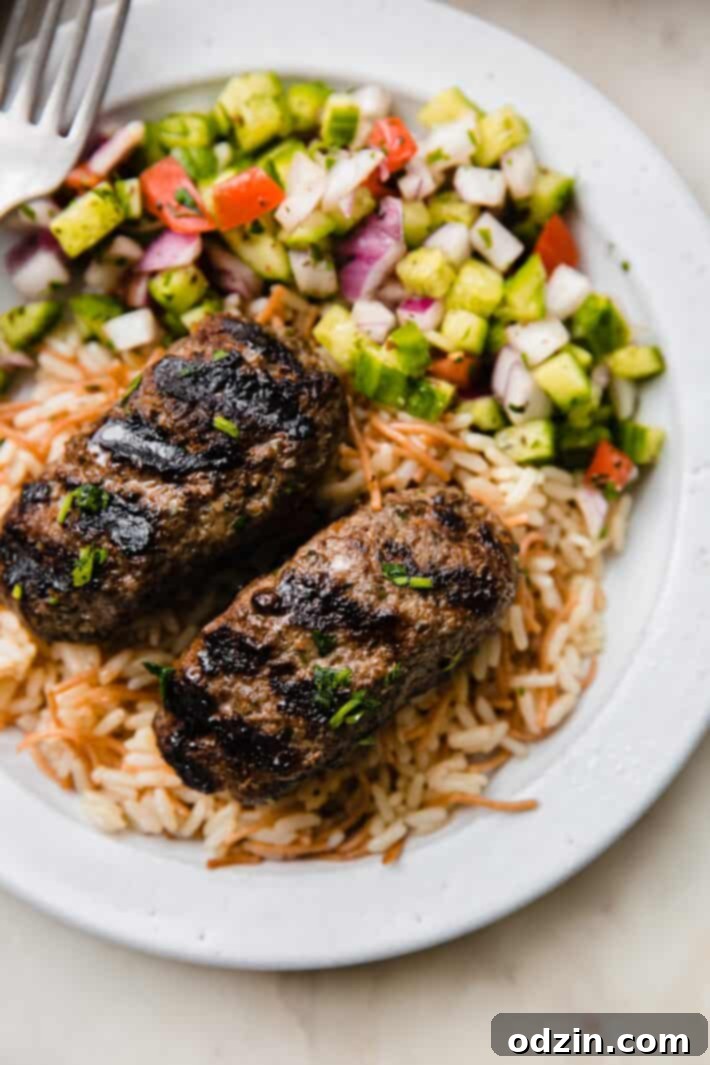
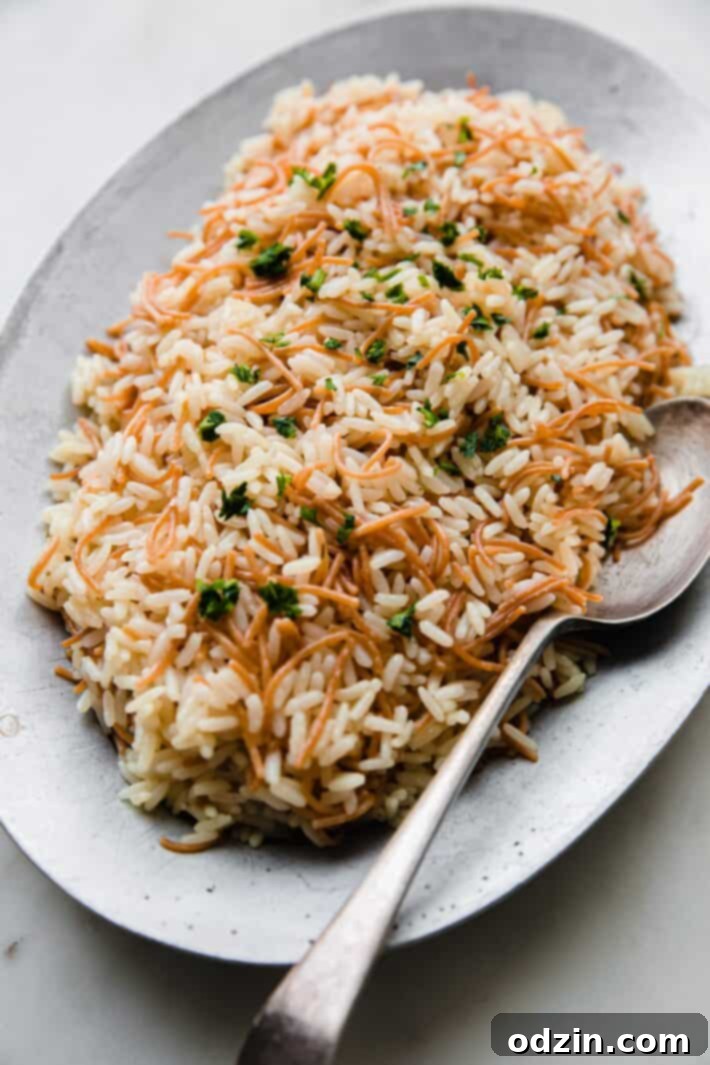
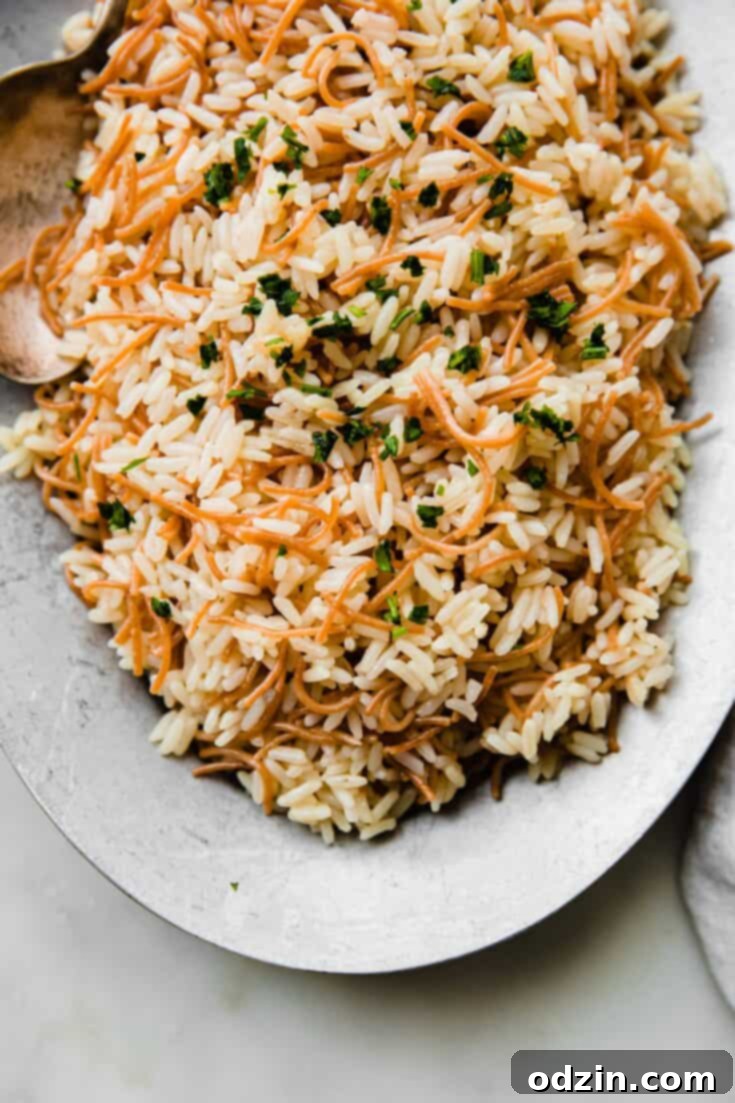
The versatility of Lebanese vermicelli rice knows no bounds. It pairs exquisitely with homemade kafta, perfectly seasoned grilled chicken skewers, and forms the base for hearty beef shawarma bowls, especially when served with a generous dollop of creamy toum. It’s also an ideal accompaniment to comforting lentil or okra stews, fresh Shirazi salad, or classic dips like hummus and baba ganoush. For an elegant touch, simply garnish your Lebanese rice with some freshly chopped parsley, or elevate it further with a sprinkling of toasted pine nuts or slivered almonds.
I find myself regularly preparing large batches of this delightful vermicelli rice, as it’s incredibly convenient to have on hand. Its delicious flavor and remarkable ability to complement almost any meal make it a constant resident in my refrigerator, ready to transform any ordinary dinner into a Middle Eastern feast.
Essential Ingredients for Authentic Middle Eastern Rice:
Creating the perfect Lebanese rice pilaf starts with selecting the right ingredients. Each component plays a vital role in achieving that signature fluffy texture and rich, savory flavor that makes this dish so irresistible.
- Long Grain White Rice: The foundation of our pilaf. For this recipe, a precise 1:2 ratio of rice to liquid is crucial – meaning for every cup of rice, you’ll use two cups of liquid. Before cooking, it’s essential to rinse your rice thoroughly under cold running water. This step helps remove excess starch, preventing the rice from becoming sticky and ensuring each grain cooks up distinct and fluffy. You can use various types of long-grain white rice, including regular long-grain, basmati rice, or even parboiled rice. If opting for parboiled rice, reduce the liquid by about ¼ cup to ensure optimal absorption and texture. Unlike many other basmati rice recipes where soaking is recommended, you can skip that step here, making this recipe even quicker and easier to prepare.
- Ghee: The star ingredient for toasting our vermicelli, ghee imparts a rich, nutty, and deeply luxurious flavor that truly defines Middle Eastern rice. While ghee is highly recommended for its unique taste, you can certainly use a 50:50 combination of butter and olive oil as an alternative, or even opt for all olive oil if you prefer a dairy-free option. However, for that authentic, elevated flavor profile, ghee is truly unparalleled.
- Vermicelli Noodles: These thin, broken pasta strands are integral to the dish’s characteristic texture and appearance. You can often find vermicelli pasta readily available in most Middle Eastern grocery stores, or even in the international aisle of larger mainstream supermarkets. If you’re having trouble locating it, Fideo pasta makes an excellent substitute, or you can conveniently order vermicelli online. The key is to find the short, broken strands that toast beautifully.
- Chicken Broth/Stock: While water can be used, chicken stock or broth is highly recommended as it infuses the rice with a profound depth of flavor, making it far more savory and aromatic. I prefer using low-sodium chicken stock to have better control over the overall saltiness of the dish. For those seeking a vegetarian-friendly option, vegetable stock or even plain water can be used, though you’ll need to adjust the seasoning accordingly.
- Kosher Salt: Since I typically use low-sodium chicken broth, adding a quarter teaspoon of kosher salt ensures the rice is perfectly seasoned, enhancing all the other flavors without being overly salty. If using regular chicken broth or water, taste and adjust the salt content to your preference.
Crafting Your Lebanese Rice Pilaf: A Step-by-Step Guide
Making this aromatic Lebanese rice is simpler than you might think. Follow these clear steps to achieve perfectly fluffy and flavorful vermicelli rice every time.
- Rinse Your Rice Thoroughly: Begin by placing your long-grain white rice into a fine-mesh strainer. Rinse the rice under cold running water for a good 2-3 minutes, gently rubbing the grains with your fingertips in a circular motion. This critical step helps to remove the excess starch that can cause rice to become sticky. You’ll know the rice is sufficiently rinsed when the water running through the sieve appears clear. Once rinsed, set the strainer aside to allow the rice to drain while you prepare the vermicelli.
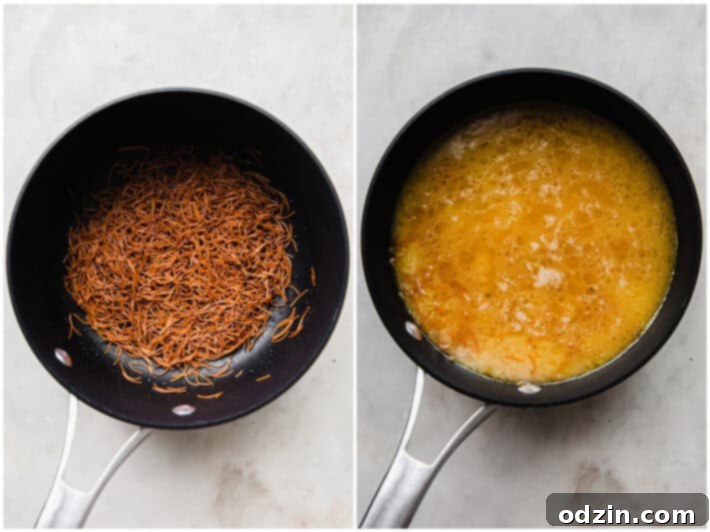
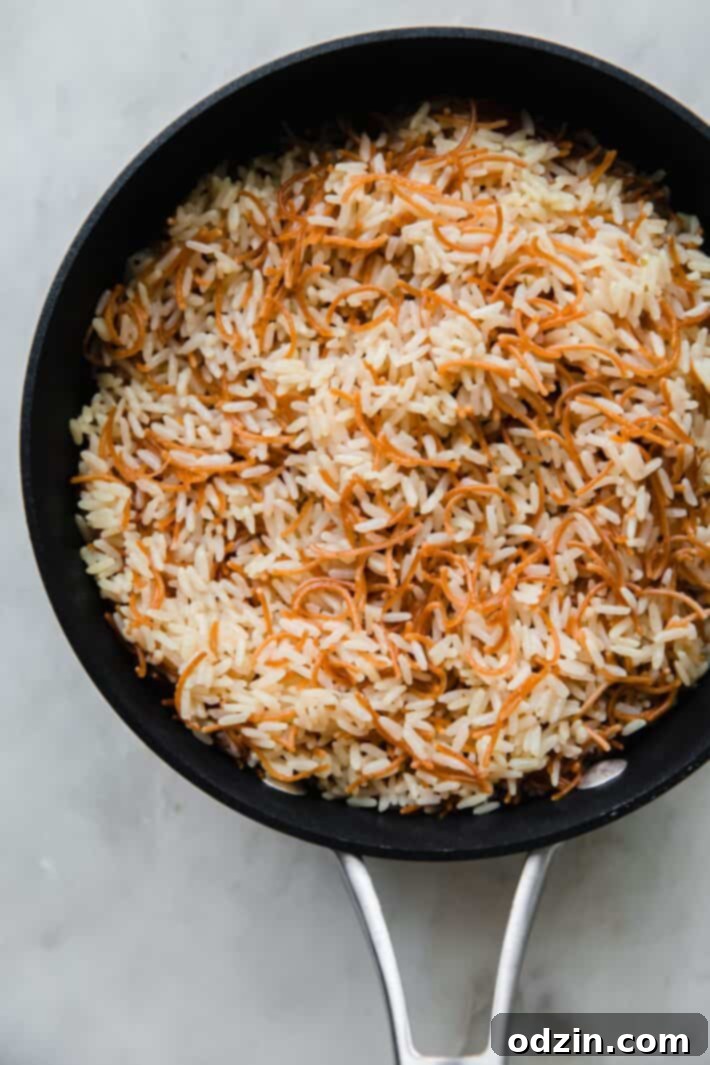
- Achieve Golden Brown Vermicelli: In a medium-sized saucepan, melt 2 tablespoons of ghee (or your chosen combination of butter and olive oil) over medium heat. Once the ghee is fully melted and shimmering, add the vermicelli noodles to the pan. Toast the noodles, stirring constantly with a wooden spoon or spatula to ensure even browning. This constant stirring is vital to prevent any noodles from burning or browning unevenly. Continue to cook until all the vermicelli strands achieve a beautiful, uniform golden-brown color, which usually takes about 4-5 minutes.
- Toast the Rice and Simmer to Perfection: Once the vermicelli has reached its ideal golden hue, add the thoroughly drained, rinsed rice to the saucepan. Continue to toast the rice with the vermicelli in the ghee for another 3 minutes, stirring frequently. You’ll notice the rice grains becoming slightly translucent and you might hear a subtle popping or sizzling sound – these are signs of proper toasting, which contributes to distinct, individual grains in the final pilaf. Next, pour in the chicken broth and add the kosher salt. Increase the heat to medium-high and bring the mixture to a rolling boil. Once boiling, give it one final stir, then immediately cover the pot with a tight-fitting lid. Reduce the heat to its lowest setting and allow the rice to simmer undisturbed for 15 minutes, or until all the liquid has been absorbed and the rice is tender.
- Rest, Fluff, and Serve: After the 15-minute simmering period, turn off the stove, but keep the pot covered. It’s crucial to let the rice stand, undisturbed, for an additional 5 minutes. This resting period allows the steam to redistribute within the rice, resulting in a more evenly cooked and fluffier texture. After resting, remove the lid and gently fluff the rice with a fork. This separates the grains and incorporates the vermicelli evenly throughout. Serve your aromatic Lebanese rice pilaf immediately alongside your preferred protein or side dishes. Both adults and children are sure to adore this simple yet profoundly delicious Middle Eastern rice pilaf!
Tips for Success with Your Lebanese Rice Pilaf:
- Preventing Sticky Rice: The key to fluffy, separate grains is thorough rinsing and proper liquid ratio. Always rinse your rice until the water runs clear. Also, ensure your lid is tight-fitting during simmering to trap all the steam, which aids in even cooking and prevents gumminess.
- Adjusting for Different Rice Types: While long-grain white rice is recommended, if you use basmati, follow the same instructions. For parboiled rice, reduce the liquid by ¼ cup. Always ensure the rice is completely cooked through before turning off the heat.
- Reheating Leftovers: Lebanese rice reheats beautifully. For best results, sprinkle a tablespoon or two of water over the rice, cover it, and microwave on medium heat or gently reheat on the stovetop over low heat until warmed through. This prevents it from drying out.
- Flavor Variations: For an extra layer of flavor, consider adding a bay leaf or a pinch of ground cardamom to the liquid before simmering. You can also experiment with different broths, such as beef or vegetable, to tailor it to your main dish.
- Perfecting the Vermicelli Toast: Don’t rush this step! A medium golden brown color is ideal for the vermicelli. Too light, and it won’t contribute as much flavor; too dark, and it can taste bitter. Stir constantly for even color.
FAQs About Lebanese Rice:
- Is this the same as Egyptian Masri Rice? Yes, this flavorful rice pilaf is indeed widely made across many Middle Eastern countries. In Egypt, it is famously known as Masri Rice, highlighting its shared cultural heritage.
- Can I use fewer vermicelli noodles if I wanted? Absolutely! While I enjoy a generous amount of vermicelli, you can easily reduce the quantity to ½ a cup if you prefer a less vermicelli-dominant rice pilaf.
- What kind of nuts can you top this with? Toasted pine nuts and toasted slivered almonds are the most traditional and popular toppings, adding a wonderful crunch and nutty flavor to the dish.
- Can I use water instead of chicken stock? Yes, you can certainly use plain water instead of chicken stock. However, keep in mind that water will result in a milder flavor. You will need to compensate by adding a bit more salt to ensure the rice is properly seasoned, as chicken stock naturally contains more sodium and flavor.
If you enjoyed this recipe, you might also like these Middle Eastern delights:
- Homemade Shawarma Seasoning
- Lebanese Meat Stuffed Pitas (Arayes)
- Manakish (Lebanese Flatbread)
- The Best Homemade Falafel
- 20-Minute Greek Gyros
Lebanese Rice Pilaf
5 minutes
20 minutes
5 minutes
30 minutes
This easy Lebanese Rice (Arabic rice) pilaf is a staple in Middle Eastern cooking. Toasted vermicelli rice noodles, rice, and chicken stock make this such an aromatic side dish! Serve with kabobs, shawarma, and so much more!
Ingredients
- 2 cups long grain white rice
- 2 tablespoons ghee (or 50:50 butter and oil)
- ¾ cup vermicelli pasta
- 4 cups low sodium chicken broth (or water)
- ¼ teaspoon kosher salt
Instructions
- RINSE: Add the rice to a fine-mesh strainer. Rinse under cold, running water for 2-3 minutes. Use fingertips to rub the rice in the sieve in a circular motion until the water runs clear. Then set aside.
- BROWN: Add the ghee to a large saucepan over medium heat. When the ghee melts, add the vermicelli and cook until a medium golden brown; about 4-5 minutes toggling the heat from medium to low if needed. Keep a close eye on it and stir it frequently.
- MAKE RICE: When the vermicelli is golden brown, add the rinsed rice and allow it to toast for 3 minutes stirring often so the vermicelli or rice doesn’t burn. You’ll notice the rice start to pop towards the end. Add the chicken broth and salt. Kick the heat up to high and bring it to a boil. Stir once, then cover with a tight-fitting lid; reduce the heat to low and let cook for 15 minutes or until the water dries up and the rice cooks through.
- SERVE: Turn off the stove; allow the rice to stand for 5 minutes before fluffing with a fork and serving.
Notes
- Liquid: If you use water instead of broth/stock, you will need to up the salt in the recipe to make up for the sodium you’d be missing from the stock.
Recommended Products
- Vermicelli Pasta
- Wooden Spoon Set
- 3-Quart Saucepan
Nutrition Information:
Yield:
8
Serving Size:
1/8
Amount Per Serving:
Calories: 119Total Fat: 4gCarbohydrates: 17gProtein: 4g
To get the most accurate information, please input the ingredients you’ve used into a nutrition calculator.
Have you made this recipe?
If you enjoyed this recipe, please consider leaving a ⭐️⭐️⭐️⭐️⭐️ rating and a comment below. You can also share a picture on Instagram with the hashtag #LITTLESPICEJAR, I’d love to see what you made!