Effortless No-Knead Focaccia Bread: Your Ultimate Guide to Homemade Perfection
Unlock the secret to baking the most delicious no-knead focaccia bread right in your own kitchen! This incredibly simple recipe calls for just five essential ingredients and can be customized with an array of delightful toppings. Prepare to be amazed by how easily you can create bakery-quality focaccia at home!
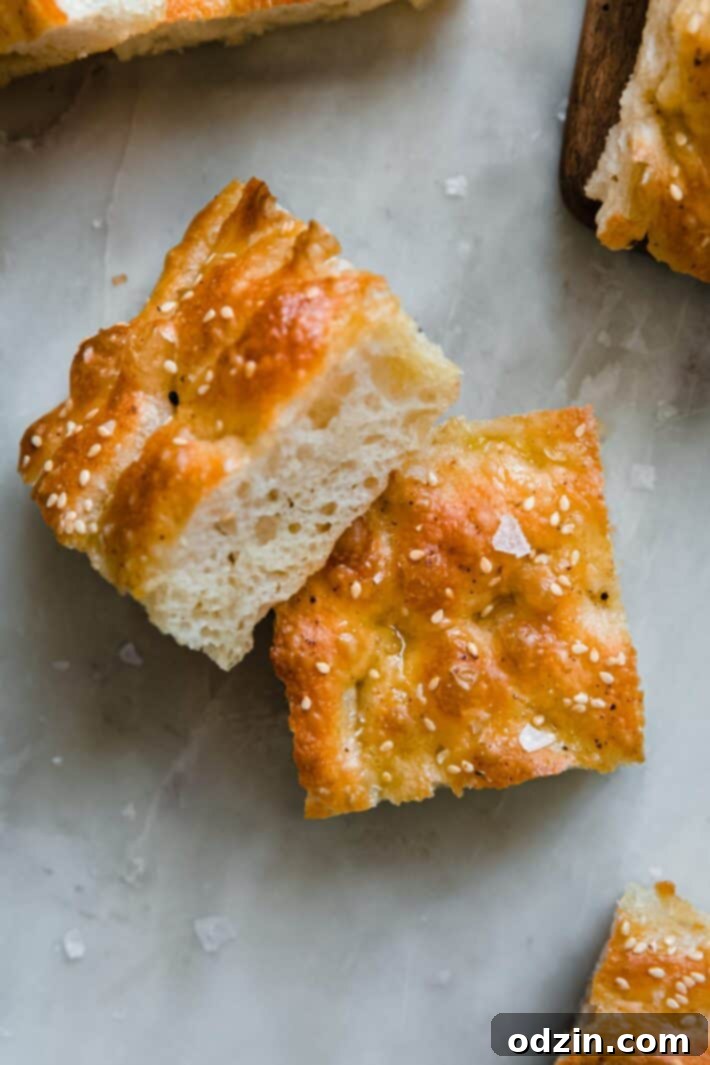
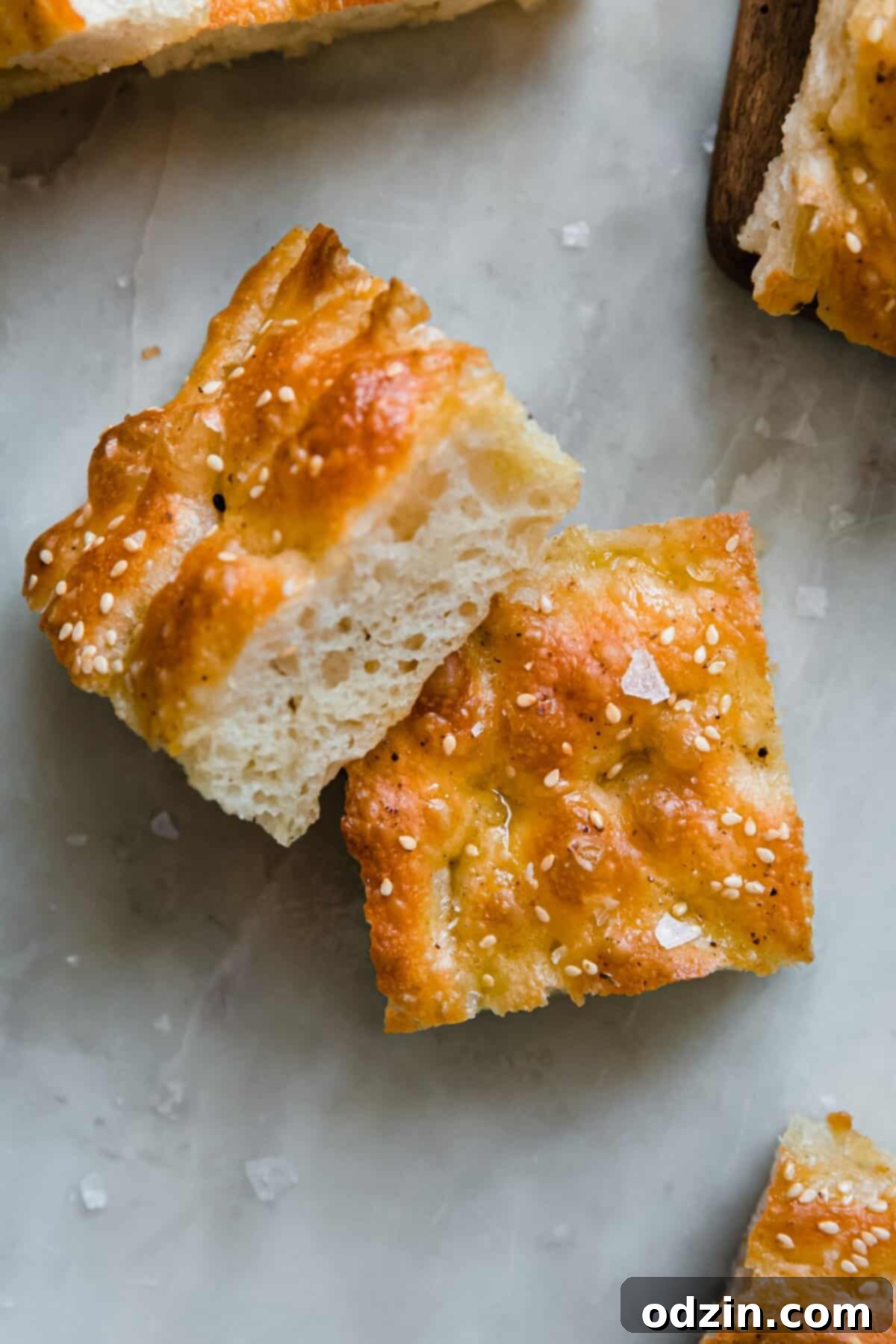
Who would have thought that baking an authentic, crusty, yet tender focaccia could be *this* straightforward? Forget complicated bread-making techniques; this no-knead method simplifies the process without compromising on flavor or texture. Every bite of this crispy, olive oil-infused focaccia instantly transports me back to the stunning Ligurian region of Italy. It was there that I shamelessly indulged in focaccia for breakfast, lunch, and dinner for three glorious days. Sometimes topped with ripe tomatoes and a whisper of fresh pesto, other times adorned with sweet cipolle (onion) petals, and always, the timeless classic: focaccia drizzled with olive oil and sprinkled with flaky sea salt. It’s an experience I’ve painstakingly perfected to bring to your home kitchen.
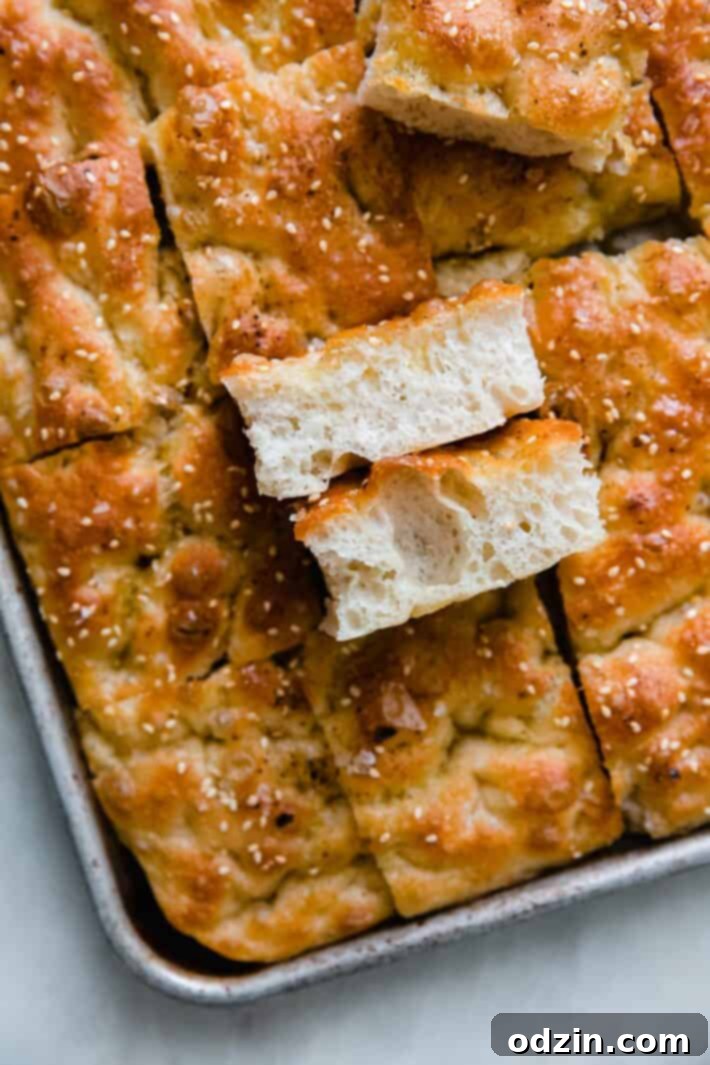
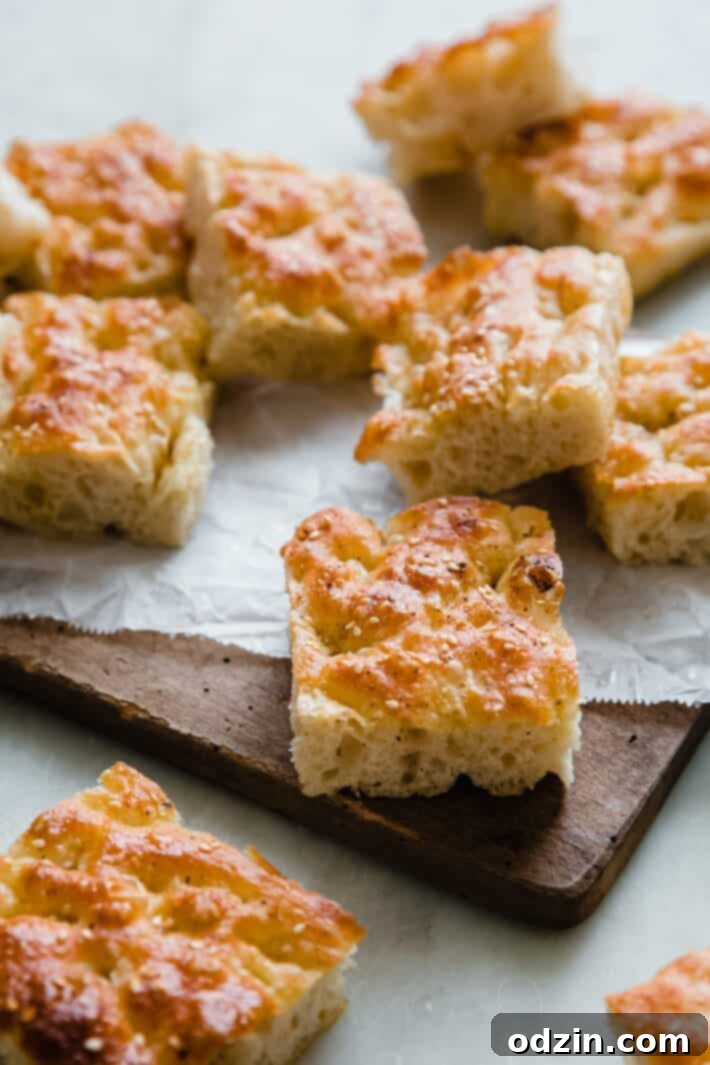
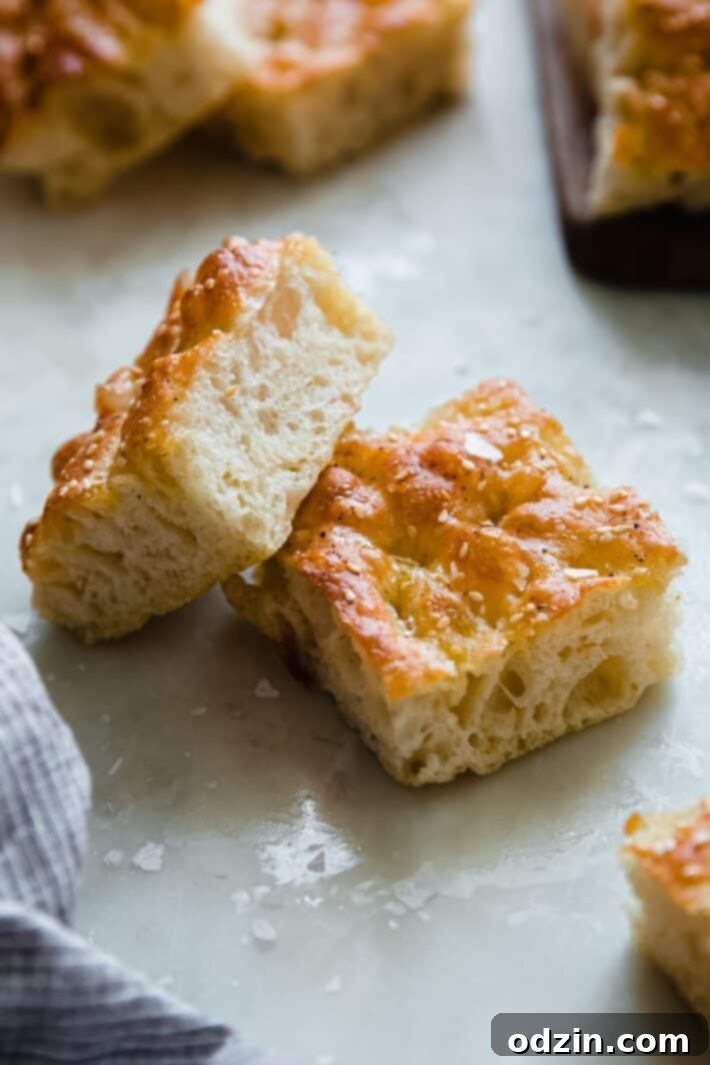
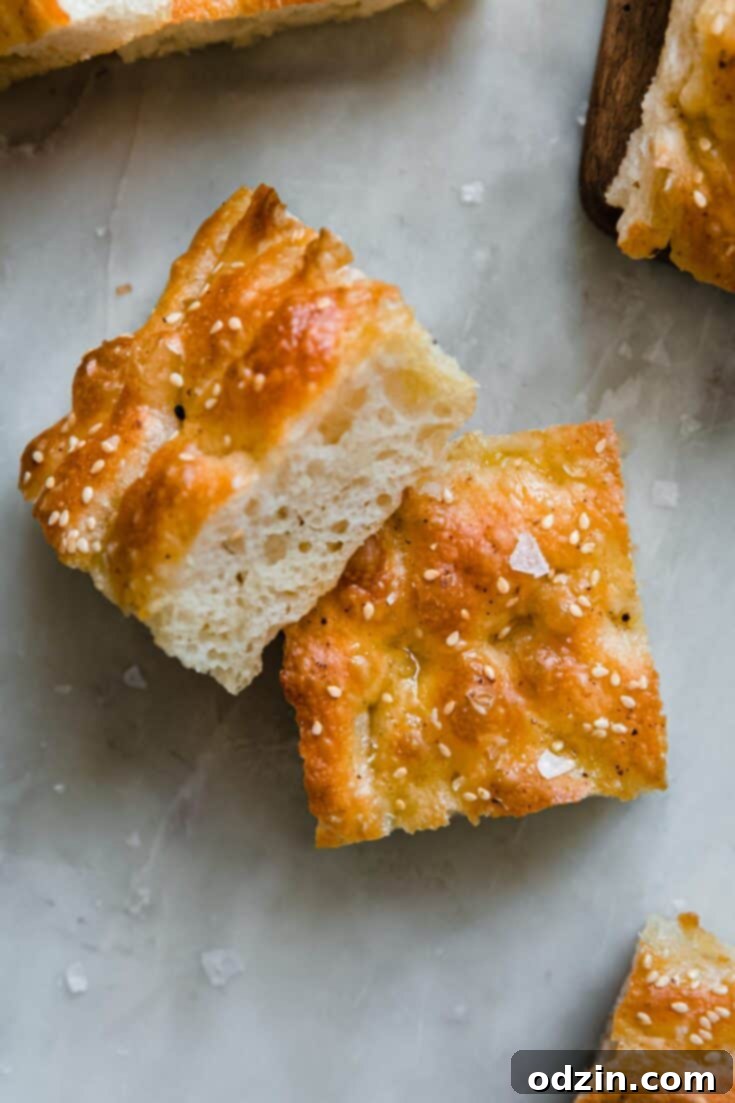
This no-knead focaccia recipe is designed for everyone, from novice bakers to seasoned pros seeking an easy win. It’s the perfect way to enjoy a true Italian classic without needing extensive bread-making experience or specialized equipment. Each slice offers a satisfyingly crunchy exterior, a soft and airy interior, a delicate hint of sea salt, and a delightful burst of fragrant olive oil from its signature dimples. I dedicated two years to refining this recipe before sharing it, ensuring it truly delivers perfection. Seriously, the sheer joy that comes from baking and savoring homemade focaccia is unparalleled. It has become a cherished staple in our home, especially during holiday gatherings like Thanksgiving.
This comprehensive guide is packed with detailed instructions and invaluable tips. If you’re already familiar with focaccia making and prefer to jump straight to the recipe, feel free to use the ‘jump to recipe’ button at the top of the page. Otherwise, read on for everything you need to know to create your best focaccia yet!
Essential Ingredients for Perfect No-Knead Focaccia Bread
Crafting this incredible focaccia requires just a handful of quality ingredients. Each plays a crucial role in developing its distinctive flavor and irresistible texture:
- Lukewarm Water: The foundation of any great bread! Water at around 105ºF (40ºC) is ideal for activating the yeast, allowing it to “bloom” effectively. Water that’s too cold will delay activation, while water that’s too hot can kill the yeast, rendering it inactive and preventing your dough from rising.
- Honey: Beyond adding a subtle sweetness that complements the savory notes, honey plays a vital role in the maillard reaction during baking, contributing to focaccia’s beautiful golden-brown crust. Crucially, it acts as a primary food source for the yeast, helping it thrive and produce the necessary carbon dioxide for a light, airy dough.
- Active Dry Yeast: This is the leavening agent that gives your focaccia its signature lift and airy structure. I typically store yeast in the refrigerator to prolong its shelf life and potency. While a standard packet usually contains about 2 ¼ teaspoons, this recipe requires precisely 1 ½ teaspoons, so accurate measurement is key. You can also use instant yeast interchangeably with active dry yeast. Instant yeast is generally more robust and doesn’t always require blooming beforehand, but for consistency and best results, especially for beginners, blooming is a good practice.
- Bread Flour: For that perfect chewy texture and impressive rise, bread flour is highly recommended. It boasts a higher protein and gluten content compared to all-purpose flour. This increased gluten allows the dough to develop more elasticity and strength, trapping air bubbles more effectively and resulting in those delightful, open crumb structures characteristic of excellent focaccia. The extra gluten is definitely a welcome addition here! (See FAQs for using other flours.)
- Kosher Salt: Salt is essential for flavor and also plays a role in regulating yeast activity and strengthening the gluten network. I consistently use kosher salt in my recipes for its clean taste and flake size. If substituting with fine table salt, remember to reduce the amount by half, as it is much denser.
- Olive Oil: A star ingredient in focaccia, good quality olive oil is utilized at several stages. First, it’s incorporated directly into the dough, imparting a delicate olive flavor and contributing to the dough’s tender crumb. Next, it’s generously used to grease the baking pan, ensuring the focaccia doesn’t stick and develops a wonderfully crispy bottom. Finally, a generous drizzle over the top before baking adds rich flavor, a beautiful sheen, and helps create those iconic dimples. Few things compare to warm focaccia fresh from the oven, glistening with olive oil!
- Seasonings or Toppings: This is where you can truly make the focaccia your own! A simple sprinkle of flaky sea salt is always a delicious choice. For a touch of heat, consider red pepper flakes. The possibilities are truly endless, and we’ll explore many topping suggestions below.
Step-by-Step Guide: How to Bake No-Knead Focaccia
Follow these simple steps to create a truly remarkable focaccia with minimal effort:
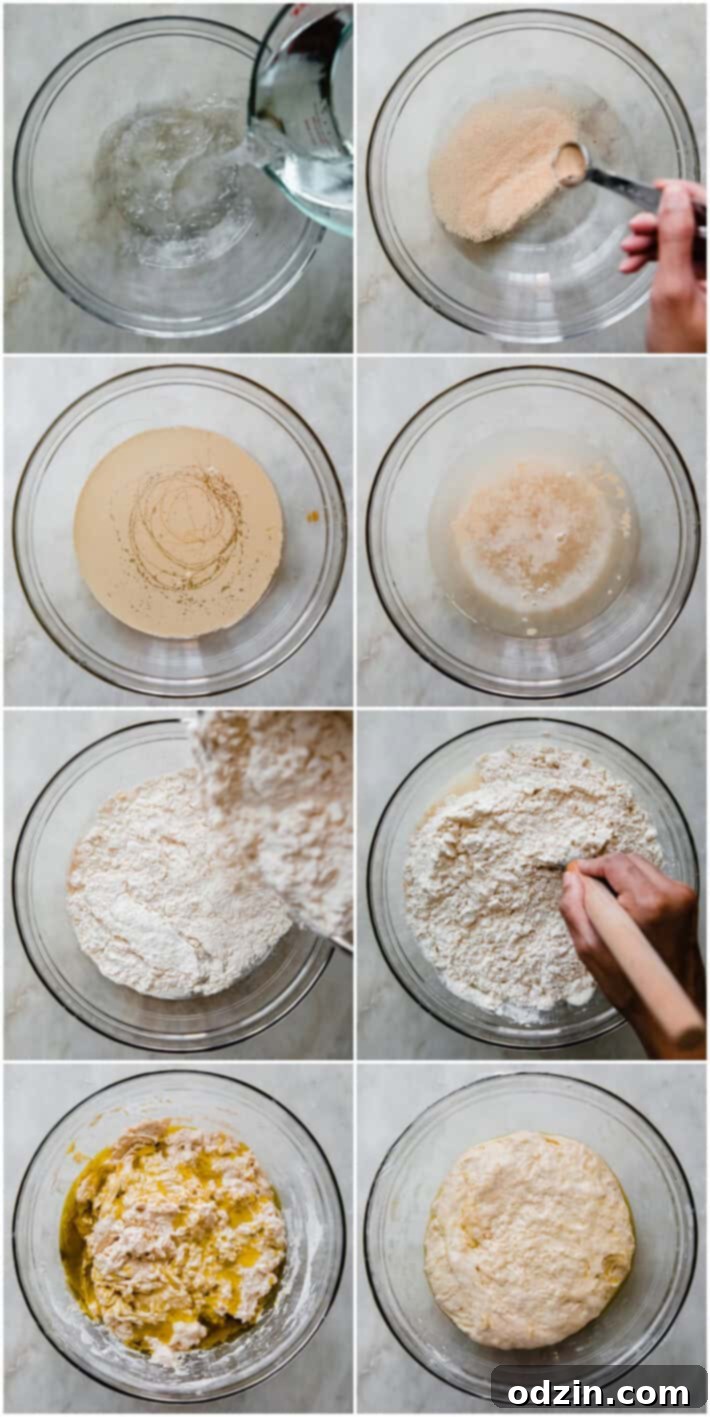
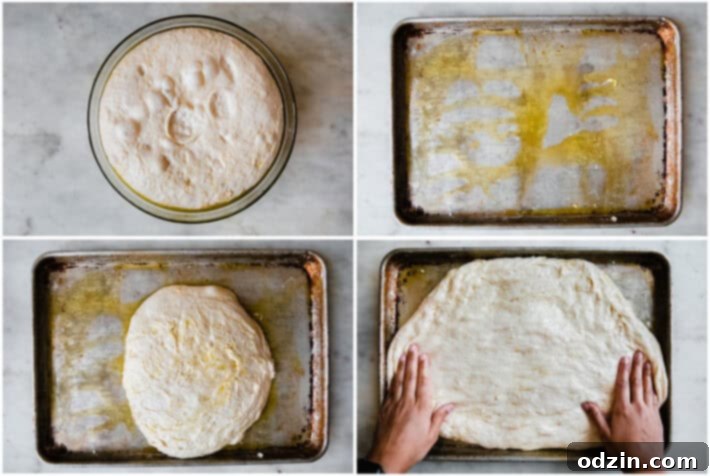
- Prepare the Dough (The No-Knead Way): Begin by combining the lukewarm water (around 105ºF / 40ºC), honey, and active dry yeast in a large mixing bowl. Gently stir, then let this mixture sit undisturbed for 10-12 minutes. During this time, the yeast should “bloom,” meaning it will activate and become foamy or bubbly on the surface. This is a crucial step – if you don’t see any activity, your yeast may be expired or the water temperature was incorrect. In that case, it’s best to start over with fresh yeast. Once activated, add the bread flour, followed by the kosher salt. It’s important to add the salt *after* the flour, avoiding direct contact with the yeast, as salt can inhibit or kill yeast activity. Next, pour in the ¼ cup of olive oil. Using a dough whisk, rubber spatula, or wooden spoon, mix until all ingredients are just combined and no dry pockets of flour remain. The dough will be shaggy and sticky – this is perfectly normal for a high-hydration, no-knead dough. Lightly grease another large bowl with about a teaspoon of olive oil, transfer the dough to this bowl, and cover it tightly. A reusable bowl cap or plastic wrap works well; if using plastic wrap, a light brush of oil on the underside will prevent sticking. Place the covered dough in the refrigerator for a long, slow fermentation, ideally 12-18 hours. This cold proof develops incredible flavor and texture.
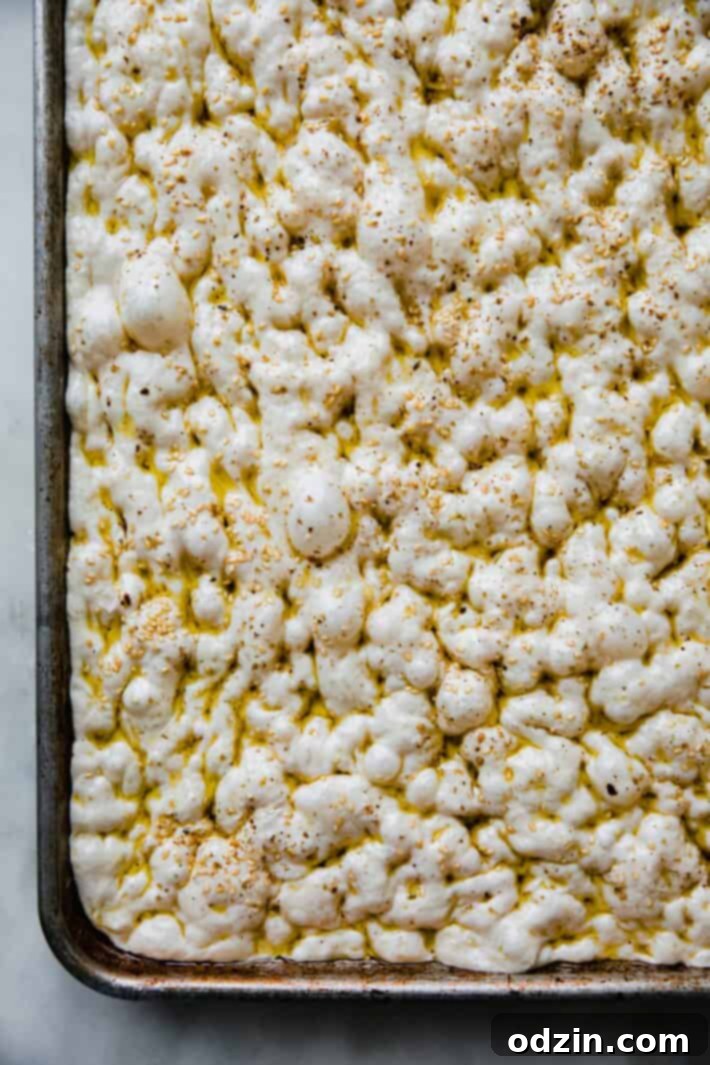
- Proofing and Preparing for Baking: Approximately 3 hours before you plan to bake, remove the dough from the refrigerator. Drizzle 2 tablespoons of olive oil onto an 18×13 inch baking sheet. If your baking sheet is not naturally non-stick, you must generously butter the entire surface of the pan before adding the olive oil. Skipping this crucial step will almost certainly result in your focaccia sticking, making it difficult to remove. Gently scrape the dough out of its bowl and onto the oiled baking sheet. With lightly oiled fingertips, begin to gently stretch the dough towards the corners of the pan. Don’t force it if the dough resists; it’s quite elastic after its cold proof. Cover the pan loosely with plastic wrap or a clean kitchen towel and let it rest for 30 minutes. The dough will relax, making it easier to stretch further. Repeat the gentle stretching process, working the dough closer to the edges if needed. Allow the dough to proof at room temperature for a total of 3 hours (including your stretching intervals). During the last 45 minutes of proofing, preheat your oven to 425ºF (220ºC) and position an oven rack in the center. Just before baking, pour the remaining 2 tablespoons of extra virgin olive oil over the proofed dough. With oiled fingertips, gently but firmly dimple the dough all over, pressing down to the bottom of the pan but being careful not to tear it. These dimples are essential for focaccia’s characteristic appearance and create pockets for the olive oil. Now is the time to sprinkle on your chosen toppings!
- Baking and Cooling: Once the oven is fully preheated, carefully place the baking sheet with the focaccia dough into the oven. Bake for 25-30 minutes, or until the focaccia is beautifully golden brown on top and cooked through. If you opt for a smaller or thicker pan, the baking time might extend slightly (30-35 minutes). For an even crispier bottom crust, an optional tip (as of 10/22 update) is to carefully flip the focaccia onto an oven-safe wire rack and broil the underside for 30-60 seconds after baking. Once baked, remove the focaccia from the oven and let it cool on the baking sheet for a few minutes before transferring it to a cutting board. Slice into generous portions and enjoy your homemade masterpiece!
Frequently Asked Questions About No-Knead Focaccia
- Can I use various toppings on this focaccia? Absolutely! Focaccia is incredibly versatile when it comes to toppings. Some of my personal favorites include thinly sliced red onions or cherry tomatoes, which bake beautifully into the dough. After the focaccia comes hot out of the oven, a generous brush of fresh basil pesto adds an amazing herbaceous flavor. Other fantastic options include green olives, a sprinkle of Za’atar seasoning (which I use often for a savory, tangy twist), sesame seeds, fresh rosemary, other fragrant herbs like thyme or oregano, or even a luscious garlic butter spread while the bread is still warm. The culinary possibilities are truly endless, allowing you to customize your focaccia to any meal or preference.
- Why is extra flour suggested if using all-purpose (AP) flour instead of bread flour? Bread flour naturally contains a higher protein content, which translates to more gluten. This higher gluten content allows bread flour to absorb more liquid and develop a stronger, more elastic dough, which is ideal for trapping air and creating a chewy, airy focaccia. All-purpose flour has less protein. By adding an extra tablespoon of AP flour, you slightly increase the overall flour-to-liquid ratio, helping to create a dough with a consistency and structure more akin to one made with higher-protein bread flour, resulting in a better rise and texture.
- Is there a significant difference between using bread flour versus all-purpose flour? Yes, there is a noticeable difference. Focaccia made with bread flour tends to have a chewier crumb and a more open, airy interior due to the enhanced gluten development. The higher protein also contributes to a slightly better rise. While either flour will work for this no-knead focaccia recipe, for the best possible texture and loft, bread flour is the superior choice. If you use all-purpose flour, your focaccia will still be delicious but might be a bit softer and less chewy.
- Does the focaccia bread stick to the baking sheet? If you are using a standard aluminum sheet pan (one that is not designated as non-stick), you will indeed need to generously grease it with a small amount of butter before drizzling in the olive oil. Unfortunately, olive oil alone is often not sufficient to prevent the focaccia from sticking to a regular pan. Ensure the butter is rubbed generously and completely over the entire surface of the pan, then add the olive oil on top. If you are using a good quality non-stick baking sheet, butter may not be necessary, but a generous coating of olive oil is still crucial for flavor and a crispy crust.
- Can I use a smaller baking sheet for thicker bread? Absolutely! If you prefer a thicker focaccia, perhaps for making sandwiches or if you enjoy a softer, more substantial interior, using a smaller pan is an excellent idea. You can utilize a rectangular cake pan or even a couple of round cake pans. Just remember that if you opt for a smaller pan, it will likely be necessary to grease it with butter in addition to olive oil, as most smaller pans are not non-stick. Also, keep in mind that baking times will vary; a thicker focaccia will require a longer baking period to cook through completely.
Foolproof Tips for No-Knead Focaccia Success
Achieve consistently perfect results with these expert tips and tricks:
- Leverage a Pizza Stone or Steel: If you’re fortunate enough to own a large pizza stone or steel and keep it permanently in your oven, utilize it! Placing your baking sheet directly on the preheated stone or steel provides an extra boost of heat to the bottom of the focaccia, encouraging a remarkably crispy, golden crust. While this step isn’t strictly necessary – your focaccia will still be fantastic without it – it definitely elevates the texture. When using a pizza stone, I recommend a rimmed baking sheet that isn’t non-stick for optimal heat transfer.
- Serving Suggestions to Elevate Your Meal: Focaccia is incredibly versatile and pairs wonderfully with almost anything! Enjoy it for breakfast alongside hearty Italian eggs, or as a comforting accompaniment to my homemade tomato soup or Italian wedding soup. It makes exceptional sandwich bread, perfect for packing flavorful lunches. Serve it with a simple olive oil dip for an appetizer, or alongside a vibrant roasted garlic Italian couscous salad. It’s the ideal side dish for substantial mains like whole roasted chicken, rich homemade ragu with pappardelle, light tomato shrimp pasta, classic gnocchi alla Sorrentina, zesty pasta puttanesca, or spicy Calabrian chili pasta!
- Understanding the Recipe Timeline: It’s important to note that this specific no-knead focaccia recipe is not a quick one-day bake. It requires patience, primarily due to the crucial 12-18 hour cold refrigeration period for the high-hydration dough. This slow proofing is what develops its complex flavor and airy texture, and it simply cannot be rushed for optimal results. If you’re looking for a focaccia recipe that can be prepared and baked within a few hours on the same day, I highly recommend trying my other focaccia bread recipe, which is specifically designed for a faster turnaround. This particular recipe yields a superior depth of flavor and texture that is well worth the wait!
- Proper Flour Measurement: For consistent results, especially with a high-hydration dough like focaccia, accurate flour measurement is key. If you are not weighing your flour with a kitchen scale (which is highly recommended for precision), use the “spoon and level” method. First, use a spoon to fluff up the flour in its container to aerate it. Then, gently spoon the flour into your measuring cup until it’s overflowing. Do not pack it down. Finally, use a straight edge, like the back of a knife, to level off the top of the measuring cup without applying any pressure. Repeat this process five times to get the 5 cups of flour needed for this recipe.
- Storage and Reheating: Homemade focaccia is best enjoyed fresh from the oven, but leftovers can be stored. Wrap cooled focaccia tightly in plastic wrap or aluminum foil at room temperature for up to 2-3 days. For longer storage, you can freeze individual slices. Wrap each slice tightly in plastic wrap, then again in foil, and place them in a freezer-safe bag for up to 1-2 months. To reheat, thaw frozen focaccia (if applicable) and warm gently in a preheated oven at 350°F (175°C) for 5-10 minutes, or until warmed through and slightly crisped. A toaster oven also works well for smaller pieces.
More Delicious Bread Recipes You Might Enjoy:
- Homemade Jalapeño Cheddar Bread
- Homemade Cinnamon Swirl Bread
- Garlic Irish Cheddar Chive Soda Bread
- Homemade Naan (and Garlic Naan too!)
Other No-Knead Dough Recipes to Explore:
- Easy No-Knead Bread
- Lazy No-Knead Pizza Dough
The Easiest No-Knead Focaccia
5 minutes
25 minutes
12 hours
12 hours 30 minutes
This is truly the most delicious no-knead focaccia bread recipe you’ll ever make! Requiring just 5 essential ingredients, it’s incredibly simple to prepare and can be customized with all your favorite toppings. Get ready to bake irresistible homemade focaccia with unbelievable ease.
Ingredients
- 2 ½ cups lukewarm water (about 105ºF / 40ºC)
- 1 ½ teaspoons honey
- 1 ½ teaspoons active dry yeast (or instant yeast)
- 5 cups (695g) bread flour (see notes for AP flour)
- 2 teaspoons kosher salt
- ¼ cup olive oil, plus extra for greasing and topping
- Optional toppings: Za’atar, fresh basil pesto, sesame seeds, fresh rosemary sprigs, thinly sliced onions, green olives, garlic butter, or flaky sea salt
Instructions
- MIX THE DOUGH: In a large mixing bowl, combine the lukewarm water, honey, and yeast. Let the mixture sit for 10-12 minutes until it becomes foamy and bubbly, indicating the yeast is active. Stir in the bread flour and kosher salt (adding salt after flour to protect the yeast). Pour in ¼ cup of olive oil and mix everything together with a dough whisk or rubber spatula until just combined and no dry spots remain. The dough will be shaggy and sticky. Lightly grease another large bowl with a teaspoon of olive oil, transfer the dough to it, cover tightly (e.g., with plastic wrap, lightly oiled on the dough-facing side), and refrigerate for 12-18 hours for a slow fermentation.
- PROOF AND STRETCH: Three hours before you plan to bake, remove the dough from the refrigerator. Drizzle 2 tablespoons of olive oil onto an 18×13 inch baking sheet. If your pan is not non-stick, generously butter the pan before adding the oil (see notes). Gently scrape the dough onto the baking sheet. With lightly oiled fingertips, carefully stretch the dough towards the pan edges. If it shrinks back, cover the pan and let it rest for 30 minutes, then repeat the stretching. Continue this process, allowing the dough to rest and proof at room temperature for a total of 3 hours (including the stretching intervals).
- PREHEAT & DIMPLES: When there are 45 minutes remaining in the proofing time, position an oven rack in the center and preheat your oven to 425ºF (220ºC). Drizzle another 2 tablespoons of olive oil over the proofed dough. Oil your fingertips slightly and gently dimple the dough all over, pressing down to the bottom of the pan to create those signature pockets, ensuring not to tear the dough. At this stage, add your chosen toppings such as olives, fresh herbs, or simply a generous sprinkle of flaky sea salt.
- BAKE & SERVE: Place the focaccia in the preheated oven and bake for 25-30 minutes, or until the top is beautifully golden brown and the focaccia is cooked through. For an extra crispy underside, you can optionally broil the bottom for 30-60 seconds on an oven-safe wire rack immediately after baking (see notes). Let the focaccia cool on the baking sheet for a few minutes before transferring to a cutting board and slicing. Enjoy warm!
Notes
- Update: 10/22 For an even crisper bottom texture, an optional step is to carefully flip the hot focaccia onto an oven-safe wire rack and broil the underside for 30-60 seconds after the initial bake.
- Measuring flour: If you are not weighing the flour (which is highly recommended for accuracy), use the spoon and level method. Fluff the flour with a spoon, then spoon it into your measuring cup without packing, and level off the top with a knife. Repeat 5 times for 5 cups.
- Flour Substitution: If using all-purpose (AP) flour instead of bread flour, I recommend adding 1 additional tablespoon of flour to the recipe to achieve a similar dough consistency.
- Baking Sheet Adhesion: If using a standard baking sheet that is not non-stick, you must generously rub a small knob of butter all over the pan before adding the olive oil. Olive oil alone may not prevent sticking on these pans. Ensure complete butter coverage before pouring in the oil. This step is not necessary for good quality non-stick baking sheets.
Recommended Products
- Flaked Sea Salt
- Za’atar
- Dough Whisk
- 68 Oz. Olive Oil
- Stackable Bowl Set
- Half Sheet Pan
Have you made this recipe?
If you enjoyed this recipe, please consider leaving a ⭐️⭐️⭐️⭐️⭐️ rating and a comment below. You can also share a picture on Instagram with the hashtag #LITTLESPICEJAR, I’d love to see what you made!