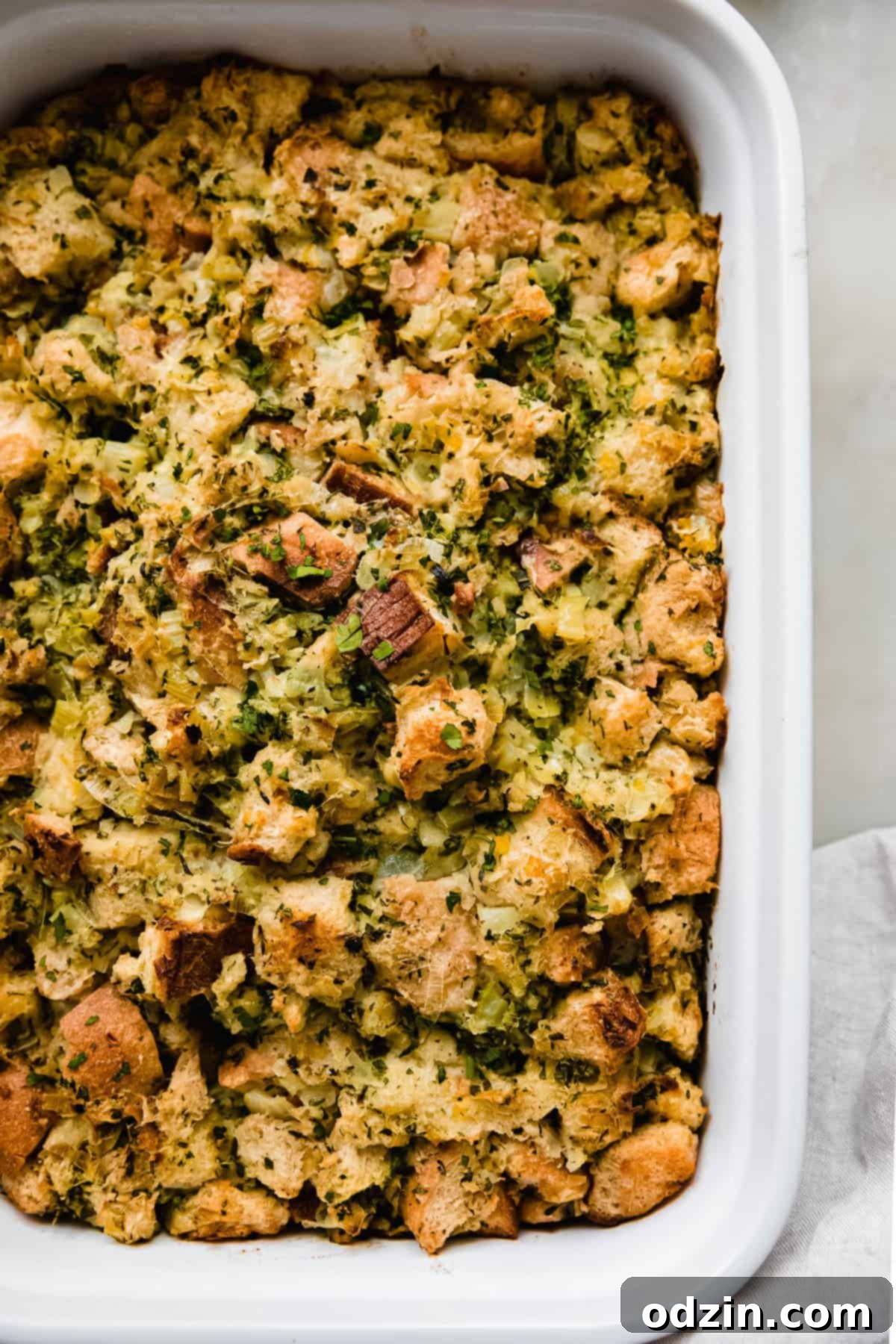
The Ultimate Herb Stuffing Recipe for an Unforgettable Thanksgiving Feast
Prepare yourself for the only herb stuffing recipe you’ll ever need! This extraordinary dish masterfully combines two distinct bread types to achieve unparalleled texture, then generously infuses them with a symphony of aromatics and fresh herbs. Forget the roasted turkey for a moment; this incredibly flavorful stuffing (or dressing, as some prefer) is destined to be the absolute star of your Thanksgiving table, leaving a lasting impression on every guest.
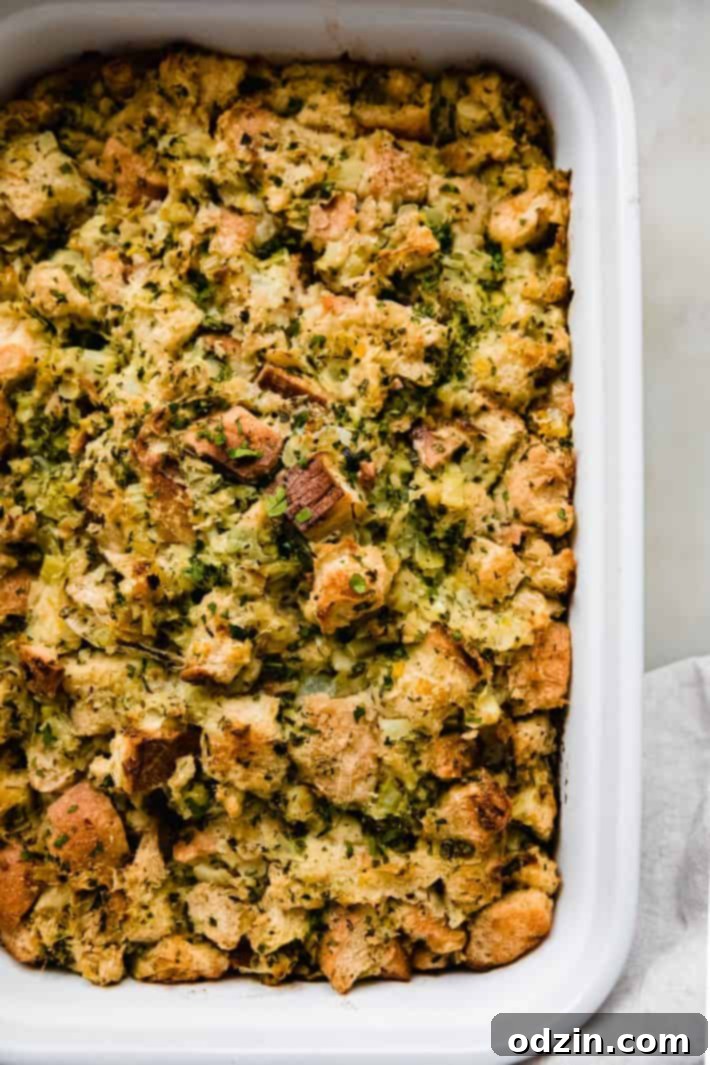
When it comes to Thanksgiving, there’s an unspoken truth: while the turkey might be the centerpiece, the side dishes are truly the heart and soul of the feast. Am I right?
While I certainly appreciate a beautifully slow-roasted herb turkey, I confess that I often find myself looking forward to crafting delicious turkey sandwiches the day after more than loading my plate with it on Thanksgiving itself. That coveted prime real estate on my plate is exclusively reserved for an array of magnificent side dishes. We’re talking about a luscious creamy green bean casserole, this very herb stuffing, rich roasted garlic asiago mashed potatoes, warm fresh focaccia bread, tangy homemade cranberry sauce, and either velvety creamed spinach or comforting creamed corn. Then, a generous pour of my rich homemade gravy over everything, and you’ve got yourself the perfect holiday plate, a true celebration of flavors and textures.
Among all the wonderful side dishes, stuffing holds a special place in my culinary heart. It’s truly my jam. Over the years, I’ve experimented with various versions, from a decadent caramelized onion version where I cleverly swapped traditional stale bread cubes for buttery croissants – an experience that was nothing short of *chef’s kiss*! Each year, I like to put a slightly different spin on things, keeping the holiday menu fresh and exciting. However, there’s one traditional herb stuffing recipe that I consistently return to, a tried-and-true classic that embodies the very essence of Thanksgiving. I sincerely apologize for keeping this gem from you for so long, but now is the time to share it. This particular recipe is packed with savory butter-sauteed leeks, an abundance of onions, crisp celery, and a generous medley of fresh, aromatic herbs. It’s more than just a dish; it’s a little piece of my heart on a plate. It’s wonderfully aromatic, beautifully golden-brown, and possesses every quality a truly exceptional homemade stuffing recipe should have.
Speaking of stuffing, and before we dive deeper into the nitty-gritty of this fantastic recipe, let’s address the elephant in the room: do you call it “stuffing” or “dressing”? I should clarify that I refer to it as “stuffing” because that’s what I’ve always known it as, a habit passed down through generations. However, technically speaking, if it’s cooked in a separate baking dish outside of the turkey, it’s more accurately called “dressing.” Cooking it inside the bird isn’t really my preference; I find it results in a less consistent texture and can sometimes lead to food safety concerns. But, if you’re someone who loves the tradition of cooking it inside the turkey, then by all means, it would indeed be truly “stuffed” stuffing! Regardless of the name, the goal is always the same: a moist, flavorful, and deeply satisfying holiday side dish that complements the entire meal.
Key Ingredients for the Best Traditional Herb Stuffing
Crafting the perfect Thanksgiving herb stuffing starts with selecting high-quality ingredients that build layers of flavor and texture. Here’s a closer look at what makes this recipe truly stand out:
- Stale Bread: This is arguably the most crucial component for achieving that ideal stuffing texture. I specifically recommend using a combination of two types of day-old or stale bread – a hearty sourdough and a rustic Italian loaf. Sourdough lends a delightful tang and robust chew, while the Italian bread provides a classic, soft-yet-firm foundation. Using stale bread is key because it absorbs the flavorful liquids without becoming soggy or mushy, allowing it to crisp up beautifully on the outside while remaining tender within. If you only have fresh bread on hand, don’t worry – check the FAQs below for a simple trick to dry it out quickly.
- Unsalted Butter: The foundation of flavor for our aromatics begins with butter. Using unsalted butter allows you to control the overall saltiness of the dish. It provides a rich, decadent base for sautéing our vegetables, infusing them with a luxurious taste right from the start.
- Celery: Finely chopped celery adds a subtle crunch and a classic savory note that is quintessential to traditional stuffing. Its refreshing flavor balances the richer ingredients. For ease during your Thanksgiving prep, you can chop the celery (and onions) up to one day in advance, or opt for pre-chopped vegetables from the store.
- Onions: We utilize yellow onions alongside leeks to give this stuffing a profound, sweet, and savory depth. When sautéed until translucent, yellow onions release their natural sugars, contributing a wonderful complexity to the overall flavor profile.
- Leeks: Often overlooked, leeks add a delicate, sophisticated onion flavor that is milder and slightly sweeter than regular onions. Ensure they are thoroughly cleaned to remove any grit before thinly slicing them. Sautéing them with the other aromatics, seasoned with a generous pinch of salt, helps draw out excess moisture and allows them to soften perfectly without browning too quickly.
- Garlic: To ensure this stuffing is anything but bland, we’re calling for a whopping 8 cloves of fresh garlic! This generous amount provides an intense, pungent aroma and flavor that permeates the entire dish. Always opt for fresh garlic, pressed or finely minced, as jarred garlic simply lacks the potent, vibrant taste that makes such a difference here.
- Fresh Herbs: An “herb stuffing” wouldn’t live up to its name without an abundance of fresh herbs! We’re using a quartet of Thanksgiving favorites: fresh sage, fresh thyme, fresh rosemary, and flat-leaf parsley. Each herb contributes its unique aromatic signature – earthy sage, subtly floral thyme, piney rosemary, and bright, clean parsley. Adding them to the pan to “bloom” in the butter ensures their essential oils are released, infusing the entire casserole with their incredible flavor.
- Large Eggs: Eggs serve as a vital binding agent in this stuffing recipe. Once lightly beaten and added to the mixture, they act like a natural glue, holding all the bread cubes and aromatics together, ensuring the stuffing holds its shape and doesn’t crumble excessively. Make sure your eggs are at room temperature for better incorporation.
- Chicken Broth/Stock: This is the primary liquid component that moistens the bread and carries all the wonderful flavors throughout the stuffing. Using a good quality chicken broth adds another layer of savory richness. If you are preparing this for vegetarian guests, a high-quality vegetable broth can be easily substituted without compromising flavor.
How to Make the Best Thanksgiving Herb Stuffing: A Step-by-Step Guide
Creating this flavorful herb stuffing is a straightforward process, but each step plays a crucial role in developing its incredible taste and texture. Follow these instructions carefully for the ultimate holiday side dish:
- Start by Prepping Your Ingredients: Begin by properly positioning a rack in the center of your oven and preheating it to 350ºF (175ºC). Next, prepare your baking vessel: thoroughly grease a 9×13 inch casserole dish with cooking spray or butter to prevent sticking, then set it aside. Now, for the star of the show – the bread. Cut your stale bread into even, 1-inch cubes. Uniform cubes are important for even cooking and texture. Transfer these bread cubes to a very large bowl; this bowl will be used for mixing all the stuffing components, so ensure it’s spacious enough.
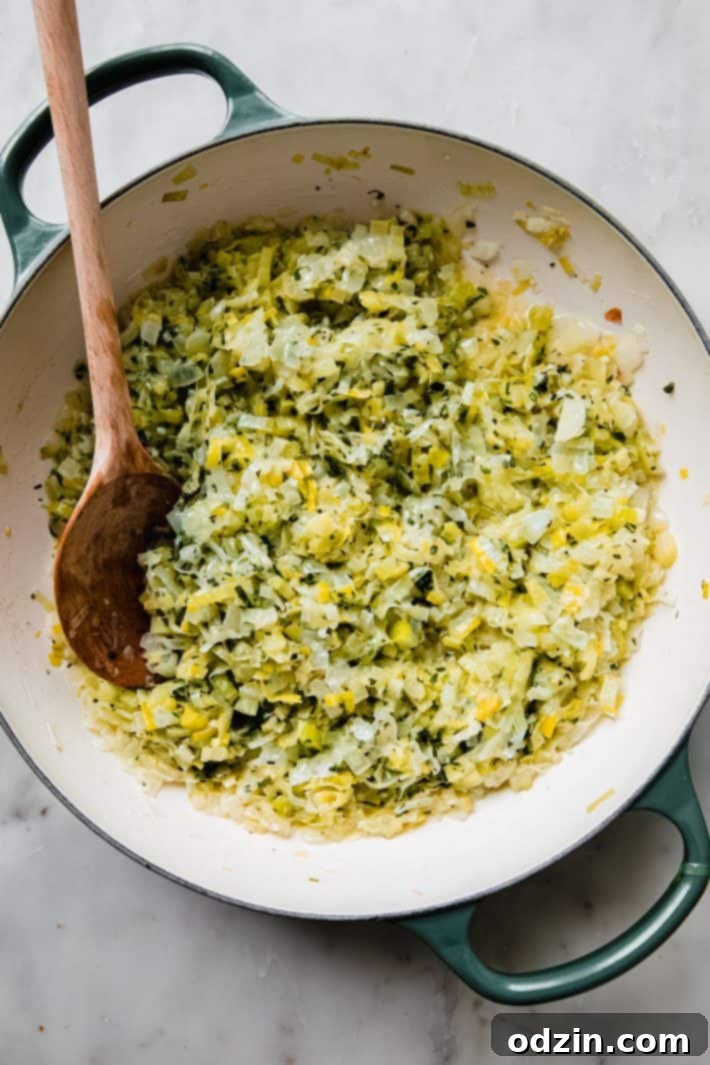
- Sauté the Aromatic Base: This step is where the fundamental flavors of your stuffing truly develop. Melt the unsalted butter in a large skillet or Dutch oven over medium heat. Once shimmering, add the finely chopped celery, onions, and thinly sliced leeks to the pan. Season them immediately with about 1/4 teaspoon of salt and a good grinding of black pepper. The salt helps to draw out the moisture from the vegetables, allowing them to soften and “sweat” without browning too quickly. Stir the vegetables often to ensure even cooking and prevent any scorching. Continue to sauté for approximately 5 minutes until the onions begin to soften and become translucent. At this point, add the minced garlic and cook for another 4-5 minutes, allowing its pungent aroma to mellow and sweeten. Finally, stir in the fresh sage, thyme, and rosemary. Let these fragrant herbs bloom in the warm butter for about 30-45 seconds; this process releases their essential oils, intensifying their flavor and aroma, which will permeate every bite of your stuffing.
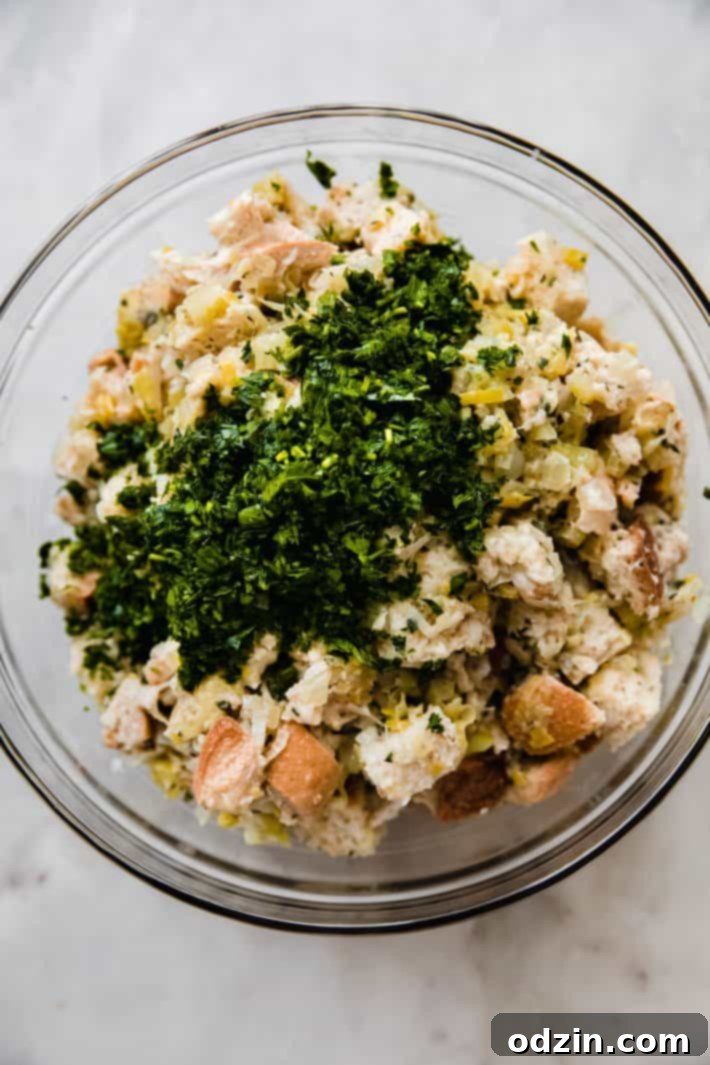
- Combine and Moisten the Stuffing Mixture: Carefully transfer the sautéed aromatic mixture from the skillet directly over the bread cubes in the large mixing bowl. Sprinkle the fresh chopped parsley over the mixture. Allow the mixture to cool for a few minutes until it’s cool enough to comfortably handle. Using your clean hands (which is often the most effective way) or a sturdy wooden spoon, gently but thoroughly toss the bread cubes with the aromatic mixture until every piece of bread is evenly coated. Next, pour in 2 cups of chicken broth (or vegetable broth for a vegetarian option). Toss again, allowing the stale bread to slowly soak up this flavorful liquid. Then, add the lightly beaten eggs and mix everything together once more. The bread should feel thoroughly wet but not swimming in liquid. If the mixture still appears a little dry or the bread hasn’t absorbed enough moisture, add the remaining 1/2 cup of broth. The exact amount of broth needed can vary depending on how dry and absorbent your specific bread is. I often find I need the full 2½ cups because my bread is typically bone dry, ensuring a perfectly moist interior.
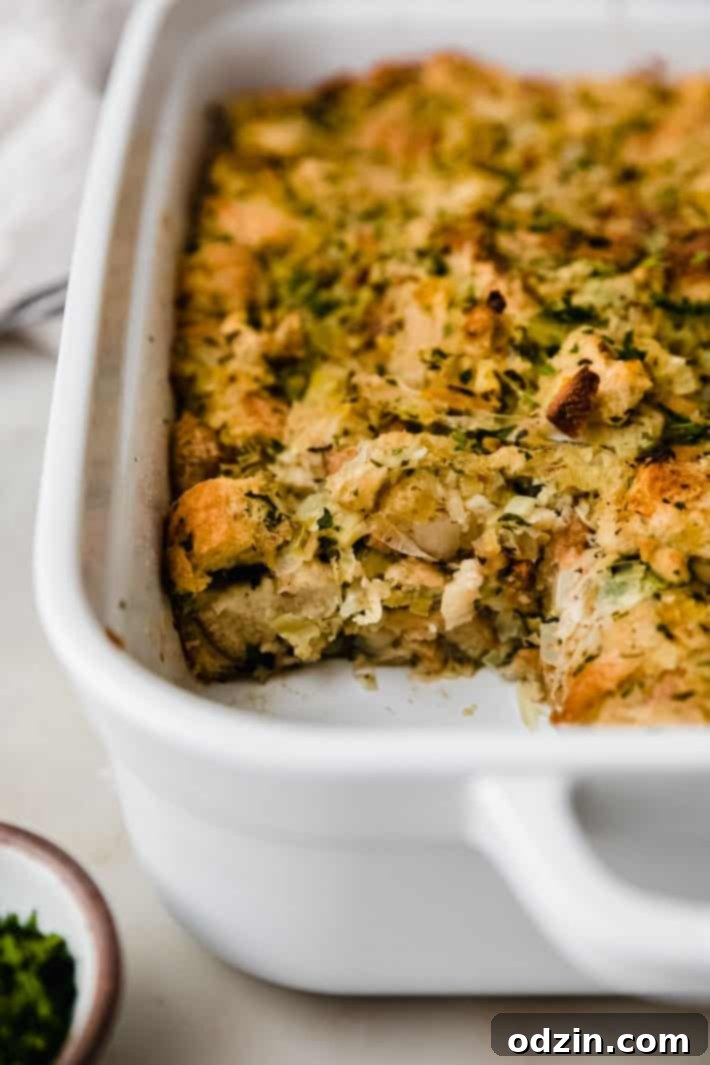
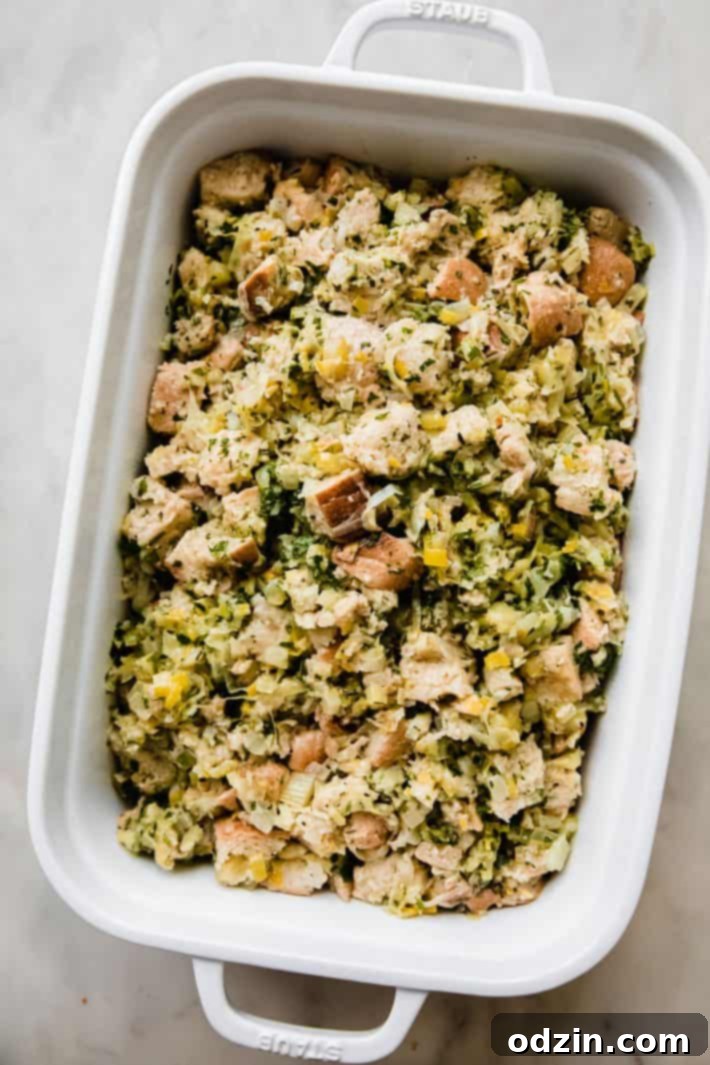
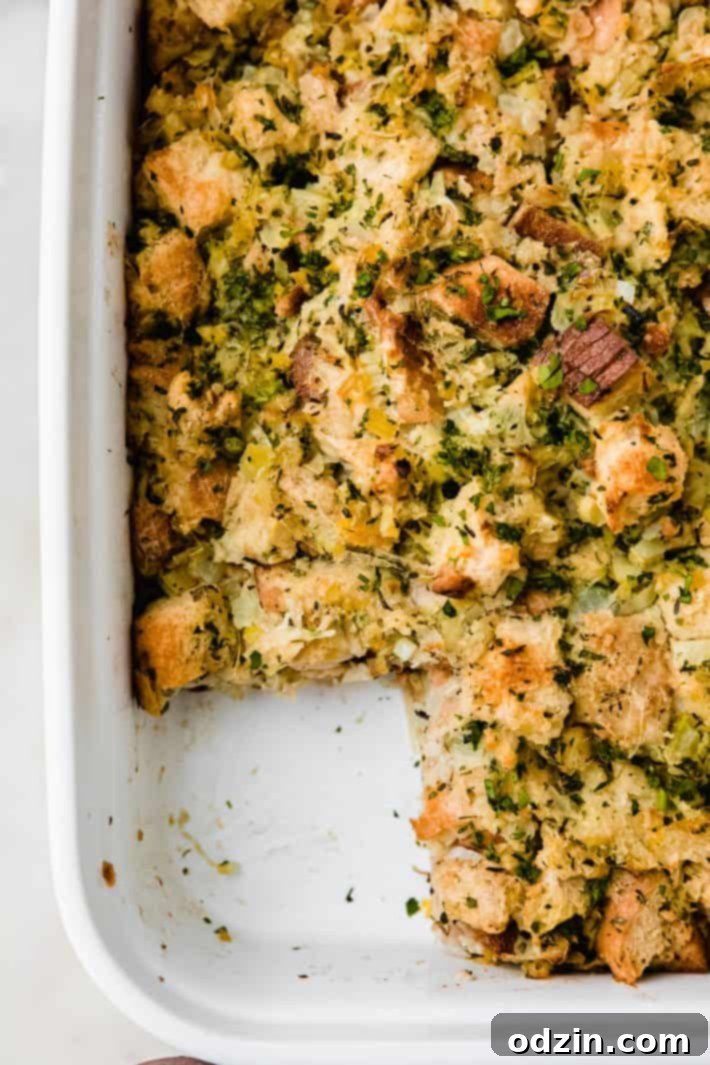
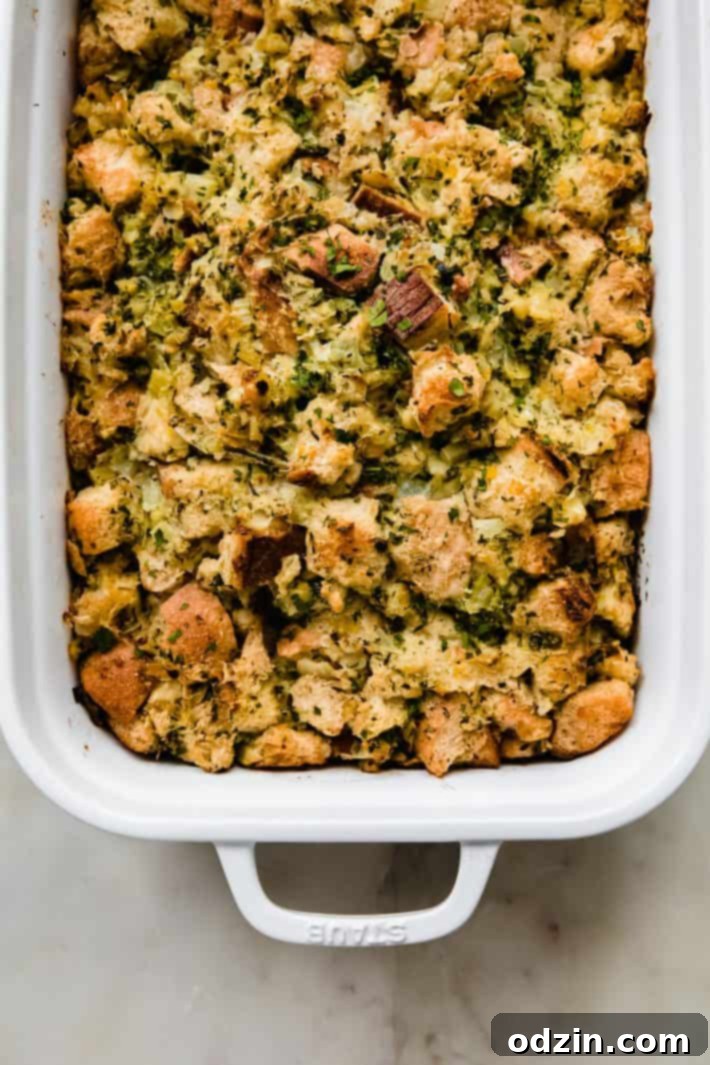
- Bake Until Golden Perfection: Once your stuffing mixture is thoroughly combined and moistened, transfer it into your prepared 9×13 inch baking dish, spreading it evenly. You can either bake the stuffing immediately or, if you’re preparing ahead for Thanksgiving, cover the dish tightly with aluminum foil and refrigerate it for up to 24 hours. If baking from the refrigerator, make sure to pull the baking dish out at least one hour prior to baking to allow it to come closer to room temperature – this helps ensure even cooking. Bake in your preheated 350ºF (175ºC) oven for 45-55 minutes, or until the top is beautifully golden brown and the stuffing is heated through. If at any point the top starts to brown too quickly, loosely tent the dish with a piece of aluminum foil to prevent over-browning while the interior continues to cook. The result will be a perfectly moist, deeply flavored stuffing with a delightful crispy crust.
FAQs About This Delicious Herb Stuffing Recipe
For the best texture and flavor, I highly recommend using a variety of day-old or stale bread. My absolute favorite combination for this herb stuffing is a 50:50 mix of hearty sourdough bread and a rustic Italian loaf. This blend offers a fantastic textural contrast, with the sourdough providing a lovely chew and tang, and the Italian bread contributing a classic, softer base. Using stale bread is key because it acts like a sponge, readily absorbing all the rich liquids and flavors without turning mushy, ensuring a delightful crisp exterior and moist interior.
No stale bread? No problem! Simply cut your fresh bread into 1-inch cubes and spread them out in a single layer on a large baking sheet. Place the baking sheet in a preheated oven at 350ºF (175ºC) for about 12-15 minutes, or until the bread cubes are lightly toasted and thoroughly dry. Keep an eye on them to prevent burning. Once dried, you can proceed with the recipe as if you started with perfectly stale bread. This quick toasting method is an excellent hack for achieving the right consistency.
Eggs play a crucial role as a binding agent in stuffing. Once lightly beaten and incorporated into the bread and aromatic mixture, they coagulate during baking, effectively holding all the ingredients together. This ensures that your stuffing maintains a cohesive structure, preventing it from crumbling apart excessively when scooped and served. Think of them as the glue that keeps every delicious component united, contributing to a more satisfying and less messy serving experience.
To revive leftover stuffing and bring back some of its original crispness, lightly sprinkle a small amount of water or chicken broth over it, then cover it loosely with foil and reheat it in a preheated oven at 325°F (160°C) for about 15-20 minutes, or until heated through and the edges begin to crisp up again. If you’re simply looking for a quick reheat and don’t mind a softer texture, you can certainly zap it in the microwave. However, the oven method is superior for restoring that desirable crispy top.
While the terms “stuffing” and “dressing” are often used interchangeably, especially in different regions of the country, there is a technical distinction. Both typically contain very similar ingredients, like bread, aromatics, and herbs. The key difference lies in *how* it’s cooked. “Stuffing” is traditionally cooked inside the cavity of the turkey, absorbing flavors from the bird as it bakes. “Dressing,” on the other hand, is baked in a separate casserole dish alongside the turkey. For food safety reasons and to achieve a more consistent texture, many home cooks and professional chefs today opt for the “dressing” method, even if they still refer to it as “stuffing.”
Absolutely! This herb stuffing is an excellent make-ahead dish, which is a huge benefit for busy Thanksgiving hosts. To prepare it in advance, simply follow the recipe instructions up to step 4 (combining all ingredients in the baking dish). Once assembled, cover the dish tightly with aluminum foil and refrigerate it for up to 24 hours. On serving day, remove the stuffing from the refrigerator at least one hour before baking to allow it to come closer to room temperature. Then, proceed with the baking instructions in step 4. Keep in mind that baking time may increase slightly if you’re baking it directly from a colder fridge temperature.
If You Love This Herb Stuffing, You Might Also Enjoy These Thanksgiving Favorites:
- Green Bean Casserole with Crispy Shoestring Onions
- Amazing Cheddar Mashed Potatoes
- Homemade Cranberry Sauce
- Sweet Potato Casserole
- Homemade Buttermilk Biscuits
- Cornbread Casserole (aka Spoonbread)
Best Herb Stuffing for Thanksgiving
30 minutes
50 minutes
1 hour 20 minutes
This is seriously the only herb stuffing recipe you’ll want to use from now on! We’re using two kinds of bread for the best texture and loading it up with tons of aromatics and fresh herbs. Move aside roasted turkey; this stuffing (dressing) recipe will be the hit of the Thanksgiving table!

Ingredients
- 20 ounces day-old bread cubes (about 12 cups, preferably a 50:50 mix of sourdough and rustic Italian bread)
- 12 tablespoons unsalted butter
- 2 cups yellow onions, finely chopped
- 1 ¼ cup celery stalks, finely chopped
- 2 leeks, halved, thoroughly rinsed, and thinly sliced (~2 cups)
- 8 cloves garlic, minced
- 3 tablespoons fresh sage, chopped
- 2 tablespoons fresh thyme, chopped
- 1 tablespoon fresh rosemary, chopped
- ½ cup fresh flat-leaf parsley, chopped
- 2 large eggs, lightly beaten and at room temperature
- 2-2½ cups chicken broth or vegetable broth (at room temperature)
Instructions
- PREP: Preheat your oven to 350ºF (175ºC) and position an oven rack in the center. Lightly grease a 9×13 inch baking dish with cooking spray or butter; set aside. Cut your day-old bread into uniform 1-inch cubes. Place the bread cubes into a very large mixing bowl and set aside while you prepare the aromatics.
- SAUTÉ AROMATICS: In a large, heavy-bottomed skillet or Dutch oven, melt the unsalted butter over medium heat. Add the chopped celery, onions, and sliced leeks to the skillet. Sauté for 1 minute before seasoning with ½ teaspoon of salt and a generous amount of freshly ground black pepper. Continue cooking, stirring frequently, for about 5 minutes until the onions begin to soften and turn translucent. Stir in the minced garlic and cook for an additional 4-5 minutes, allowing its aroma to develop. Finally, add the chopped fresh sage, thyme, and rosemary. Stir and let them “bloom” in the butter for 30-45 seconds, releasing their fragrant oils.
- COMBINE & MOISTEN: Transfer the sautéed aromatic mixture directly over the bread cubes in the large mixing bowl. Sprinkle the fresh chopped parsley over the top. Once the mixture has cooled slightly (enough to handle comfortably), use your hands or a sturdy wooden spoon to gently toss and evenly coat the bread cubes with the aromatic mixture. Pour in 2 cups of chicken or vegetable broth over the stuffing mixture and toss again. Add the lightly beaten room-temperature eggs and mix thoroughly until all ingredients are well combined. The bread should feel moist throughout; if it still appears dry, add the remaining ½ cup of broth and mix again. The total amount of broth needed can vary based on the dryness and absorbency of your specific bread.
- BAKE: Transfer the prepared stuffing mixture into your greased 9×13 inch baking dish, spreading it out evenly. Bake immediately in the preheated oven for 45-55 minutes, or until the top is golden brown and the stuffing is heated through. If you notice the top browning too quickly during baking, you can loosely tent the dish with a piece of aluminum foil to prevent over-browning while allowing the interior to finish cooking.
Notes
- Bread Selection: For the best texture and depth of flavor, I recommend using approximately 12 cups (which is about 20 ounces) of a 50:50 blend of day-old sourdough and rustic Italian bread. This combination provides both structural integrity and a wonderful flavor profile.
- Make Ahead Instructions: This Thanksgiving herb stuffing is perfect for preparing in advance. After combining all the ingredients and transferring the mixture to the baking dish (as per step 4), simply cover the dish tightly with aluminum foil and refrigerate it for up to 24 hours. On the day you plan to serve, remove the casserole from the refrigerator at least 1 hour before baking to allow it to come closer to room temperature. Then, follow the baking instructions provided in step 4. Please note that if you bake the stuffing directly from fridge temperature, the overall baking time might increase slightly.
- If You Don’t Have Stale Bread: No need to worry if you only have fresh bread! You can easily make it stale yourself. Refer to the FAQ section within the blog post for quick and effective instructions on how to dry out fresh bread cubes in the oven.
Have you made this recipe?
If you enjoyed this ultimate herb stuffing recipe, please consider leaving a ⭐️⭐️⭐️⭐️⭐️ rating and a comment below. Your feedback helps other home cooks discover and enjoy this delicious dish! You can also share a picture of your creation on Instagram with the hashtag #LITTLESPICEJAR – I’d absolutely love to see what you made and celebrate your culinary success!