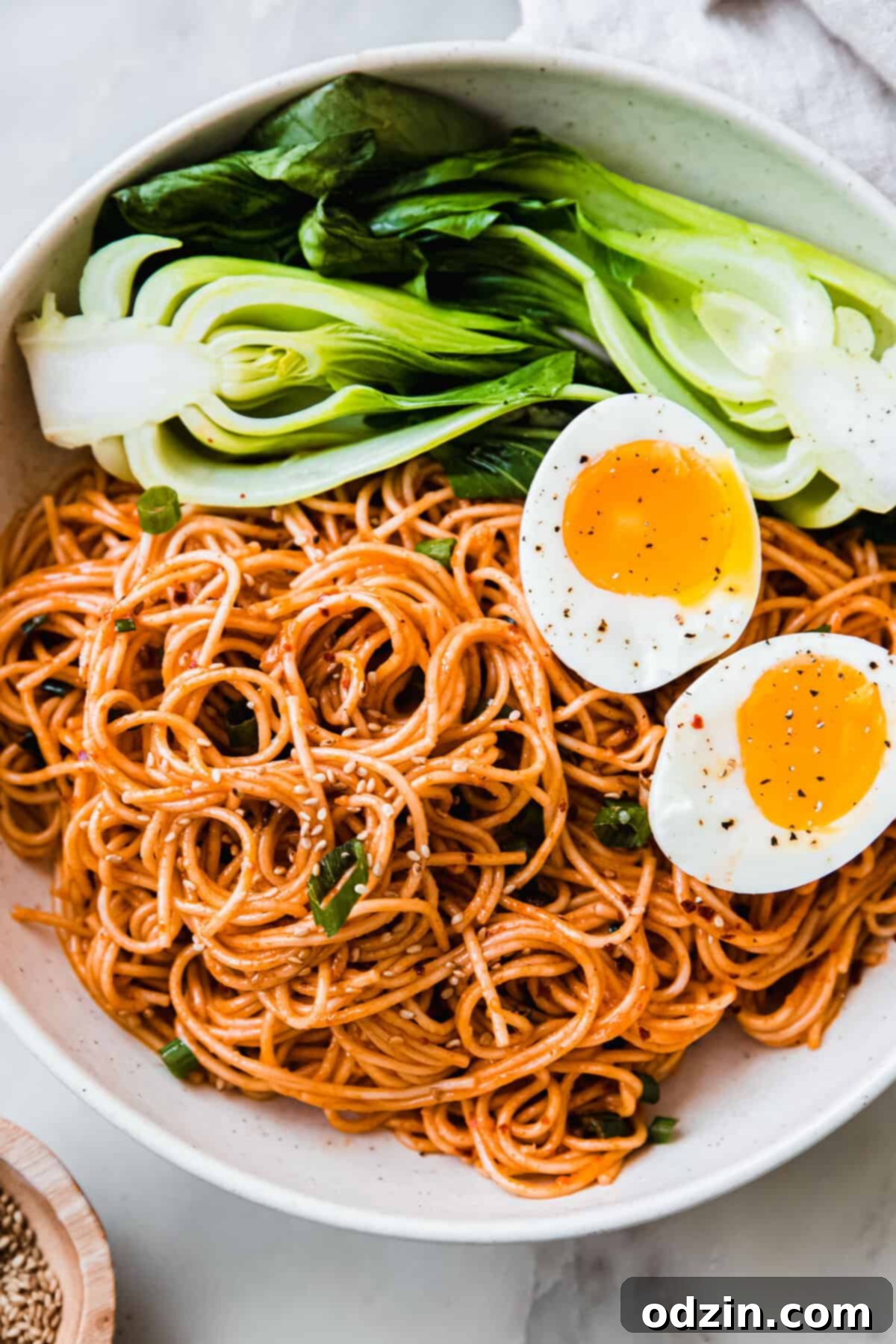
Creamy Gochujang Noodles: Your Ultimate 30-Minute Korean-Inspired Weeknight Meal
Discover your new go-to weeknight dinner with these incredible Creamy Gochujang Noodles! This recipe delivers a harmonious blend of spicy, savory, and rich flavors, all coated onto perfectly chewy noodles. Infused with aromatic garlic, umami-rich soy sauce, and the distinctive tang of gochujang paste, these noodles are elevated by the smooth, nutty addition of tahini. Crafted with just a handful of simple ingredients and prepared in under 30 minutes, they’re effortlessly delicious. Simply toss everything together in a bowl, then serve with your favorite crisp greens and a perfectly jammy soft-boiled egg for a meal that feels both comforting and gourmet.
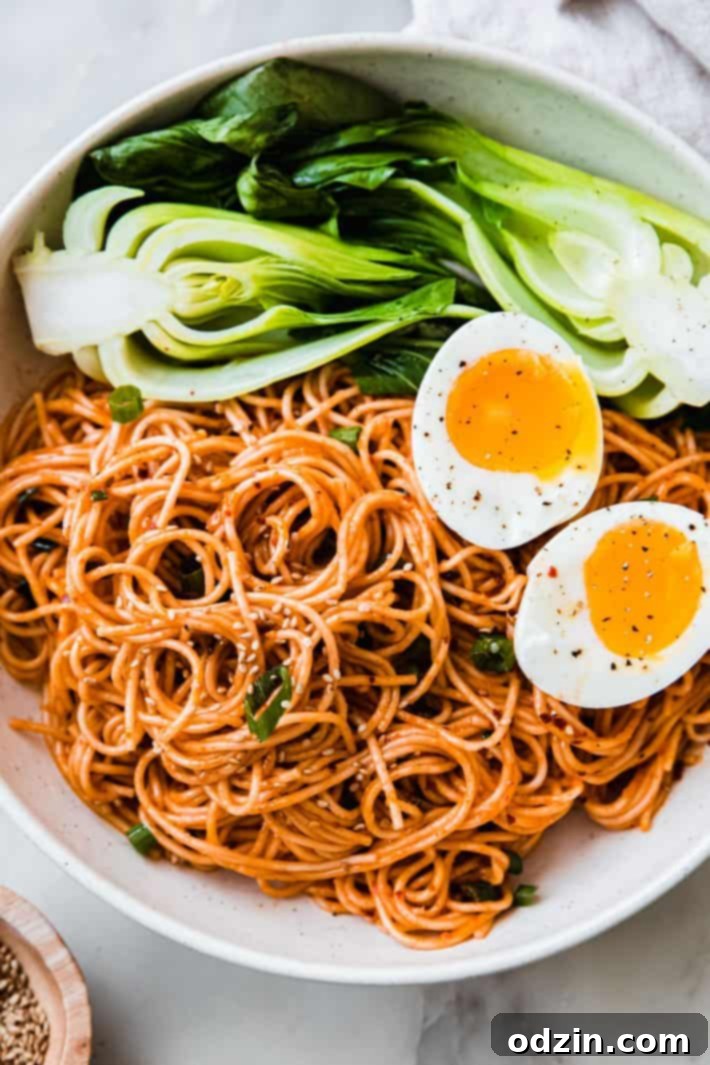
Prepare for a culinary sensation because these Gochujang noodles are arriving hot – not just in terms of spice, but in their immense popularity and irresistible flavor! We’re talking about a dish that is inherently creamy, wonderfully cozy, delightfully chewy, and profoundly comforting. There’s truly nothing better than a meal that comes together in under 30 minutes while still delivering an explosion of vibrant, satisfying tastes.
This Korean-inspired gochujang noodle recipe, often referred to as spicy noodles, has become a consistent favorite in our household for weeks on end. It’s hard to get them out of your mind once you’ve experienced their magic. The secret lies in a dynamic flavor profile: pungent fresh garlic, rich and nutty tahini paste, plenty of fresh green onions, the signature heat from gochujang, and the savory depth of soy sauce. The key to unlocking their incredible creaminess is heating oil on the stove and then pouring it over these aromatics and spices. This crucial step “blooms” the flavors, creating a silky, luxurious sauce that clings beautifully to every strand of noodle. It’s truly a dream in a bowl! Finish them off with a sprinkle of toasted sesame seeds and customize your serving with fresh greens, a soft-boiled egg, or your choice of protein like chicken, fish, or beef – whatever your heart desires!
These Gochujang noodles are undeniably the perfect balance of savory and comforting, making them an essential addition to any noodle lover’s repertoire.
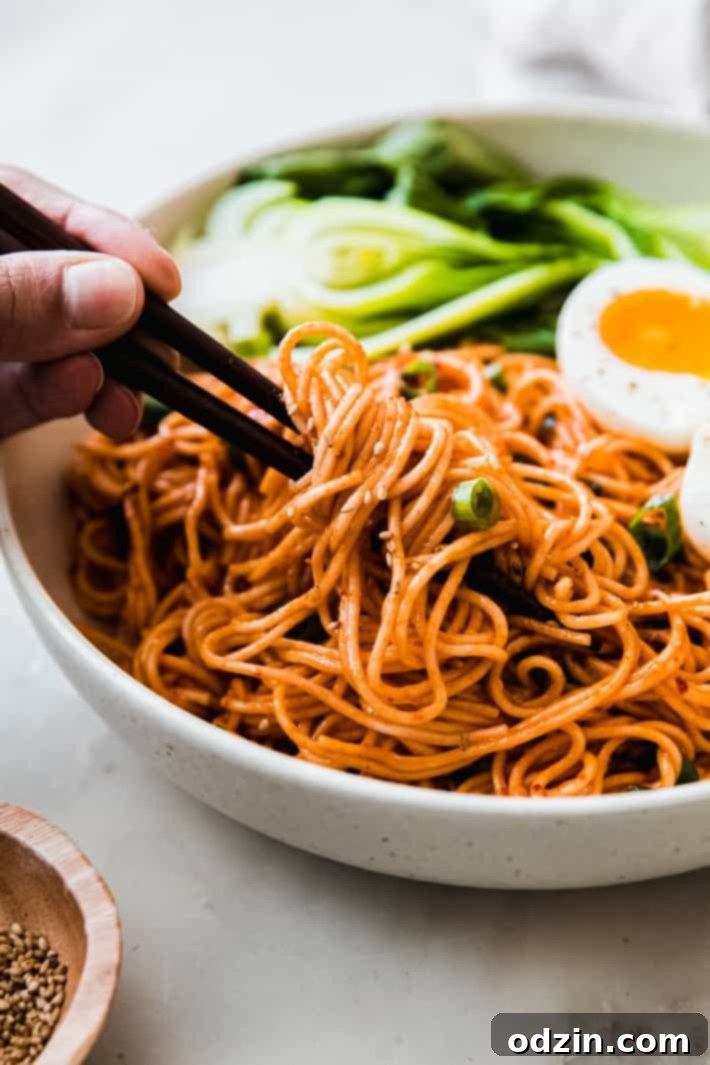
Essential Ingredients for Crafting Your Homemade Gochujang Noodles:
Creating these delicious gochujang noodles starts with selecting the right components. Each ingredient plays a vital role in building the complex, harmonious flavors that make this dish so irresistible.
- Noodles: The foundation of this dish! For an authentic Korean feel, Korean-style wheat noodles are excellent. Alternatively, udon noodles offer a wonderful chewy and bouncy texture, which is absolutely delightful. If you prefer a gluten-free option, rice noodles work beautifully. Common ramen noodles or even egg noodles can be used if that’s what you have readily available. The most important tip is to always follow the package instructions meticulously for your chosen noodle type to achieve the perfect al dente or slightly past al dente texture. Even common pantry staples like spaghetti or spaghettini, cooked just past al dente, can serve as a fantastic base.
- Gochugaru: This isn’t just any chili flake; Gochugaru is a cornerstone of Korean cooking, known for its vibrant red color and distinctive smoky heat. You can typically find large bags or plastic bottles of it in Asian grocery stores, and a single purchase often lasts for many recipes. I highly recommend using authentic Gochugaru for the most genuine flavor profile. However, if you’re in a pinch, a small amount of chili powder combined with red pepper flakes can serve as a passable substitute, though it won’t perfectly replicate the unique taste.
- Garlic: Fresh garlic is indispensable here. I recommend using 4-6 small cloves, freshly pressed or minced, to impart a robust, aromatic punch that truly enhances the overall savoriness of the noodles. Don’t skimp on this!
- Scallions or Green Onions: These versatile onions serve a dual purpose. A significant portion goes into the hot chili oil, infusing it with a mild oniony sweetness and fragrance. The remaining greens are perfect as a fresh, crisp garnish, adding both color and a subtle bite.
- Gochujang Paste: The star of the show! Gochujang is a fermented Korean chili paste that provides a unique balance of sweet, savory, and spicy flavors with a hint of fermented umami. It’s becoming increasingly easy to find in the international aisle of most major grocery stores. I typically use 2 tablespoons of a mild paste, which yields a perfect level of warmth for our palate without being overwhelmingly hot. It’s worth noting that while delicious, these noodles do have a noticeable kick, so they might be a bit spicy for very young children.
- Cooking Oil + Sesame Oil: You’ll need about 2 tablespoons of a high-heat neutral cooking oil, such as avocado, vegetable, canola, or corn oil. This oil will be heated until shimmering and poured over the aromatics, a crucial step for blooming the flavors and creating the base of our luscious sauce. Additionally, a splash of toasted sesame oil adds a rich, nutty aroma that is characteristic of many Asian dishes and rounds out the flavor beautifully.
- Tahini Paste: This sesame paste is what truly transforms these noodles, giving them an incredibly creamy texture and a wonderfully earthy, nutty flavor. It’s a fantastic dairy-free way to achieve richness and body in the sauce. If you love the concept of adding tahini to your noodles for creamy goodness, you might also enjoy exploring similar creamy noodle recipes that utilize peanut butter for a different but equally delightful nut-based creaminess.
- Soy Sauce: A couple of tablespoons of soy sauce are essential for seasoning the silky sauce, providing that foundational umami and saltiness. I usually keep low-sodium soy sauce on hand; if you do too, feel free to use it, but you may want to add an additional 1/2 teaspoon of salt to balance the flavor. For those with gluten sensitivities, gluten-free tamari is an excellent substitute that delivers the same savory depth.
- Rice Vinegar: A dash of rice vinegar is crucial for adding a bright, acidic tartness to the chili oil and sauce. This acidity cuts through the richness, balances the heat, and makes the entire dish even more addictively flavorful.
- Sugar: Just a touch of sugar helps to balance the myriad of savory, salty, and spicy ingredients, rounding out the flavor profile with a subtle sweetness. It prevents the sauce from tasting flat and enhances the other flavors.
- Sides for Serving: The beauty of these noodles is their versatility when it comes to serving. Feel free to top them generously with fresh spring onions, chopped cilantro, or any other fresh herbs you enjoy. A big pinch of toasted sesame seeds is always a fantastic addition for extra texture and nutty flavor. For greens, steamed broccoli or other leafy vegetables work wonderfully. My personal favorite is baby bok choy, lightly steamed or sautéed, for its tender texture and mild flavor. And for the ultimate indulgence, a soft-boiled egg, cooked for precisely 5 1/2 to 6 minutes, offers a perfectly runny yolk that enriches the noodles beautifully.
Step-by-Step Guide: How to Master Gochujang Noodles
Making these delectable gochujang noodles is surprisingly simple, designed for efficiency without compromising on flavor. Follow these straightforward steps for a perfect meal every time.
- Prepare the Noodles: Begin by filling a large pot with water and bringing it to a rolling boil over high heat. While the water is heating up, you can start assembling your sauce ingredients. Once the water is vigorously boiling, add your chosen noodles and cook them according to the specific directions on their package. Cooking times can vary significantly between different noodle types (e.g., udon, wheat, rice, spaghetti), so always refer to the package for the best results. Before draining your perfectly cooked noodles, be sure to reserve about 1/2 cup of the starchy cooking liquid – this will be your secret weapon for achieving the ideal sauce consistency later.
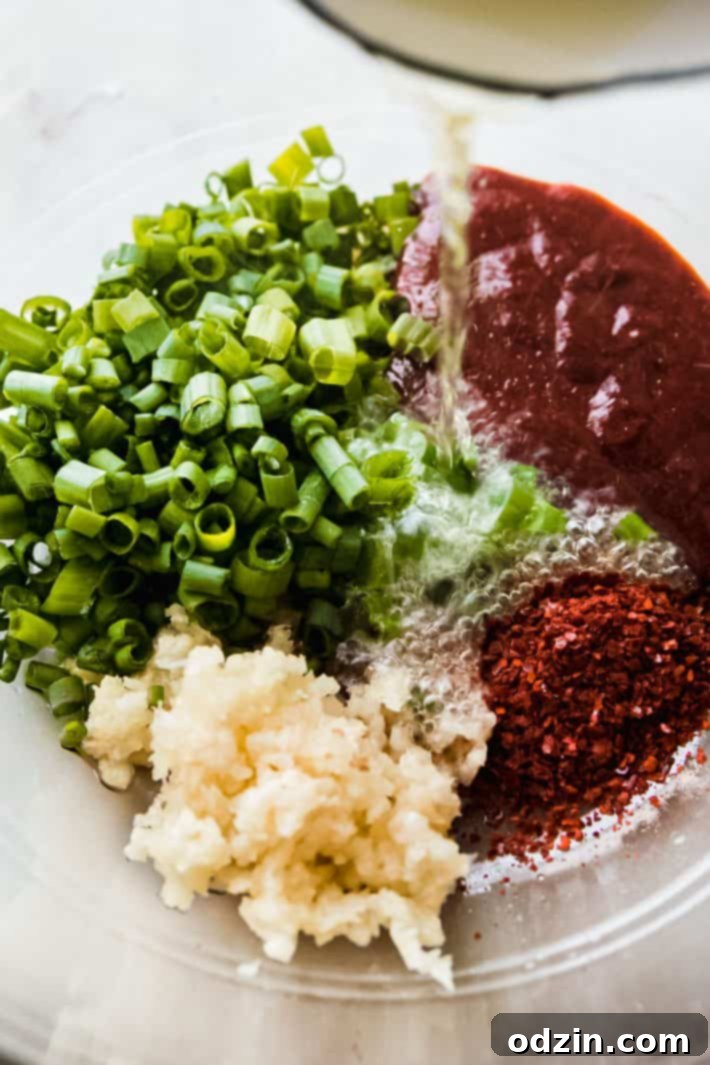
- Craft the Irresistible Sauce: While your noodles are cooking, it’s time to build the heart of the dish: the flavorful gochujang sauce. In a large, heat-proof mixing bowl, combine the gochugaru (Korean chili flakes), finely minced garlic, the chopped green parts of your scallions, a drizzle of toasted sesame oil, and the creamy gochujang paste. Next, heat the high-heat cooking oil (like avocado or vegetable oil) in a small saucepan over medium-high heat. Watch it carefully; the oil should be shimmering and hot, but not smoking, which indicates it’s too hot and could burn the aromatics. Once the oil is perfectly heated, carefully pour it over the ingredients in your mixing bowl. You’ll hear a satisfying sizzle as the hot oil blooms the spices and aromatics, releasing their full fragrance. Immediately after, stir in the tahini paste, sugar, rice vinegar, and soy sauce until everything is well combined and forms a smooth, rich sauce.
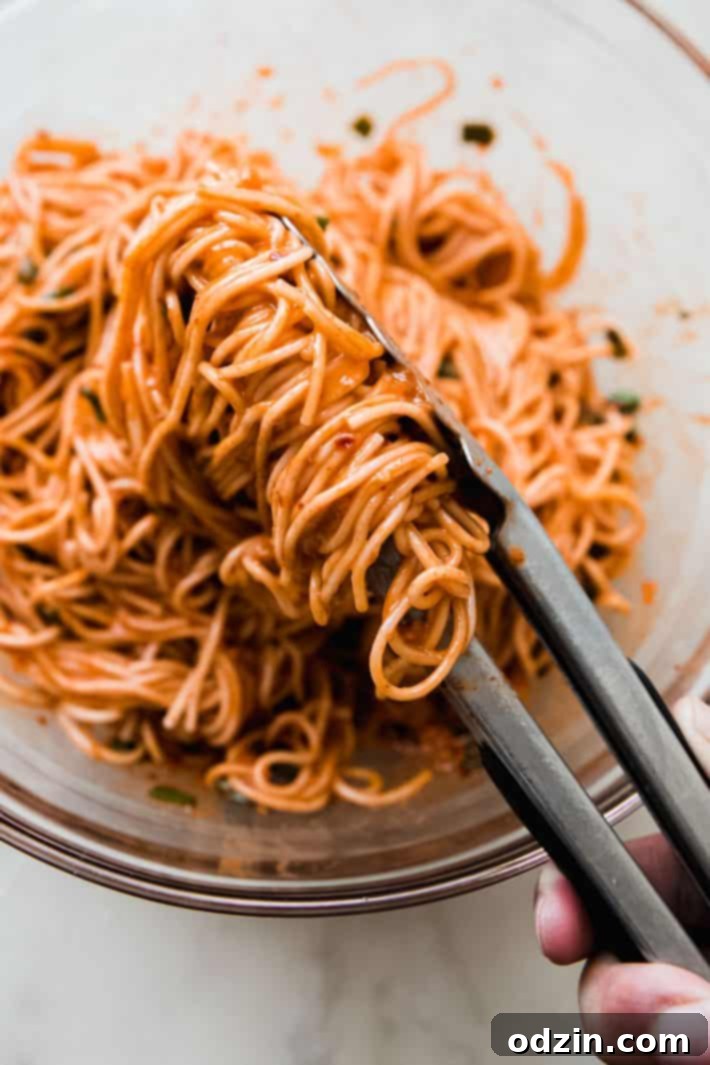
- Toss and Coat the Noodles: This step requires quick action! As soon as your noodles are drained (remembering to reserve that cooking liquid!), add them immediately to the prepared gochujang sauce in the large bowl. Using tongs, toss the noodles vigorously and evenly until every strand is beautifully coated with the creamy, flavorful sauce. If the sauce seems a little too thick or sticky, simply add a splash or two of the reserved noodle cooking liquid. The starch in the liquid will help to emulsify the sauce, making it silkier and ensuring it clings perfectly to the noodles without being watery. Continue tossing until you achieve the desired consistency.
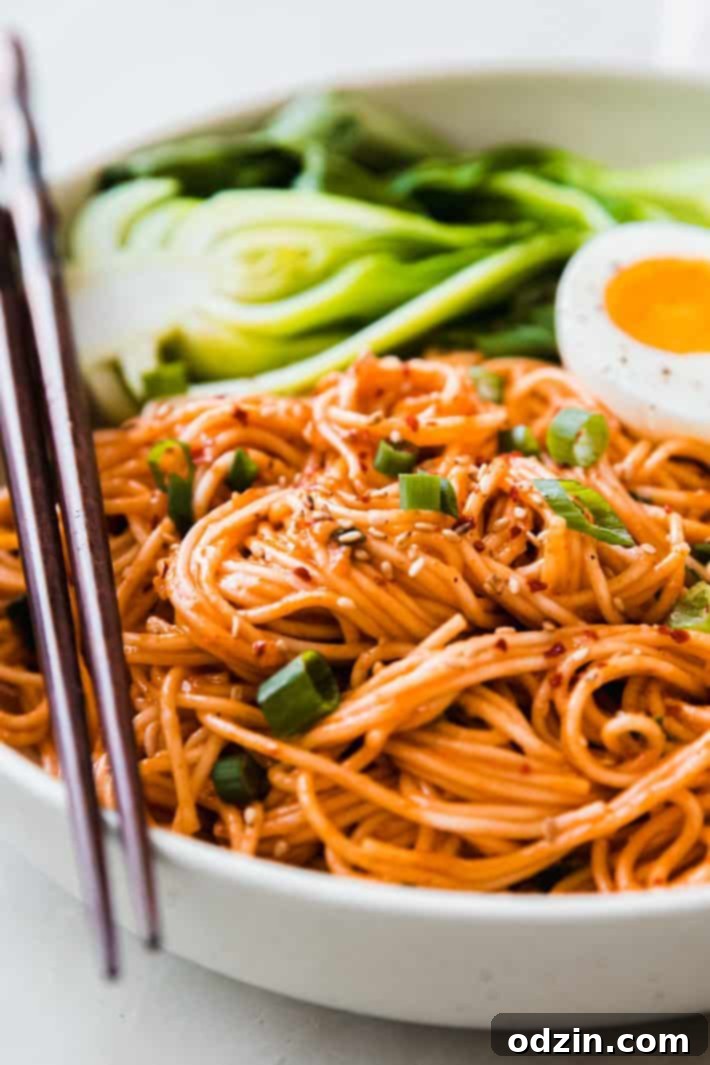
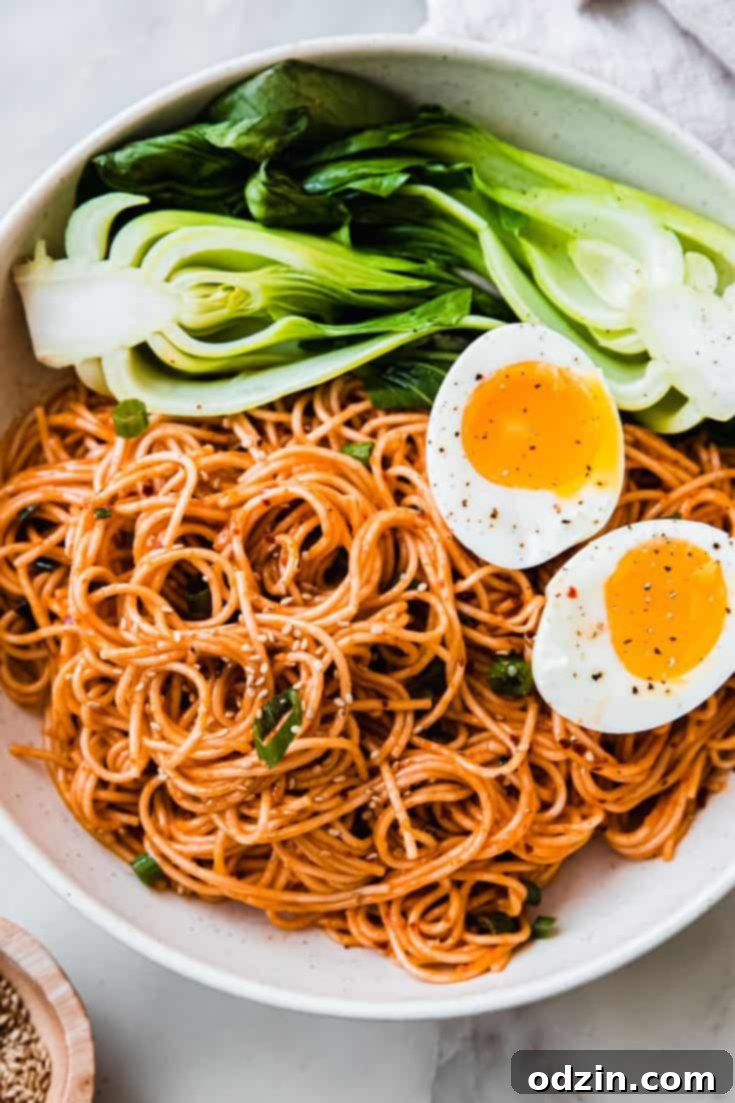
- Serve Them Up: Now for the best part – plating and enjoying! Divide the hot, saucy noodles into individual serving bowls. Elevate your dish by topping each serving with a perfectly soft-boiled egg (its runny yolk will add even more creaminess), along with some steamed or lightly sautéed baby bok choy or your favorite greens. Finish with a generous sprinkle of toasted sesame seeds for crunch and nutty flavor, fresh cilantro, or any other garnishes you enjoy. Serve immediately and savor every delicious, comforting bite!
Tips for Perfect Gochujang Noodles Every Time
While this recipe is straightforward, a few tips can help you achieve restaurant-quality results in your own kitchen:
- Don’t Overcook Your Noodles: Pay close attention to package instructions. Overcooked noodles become mushy and lose their desirable chewy texture, which is crucial for this dish.
- Bloom the Aromatics: The step of pouring hot oil over the gochugaru, garlic, and scallions isn’t just for mixing; it’s a critical technique to “bloom” their flavors, intensifying their aroma and taste in the sauce.
- Reserve Noodle Water: That starchy pasta water is liquid gold! It helps to loosen the sauce and create a luscious, emulsified coating that clings beautifully to the noodles. Don’t skip it.
- Taste and Adjust: Before serving, always taste the sauce and adjust seasonings. You might want more soy sauce for saltiness, a touch more sugar for sweetness, or extra rice vinegar for tang. Personalize it to your preference!
- Fresh Ingredients Matter: Using fresh garlic and vibrant green scallions will make a noticeable difference in the overall flavor of your dish compared to dried or pre-minced alternatives.
Variations & Customizations
These Creamy Gochujang Noodles are incredibly versatile. Feel free to experiment and make them your own!
- Add Protein: Make it a heartier meal by adding cooked protein. Sliced grilled chicken, pan-fried shrimp, thinly sliced beef, or even crispy tofu would be excellent additions.
- Boost the Veggies: Alongside bok choy, consider adding sautéed mushrooms, thinly sliced bell peppers, spinach (wilted in with the hot noodles), or blanched broccoli florets.
- Adjust Spice Level: If you love extra heat, increase the amount of gochugaru or gochujang. For a milder version, reduce the gochugaru or use a less spicy gochujang.
- Nut-Free Option: While tahini provides unique creaminess, if you have a sesame allergy, you could try substituting with a small amount of unsweetened cashew butter or even a touch of cream cheese (if dairy is not an issue) for richness, though the flavor profile will shift.
- Citrus Brightness: A squeeze of fresh lime juice just before serving can add an extra layer of brightness and zest.
Storage & Reheating
These Gochujang Noodles are best enjoyed fresh, but they can be stored and reheated:
- Storage: Store any leftover noodles in an airtight container in the refrigerator for up to 3-4 days. The sauce may thicken slightly upon cooling.
- Reheating: To reheat, place the noodles in a microwave-safe bowl and heat in the microwave for 1-2 minutes, stirring halfway through, until warmed through. Alternatively, reheat gently in a saucepan over medium-low heat, adding a splash of water or vegetable broth to loosen the sauce if needed.
Frequently Asked Questions About This Recipe
Gochujang is a savory, sweet, and spicy fermented Korean condiment. It’s typically made from Korean pepper flakes (gochugaru), glutinous rice, fermented soybean paste (meju), malted barley powder, salt, and sweeteners like tapioca syrup. These ingredients are fermented over months to develop its distinctive complex flavor.
Generally, no. Gochujang tends to be milder than sriracha and many other hot sauces. While it provides a pleasant warmth, its heat is often balanced by its sweetness and umami depth. Sriracha typically has a sharper, more direct heat. The spice level of gochujang can vary between brands, with some being “mild” and others “hot.”
Yes, absolutely! To make this recipe gluten-free, simply use gluten-free noodles (such as rice noodles or certified gluten-free wheat noodles) and substitute regular soy sauce with tamari, which is a gluten-free alternative that offers a similar savory flavor.
Gochujang offers a unique and complex flavor profile: it’s simultaneously savory, sweet, and spicy, with a rich umami depth. The fermentation process also gives it a subtle tang and earthiness, making it a truly distinctive and addictive condiment.
If You Love These Noodles, Explore More Flavorful Recipes:
If you’ve enjoyed the creamy, spicy, and savory notes of these Gochujang noodles, you’re in for a treat with these other fantastic noodle and rice dishes that promise equally exciting flavors and satisfying textures:
- Crazy Good Quick Garlic Noodles: Simple yet incredibly flavorful, these noodles are a garlic lover’s dream, perfect for a fast and satisfying meal.
- Cantonese Pan-fried Noodles: Experience the delightful contrast of crispy and tender noodles drenched in a savory sauce, often with your choice of protein and vegetables.
- Garlicky Pad See Ew: A classic Thai stir-fried noodle dish featuring wide rice noodles, tender greens, and a rich, garlicky, sweet, and savory sauce.
- Sesame Peanut Noodles with Chicken: Indulge in creamy peanut butter sauce coating springy noodles, often served with tender chicken and fresh vegetables for a complete meal.
- Quick Kimchi Fried Rice: A vibrant and tangy Korean staple that brings together fermented kimchi, rice, and often a fried egg for a comforting and quick dish.
Quick Sesame Gochujang Noodles
10 minutes
15 minutes
25 minutes
These Gochujang Noodles have become a weeknight staple for us! Creamy noodles loaded with gochujang, garlic, soy sauce, smooth tahini paste, and a few other ingredients. Toss everything together in a bowl and serve with your favorite greens and a soft-boiled egg. Dinner in under 30 minutes!
Ingredients
- 8 ounces dry noodles (udon, wheat, etc.)
- ½-2 teaspoons Gochugaru (Korean chili flakes)
- 4-6 cloves garlic, pressed
- 4 scallions, greens only
- 2 teaspoons EACH: sesame oil AND sugar
- 2 tablespoons Gochujang paste
- 2 tablespoons high-heat oil (such as avocado)
- 1 tablespoon tahini paste
- 2 tablespoons EACH: rice vinegar AND soy sauce
- Soft boiled eggs, for serving
- Steamed baby bok choy, for serving
Instructions
- NOODLES: Heat a large pot of water to boiling, cook your noodles of choice according to package directions. When the noodles are done, set aside ½ cup of cooking liquid, drain the noodles, set aside but keep warm.
- SAUCE: Add gochugaru, minced garlic, scallions, sesame oil, and gochujang paste to a bowl. Heat the avocado oil in a small saucepan and pour it over the ingredients. Stir in the tahini, sugar, rice vinegar, and soy sauce.
- TOSS: Immediately add the noodles to the prepared sauce and toss to combine. If the sauce is too thick, use a couple tablespoons of the cooking liquid from the noodles so the sauce coats the noodles.
- SERVE: noodles in bowls topped with soft boiled eggs and steamed bok choy.
Recommended Products
- Tahini Paste
- Gochugaru
- Gochujang Paste
- Udon Noodles
- Locking Tongs
- Mini Saucepan
Nutrition Information:
Yield:
4
Amount Per Serving:
Calories: 278Total Fat: 14gCarbohydrates: 32gFiber: 4gProtein: 8g
The nutrition information is provided as a courtesy and is just an estimate. To get the most accurate information, please input the ingredients you’ve used into a nutrition calculator.
Have you made this recipe?
If you enjoyed this recipe, please consider leaving a ⭐️⭐️⭐️⭐️⭐️ rating and a comment below. You can also share a picture on Instagram with the hashtag #LITTLESPICEJAR, I’d love to see what you made!