
Authentic Smoky Baba Ganoush Recipe: The Ultimate Homemade Eggplant Dip
Prepare to elevate your appetizer game with this incredible, restaurant-style baba ganoush recipe! Made with perfectly fire-roasted eggplants, fresh garlic, bright lemon juice, rich tahini paste, and a drizzle of premium olive oil, this classic Middle Eastern dip is a true culinary delight. Its irresistible smoky flavor and creamy texture are guaranteed to impress everyone at your table.
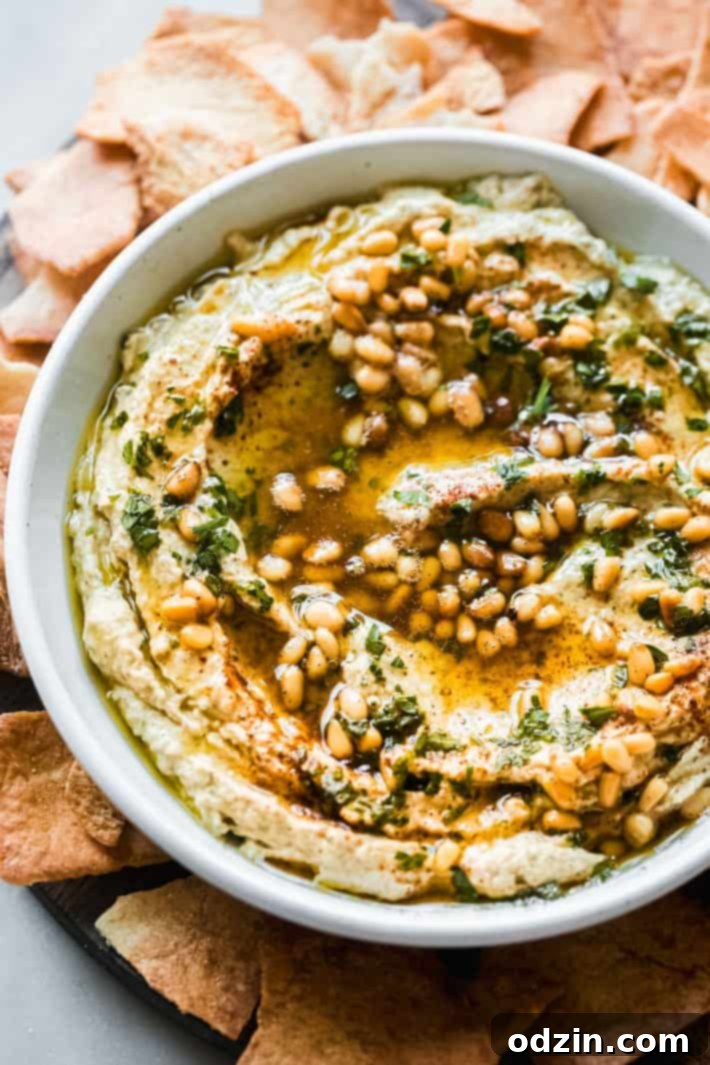
There’s nothing quite like the deeply smoky and incredibly satisfying taste of homemade baba ganoush. This roasted eggplant dip isn’t just an appetizer; it’s an experience, a journey to the heart of authentic Middle Eastern cuisine. Forget store-bought versions; once you try this recipe, you’ll understand why making it from scratch is truly worth the effort.
Grab a generous bowl of crispy homemade pita chips because you’re about to dive into a world of exquisite flavors! What truly defines this dip? Is it the captivating aroma of fire-roasted eggplant that fills your kitchen, or the bold, garlicky punch harmoniously blended with that signature smoky essence? Each element plays a crucial role: a hint of fresh herbs, a gentle warmth from cayenne pepper, a luxurious swirl of olive oil, and optionally, a touch of creamy Greek yogurt, all culminate in absolute perfection.
Much like our velvety smooth hummus recipe, this baba ganoush adheres to a clean, authentic ingredient list. We focus on the traditional Lebanese style, ensuring pure flavors without any unnecessary or “randomly added” components. This commitment to simplicity and quality is what makes all the difference.
The beauty of this recipe lies in its flexibility regarding eggplant preparation. You can achieve that essential smoky char on a gas stove over an open flame, on an outdoor grill for an authentic barbecue flavor, under the broiler in your oven, or by baking it for a longer, more hands-off approach. Regardless of your chosen method, the key is to ensure the eggplant is perfectly cooked and charred, unlocking its full flavor potential for this sensational baba ganoush.
Essential Ingredients for the Best Baba Ganoush
Creating an exquisite baba ganoush starts with selecting the right ingredients. Here’s a detailed look at what you’ll need and why each component is vital:
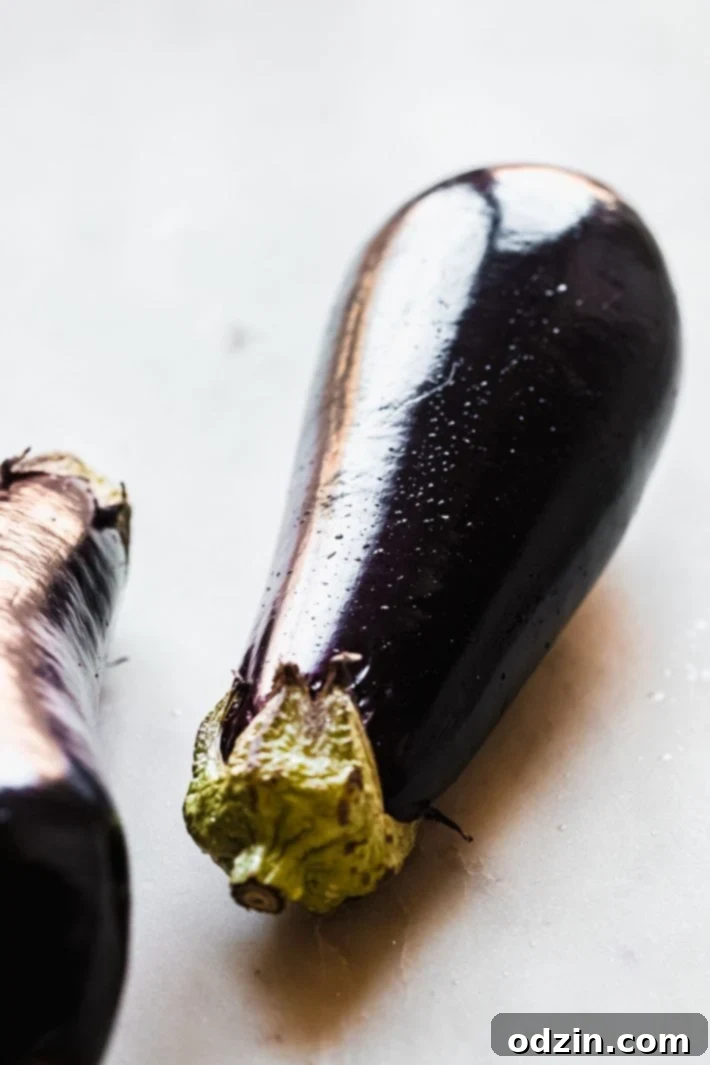
- Eggplants: For this recipe, aim for two medium-sized eggplants, totaling around two pounds. Globe or Italian eggplants work best due to their fleshy texture. Ensure they are firm, heavy for their size, and have smooth, shiny skin. A thorough washing is essential before roasting them using your preferred method. The eggplant is the star, so choosing fresh, quality produce is paramount for a flavorful dip.
- Garlic Cloves: You have control over the garlic intensity here, typically using 2-4 cloves. Remember that we’re using raw garlic, which delivers a pungent, spicy kick to appetizers and dressings. If you love a bold garlic flavor, go for 4 cloves, but proceed with caution if you prefer a milder taste. Mince or crush them finely to distribute the flavor evenly throughout the dip.
- Extra Virgin Olive Oil: Since this oil is not subjected to high heat cooking or baking, its flavor truly shines through. Opt for a high-quality extra virgin olive oil. A good olive oil will add a fruity, slightly peppery note that enhances the overall richness and mouthfeel of the baba ganoush. It’s often drizzled generously at the end, making its quality even more noticeable.
- Tahini Paste: This rich, nutty paste is the very backbone of many iconic Middle Eastern dishes, including both baba ganoush and extra smooth hummus. Made from toasted and ground sesame seeds, tahini contributes a distinctive earthy flavor and a crucial creamy texture. Choose a tahini that is smooth and pourable, as a thicker, pastier tahini might indicate an older product or one that has separated.
- Fresh Lemon Juice: We recommend about a quarter cup of fresh lemon juice, which provides the perfect balance of brightness and zing without overpowering the other flavors. Freshly squeezed lemon juice is always superior to bottled, offering a more vibrant and authentic taste. Feel free to adjust the quantity to suit your preference, adding a little more for extra tang or slightly less if you prefer a milder acidity.
- Seasonings: A simple yet effective blend of kosher salt, ground cumin, and a pinch of cayenne pepper will give your dip an abundance of savory depth and subtle warmth. Cumin is essential for that authentic Middle Eastern flavor. If you prefer to keep the heat at bay, easily swap the cayenne pepper for smoked paprika, which will contribute a lovely smoky aroma without the spice. Always taste and adjust seasonings to your liking.
- Chopped Fresh Parsley: A handful of freshly chopped parsley stirred into the dip at the very end not only adds a burst of fresh flavor but also introduces a beautiful pop of green color, enhancing its visual appeal. It can also be used as a garnish.
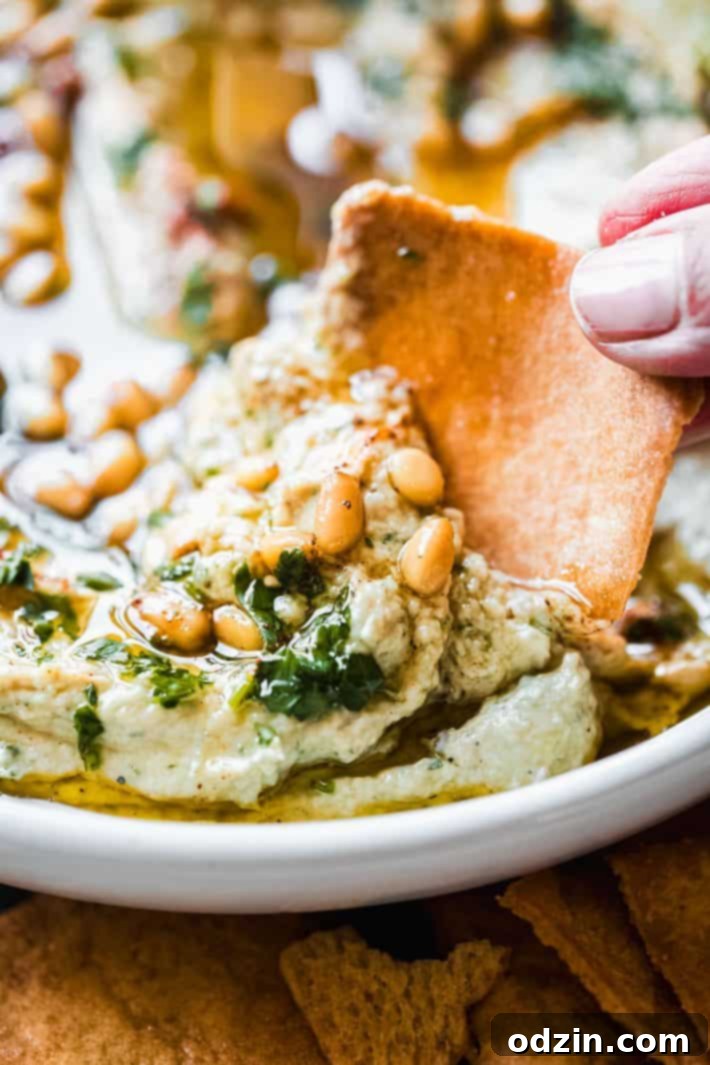
- Something to Serve With: Baba ganoush is a versatile dip. While homemade pita chips or warm pita bread are classic choices, don’t hesitate to pair it with crisp cucumber slices, carrot sticks, bell pepper strips, or other fresh vegetables for a healthier option.
Crafting Your Homemade Roasted Eggplant Dip: Step-by-Step
Making delicious baba ganoush is a straightforward process, but paying attention to a few key steps will ensure a truly authentic and flavorful result.
- Roast Your Eggplant to Perfection: The first and most crucial step is preparing the eggplant. Begin by giving them a thorough rinse under cool running water.
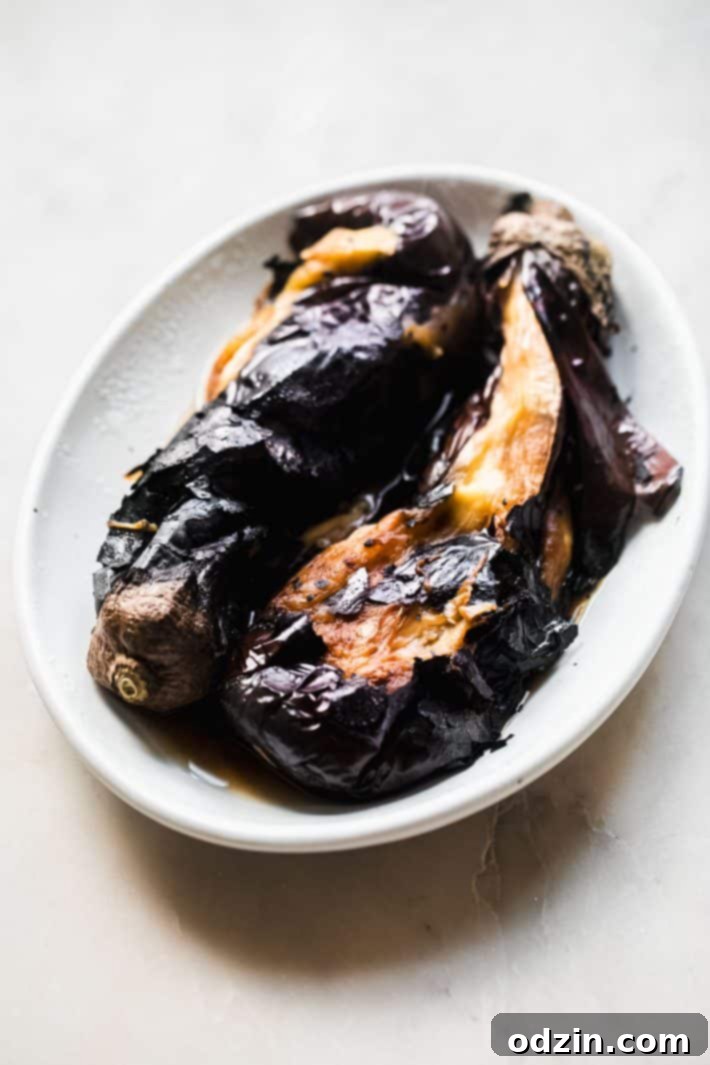
- Gas Stove Method (Highly Recommended for Smokiness): If you have a gas stove and don’t mind a little charring mess (easily contained with foil!), roasting the eggplant directly over an open flame yields the most authentic and intensely smoky flavor. Line your stove with foil for simplified cleanup. Place the washed and dried eggplant directly on the burner grate over medium-high heat. Turn the eggplant every 5-7 minutes, allowing it to char evenly on all sides. This process typically takes 15-20 minutes in total, until the skin is thoroughly blackened and the eggplant feels soft and collapsed. The goal is to char the skin, as we are primarily interested in the tender, smoky flesh inside.
- Oven Broiler Method: For a less messy but still smoky option, preheat your oven broiler to high. Line a baking sheet with foil and place a wire rack on top. Pierce the eggplant several times with a fork. Lightly brush or spray the eggplants with olive oil and place them on the wire rack. Broil for 15-20 minutes, turning every 5-7 minutes, until the skin is completely charred and blistered, and the eggplant is very soft. Watch closely to prevent burning.
- Oven Baking Method: If you prefer a hands-off approach, preheat your oven to 375ºF (190ºC). Pierce the eggplant with a knife or fork multiple times (about 1/4 inch deep). Spray them with cooking spray or lightly brush with olive oil, then place them on a foil-lined baking sheet. Bake for 65-90 minutes, turning halfway through, until the eggplants are completely collapsed and tender when pierced with a fork. While this method yields less smokiness, it still cooks the eggplant beautifully.
Once cooked, regardless of the method, place the hot eggplants in a bowl and cover tightly with foil or plastic wrap. Let them steam for 15-20 minutes. This steaming process makes the skin incredibly easy to peel.
- Peel, Drain, and Prepare the Eggplant Flesh: After the steaming period, carefully peel off the charred skin from the eggplants; it should slide off effortlessly. Discard the skin. Collect the soft, tender eggplant flesh in a sieve placed over a bowl. This step is crucial for preventing a watery baba ganoush. Gently sprinkle the eggplant flesh with about ½ teaspoon of kosher salt. Use a spoon or your hands to gently mix it, then let it drain for at least 15-20 minutes, allowing excess moisture to escape. During this time, you can also remove any larger seed clusters from the center of the eggplant flesh. Too many seeds can impart a slightly bitter taste to your final dip. After draining, gently squeeze out any remaining water from the eggplant flesh with your hands or the back of a spoon – but do not rinse it. This ensures a rich, concentrated eggplant flavor.
- Blend for the Perfect Dip: Now it’s time to bring all the flavors together. In the bowl of a food processor, combine the tahini paste, minced garlic, and fresh lemon juice. Pulse these ingredients together for about 30 seconds to a minute. This initial pulsing step is vital; it helps to “loosen” the tahini, allowing it to emulsify properly with the lemon juice and garlic. This also ensures the garlic breaks down more finely, releasing its flavor evenly throughout the dip. Next, add the drained eggplant flesh, ground cumin, and cayenne pepper (or smoked paprika) to the food processor. Add the 2 tablespoons of extra virgin olive oil. Pulse until the dip reaches your desired consistency – some prefer it ultra-smooth, while others enjoy a slightly chunky texture. Avoid over-processing, as it can make the dip gummy.
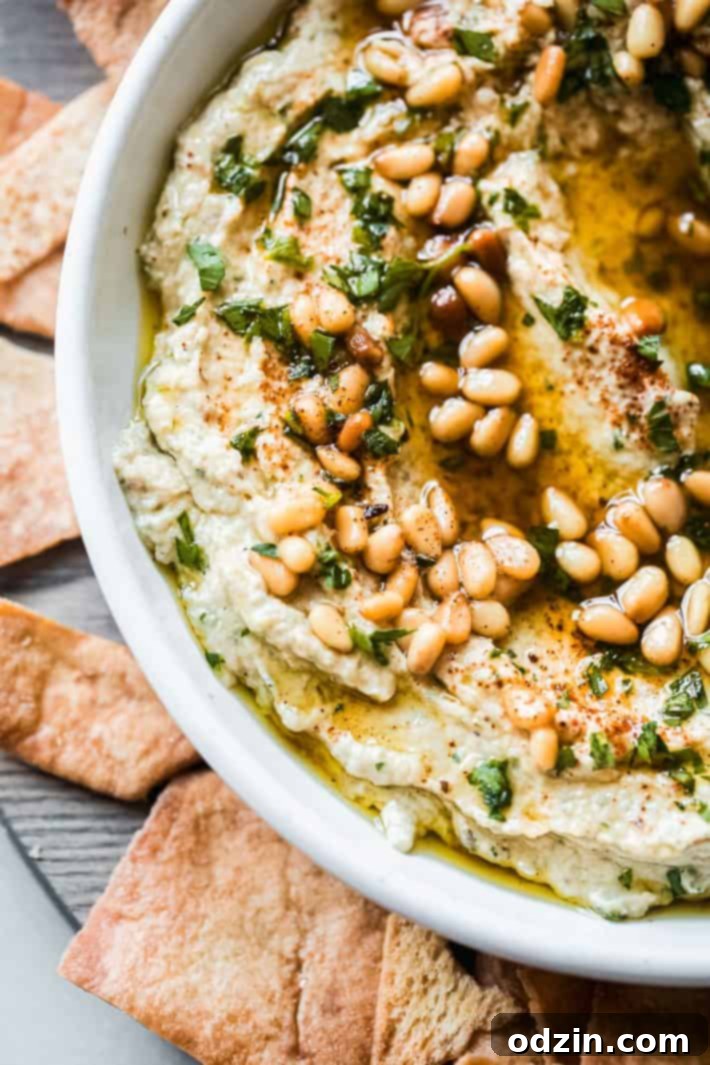
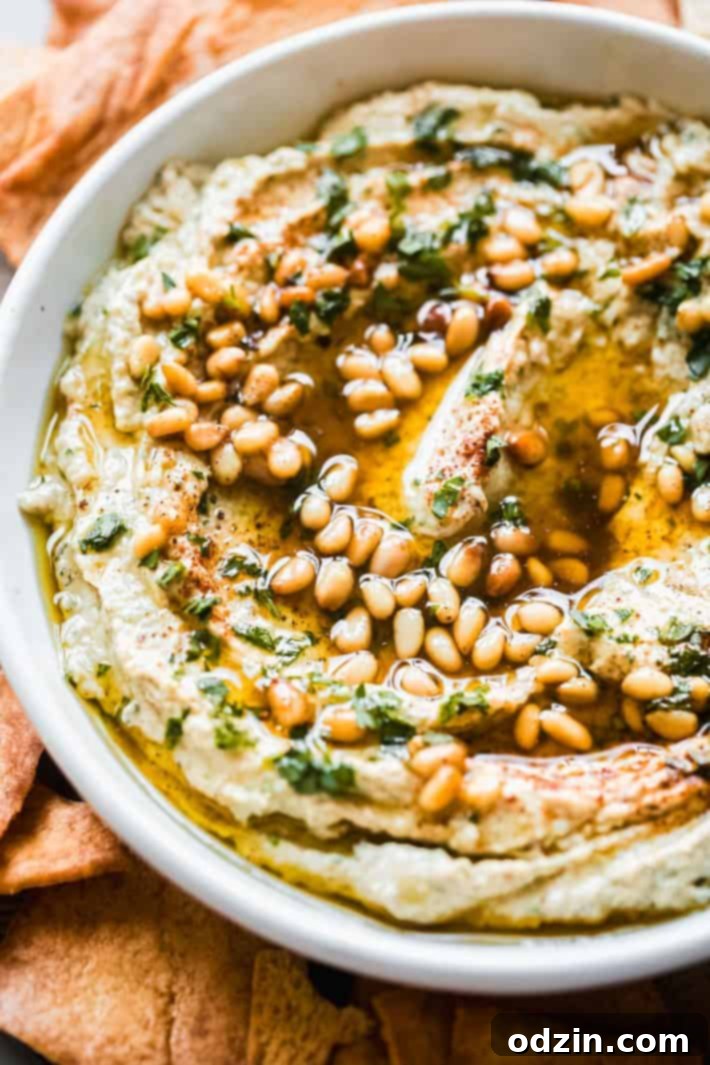
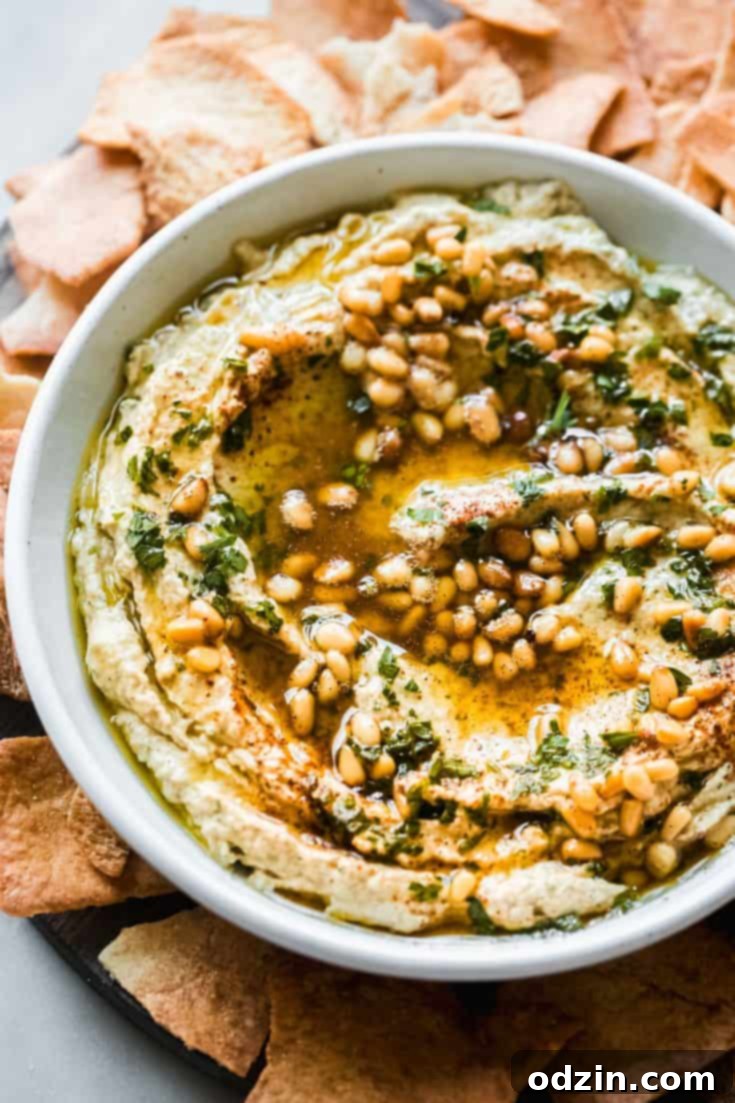
- Plate, Chill, and Serve: Spoon the freshly made baba ganoush into your chosen serving dish. For an extra touch of richness and visual appeal, drizzle it with additional extra virgin olive oil. You can also garnish it with a sprinkle of fresh chopped parsley, a dash of cayenne pepper for more heat, or even toasted pine nuts (lightly fried in olive oil until golden). While tempting to devour immediately, allow the baba ganoush to chill in the refrigerator for at least 2-3 hours, or ideally 8 hours, covered with plastic wrap. Chilling allows the flavors to meld and deepen, resulting in an even more delicious dip. Serve chilled with homemade pita chips, fresh pita bread, or an assortment of crisp vegetables.
FAQs About This Delicious Baba Ganoush Recipe
It’s challenging to declare one definitively “healthier” than the other, as both baba ganoush and hummus are incredibly nutritious appetizers, each offering a unique profile of vitamins, minerals, and healthy fats. Hummus, made with chickpeas, is typically higher in protein and fiber. Baba ganoush, based on eggplant, is generally lower in calories and carbohydrates, and rich in antioxidants. Both are excellent choices for a healthy snack or side dish, providing different nutritional benefits. It ultimately depends on your dietary goals and what your body needs!
The delightful name “baba ganoush” (or sometimes “baba ghanouj”) has a charming literal meaning from Arabic. The word ‘baba’ translates to ‘dad’ or ‘father.’ The word ‘ganoush’ (or ‘ghanouj’) means ‘spoiled’ or ‘pampered.’ So, when combined, it roughly translates to “pampered papa” or “spoiled daddy.” The exact origin story is debated, but one popular theory suggests it was a dish so delicious and luxurious that it would spoil a father, or perhaps it was created by a member of a sultan’s harem to pamper him. Either way, it hints at a dish meant to be enjoyed and savored.
Baba ganoush offers a complex and delightful flavor profile. Its most defining characteristic is the intense smokiness derived from the fire-roasted eggplants, which is complemented by the warm, earthy notes of ground cumin. You’ll experience a distinct garlicky punch, which can be adjusted to your preference. The tahini adds a creamy, nutty depth, while fresh lemon juice provides a bright, tangy lift that balances the richness. The texture can range from ultra-smooth to slightly chunky, depending on how long you process it, making each bite a satisfying blend of flavors and sensations.
If you like this recipe, you might also like:
- Homemade Beef Shawarma
- Lebanese Garlic Sauce (Toum)
- Lebanese Fattoush Salad
- Meat Stuffed Pitas (Arayes)
- How to Make Baklava
Smoky Baba Ganoush (Authentic)
This recipe delivers a delicious, creamy, and truly authentic restaurant-style baba ganoush, featuring fire-roasted eggplants, fresh garlic, bright lemon juice, rich tahini paste, and high-quality olive oil. It’s a timeless Middle Eastern dip that’s sure to be a crowd-pleaser!
Ingredients
- 2 medium eggplants (~1 ¾ – 2 pounds), preferably globe or Italian
- ½ teaspoon kosher salt, plus more for draining
- ¼ cup fresh lemon juice (from 1-2 lemons)
- 3 tablespoons tahini paste, good quality
- 2-4 cloves garlic (minced, adjust to taste for raw garlic intensity)
- ¼ teaspoon ground cumin (or more, to personal preference)
- 1 pinch cayenne pepper (optional, for a hint of heat; or smoked paprika for smoky flavor without heat)
- 2 tablespoons extra virgin olive oil, plus more for serving
- 2 tablespoons Greek yogurt (optional, for extra creaminess and tang)
- 2 tablespoons fresh chopped parsley, plus more for garnish
- Prepared pita chips, fresh pita bread, or fresh vegetables, for serving
Instructions
- PREP EGGPLANT: Begin by thoroughly washing and drying your eggplants. If you are baking in the oven, position a rack in the center of the oven and preheat to 375ºF (190ºC). Line a metal baking sheet with foil and place a wire baking rack on top; set aside. For stovetop grilling, please see the notes below.
- ROASTING EGGPLANTS (OVEN METHOD): Pierce holes into the eggplants (about ¼ inch deep) with a knife or fork all over. Lightly spray the eggplants with cooking spray or brush with a little olive oil. Place them on the prepared wire rack on the baking sheet. Bake for 65-90 minutes, turning the eggplants halfway through the cooking time. The eggplants are done when they are completely soft and collapsed, easily pierced with a fork with no resistance. Remove from the oven, immediately transfer the hot eggplants to a bowl, and cover tightly with foil or plastic wrap. Allow them to steam in the bowl for 20-25 minutes; this crucial step makes peeling much easier.
- PEEL & DRAIN EGGPLANT: Once cooled enough to handle, remove the skin from the eggplants and discard it. Collect the tender eggplant flesh in a sieve placed over a bowl. If your eggplants have many seeds, you can remove the center core with the seeds at this stage, as excessive seeds can make your baba ganoush bitter. Sprinkle the eggplant flesh generously with about ½ teaspoon of kosher salt and give it a good mix. Allow the eggplant to drain for at least 15-20 minutes to release excess moisture. Before blending, gently squeeze out as much water as you can from the eggplant using your hands or the back of a spoon. Do not rinse.
- PULSE FIRST STAGE: In the bowl of a food processor, combine the fresh lemon juice, tahini paste, and minced garlic. Process for about 30 seconds to 1 minute, until the tahini loosens up and the garlic is finely minced. This step ensures a smooth, well-emulsified base.
- FINISH & CHILL: Add the drained eggplant flesh, ground cumin, cayenne pepper (if using), and 2 tablespoons of extra virgin olive oil to the food processor. Pulse until the dip reaches your desired texture – whether you prefer it extra smooth or with a slight chunky consistency. Avoid over-processing. Stir in the Greek yogurt (if using) and the fresh chopped parsley. Taste and adjust seasonings (salt, lemon, cumin) to your preference. Transfer the baba ganoush to a serving bowl, cover with plastic wrap, and refrigerate for at least 2-3 hours, or ideally 8 hours, to allow the flavors to fully meld and deepen.
- SERVE: Drizzle with extra virgin olive oil just before serving. Garnish with additional chopped parsley, a sprinkle of cayenne or smoked paprika, or toasted pine nuts. Serve chilled with homemade pita chips, warm pita bread, or a colorful array of fresh vegetables.
Notes
- Stovetop Eggplant Roasting Method (for maximum smokiness): This method is highly recommended for the most authentic smoky flavor, though it can be a bit messy. To ease cleanup, line your stovetop area with aluminum foil. Place the washed and thoroughly dried eggplant directly onto the grate of a gas burner over medium-high heat. Cook each side for approximately 5-7 minutes, rotating the eggplant frequently, until the skin is completely charred and blackened, and the eggplant is very soft and tender throughout (total cooking time usually 15-20 minutes). You are only interested in the tender, smoky flesh, so don’t worry about burning the skin. Once cooked, proceed directly to step #3 (peeling and draining) after letting it steam.
- Storage: Homemade baba ganoush can be stored in an airtight container in the refrigerator for up to 3-5 days. It’s best enjoyed fresh, but the flavors continue to develop and meld over the first day or two.
- Variations: Feel free to experiment! For an extra zing, add a touch more lemon juice. For a spicier kick, increase the cayenne pepper or add a pinch of red pepper flakes. Some people enjoy a small amount of finely chopped onion or a few fresh mint leaves for a different flavor profile.
Have you made this recipe?
If you enjoyed this recipe, please consider leaving a ⭐️⭐️⭐️⭐️⭐️ rating and a comment below. You can also share a picture on Instagram with the hashtag #LITTLESPICEJAR, I’d love to see what you made!