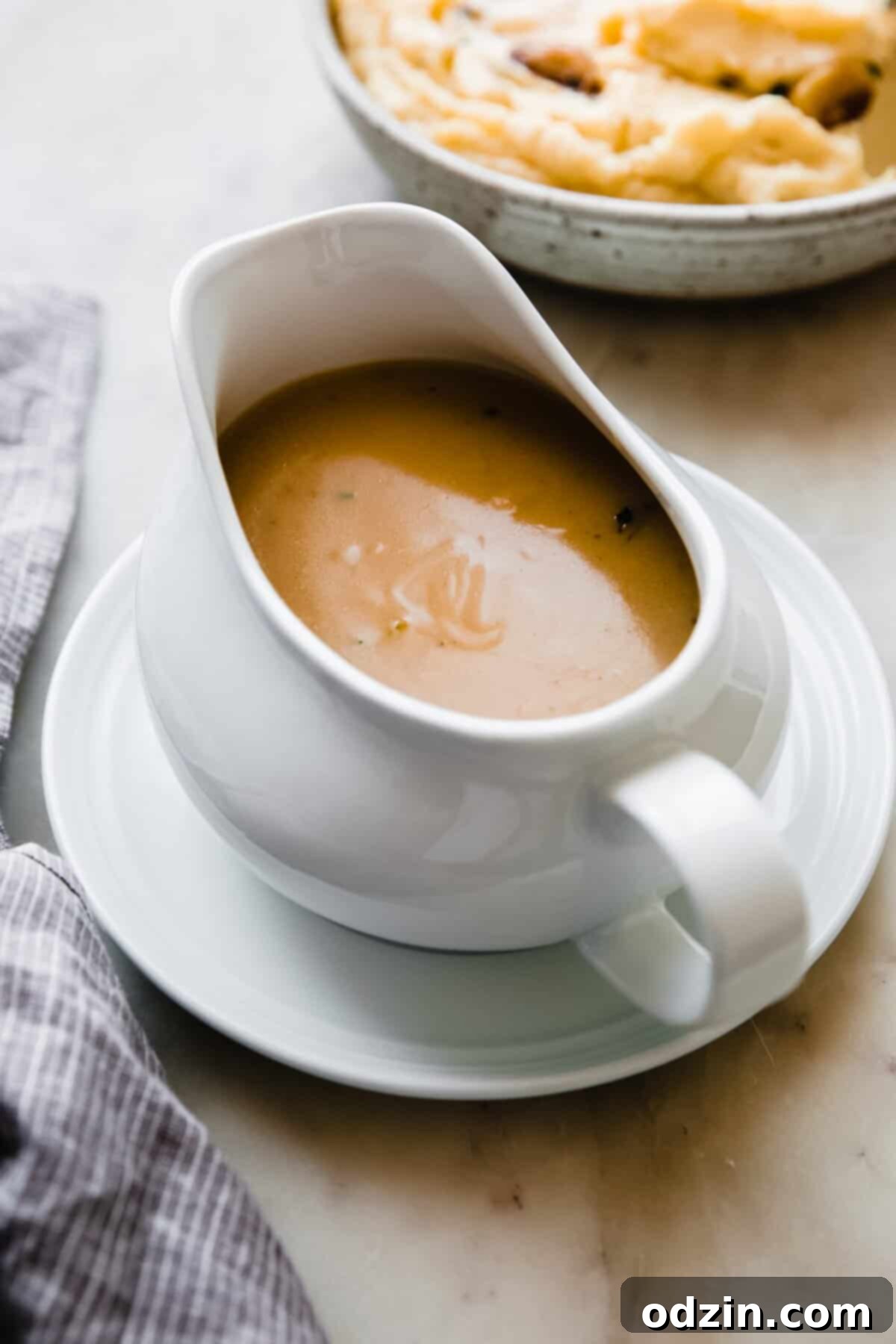
Ultimate Homemade Gravy Recipe: Rich & Savory, With or Without Pan Drippings
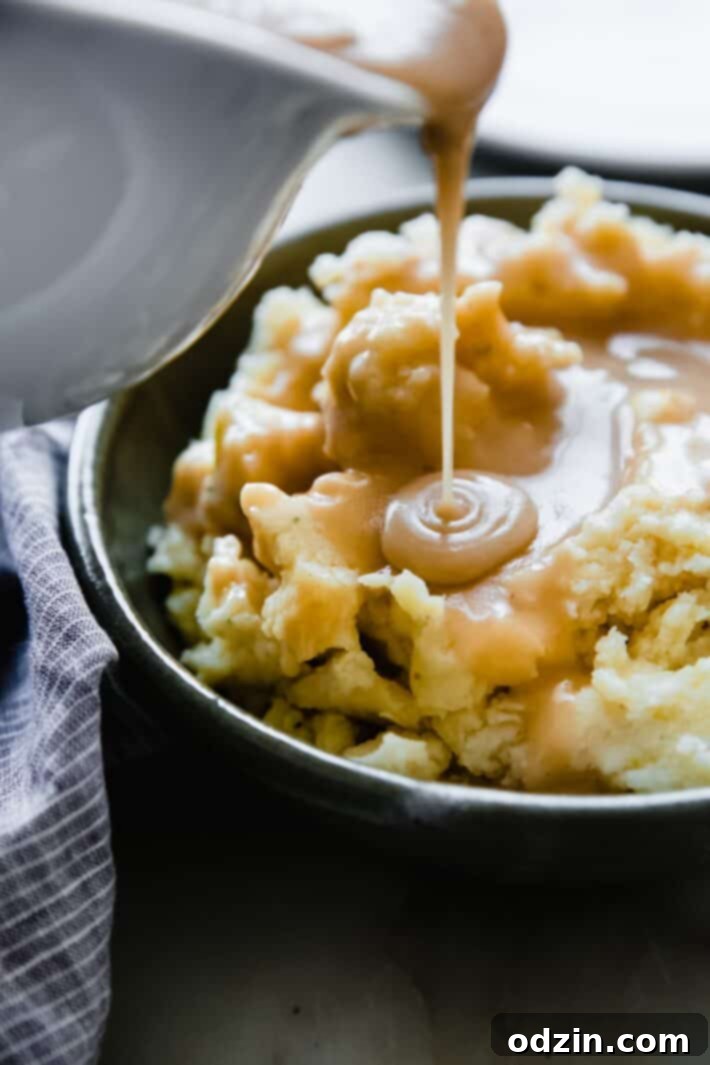
Unlock the secret to the best homemade gravy recipe, whether you have luscious pan drippings or are starting from scratch! This guide will show you how to craft a truly exceptional gravy using simple, pantry-staple ingredients like flour and butter. Imagine this warm, velvety “liquid gold” generously poured over your holiday turkey, creamy mashed potatoes, fluffy homemade biscuits, and so much more!
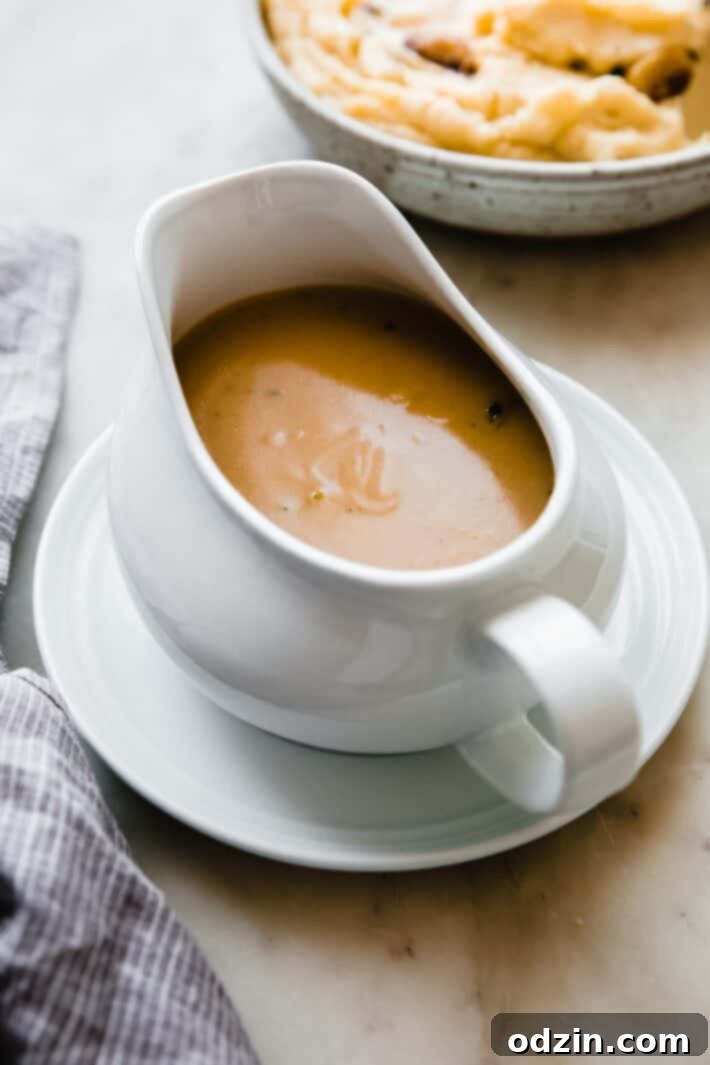
There’s something undeniably magical about a truly great gravy. It’s the ultimate comfort food companion, transforming even the simplest meals into a gourmet experience. Often referred to as the “liquid gold” of the culinary world, gravy isn’t just a sauce; it’s the heart of a hearty meal, adding richness, depth, and an incredible savory flavor that ties everything together. While many believe that exceptional gravy requires pan drippings from a perfectly roasted turkey or chicken, we’re here to tell you that’s simply not true! This recipe empowers you to create an intensely flavorful, from-scratch gravy that tastes deeply homemade, even when starting without those precious drippings.
Most gravy recipes fall short on that profound, rich umami flavor that makes gravy unforgettable. But with a few clever additions of pantry staples, this recipe elevates your gravy to an entirely new level. We’ll guide you through the process, ensuring your gravy is thick, smooth, and bursting with savory goodness, making it a perfect complement to your Sunday roast, a holiday feast, or just a weeknight dinner needing an extra special touch.
Key Ingredients for the Perfect Homemade Gravy
Crafting the best homemade gravy starts with understanding the role each ingredient plays. This recipe focuses on maximizing flavor with minimal fuss, ensuring a delightful result every time. Here’s a breakdown of what you’ll need and why:
- Pan Drippings or High-Quality Stock: The foundation of any great gravy. Pan drippings are the flavorful juices and rendered fat collected at the bottom of a roasting pan after cooking meat like chicken, turkey, or beef. These drippings are packed with concentrated flavor. If you have them, use a fat separator to remove excess fat, leaving behind the rich liquid. If you don’t have drippings, don’t worry! A good quality low-sodium chicken, turkey, or beef stock will work beautifully. You’ll need about 2½ cups of total liquid for this recipe.
- Umami-Boosting Sauces (Worcestershire & Soy Sauce): These are our secret weapons for an incredibly rich, deep flavor, especially when making gravy without pan drippings. Both Worcestershire and low-sodium soy sauce are packed with umami, the savory “fifth taste,” which adds complexity and depth that makes your gravy taste like it simmered for hours. They enhance the overall flavor profile without dominating it.
- Bouillon Cube: A simple yet effective ingredient for intensifying the savory notes. Depending on your gravy type, you can use a chicken bouillon cube for poultry gravies or a beef bouillon cube for a rich brown beef gravy. It dissolves easily into the stock, adding an extra layer of concentrated flavor.
- Unsalted Butter: Butter is crucial for creating the roux, which thickens the gravy and provides a luscious mouthfeel. About half of the butter can be replaced with the rendered fat from pan drippings if you have them, adding even more authentic flavor. Using unsalted butter gives you better control over the final saltiness of your gravy.
- All-Purpose Flour: The other half of our roux. When whisked into melted butter, flour creates a smooth paste that cooks out the raw flour taste and acts as the primary thickening agent. The roux provides body and ensures a silky-smooth gravy texture.
- Essential Seasonings + Fresh Herbs: These pantry staples elevate the gravy from good to phenomenal.
- Garlic Powder & Onion Powder: Provide a foundational savory aromatic base without the texture of fresh garlic or onion.
- Cayenne Pepper: An optional pinch of cayenne adds a very subtle warmth and kick, enhancing the overall flavor without making the gravy spicy.
- Kosher Salt & White Pepper: Essential for seasoning. White pepper is often preferred in gravies and light-colored sauces because it provides a distinct, slightly milder peppery flavor without leaving visible black flecks, contributing to a more refined appearance. If you only have black pepper, that works too.
- Fresh Herbs (Bouquet Garni): This is truly a game-changer, especially when making gravy without pan drippings. A “bouquet garni” is simply a bundle of fresh herbs (like sage, thyme, and rosemary sprigs) tied together with kitchen twine. Simmering these herbs in the gravy infuses it with incredible aromatic depth and a fresh, herbaceous note, mimicking the complexity often found in drippings. They are easily removed before serving.
- Heavy Cream (Optional): A small splash of heavy cream, added at the very end, is my secret for that extra “spark” and subtle richness. It won’t make your gravy overtly creamy, but it adds a lovely velvety finish and brightens the flavors, making them “dance on your tongue.” While it’s a fantastic addition to poultry gravies, you might omit it for a traditional brown beef gravy.
How to Make Perfect Gravy from Scratch: A Step-by-Step Guide
Making homemade gravy might seem daunting, but it’s a straightforward process that yields incredibly rewarding results. Follow these steps for a smooth, lump-free, and flavorful gravy every time:
- Prepare Your Liquid Base (Drippings or Stock):
If you’re using pan drippings, start by collecting them from your roasting pan. Allow them to settle, then carefully skim off any excess fat using a fat separator or a spoon. Measure the liquid drippings. If you don’t have enough to reach 2½ cups, make up the difference with low-sodium chicken, turkey, or beef stock. If you’re starting from scratch without drippings, simply measure out 2½ cups of your chosen stock.
Transfer your liquid (drippings + stock or just stock) into a large measuring cup or bowl. Add the Worcestershire sauce, soy sauce, and the bouillon cube. Microwave the mixture briefly, just until it’s warm enough for the bouillon cube to dissolve completely, stirring well. This ensures all the flavor enhancers are fully incorporated into your liquid base before you add it to the roux. Set this flavorful liquid aside.
- Mastering the Roux: The Thickening Foundation:
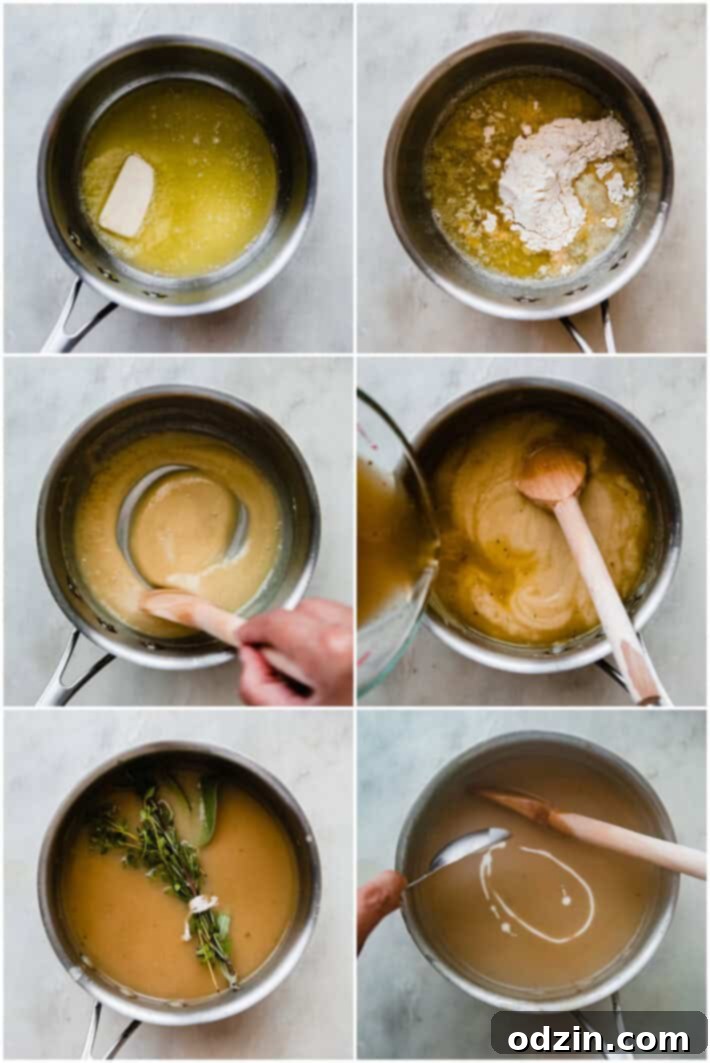
In a medium saucepan, melt the 4 tablespoons of unsalted butter over medium heat. If you’re fortunate enough to have rendered fat from your roast drippings, you can substitute up to 2 tablespoons of the butter with this flavorful fat, ensuring it’s pure fat by using a fat separator. Once the butter is fully melted and shimmering, sprinkle in the ¼ cup of all-purpose flour, along with the onion powder, garlic powder, and a pinch of cayenne (if using).
Whisk constantly for 1-2 minutes. This crucial step cooks out the raw, pasty taste of the flour and allows it to develop a hint of nutty flavor and a light golden (blond) color. You’ll notice a subtle, pleasant aroma. This perfectly cooked roux is the key to a smooth, flavorful gravy. Now, gradually add half of your prepared stock mixture into the roux in a slow, steady stream, whisking vigorously as you pour. This helps prevent lumps. Continue whisking until the mixture is completely smooth and lump-free. Then, pour in the remaining liquid and continue whisking until thoroughly combined.
At this point, if you’re using fresh herbs, add your tied bouquet garni to the saucepan. Bring the gravy to a gentle simmer, whisking occasionally. This simmering process allows the gravy to thicken and for the flavors to meld beautifully. It typically takes about 3-5 minutes. The gravy will thicken as it heats, reaching your desired consistency.
- Finishing Your Delicious Gravy:
Once your gravy has reached your preferred thickness and has simmered for a few minutes, carefully fish out the fresh herbs (or leave them in if you prefer a rustic look, just remove the twine!). Taste the gravy and adjust the seasonings as needed. This is where you can add more kosher salt, white pepper, or an extra pinch of cayenne to suit your palate. Remember, saltiness can vary depending on your stock and drippings.
For that extra touch of perfection, stir in the optional tablespoon of heavy cream. This adds a subtle richness and a beautiful sheen without making the gravy overly creamy. Allow the gravy to cook for another 30 seconds after adding the cream, then immediately remove the pot from the burner. Your perfectly smooth, incredibly flavorful homemade gravy is now ready to be served over roasted chicken, turkey, pork chops, creamy mashed potatoes, or anything else your heart desires!
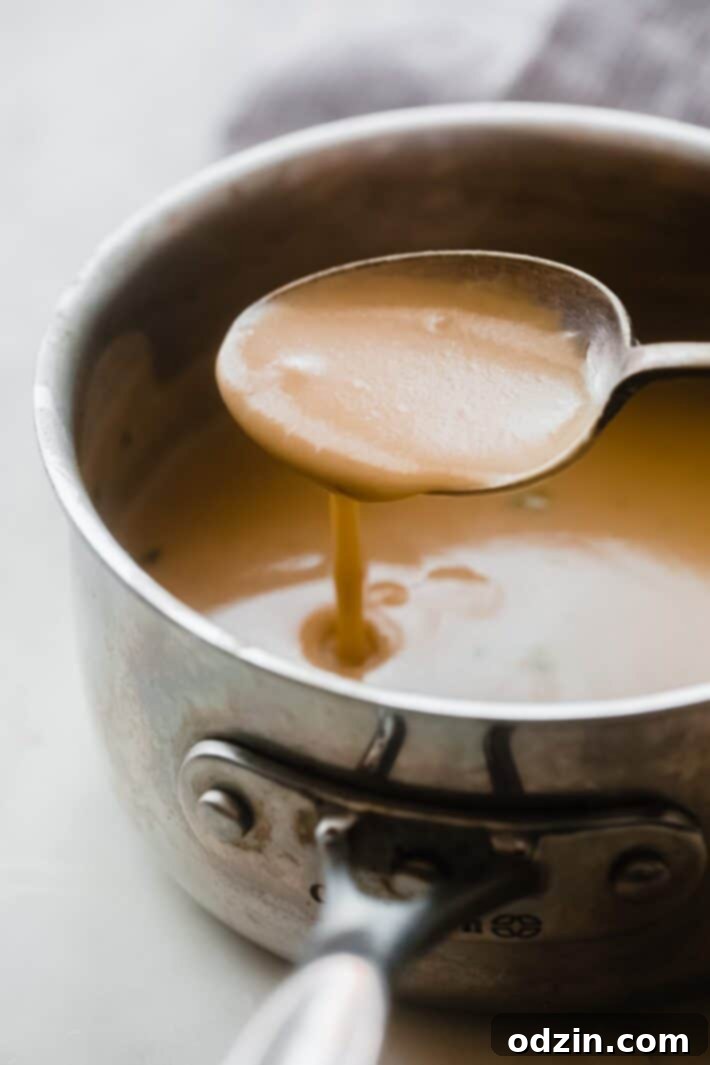
Gravy Q&A: Common Questions & Troubleshooting Tips
How much flour do you use in a gravy recipe?
The ideal flour-to-butter ratio for a perfect homemade gravy is typically 1:1 by volume. This means for every tablespoon of all-purpose flour you use, you’ll need 1 tablespoon of butter (or rendered fat). For this particular recipe, we use ¼ cup of flour and 4 tablespoons of butter, maintaining that optimal ratio.
It’s important to remember that this isn’t baking, so precision isn’t about gram weight. For measuring flour, use the scoop and level method: simply fluff the flour in its container with a spoon, then gently scoop it into your measuring cup. Use the back of a knife or a straight edge to level off the top, ensuring an accurate measurement without compacting the flour. If your gravy turns out too thin, you can make a small slurry of equal parts flour and cold water, whisk it in, and simmer for another minute. If it’s too thick, simply whisk in a little more warm stock until it reaches your desired consistency.
How do you keep gravy warm until serving time?
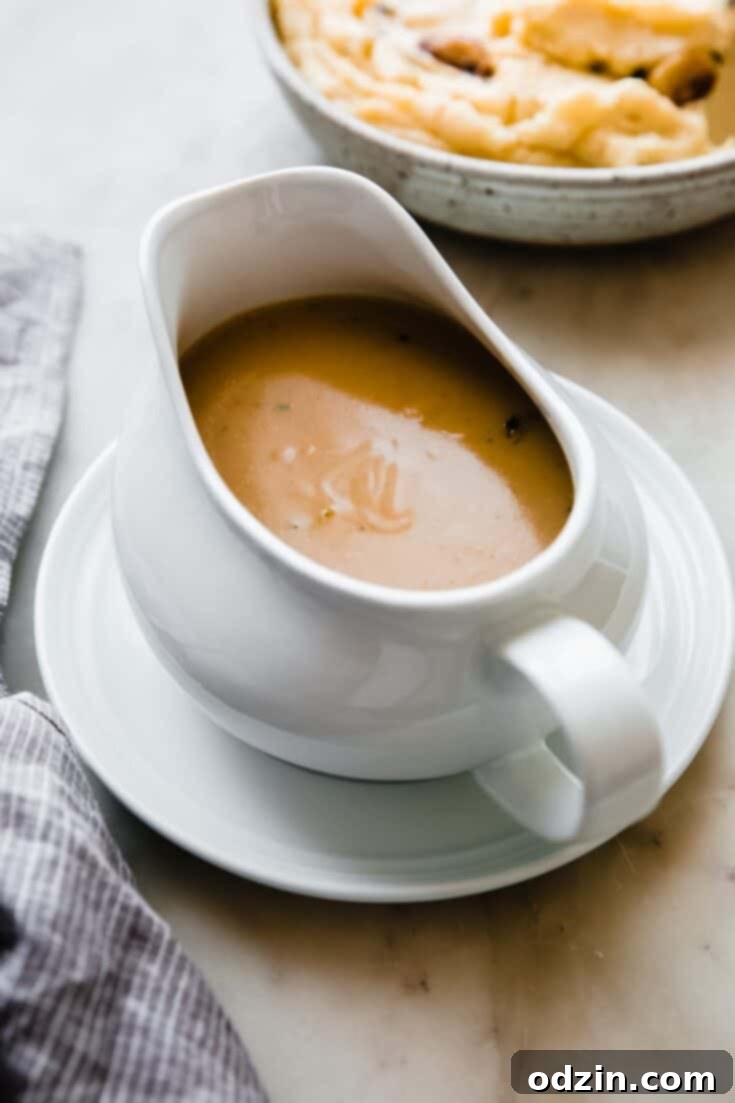
Keeping gravy warm, especially for a holiday gathering with many dishes, is key to serving a delicious meal. For years now, I’ve relied on two excellent methods. You can prepare your gravy 1-2 hours ahead of time and store it in an insulated carafe or thermal server. These are designed to keep liquids piping hot for extended periods without overcooking or altering the gravy’s consistency. When you’re ready to serve, simply transfer it to a traditional gravy boat, or even serve it directly from the carafe for a more casual approach.
Alternatively, a slow cooker set to its “warm” setting works wonderfully for larger batches. Stir occasionally to prevent a skin from forming. A double boiler is another excellent option for smaller quantities, gently keeping the gravy warm without scorching it. If you notice it has thickened too much while sitting, a splash of warm stock or water and a quick whisk will bring it back to life.
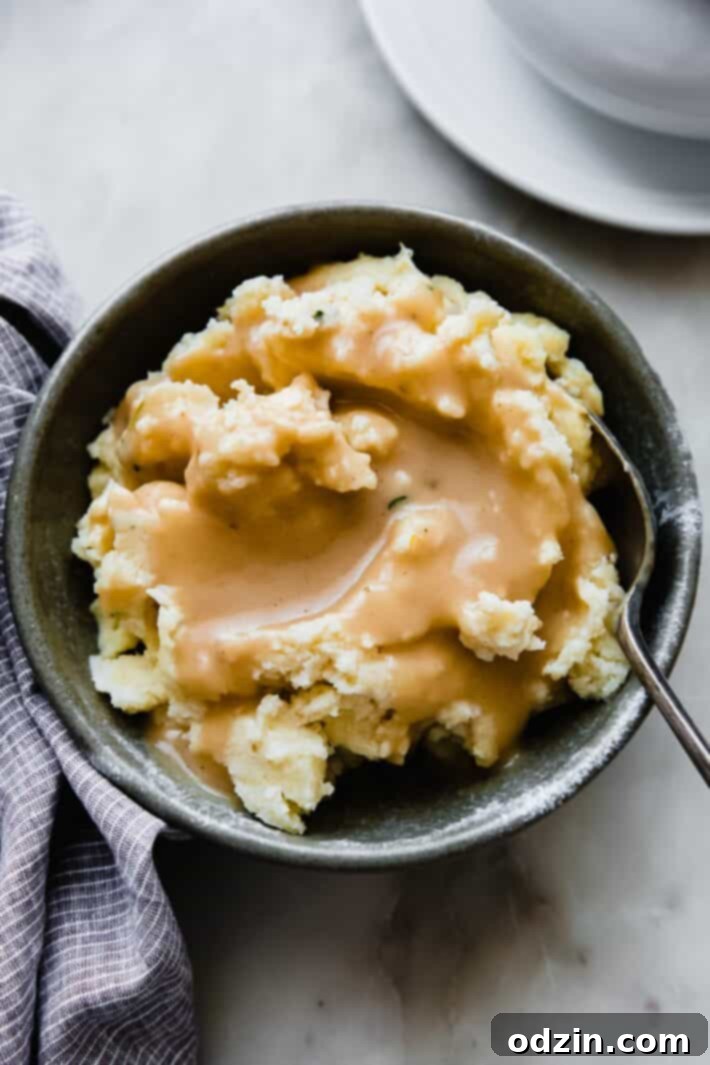
Creative Ways to Serve Your Homemade Gravy
This versatile homemade gravy is far too delicious to limit to just one meal! Here are some fantastic ideas for how to enjoy your savory creation:
- Over a Mountain of Mashed Potatoes! This is a classic pairing for a reason. The creamy potatoes are the perfect canvas for rich gravy. Explore different varieties: try our asiago and roasted garlic mashed potatoes for an elevated flavor, our quick 20-minute Instant Pot mashed potatoes for efficiency, or everyone’s beloved cheddar mashed potatoes for extra indulgence.
- Drenched Over Roasted Chicken: Gravy is the ultimate partner for any roasted bird. Our 1-hour whole roasted chicken is a fantastic choice, providing flavorful pan drippings to enhance your gravy. Also perfect with our oven rotisserie chicken or a succulent herb butter spatchcock chicken.
- Alongside Crispy Fried Chicken: Create the ultimate Southern comfort food feast! Pair your gravy with crispy fried chicken, creamy mashed potatoes, cheesy mac and cheese, flaky buttermilk biscuits, and refreshing coleslaw.
- The Star of Your Thanksgiving Turkey Spread: Whether you use luscious pan drippings from a homemade Thanksgiving turkey or prepare it ahead of time with store-bought turkey stock, this gravy is non-negotiable for the holiday table. Every Thanksgiving plate deserves to be generously doused in this savory goodness!
- Transform into Rich Beef Gravy for Seared Steak: Easily adapt this recipe to make a robust beef gravy. Simply swap the chicken stock and bouillon cube for beef stock and a beef bouillon cube. This rich beef gravy would be absolutely divine over our garlic butter skillet steak, pot roast, or even beef short ribs.
- Elevate Appetizers and Other Potato Dishes! Get creative! Imagine dipping our homemade loaded mashed potato balls into this flavorful gravy. It’s also surprisingly delicious drizzled over simple baked potatoes or crispy roasted potatoes.
Other Holiday & Comfort Food Recipes to Explore:
- 19 Thanksgiving Sides + Everything You Need to Host Thanksgiving
- The Best Creamed Spinach
- Roasted Honeynut Squash Risotto
- Caramelized Onion and Gruyere Drop Biscuits
- Irresistibly Delicious Green Bean Casserole from Scratch
- Roasted Garlic Rosemary Focaccia Bread

Homemade Gravy Recipe (with or without Pan Drippings)
5 minutes
10 minutes
15 minutes
This incredibly easy homemade gravy recipe can be crafted beautifully with or without pan drippings! Our scratch-made gravy relies on mostly pantry-staple ingredients like flour and butter to create a rich, savory, and lump-free sauce. This warm and deeply delicious gravy is absolutely perfect generously poured over roasted turkey, creamy mashed potatoes, fluffy homemade biscuits, and a myriad of other delightful dishes!
Ingredients
- 2 ½ cups pan-drippings or stock (see notes for options)
- 1 teaspoon EACH: Worcestershire sauce AND low sodium soy sauce (for rich umami flavor)
- 1 chicken bouillon cube (or beef for brown gravy, enhances savoriness)
- 4 tablespoons unsalted butter (for the roux, or substitute some with fat drippings – see notes)
- ¼ cup all-purpose flour (thickening agent for the roux)
- ½ teaspoon onion powder
- ¾ teaspoon garlic powder
- A few sprigs sage, rosemary, and thyme (tied into a bouquet garni, adds aromatic depth – see notes)
- Pinch of cayenne, optional (for a subtle warmth)
- Kosher salt + white pepper (to taste, white pepper for a cleaner look)
- 1 tablespoon heavy cream, optional (for added richness and sheen)
Instructions
- PREPARE LIQUID BASE: In a large measuring cup or bowl, combine your pan drippings and/or stock to total 2½ cups. Add the Worcestershire sauce, soy sauce, and the bouillon cube. Microwave the mixture just until it’s warm enough for the bouillon cube to fully dissolve (about 1-2 minutes); stir thoroughly to combine. Set aside.
- MAKE THE ROUX: In a medium saucepan, melt the butter over medium heat. Once melted, whisk in the flour, onion powder, garlic powder, and cayenne (if using). Cook, whisking constantly, for 1-2 minutes to cook out the raw flour taste and allow the roux to turn a light golden “blond” color. Then, in a slow, steady stream, pour in half of the prepared stock mixture while continuously whisking to prevent lumps. Continue whisking until smooth. Pour in the remaining stock and whisk again until completely smooth. Add the tied fresh herbs (bouquet garni) to the gravy.
- SIMMER & FINISH: Bring the gravy to a gentle simmer, whisking occasionally, and allow it to heat through and thicken to your desired consistency, which typically takes about 3-5 minutes. Taste the gravy and adjust seasonings with kosher salt, white pepper, and additional cayenne as desired. Carefully remove and discard the fresh herbs. Stir the heavy cream (if using) into the gravy. Cook for another 30 seconds, then remove the pot from the burner. Serve warm over roasted chicken, mashed potatoes, turkey, pork chops, or any other delicious dish you desire!
Notes
- Pan Drippings: These flavorful drippings can come from roasted turkey, chicken, beef, or even lamb. Measure whatever drippings you have into a measuring cup and add enough low-sodium stock (chicken, turkey, or beef, depending on your gravy type) to reach a total of 2½ cups. If you don’t have any pan drippings, simply use 2½ cups of your preferred low-sodium stock.
- Fat Drippings: If your pan drippings have a significant layer of fat, you can use this rendered fat to replace up to 2 tablespoons of the unsalted butter in the roux. Be sure to use a fat separator to ensure you’re adding pure, clarified fat to your roux, not watery drippings.
- Fresh Herbs vs. Dried: For the best aromatic flavor, fresh herbs (sage, rosemary, thyme) are highly recommended. Tie them together with kitchen twine for easy removal. If fresh herbs are unavailable, you can substitute them with ½ teaspoon of dried thyme (or a mix of dried poultry herbs) added along with the onion and garlic powder during the roux step.
Recommended Products for Gravy Success
- Fat Separator
- 9-Inch Whisk
- Bakers/Butchers Twine
- Gravy Boat
- 3-Quart Saucepan
- Carafe
Have you made this recipe?
If you enjoyed this recipe, please consider leaving a ⭐️⭐️⭐️⭐️⭐️ rating and a comment below. You can also share a picture on Instagram with the hashtag #LITTLESPICEJAR, I’d love to see what you made!