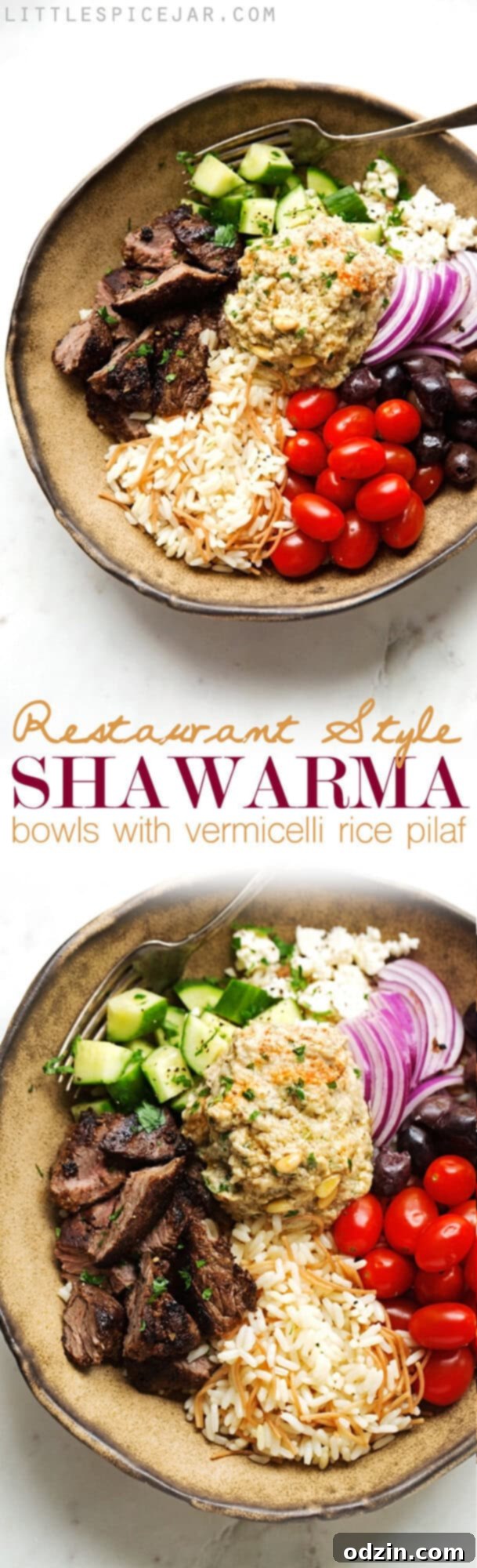
Homemade Beef Shawarma Bowls with Fragrant Persian Vermicelli Rice Pilaf: A Complete Middle Eastern Feast
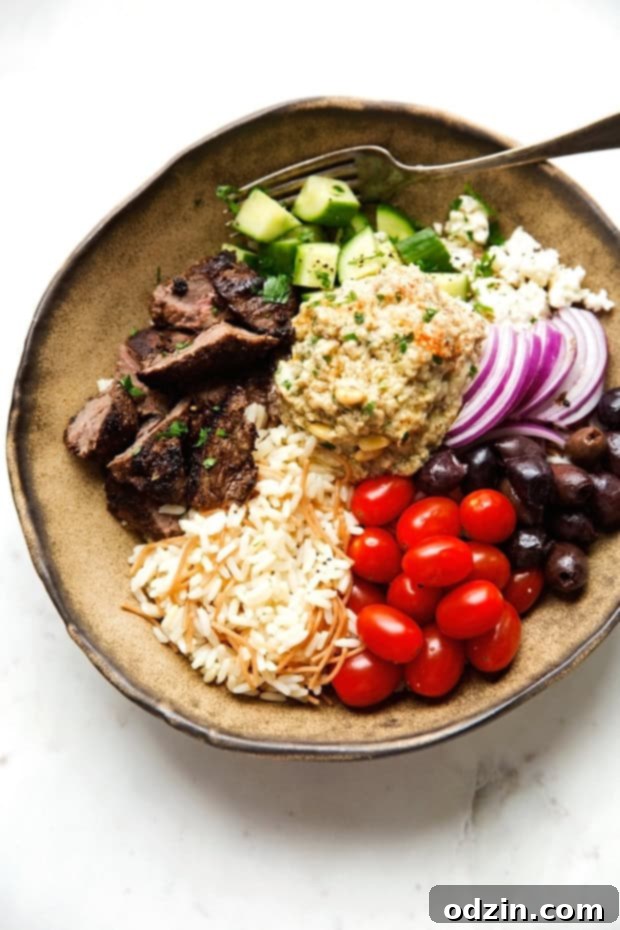
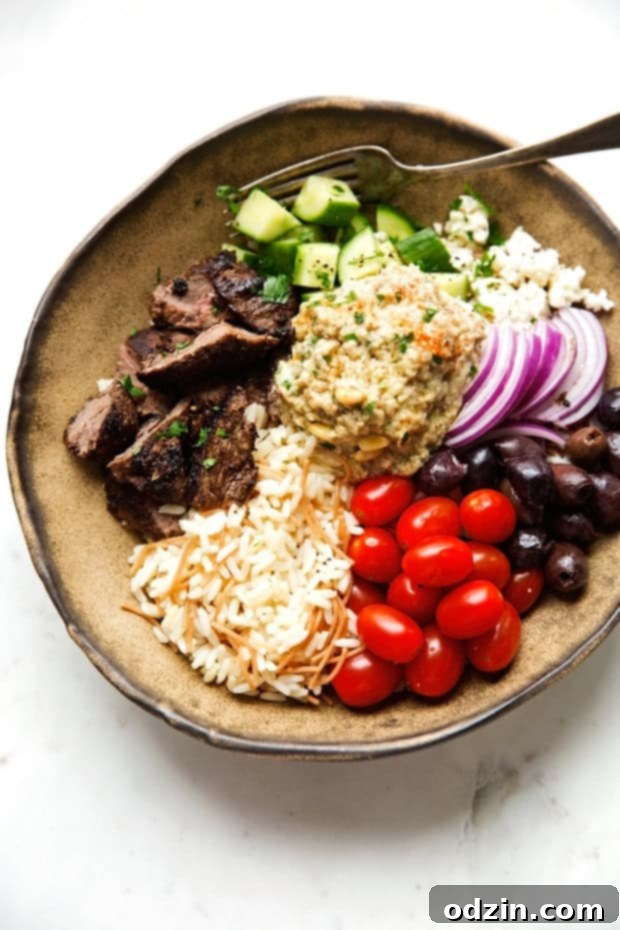
Embark on a culinary journey with these exquisite Marinated Beef Shawarma bowls, perfectly complemented by the most fragrant Persian rice Pilaf. Each bowl is generously loaded with vibrant fresh cucumbers, crisp sliced red onions, briny Kalamata olives, and a luxurious dollop of creamy baba ganoush. It’s truly a symphony of flavors that promises an unbelievably delicious and satisfying meal!
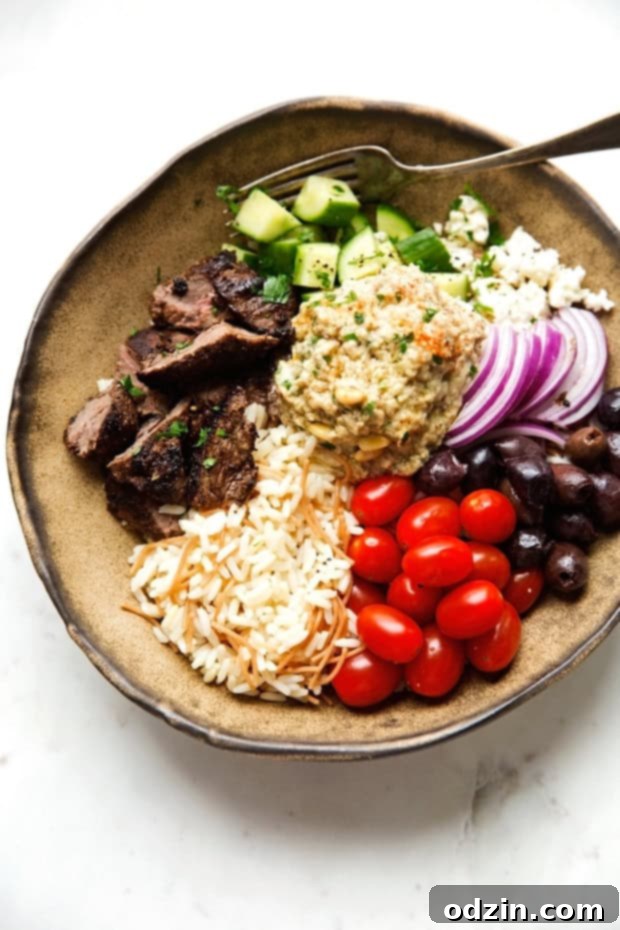
There’s an undeniable magic to a well-made beef shawarma. While I’ve always cherished a classic shawarma wrap, these homemade Beef Shawarma Bowls elevate the experience to an entirely new level. They are more than just a meal; they are an obsession, a culinary delight that will have you craving more from the very first bite.
I’ve been captivated by this incredibly flavorful creation – a harmonious blend of tender, shredded beef shawarma, velvety baba ganoush (or a luscious hummus), and the most aromatic Persian vermicelli rice pilaf you’ll ever taste. This isn’t merely about delicious beef; it’s about crafting an entire experience, where every component plays a crucial role. This recipe unveils the secrets to a homemade, fragrant Lebanese-style rice pilaf that’s surprisingly simple to prepare and offers a depth of flavor far superior to anything you might find at a typical Middle Eastern restaurant. The bowl achieves a perfect balance of savory and tangy notes, with a delightful brininess from crumbled feta cheese, and an abundance of freshness from vibrant tomatoes, crisp cucumbers, and sharp red onions. The marinated and perfectly grilled beef shawarma delivers an explosion of authentic Middle Eastern flavors. Seriously, prepare yourselves, because the internet might not be ready for the best shawarma bowl ever, but I am absolutely thrilled for you to try it.
Even if you’re a bit skeptical about combining all these elements into one bowl, I urge you to give this recipe a chance. Perhaps beef shawarma isn’t typically your go-to, and that’s perfectly fine. If you prefer the lean notes of chicken shawarma or the richer dark meat, feel free to substitute. The beauty of these bowls lies in their adaptability, allowing you to tailor them to your personal preferences while still achieving an unforgettable meal.
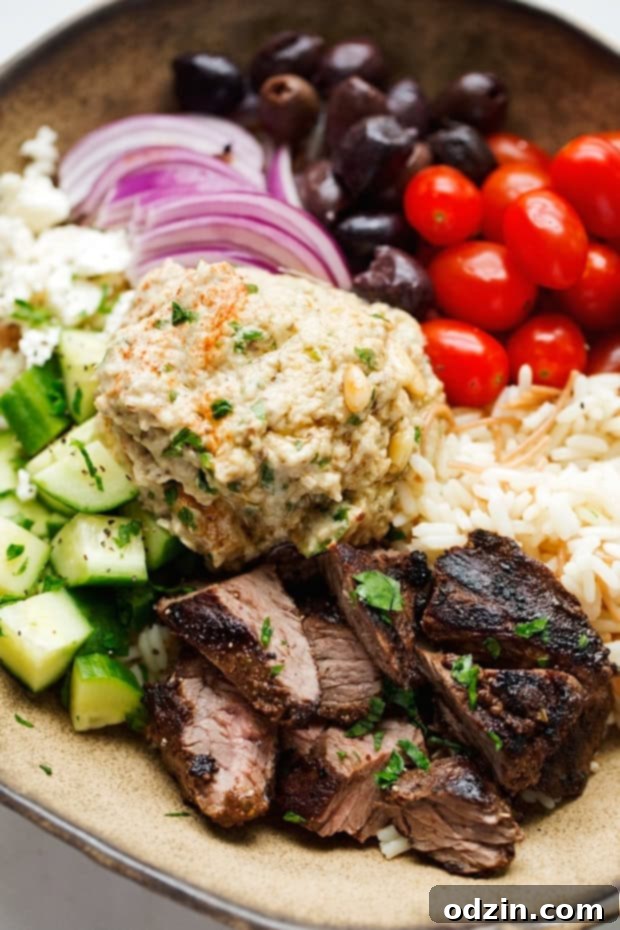
Crafting a meal with a rainbow of fresh vegetables is always a win, proving that healthy eating doesn’t mean sacrificing flavor. We’re aiming for an abundance of taste, satisfying crunch, and incredible versatility. When I speak of versatility, I truly mean that you can incorporate almost any vegetables you have on hand in your refrigerator into these delightful bowls. Roasted carrots and cauliflower, for instance, make fantastic additions, adding sweetness and texture. Feel empowered to swap ingredients and use what’s available; trust me, the results will be just as spectacular and flavorful.
Do you recall when I shared my homemade baba ganoush recipe last week, hinting that the most amazing shawarma bowls were on their way? Well, they have officially arrived! But if baba ganoush isn’t your favorite, fret not. My classic hummus recipe makes an equally delicious and creamy accompaniment, perfect for drizzling or dolloping generously over your shawarma bowls.
In my family, shawarma is more than just food; it’s practically a love language. Coming from a household of avid shawarma enthusiasts, this recipe holds a special place in our hearts. I even joked with my husband on our wedding day about squeezing in a quick shawarma stop before the ceremony began. Yes, we are absolutely serious about our shawarma!
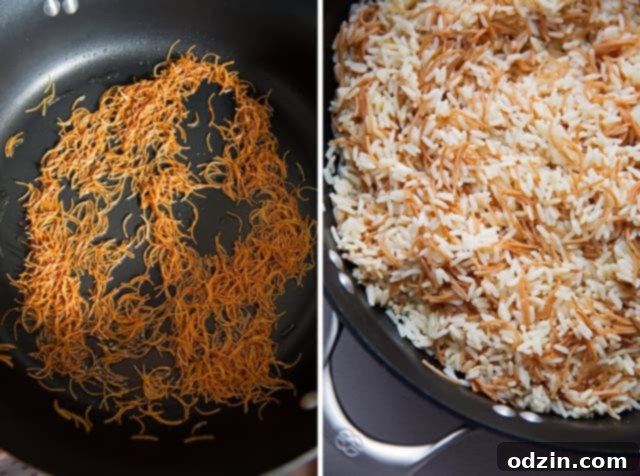
The Secret to Super Flavorful Persian Vermicelli Rice Pilaf
Now, let’s talk about the Persian rice pilaf for this recipe – undoubtedly one of my absolute favorite components of this entire dish. For a long time, perfecting this rice was a challenge. I had been making rice pilaf for years, but it always felt like it lacked that distinctive nuttiness and deep aroma that characterizes the vermicelli rice served in authentic Middle Eastern restaurants. While my rice was consistently cooked to perfection, it never quite achieved that sought-after fragrance.
Then came a fortunate accident. One day, I thought I had “burned” the vermicelli a bit too much. What a happy mistake that turned out to be! The undeniable secret to truly exceptional Persian vermicelli rice pilaf is allowing the vermicelli to brown thoroughly. And by “brown,” I mean deep, dark reddish-brown – not merely golden or lightly toasted. You might even reach a point where you question if you’ve gone too far, thinking it’s too reddish-brown to be salvageable. That, my friends, is precisely the perfect stage. This intense browning develops the rich, nutty flavor that Persian rice pilaf is renowned for, especially when achieved by sautéing the vermicelli in ghee.
It’s a wonderful lesson in learning from mistakes, turning a perceived error into a culinary triumph. Once you discover this technique, you’ll find yourself repeating it effortlessly, creating consistently perfect Persian vermicelli rice pilaf every time. Or, at least, something pretty close to it!
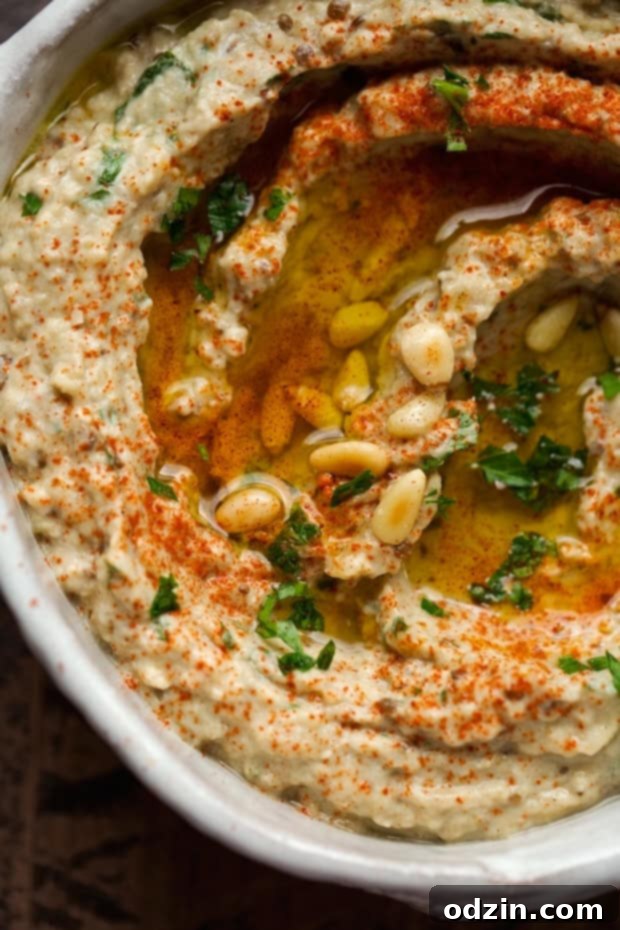
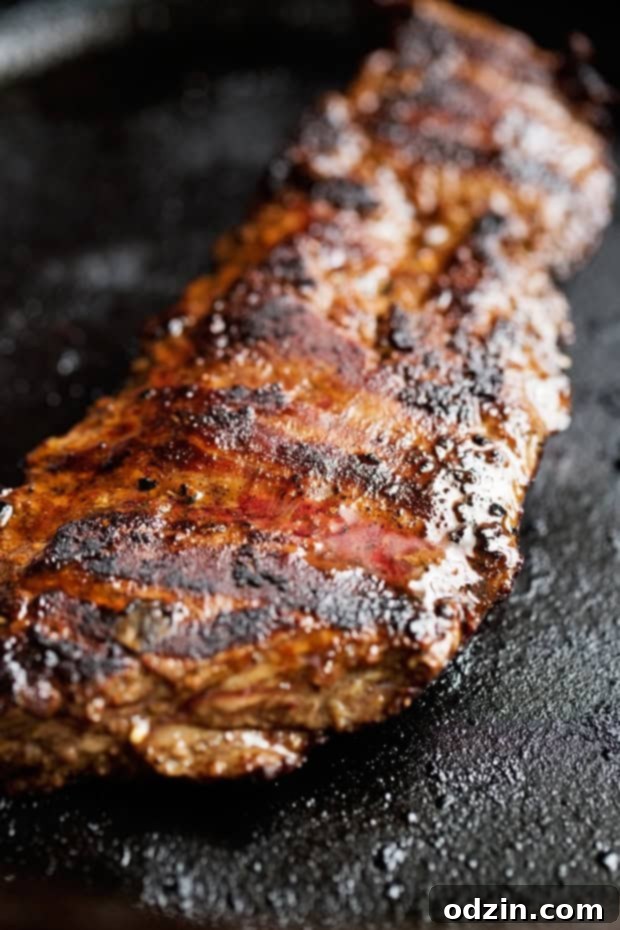
Crafting the Perfect Beef Shawarma Marinade
And while we’re on the topic of perfecting culinary elements, let’s discuss the marinade for this beef shawarma. It’s nothing short of phenomenal – truly awesome-sauce multiplied by a million! The key lies in a simple yet potent blend: just two tablespoons of high-quality shawarma seasoning. Don’t worry if your local grocery store doesn’t carry it; you can easily purchase it online. Many Middle Eastern markets, like my favorite local spot, create their own unique shawarma seasonings, and those are often the absolute best. For anyone in the Houston area, I highly recommend seeking out the Phoenicia brand shawarma seasoning specifically for beef – it is exceptionally good. If you prefer a DIY approach, there are numerous recipes available online for making your own shawarma seasoning blend. While I haven’t found a homemade blend that I’m completely enamored with enough to share links, if you decide to craft your own, ensure that allspice is one of the primary ingredients. It’s listed as the first and most crucial seasoning on my go-to store-bought package, signaling its importance in achieving that authentic shawarma flavor profile.
The marinade, typically a mix of the seasoning, olive oil, and a touch of vinegar, works wonders not only in flavoring the beef but also in tenderizing it. Allowing the flank or skirt steak to marinate for at least 20 minutes, and ideally for an hour or even up to 24 hours, ensures every fiber of the meat is infused with those aromatic Middle Eastern spices. When it’s time to cook, whether you choose to grill, pan-fry in a cast-iron skillet, or even broil, the result will be unbelievably tender and bursting with savory goodness. Slice it against the grain for maximum tenderness, and prepare to be amazed.
So there you have it, folks! Go forth, create these incredible beef shawarma bowls, and prepare for a meal that will impress your family and friends. You’ll be thanking me later, guaranteed! Enjoy the process of bringing these vibrant, flavorful dishes to life in your own kitchen. They’re perfect for meal prepping, a quick weeknight dinner, or a festive gathering.
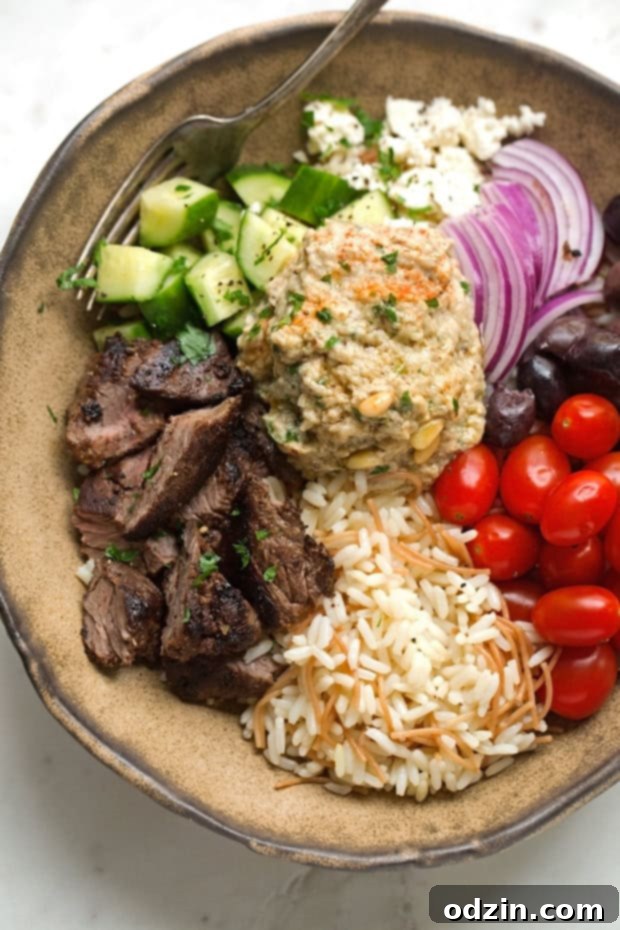
Beef Shawarma Bowls with Persian Rice Pilaf
Marinated Beef Shawarma bowls with the most fragrant Persian rice Pilaf. This bowl is loaded with fresh cucumbers, sliced onions, kalamata olives, and a dollop of baba ganoush for an authentic Middle Eastern experience. It’s seriously so delicious and perfect for a satisfying meal!
Ingredients
For the Beef Shawarma:
- 2 tablespoons shawarma seasoning (homemade or store-bought, ensure good quality for best flavor)
- 2 tablespoons olive oil (for marinade)
- 1 tablespoon vinegar (white or apple cider vinegar works well)
- 1 ½ – 2 pounds flank or skirt steak (sliced thinly for quick cooking and tenderness)
- ½ teaspoon salt (only if your shawarma seasoning is salt-free)
For the Vermicelli Rice Pilaf:
- 3 tablespoons ghee (clarified butter, for a rich, nutty flavor)
- ¾ cup vermicelli pasta (broken into small pieces)
- 2 cups long-grain parboiled rice (rinsed thoroughly)
- 4 cups warm water or low sodium chicken broth (broth adds more flavor)
- 1 teaspoon salt (or to taste)
Optional Toppings & Accompaniments:
- Sliced cucumbers, tomatoes, and red onions (for freshness and crunch)
- Crumbled feta cheese (adds a salty, tangy kick)
- Kalamata olives (for briny notes)
- Toasted pine nuts (for added texture and richness)
- Homemade or store-bought baba ganoush or hummus (for creaminess)
- Roasted root vegetables (e.g., carrots, cauliflower, for extra depth)
- A sprinkle of sumac (for a tangy, lemony finish)
- Fresh parsley or mint (for garnish and freshness)
Instructions
- PREPARE THE BEEF SHAWARMA: In a large mixing bowl, combine the shawarma seasoning, olive oil, and vinegar. If your chosen shawarma seasoning does not contain salt, add about ½ teaspoon of salt to the marinade. Taste and adjust seasonings as desired. Add the flank or skirt steak, ensuring it’s fully coated. Allow the beef to marinate in the refrigerator for a minimum of 20 minutes. For the best flavor and tenderness, ideally marinate for an hour, or even up to 24 hours. When you’re ready to cook, remove the marinated meat from the refrigerator and let it rest at room temperature for about 20 minutes.
- Heat a large cast iron skillet or heavy-bottomed pan over medium-high heat. Allow the pan to get intensely hot before adding the beef. Cook the meat in batches if necessary to avoid overcrowding, ensuring a good sear. Cook for 3-8 minutes per side, depending on your preferred doneness and steak thickness. As a general guide, about 5 minutes per side will yield a delicious medium-rare skirt steak. Once cooked, transfer the beef to a plate and allow it to rest for at least 10 minutes before slicing it thinly against the grain for maximum tenderness.
- PREPARE THE VERMICELLI RICE PILAF: Begin by thoroughly rinsing the parboiled rice in a fine mesh strainer under cold running water for at least 2 minutes. Use your fingers to gently rub the rice grains during rinsing to remove excess starch. Set the rinsed rice aside to drain.
- In a large Dutch oven or heavy-bottomed pot, melt the ghee over medium heat until it’s completely liquid. Add the broken vermicelli pasta to the pot. Stir frequently and continuously, allowing the vermicelli to brown. This process will take approximately 5-6 minutes. The key is to achieve a deep, reddish-brown color – do not stop at golden or light brown, as the darker color develops the characteristic nutty flavor. Keep a close eye on it to prevent burning.
- Once the vermicelli has reached a deep reddish-brown hue, add the thoroughly rinsed rice to the pot. Toast the rice with the vermicelli for another 3-4 minutes, stirring constantly to prevent the vermicelli from burning while the rice absorbs some of the ghee and lightly toasts.
- Carefully pour in the warm water or low-sodium chicken broth and add the salt. Bring the mixture to a boil. Stir just once to break up any lumps or settled rice. Immediately cover the pot, reduce the heat to the lowest setting, and let it simmer undisturbed for 12-15 minutes, or until all the liquid has been absorbed and the rice is fully cooked and tender.
- Once cooked, remove the pot from the heat and allow the rice to stand, still covered, for an additional 5 minutes. This steaming period helps the rice grains become perfectly fluffy. Finally, gently fluff the rice with a fork before serving.
- ASSEMBLE YOUR SHAWARMA BOWLS: To assemble your delicious and satisfying bowl, place a desired amount of the fragrant Persian vermicelli rice pilaf as the base in your chosen vessel. Top generously with slices of the tender beef shawarma meat. Arrange your preferred optional toppings around the beef and rice – a vibrant mix of fresh cucumbers, tomatoes, red onions, kalamata olives, and a dollop of creamy baba ganoush or hummus. Finish with a sprinkle of crumbled feta cheese, toasted pine nuts, and a dash of sumac if desired, along with fresh parsley or mint for garnish.
Notes
- If ghee is not readily available or preferred, you can replace it with 1 tablespoon of unsalted butter combined with 2 tablespoons of a neutral cooking oil (such as canola or vegetable oil) for browning the vermicelli and toasting the rice.
- For meal prepping, store the cooked beef shawarma and rice pilaf separately in airtight containers. Assemble the bowls with fresh toppings just before serving for the best texture and flavor.
- Don’t be afraid to experiment with different vegetables! Roasted bell peppers, zucchini, or even finely chopped spinach can be wonderful additions.
Have you made this recipe?
If you enjoyed this recipe, please consider leaving a ⭐️⭐️⭐️⭐️⭐️ rating and a comment below. You can also share a picture on Instagram with the hashtag #LITTLESPICEJAR, I’d love to see what you made!
IS THIS A GOOD CHOICE FOR YOU?
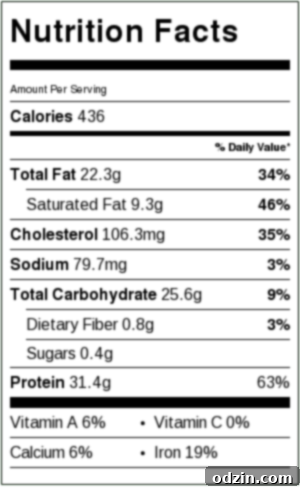
*Please note: the nutritional facts provided here are an estimate based on the ingredients and brands I’ve used in preparing this recipe. For a more precise and accurate count, I highly recommend calculating them using the specific ingredients and brands you’ve chosen for your own preparation. It’s important to remember that these nutritional facts are calculated for the rice and shawarma meat components only; they do not include any of the optional toppings. The information presented is for 1/6th of the overall recipe, to help you gauge your portion sizes accurately.*