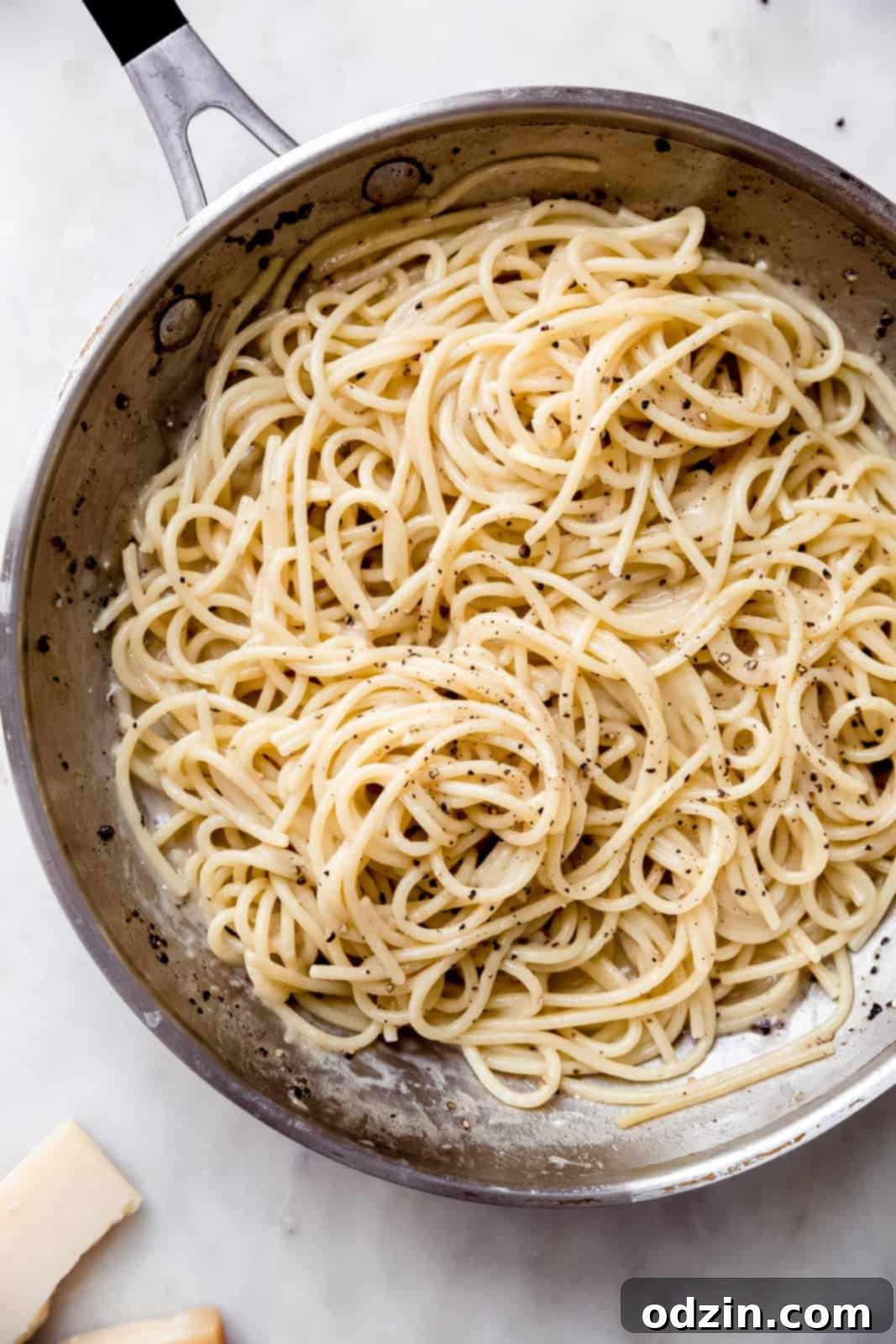
Authentic & Creamy Cacio e Pepe Recipe: Master the Roman Classic with 3 Simple Ingredients
Imagine a pasta dish so incredibly simple, yet so profoundly satisfying, it has captured hearts for centuries. Cacio e Pepe, literally meaning “cheese and pepper,” is a cornerstone of Roman cuisine, celebrated for its minimalist approach and maximum flavor. Crafted with just three core ingredients – high-quality pasta, rich Pecorino Romano cheese, and aromatic black peppercorns – it’s a testament to how treating each component with meticulous care can transform humble staples into an extraordinary culinary experience. I promise you, by following these expert tips and precise steps, you’ll unlock the secret to the best cacio e pepe you’ve ever tasted, rivaling those found in the heart of Rome.
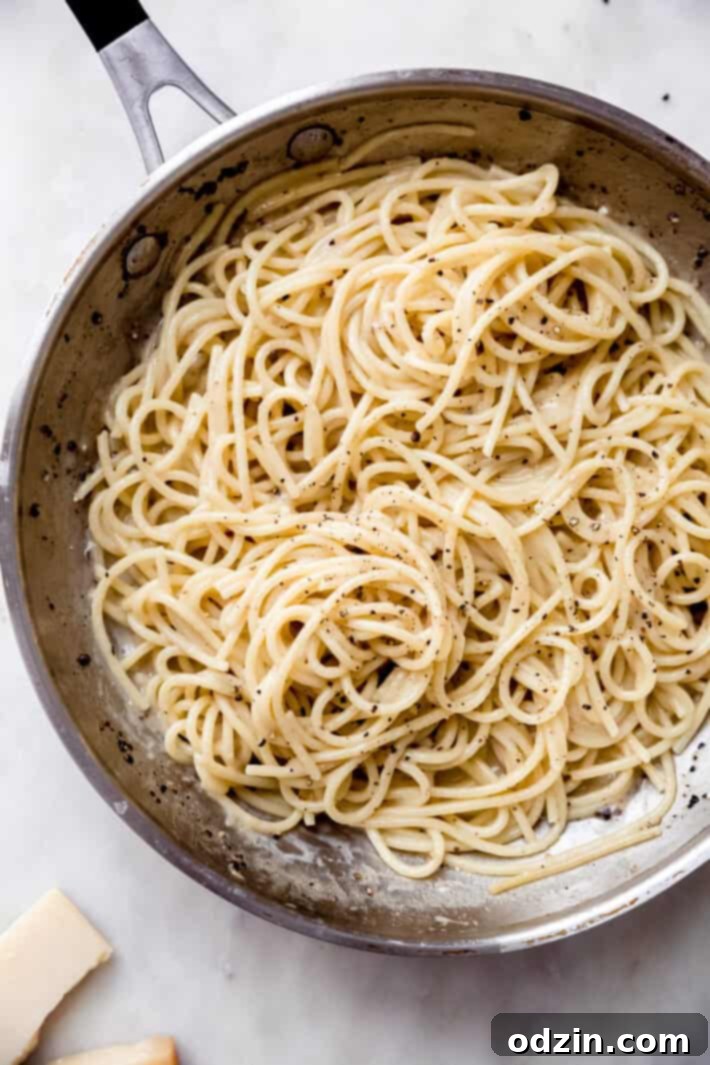
My profound love affair with Cacio e Pepe began during a memorable trip to Italy a couple of summers ago. Wandering through the charming, ancient cobblestone streets of Trastevere, Rome, we stumbled upon a quaint, family-run cafe. It was an early evening, the golden light of dusk painting the historic buildings, and the air was filled with the irresistible aromas of authentic Italian cooking. We settled at an outdoor table, soaking in the vibrant atmosphere, and it was there that I had my first true, authentic bowl of Cacio e Pepe. It was nothing short of perfection. The pasta, specifically fresh tonnarelli, was wonderfully chewy, coated in an impossibly smooth, intensely cheesy sauce, with the vibrant warmth and subtle crunch of coarse cracked pepper shining through. It was an unforgettable symphony of flavors and textures that imprinted itself on my culinary memory.
Over the course of that trip, I indulged in numerous bowls of this iconic dish across various Roman eateries. It quickly became apparent how much the quality and preparation could vary from one restaurant to another. Some versions were disappointingly dry, lacking the luscious, emulsified cheese sauce. Others were overwhelmed by an aggressive, unbalanced amount of black pepper, masking the delicate harmony of the dish. The vivid memory of that first, perfect bowl from Trastevere became my benchmark, a culinary north star that guided my dedicated efforts back home.
Since returning, I’ve embarked on a focused quest to recreate that sublime experience in my own kitchen. Countless experiments, careful adjustments to ingredient ratios, and a deep dive into the nuances of traditional Roman cooking techniques later, I’ve finally cracked the code. I’ve discovered the ‘sweet spot’ where simplicity meets perfection, resulting in a Cacio e Pepe that rivals the best I tasted in Italy. This recipe is the culmination of that passionate journey, and I’m beyond thrilled to share every secret and technique with you, ensuring your homemade version is equally spectacular.
What is Cacio e Pepe? The Beloved Roman Staple Explained
Cacio e Pepe, a name that rolls off the tongue with the rustic charm of Rome itself, translates directly to “cheese and pepper.” This beloved classic Roman pasta dish embodies the very essence of *cucina povera* – “poor kitchen” or peasant cuisine – which passionately champions resourceful cooking with simple, high-quality, and readily available local ingredients. It’s a dish born out of necessity and ingenuity, traditionally prepared by shepherds who carried non-perishable provisions such as hard cheese, dried pasta, and black pepper during their long migrations across the Italian countryside. Its historical roots are steeped in practicality, making it a truly authentic and enduring symbol of Roman culinary heritage.
At its heart, Cacio e Pepe relies on just three fundamental components: pasta, black pepper, and grated Pecorino Romano cheese. However, the true “magic” happens when these ingredients are combined with a crucial fourth element that is often overlooked: the starchy pasta cooking water. This humble water, typically discarded in other pasta preparations, is the secret weapon that emulsifies the melted cheese and fragrant pepper into a rich, velvety-smooth sauce that clings beautifully and evenly to every single strand of pasta. While spaghetti is a popular and well-known choice, many traditional Roman versions of Cacio e Pepe often feature thicker, chewier pasta types like tonnarelli (a square-cut spaghetti) or bucatini (a thick, hollow spaghetti), which offer an even more satisfying texture and greater surface area for the luscious sauce.
Essential Ingredients for Your Perfect Cacio e Pepe
Given the beautiful simplicity of Cacio e Pepe, the quality of each ingredient is not just important, but absolutely paramount. There’s no room for shortcuts or subpar products here; each element plays an irreplaceable and vital role in creating that authentic Roman flavor profile and achieving the dish’s signature luscious, creamy texture. Here’s a closer look at what you’ll need to elevate your Cacio e Pepe from good to extraordinary:
- Pasta: The very foundation of any great pasta dish! While spaghetti is widely used and accessible, traditional Roman preparations frequently opt for pasta with a bit more heft and surface area to better hold the rich sauce. Tonnarelli, a delightful square-cut spaghetti, and bucatini, a thick, hollow spaghetti, are excellent choices, offering a wonderfully satisfying chew and ample space for the sauce to adhere. Linguine can also work effectively if that’s what you have readily available. The absolute key is to select a high-quality, bronze-die extruded pasta (often labeled as *trafilata al bronzo*). This type of pasta has a distinctly rougher, more porous outer surface that grips the sauce much better and, crucially, releases significantly more starch into the cooking water – a vital element for creating our gloriously creamy, emulsified sauce.
- Black Peppercorns: Do not underestimate the transformative power of freshly cracked black pepper in this dish. It’s far more than just a seasoning; it’s a co-star, providing a bold, aromatic backbone. I highly recommend investing in good quality, whole black peppercorns and grinding them fresh for each batch. Specifically, Tellicherry black peppercorns are renowned for their exceptional size, bold, complex, and highly aromatic profile, boasting deep citrus and woody notes. They truly elevate the dish beyond what standard pre-ground black pepper can offer. You can purchase them online at a very reasonable price, ensuring you always have the finest peppercorns at your fingertips. Grinding them freshly just before use, ideally with a mortar and pestle to achieve a coarse, uneven texture, unlocks their full aromatic potential and adds a delightful textural contrast.
- Grated Cheese: The “cacio” in Cacio e Pepe unequivocally refers to Pecorino Romano cheese. This hard, intensely salty, sheep’s milk cheese, hailing from the Lazio region of Italy, is known for its pungent, sharp, and savory flavor that is absolutely essential for the authentic taste of this iconic dish. Its inherent saltiness also means you need to be very mindful and careful when salting your pasta water. If Pecorino Romano is difficult to find or if you prefer a slightly milder flavor, Parmigiano Reggiano, with its nutty, less assertive profile, or Grana Padano, which melts beautifully and offers a subtly sweet and milder taste, can be used as alternatives or even blended with Pecorino Romano for a nuanced and balanced flavor. Always, always grate your cheese fresh just before use; pre-grated cheeses often contain anti-caking agents like cellulose that hinder smooth melting and proper emulsification, leading to a clumpy or grainy sauce.
Unlocking the Secrets: Expert Tips for the Best Cacio e Pepe
Crafting the perfect Cacio e Pepe is less about complicated techniques and more about understanding the precise interaction of its few, but powerful, ingredients. These tips, meticulously honed through countless trials and errors, will guide you to a consistently creamy, intensely flavorful, and authentically Roman result, ensuring your Cacio e Pepe is nothing short of spectacular:
- Toast Your Peppercorns for Intense Aroma: This crucial step, inspired by traditional spice preparation techniques like my mom’s garam masala, is vital for extracting the maximum flavor and intoxicating aroma from the black peppercorns. Dry roasting whole peppercorns in a pan over medium-low heat for about 1-2 minutes, swirling them frequently until they become intensely fragrant, gently awakens and releases their complex essential oils. This intensifies their flavor, adding a layer of depth, warmth, and subtle spice that freshly ground, untoasted pepper simply cannot achieve. Once toasted, immediately transfer them and crush them coarsely using a mortar and pestle or a dedicated spice grinder to maintain that beautiful, uneven texture.
- Choose High-Quality, Rough-Textured Pasta: The specific type of pasta you choose significantly impacts the success and overall experience of the final dish. Look for pasta that isn’t shiny or overly smooth. High-quality Italian pasta, particularly those labeled as “bronze-die extruded” (trafilata al bronzo), boasts a distinctly rough, porous surface. This unique texture is absolutely vital for two key reasons: it allows the incredibly creamy sauce to cling beautifully and evenly to every single strand, and it actively promotes the release of more starch into the cooking water, making that water even more potent for our sauce.
- Boil Pasta in Less Water for Super-Starchy Broth: This ingenious technique goes against much of the conventional wisdom for boiling pasta, but it is an absolute game-changer for Cacio e Pepe. Instead of a very large pot of water, use just enough (typically 2-3 quarts or 8-12 cups for 8 ounces of pasta) to ensure the pasta is fully submerged but the water-to-pasta ratio is intentionally reduced. This strategic reduction in water volume concentrates the starch released from the pasta, making the cooking water incredibly dense and starchy. This highly concentrated starch is absolutely essential for achieving a silky-smooth, perfectly emulsified cheese sauce without ever resorting to butter, cream, or other thickeners.
- Grate Your Cheese Finely and Freshly: For the smoothest possible sauce, it is imperative to grate your Pecorino Romano (or your chosen cheese blend) as finely as possible. A microplane grater works wonders here, creating delicate, almost powdery strands that melt quickly and seamlessly. Avoid all forms of pre-grated cheese at all costs, as they often contain anti-caking agents like cellulose that actively prevent the cheese from melting properly, almost guaranteeing a gritty or clumpy sauce. Also, ensure the cheese is at room temperature to help it incorporate more smoothly and prevent it from seizing when it hits the hot pasta water.
- Temper the Cheese with Hot Pasta Water: Adding grated cheese directly to extremely hot pasta in a skillet can cause it to seize, clump, and create an undesirable stringy texture. The crucial trick here is to temper it. Before combining the cheese with the pasta, gradually whisk some hot, starchy pasta water into the finely grated cheese in a separate, medium-sized, heat-proof bowl. This process creates a thick, creamy “cheese paste” or “queso-like” sauce, making it perfectly ready for smooth, lump-free incorporation into the dish. This tempering step is absolutely critical for preventing lumps and achieving that signature luscious, velvety texture.
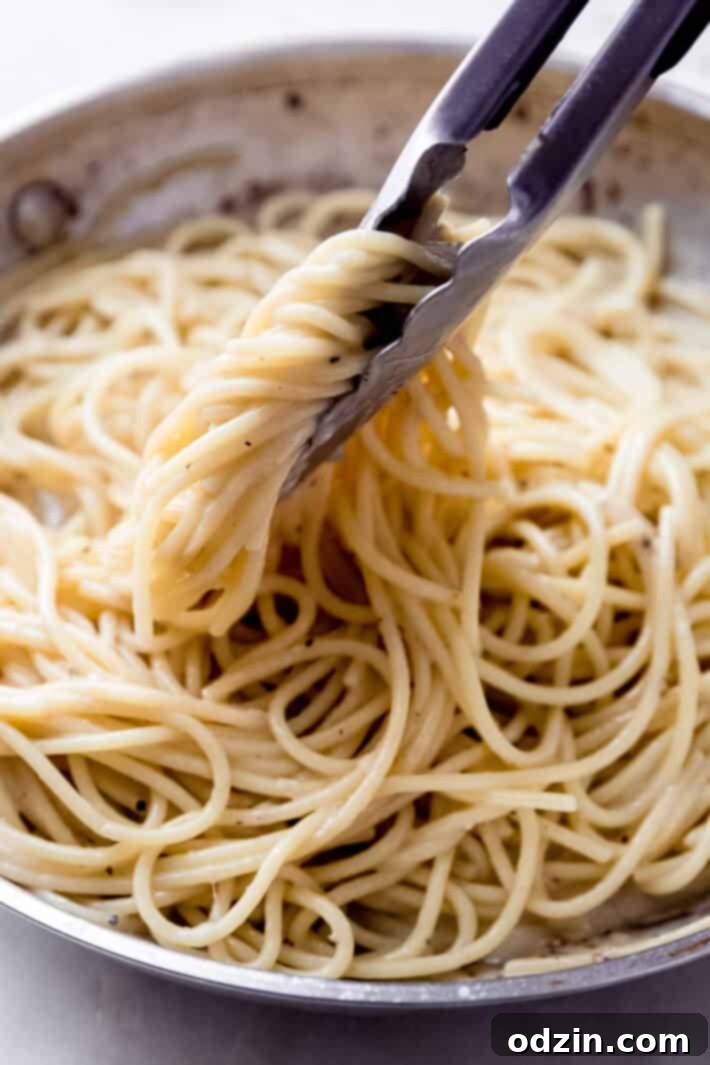
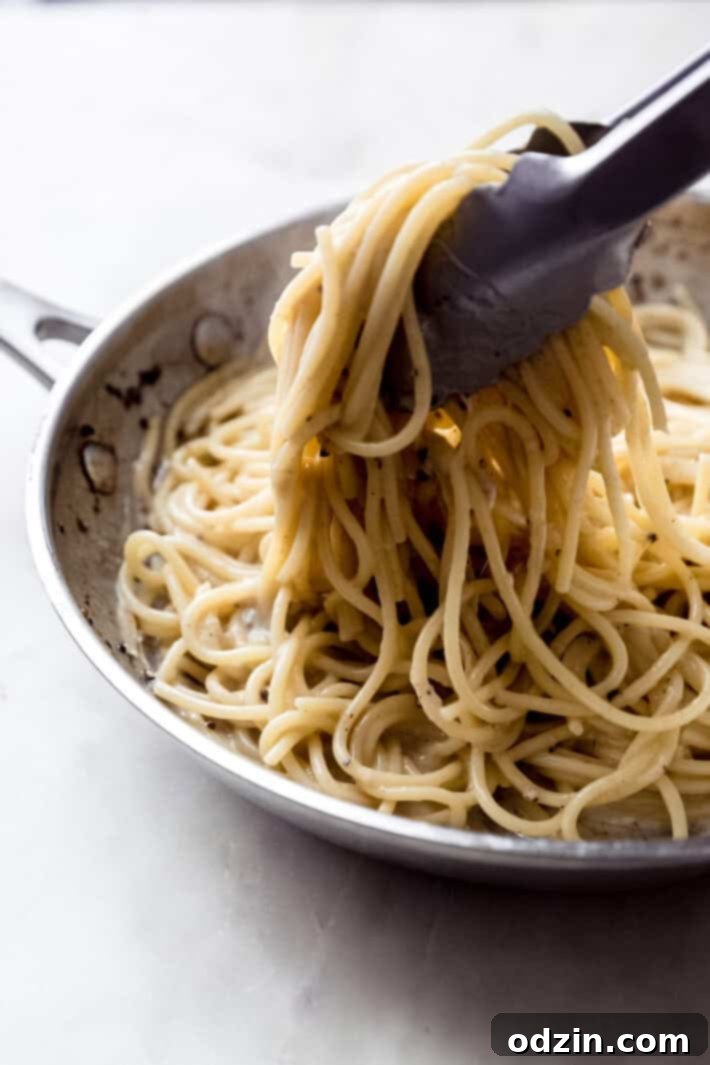
- The Art of Emulsification: Continuous Tossing is Key: The true magic of Cacio e Pepe lies in the meticulous process of emulsification – the delicate art of combining the cheese, pepper, and starchy pasta water into a stable, homogeneous, and glossy sauce. This process demands constant motion. Once the slightly undercooked pasta, toasted pepper, and tempered cheese paste are all in the skillet, you must continuously and vigorously toss the pasta with tongs. The residual heat from the pasta, combined with the concentrated starch, the friction of tossing, and the precise amount of pasta water, all work in harmony to create that rich, creamy, and beautifully glossy coating. If at any point the sauce appears too thick, dry, or sticky, gradually add small splashes (just 1-2 tablespoons at a time) of additional hot pasta water while continuing to toss until the spaghetti is beautifully glazed with a creamy, smooth sauce that evenly coats every strand. Remember, the pasta will continue to absorb water quickly, so be generous but controlled with your additions.
- Serve Immediately for Peak Perfection: Cacio e Pepe is a dish that truly waits for no one. The sauce is at its absolute peak creaminess, texture, and luxuriousness the moment it’s perfectly emulsified and tossed. As it cools, the cheese can begin to seize and the sauce may thicken too much, losing its desired fluidity. Therefore, prepare to serve it immediately as soon as it’s ready, ensuring you experience its unparalleled, unctuous best.
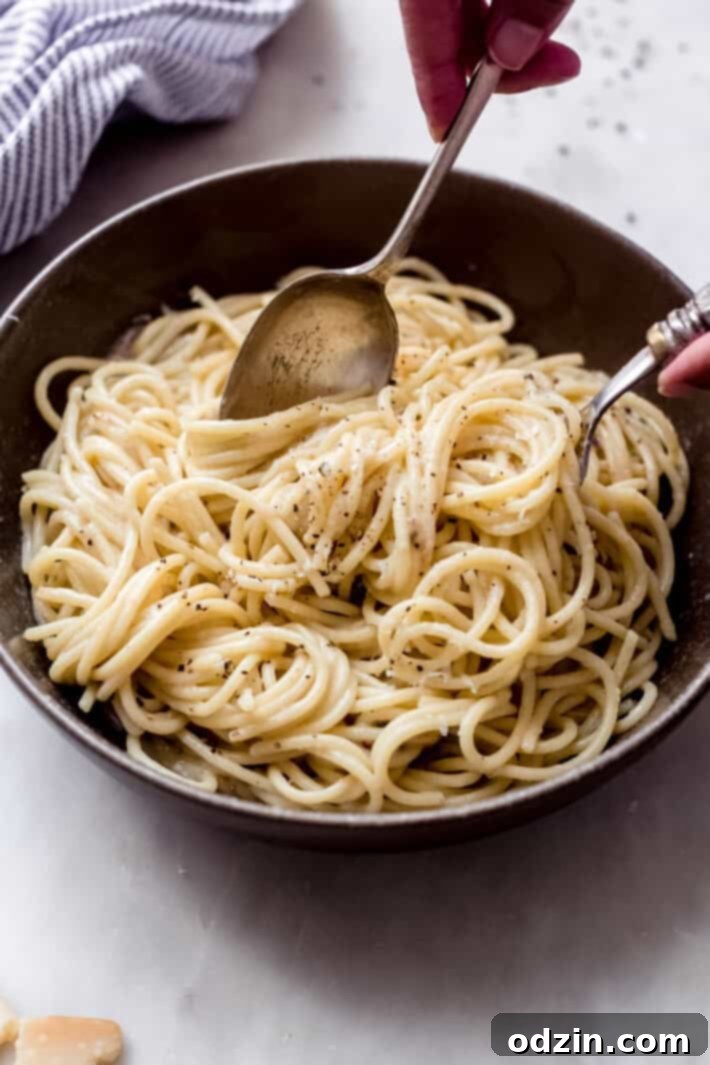
If you like this classic Roman recipe, you might also enjoy these Italian favorites:
- Eggs in Purgatory
- Italian Wedding Soup
- Tuscan Tomato Bread Soup
- Shrimp Gnocchi in Pomodoro Sauce
- Spicy Shrimp Pasta with Tomatoes and Garlic
Perfectly Creamy & Authentic Cacio e Pepe
15 minutes
12 minutes
27 minutes
Experience the authentic taste of Rome with this incredibly creamy and flavorful Cacio e Pepe. Made with just three essential ingredients – pasta, Pecorino Romano cheese, and black peppercorns – this recipe reveals the secrets to achieving a luxuriously smooth, emulsified sauce that coats every strand. Simple to make, yet profoundly satisfying, it’s a timeless classic perfect for any night of the week.
Ingredients
- 1 tablespoon whole Tellicherry black peppercorns (or other high-quality whole black peppercorns)
- 8 ounces high-quality spaghetti, tonnarelli, bucatini, or linguine (bronze-die preferred)
- Kosher salt, for seasoning pasta water (use sparingly due to salty cheese)
- 1 ¼ cups freshly grated Pecorino Romano cheese, finely grated (or a combination with Parmigiano Reggiano/Grana Padano)
Instructions
- PREP PEPPER: In a dry skillet over medium-low heat, gently toast the whole peppercorns for 1-2 minutes, swirling occasionally, until they become intensely fragrant. Immediately transfer them to a mortar and pestle or a spice grinder and crush them into a coarse grind (not fine powder). Remove about half of the crushed pepper to a small bowl for garnish and set aside.
- COOK PASTA: Bring approximately 2 quarts (8 cups) of water to a rolling boil in a pot. Once boiling, season the water with about 1 tablespoon of kosher salt. Taste the water; it should be noticeably salty, but remember the cheese is also very salty. Add the pasta and cook for 2-3 minutes LESS than the package directions for al dente. This slightly undercooked pasta will finish cooking and absorb sauce in the skillet. DO NOT DRAIN THE PASTA WATER – you will need it!
- PREPARE CHEESE & PEPPER BASE: While the pasta cooks, finely grate the Pecorino Romano cheese into a medium, heat-proof bowl. Ensure it’s very fine for smooth melting. Set aside. When there are about 4 minutes remaining for the pasta to be done, return the skillet (the one used for toasting pepper, no need to clean) to medium-low heat. Add the remaining half of the coarsely ground pepper to the skillet and toast for another 30 seconds until deeply aromatic. Immediately add ¼ cup of the hot, starchy pasta water to the skillet with the pepper. Let it simmer gently for about 1-2 minutes, allowing the water to reduce by half and become intensely infused with the pepper’s flavor.
- CREATE CHEESE SAUCE: With about 2 minutes remaining in the pasta cooking time, take ⅓ cup of the hot, starchy pasta water and gradually add it to your finely grated cheese in the bowl. Using a rubber spatula or whisk, stir vigorously until a smooth, thick, queso-like paste or emulsion forms. You may need an additional tablespoon or two of starchy water to achieve the desired consistency; it should be creamy and lump-free. Avoid over-thinning.
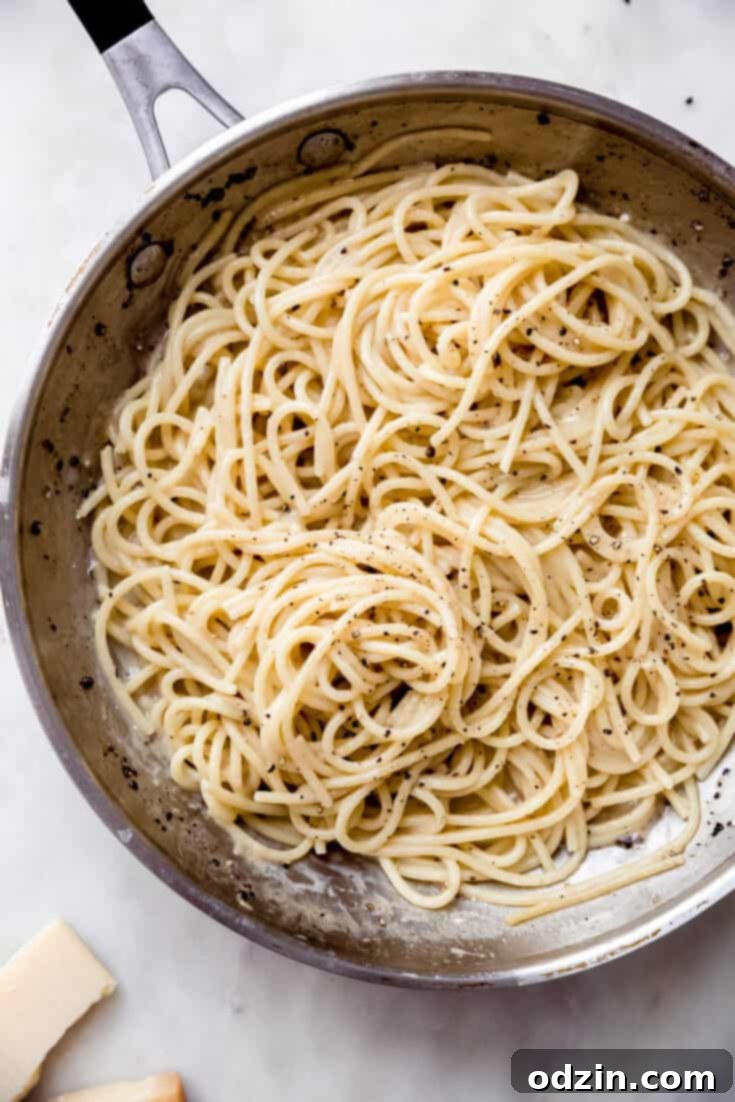
- COMBINE & EMULSIFY: When the pasta is ready (still slightly firm), use tongs to transfer it directly from the pot to the skillet containing the pepper-infused water. Turn the stove to its lowest setting. Toss the pasta vigorously with the pepper mixture for about 30 seconds to coat. Then, add the prepared cheese paste to the skillet. Continuously toss and stir the pasta with the tongs, incorporating the cheese mixture thoroughly. The heat from the pasta and the remaining starchy water will help melt the cheese and create a luxurious, emulsified sauce that beautifully coats every strand. If the sauce appears too thick or sticky, gradually add small splashes (1-2 tablespoons at a time) of additional hot pasta water while continuing to toss, until the spaghetti is beautifully glazed with a creamy, smooth sauce. The pasta will absorb water quickly, so be attentive to the consistency.
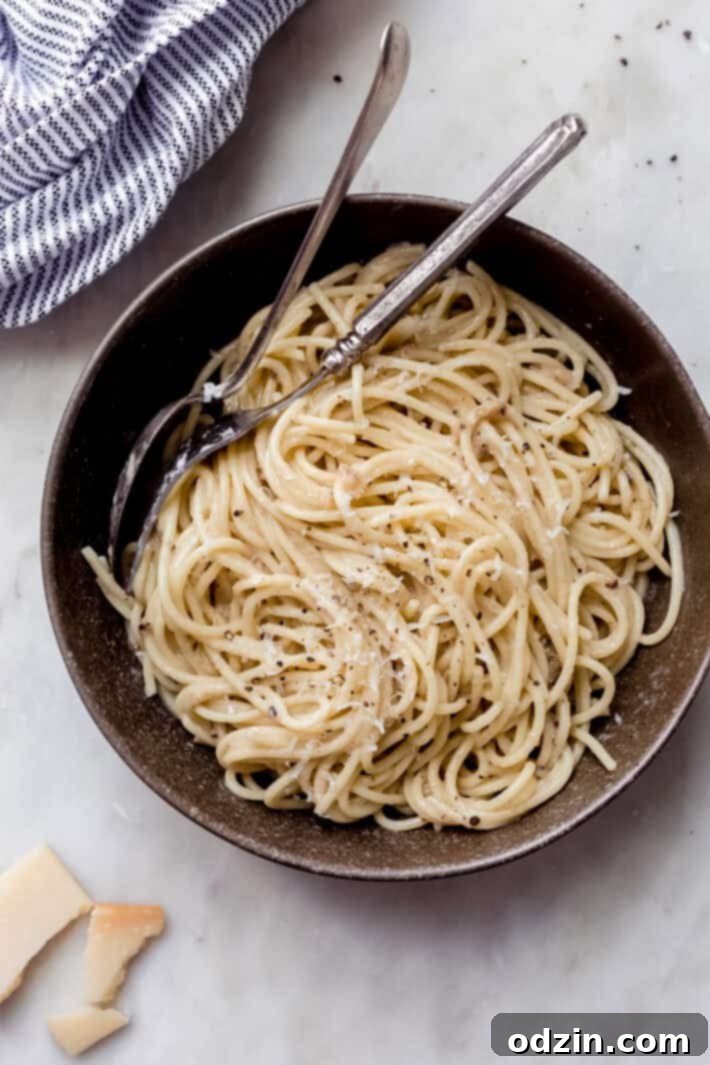
- SERVE: Taste and adjust with additional pepper as desired (likely no more salt is needed due to the Pecorino). Serve immediately, garnished with the reserved coarsely ground pepper and, optionally, extra shaved Pecorino Romano. Enjoy the unparalleled creaminess and robust flavor of this Roman masterpiece!
Recommended Kitchen Essentials
- Premium Tellicherry Black Peppercorns
- Marble Mortar and Pestle Set
- Stainless Steel Locking Tongs
- Heat-Resistant Silicone Spatula
- 12-inch Stainless Steel Skillet
- Enamel Casserole Dish / Braiser
Have you made this recipe?
If you enjoyed this recipe, please consider leaving a ⭐️⭐️⭐️⭐️⭐️ rating and a comment below. You can also share a picture on Instagram with the hashtag #LITTLESPICEJAR, I’d love to see what you made!