
The Ultimate Guide to Baking Perfect Cut Out Sugar Cookies: Soft, Chewy & Easy!
Welcome to the ultimate guide for crafting the *best* cut out sugar cookies you’ll ever taste! This isn’t just another sugar cookie recipe; it’s your definitive resource for achieving those perfect, buttery cookies with irresistibly soft and chewy centers every single time. Forget crumbly, hard, or overly sweet cookies – our recipe strikes the ideal balance, making them a true joy to eat and a delight to share. Whether you prefer decorating with elegant royal icing or our simple, fuss-free sugar cookie frosting, these cookies provide the perfect canvas for your culinary creativity. Plus, they offer incredible flexibility: you can bake them immediately, prepare the dough days in advance, or even freeze the dough for future cookie cravings. Let’s dive into creating some cookie magic!

I’ll confess, our household recently devoured over 50 of these delectable sugar cookies in just three days. I’m still debating if that fact is more embarrassing or amusing! But honestly, when you have homemade cut out sugar cookies with beautifully buttery, crisp edges, wonderfully soft centers, and a quick, effortlessly smooth frosting, it’s remarkably easy to lose track of just how many you’ve enjoyed. These aren’t just any cookies; they’re the kind that disappear almost as quickly as they’re baked, thanks to their exceptional texture and balanced sweetness.
Perhaps you’re skeptical about whether a sugar cookie can truly hold its intricate shape when using a particularly detailed cookie cutter. The answer, with this recipe, is a resounding yes! I’m excited to share my number one tip to guarantee your sugar cookies retain their precise form throughout the baking process. This ensures your festive Santa cookie emerges from the oven looking exactly as intended, not as if he indulged in too many cookies himself before baking!
What truly sets these sugar cookies apart is their perfect level of sweetness. I understand the frustration of biting into a frosted sugar cookie that’s so overwhelmingly sweet you can barely manage two bites. My recipe ensures a harmonious flavor profile where the rich butteriness shines through, complemented by just the right amount of sugar. In fact, I might even love these sugar cookies more than my extra chewy chocolate chip cookies – and for those who know me, you’ll know it took me a decade to perfect that chocolate chip recipe! My husband, Anees, however, still firmly champions the chocolate chip variety. To each their own, but these sugar cookies are truly a masterpiece.

Essential Ingredients for the Best Homemade Cut Out Sugar Cookies
Crafting perfect cut out sugar cookies starts with understanding the role of each high-quality ingredient. Here’s what you’ll need and why:
- Softened Butter: Butter is undeniably the star for flavor in any cookie recipe, especially sugar cookies. For optimal results, it is absolutely crucial that your butter is softened to true room temperature. This isn’t just a suggestion; it directly impacts the cookie’s texture. When butter is properly softened, it creams beautifully with sugar, creating tiny air pockets that give the cookies a lighter, cake-like texture rather than a dense, heavy one. I personally prefer using salted butter for its enhanced flavor profile; however, if unsalted butter is all you have on hand, simply add about ½ teaspoon of kosher salt when you incorporate the flour to achieve a similar balance.
- Granulated Sugar: Beyond merely providing sweetness, granulated sugar plays a vital role in achieving the desired texture. It contributes to the slight crispness around the edges of your baked cookies. In this recipe, we maintain a balanced 1:1 ratio of softened butter and granulated sugar, ensuring a perfectly sweet and texturally appealing cookie.
- One Large Egg: Eggs are indispensable in baking, acting as a critical binding agent and providing essential structure to baked goods. In our sugar cookie recipe, the egg helps emulsify the ingredients, contributing to the dough’s cohesive consistency and the final cookie’s tender yet stable structure. Ensure your egg is also at room temperature for seamless incorporation.
- Vanilla and Almond Extracts: These extracts are key to the signature flavor of these sugar cookies. I use both vanilla and almond extract, which together create a wonderfully complex and aromatic profile. While vanilla is a universal favorite, I understand that almond extract can be polarizing. To be completely honest, I wasn’t a fan until I discovered this particular almond extract, which offers a refined, delicate almond note rather than an overpowering one. Feel free to adjust the amount of almond extract or omit it entirely if it’s not to your taste, but I highly recommend trying it for an elevated flavor.
- Baking Powder: Unlike some cookie recipes that aim for a completely flat, crisp result, our goal is a cookie that’s slightly soft and delightfully chewy in the middle. Baking powder is the secret ingredient that provides the tiniest rise, ensuring your cookies achieve this tender consistency, preventing them from becoming hard or cracker-like. It creates a delicate lift that contributes significantly to the melt-in-your-mouth texture.
- All-Purpose Flour: The foundation of our cookie dough, all-purpose flour works by absorbing the softened butter and other liquids, which is crucial for the dough to hold its shape perfectly in the oven. The method you use for measuring flour is paramount for consistent baking results; I strongly advocate for the spoon and level method. To do this, gently fluff the flour in its container with a spoon or small scoop. Then, using that same small scoop (a tablespoon or ¼ cup measuring cup also works), lightly spoon the flour into your measuring cup until it’s mounded. Finally, use the flat edge of a knife to level off the top of the measuring cup without compacting the flour. This precise method prevents over-measuring, which can lead to dense, dry, or tough cookies, making it ideal for delicate baked goods like cookies and cakes.

How to Make the Best Cut Out Sugar Cookies: Step-by-Step Guide
Achieving truly exceptional cut out sugar cookies involves a few key steps and techniques. Follow this guide for consistently perfect results:
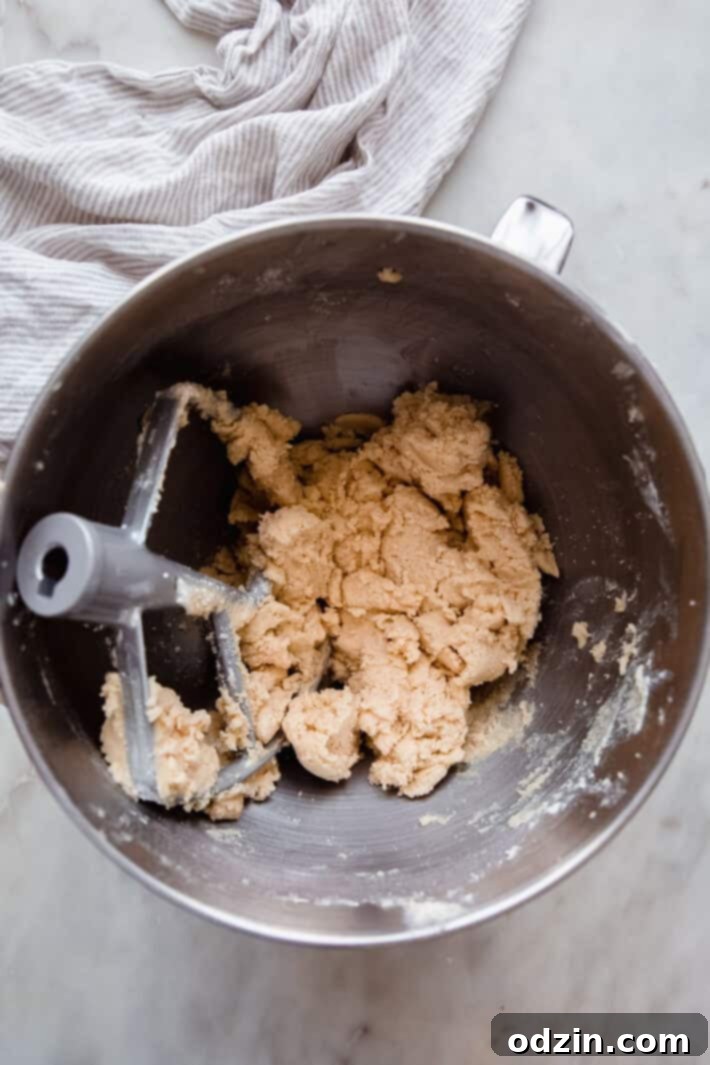
- Prepare the Dough with Precision: The foundation of our amazing cookies begins with carefully prepared dough. Start by placing your softened butter in the bowl of a stand mixer fitted with the paddle attachment. Add the granulated sugar, then beat the butter and sugar together on high speed. Continue mixing until the mixture becomes visibly pale and takes on a sandy, fluffy texture, typically around 5 minutes. This extended creaming process is vital as it incorporates ample air into the dough, which contributes significantly to the final cookie’s light and tender texture. During this step, remember to stop the mixer periodically and scrape down the sides and bottom of the bowl thoroughly to ensure all ingredients are evenly combined. Next, incorporate the room temperature egg and both vanilla and almond extracts. Beat again on high speed for about 90 seconds until fully mixed. Proper incorporation here is crucial because once the flour is added, you want to work the dough as little as possible. Finally, add the baking powder and let it mix for about 15 seconds. Then, on low speed, gradually add the all-purpose flour, mixing only until the flour is *almost* combined – you should still see a few streaks of flour. At this point, stop the mixer. Switch to a rubber spatula and gently fold in the remaining flour by hand until just combined. This minimal mixing post-flour addition prevents over-developing the gluten, ensuring your cookies remain wonderfully tender and not tough.
- Roll Out Before Chilling for Maximum Ease: This is a game-changing tip that will make your cookie-making process significantly smoother. Once your dough is prepared, dump it directly onto a clean work surface. I highly recommend doing this on a large sheet of parchment paper, pre-cut to the size of your baking sheet. Gather the dough into a cohesive ball, then flatten it into a disc. Place another sheet of parchment paper directly on top of the dough. Using a rolling pin, roll the dough evenly between the two sheets of parchment paper until it reaches a uniform ¼-inch thickness. Aim for a rectangular shape, roughly 13×18 inches, mirroring the dimensions of a half-sheet pan. Now, here’s the brilliant part: transfer the entire parchment paper “sandwich” (with the rolled-out dough inside) onto a baking sheet and refrigerate it for at least 2 hours. This step saves you immense time and effort later because the dough is already perfectly flattened and ready for cutting once chilled. No more wrestling with stiff, cold dough and uneven rolling!
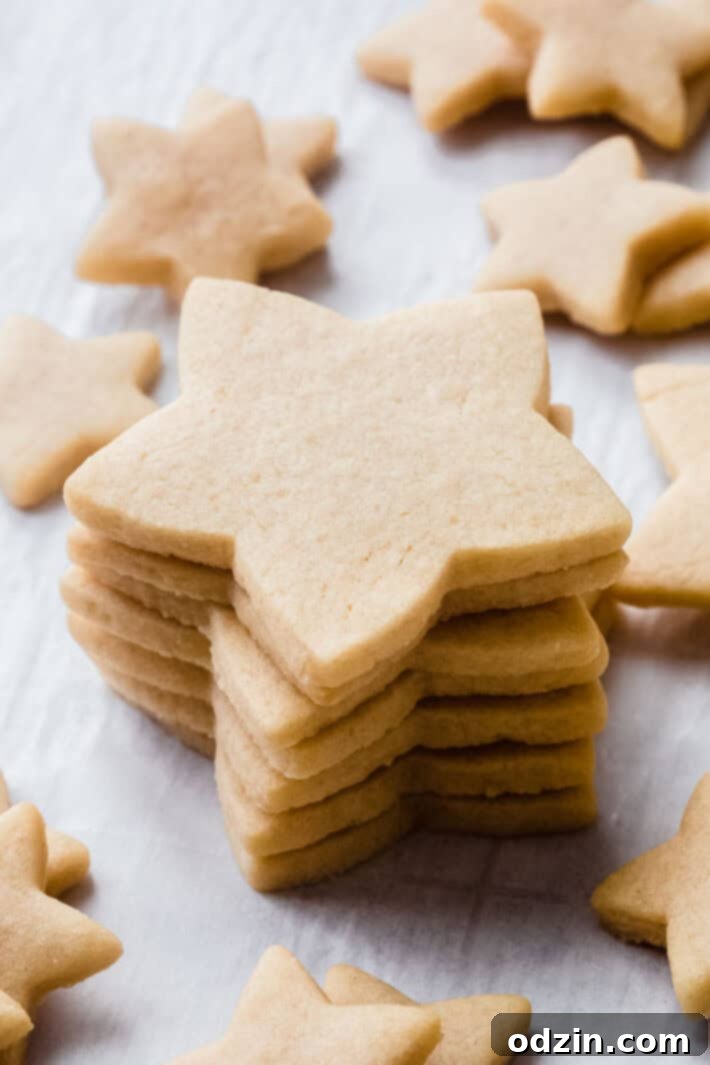
- Prepare for Baking and Achieve Perfect Shapes: Once your dough is sufficiently chilled, it’s time to bake! Begin by preheating your oven to 350°F (175°C). It’s always a good practice to use an oven thermometer to confirm your oven has reached and maintained the correct temperature, as oven inconsistencies can drastically affect baking. For the best results and to maintain optimal oven temperature, I recommend baking only one tray of cookies at a time. Carefully peel off the top sheet of parchment paper from your chilled dough. Using your chosen cookie cutters, cut out your desired shapes. Arrange the cut-out cookies on a separate parchment-lined baking sheet, spacing them about 1 ½ inches apart. Once a baking sheet is full, place it in the freezer for about 10-15 minutes, or until the cookie dough hardens slightly. This crucial freezing step helps the cookies retain their sharp shapes in the oven. Meanwhile, re-roll any remaining dough scraps (between parchment paper, just like before) and continue cutting until all dough is used, placing subsequent cutouts on a second parchment-lined sheet to chill in the freezer. When ready, transfer one frozen baking sheet to the preheated oven. Bake the cookies for approximately 9-13 minutes. For smaller cookies (around 2 ½ inches), aim for 9-11 minutes, and for larger cookies (around 3 inches in diameter), 11-13 minutes. The key is to remove them *before* they develop a golden-brown edge; they should appear set but still light in color, with centers that look slightly soft. Allow the cookies to cool on the baking sheet for 5-7 minutes before carefully transferring them to a wire rack to cool completely. It is essential that the cookies are entirely cooled before you attempt to frost or decorate them to prevent the frosting from melting or sliding.


The Easiest & Most Delicious Sugar Cookie Frosting
This simple sugar cookie frosting recipe is designed to yield just enough for one batch of our fantastic cut out cookies, ensuring minimal waste and maximum deliciousness. It’s incredibly easy to prepare and provides a smooth, pipeable, or spreadable consistency that complements the cookies perfectly without being overly sweet.
- Whip the Butter to Perfection: Begin by placing your softened salted butter in a mixing bowl. Using a hand mixer or stand mixer, whip the butter on medium-high speed until it becomes noticeably pale in color and takes on a light, fluffy consistency. This aeration is key to a light and airy frosting.
- Combine and Adjust: Once the butter is whipped, add both the vanilla and almond extracts, along with the initial 2 tablespoons of milk. Continue beating until these ingredients are well combined. Next, gradually add the powdered sugar, beginning on the lowest setting of your mixer to prevent a sugar cloud, then increasing speed as it incorporates. If, after adding all the powdered sugar, the frosting appears too stiff for your liking (especially if you plan to pipe intricate designs), add additional milk, one teaspoon at a time, beating after each addition, until you achieve the desired consistency. Exercise caution not to add too much liquid, as you want the frosting to remain thick enough to hold its shape for piping or to be smoothed beautifully with an offset spatula. The goal is a smooth, creamy frosting that’s easy to work with and sets well.

5 Common Mistakes to Avoid When Baking Cut Out Sugar Cookies
Even seasoned bakers can fall prey to common pitfalls when it comes to cut out sugar cookies. Avoiding these mistakes will significantly elevate your baking results, ensuring perfectly shaped, tender, and delicious cookies every time.
- Don’t Rush the Butter Softening Process: This is arguably the most critical step for sugar cookie success. It’s imperative that your butter reaches true room temperature, ideally around 70°F (21°C). If your butter is too cold, it won’t cream properly with the sugar, leading to a dense cookie and an uneven dough texture. If it’s too warm (starting to melt or look greasy), it will result in a sticky dough that’s difficult to roll and cookies that spread excessively. I store my butter in the freezer, and I’ve found it takes at least 4-5 hours to reach ideal softness in cooler months. My routine is to pull it out first thing in the morning and prepare the dough well after lunch. To check for perfect softness, gently press the butter: it should yield easily to pressure, leaving a slight indent, but still feel cool to the touch and hold its shape. If you feel significant resistance, it needs more time. For a quicker (but careful) soften, cut refrigerated butter into tablespoons and let it sit for 20-30 minutes.
- Do Not Overwork the Dough: Once the flour is added to your cookie dough, the clock starts ticking. Overmixing at this stage is a common mistake that leads to tough, chewy, and less tender cookies. When you mix flour, you develop gluten, which is desirable in bread but detrimental to delicate cookies. Instead of mixing until every last speck of flour is incorporated by the machine, aim to stop your stand mixer when *most* of the flour is just combined and you still see a few flour streaks. Then, switch to a rubber spatula and gently fold the dough by hand just until those flour pockets disappear. The less you handle or work the dough after adding flour, the more tender and melt-in-your-mouth your cookies will be.
- Give the Dough Ample Time to Chill: Patience is a virtue, especially when it comes to chilling sugar cookie dough. Adequate chilling is absolutely essential for several reasons: it allows the butter to re-solidify, preventing the cookies from spreading too much in the oven, and it helps the flavors meld. For the best sugar cookies, you must let the rolled-out dough chill in the refrigerator for at least 2 hours before cutting shapes. My preferred method, as detailed above, is to roll the dough out immediately after mixing. Since the ingredients are at room temperature at this point, the dough is pliable and easier to roll. Rolling it into a thin sheet increases its surface area, allowing it to chill much faster than if it were a thick disc. This also conveniently means you can skip one round of additional chilling. Crucially, once you’ve cut out your cookie shapes, place them on a parchment-lined baking sheet and pop the entire sheet into the freezer for at least 15 minutes before baking. The combination of cold dough and a cold baking sheet is my number one tip for ensuring your cookies retain their perfectly crisp edges and intricate shapes in the oven.
- Roll the Dough to the Perfect and Even Thickness: Inconsistent dough thickness is a leading cause of unevenly baked cookies – some might be perfectly done, while others are burnt or raw. To ensure all your cookies bake uniformly and have a consistent texture, it’s vital to roll the dough out to an even ¼-inch thickness across the entire sheet. For this reason, I cannot recommend this adjustable rolling pin enough. It is an absolute lifesaver! It takes all the guesswork out of rolling, allowing you to achieve perfectly uniform thickness effortlessly, guaranteeing professional-looking results every time.
- Pull the Cookies Out of the Oven Before They Get a Golden Brown Edge: This might feel counter-intuitive, as most cookie recipes instruct you to bake until golden brown. However, for these perfectly soft and chewy cut out sugar cookies, the key is to remove them from the oven *before* they develop any significant golden hue or browning around the edges. They should still look quite pale, with edges just set and centers that appear slightly soft. The reason for this is carryover cooking: the cookies will continue to cook and set on the hot baking sheet for 5-7 minutes after they are removed from the oven. If you wait for them to brown in the oven, they will be overbaked and hard once cooled. After resting on the baking sheet, carefully transfer them to a wire rack to cool completely. This technique ensures a perfectly soft, tender cookie with a delicate chew, ready for decorating once fully cooled.
Essential Cookie Baking Staples: Tools for Success
Having the right tools can make all the difference in your baking experience and results. Here are some of my favorite and most recommended baking staples for achieving perfect cut out sugar cookies:
- Stand mixer: An invaluable tool for creaming butter and sugar effectively.
- Almond Extract: My secret for that perfectly delicate almond flavor.
- Vanilla Extract: A must-have for rich, classic cookie flavor.
- Parchment paper: Essential for non-stick baking and mess-free rolling.
- Adjustable Rolling Pin: Guarantees perfectly even dough thickness every time.
- Oven thermometer: Critical for accurate oven temperature, ensuring consistent baking.
- Baking sheet: Sturdy sheets are key for even heat distribution.
- Wire cooling rack: Allows for proper air circulation to cool cookies completely without getting soggy.
- Piping bags and nozzle set: For beautifully decorated cookies with ease.
- Sprinkle Set: Perfect for adding that festive touch. The white sparkling sugar you see on the cookies here is from this set; I also used gold and silver for some variations!

If You Love This Cut Out Sugar Cookie Recipe, You Might Also Enjoy:
- Extra Chewy Chocolate Chip Cookies
- Easy Maple Pecan Shortbread Cookies (Pecan Sandies)
- Twix Cookies
- Raspberry Almond Linzer Cookies
- Loaded Dark Chocolate Chip Oatmeal Cookies
- Apricot Raspberry Thumbprint Cookies

The Best Cut Out Sugar Cookies (They Melt in Your Mouth!)
15 minutes
11 minutes
1 hour 45 minutes
2 hours 11 minutes
Discover the secrets to baking the best cut out sugar cookies with this easy-to-follow recipe! Our method uses simple, accessible ingredients to produce perfectly buttery cookies with delightfully soft and chewy centers that truly melt in your mouth. You’ll love their balanced sweetness, making them ideal for decorating with royal icing or our quick, simple sugar cookie frosting. For your convenience, the dough can be baked on the same day, refrigerated for a few days, or even frozen for future baking adventures!

Ingredients
Sugar Cookies:
- ¾ cup (12 tablespoons) salted butter, softened to room temperature
- ¾ cup granulated sugar
- 1 large egg, room temperature
- 2 teaspoons vanilla extract
- ¼ – ½ teaspoon almond extract (optional; use less if you’re not a huge fan)
- ¾ teaspoon baking powder
- 2 ⅓ cups all-purpose flour, plus more for dusting (measured using the spoon and level method)
Frosting:
- 3 tablespoons softened salted butter
- ½ teaspoon vanilla extract
- ⅛ teaspoon almond extract (up to ½ teaspoon if you love almond extract!)
- 2 tablespoon milk (plus more, as needed)
- 2 ¼ cups powdered sugar
Instructions
- PREPARE THE DOUGH: In a large bowl, using either a hand mixer or a stand mixer fitted with the paddle attachment, cream the softened butter and granulated sugar together on high speed for about 5 minutes, until the mixture is visibly pale, light, and sandy. Remember to stop the mixer and scrape down the sides and bottom of the bowl about halfway through to ensure thorough combination. Incorporate the room temperature egg, vanilla extract, and almond extract (if using), beating on high speed for another 90 seconds until fully combined. Add the baking powder and mix for 15 seconds to disperse. Finally, add the all-purpose flour on low speed, mixing just until the flour is *almost* combined and a few streaks of flour remain. The dough will be quite soft at this stage. Finish mixing the remaining flour by hand with a rubber spatula, gently folding until no visible flour pockets remain. If the dough feels excessively sticky for rolling, incorporate one additional tablespoon of flour.
- CHILL THE DOUGH: Carefully transfer the dough onto a clean sheet of parchment paper, ideally cut to fit your baking sheet. Lightly sprinkle the dough with a bit of flour. Place a second sheet of parchment paper on top of the dough. Using a rolling pin, roll the dough evenly between the two parchment sheets to an approximate ¼-inch thickness (refer to notes for rolling tips). The rolled dough should roughly measure 13×18 inches, similar to a half sheet pan. Transfer this entire parchment paper “sandwich” (with the rolled dough inside) onto a baking sheet. Refrigerate the entire setup for at least 1 ½ to 2 hours. This crucial chilling step allows the butter to firm up and prevents the cookies from spreading excessively during baking. For convenience, you can prepare the dough up to two days in advance; if doing so, cover the entire sheet pan with plastic wrap to prevent the dough from drying out and becoming brittle.
- BAKE THE COOKIES: Position an oven rack in the center and preheat your oven to 350°F (175°C). Gently move the parchment paper with the chilled dough onto a clean counter. Line two large baking sheets with fresh parchment paper. Carefully peel off the top sheet of parchment paper from your chilled dough. Using your preferred cookie cutters, cut the dough into desired shapes and arrange the cutouts on the prepared baking sheets, spacing them about 1 ½ inches apart. Once a baking sheet is full, place it in the freezer for 15-20 minutes, or until the cookie dough cutouts are firm. Gather any remaining dough scraps, re-roll them between parchment paper, and continue cutting until all dough is used. Place the first frozen cookie sheet into the preheated oven (while the second sheet chills in the freezer). Bake cookies for 9-13 minutes for those that are 2½ – 3 inches in diameter. Bake closer to 9 minutes if you prefer a softer, chewier center. It’s essential to remove the cookies from the oven *before* they begin to brown at the edges; they should look set but still pale. Allow the cookies to cool on the baking sheet for 5-7 minutes (this allows for carryover cooking and setting) before carefully transferring them to a wire rack to cool completely. Only frost the cookies once they have reached room temperature.
PREPARE THE FROSTING (optional): In a bowl, whip the softened butter until it is pale and fluffy. Add the vanilla extract, almond extract, and the initial 2 tablespoons of milk, beating until combined. Gradually add the powdered sugar, starting with the mixer on its lowest setting to avoid a mess, then increasing speed as it incorporates. If the frosting is too stiff for piping or spreading, add additional milk, one teaspoon at a time, until the desired consistency is achieved. Be mindful not to add too much liquid; the frosting should remain thick enough to hold its shape. Spread the frosting onto completely cooled cookies using an offset spatula or pipe decorative designs using your favorite piping nozzle.
Notes
- Importance of Room Temperature Ingredients: For optimal results, ensure both your butter and egg are at proper room temperature. If the butter is too soft (starting to melt or greasy), it will result in a much stickier dough that’s harder to handle and can cause cookies to spread excessively. In such a case, you may need to add one additional tablespoon of flour to the cookie dough to achieve a workable consistency. If this happens, allow the dough to chill in the refrigerator for at least 15 minutes before attempting to roll it out (then proceed with rolling between parchment and chilling for the full 2 hours as instructed).
- Troubleshooting Rolling Dough: If you find the parchment paper sliding around while you’re rolling out the dough, here’s a helpful trick: lightly wet a paper towel, squeeze out any excess water, and rub it across your counter surface where you plan to roll. Then, place your bottom sheet of parchment paper on the dampened spot and press down firmly to create a slight seal. This will help keep the parchment securely in place, allowing you to roll the dough without frustration.
- Freezing Instructions: For detailed guidance on how to effectively freeze both the unbaked cookie dough (as a rolled sheet or cutouts) and the baked cookies for later enjoyment, please refer to the main article body above for comprehensive instructions and tips.
Recommended Products
- Almond Extract
- Parchment Paper
- Adjustable Rolling Pin
- Wilton Cooling Rack, Black
- Half Sheet Pan
- 6 Qt. Stand Mixer
Have you made this recipe?
If you enjoyed this recipe, please consider leaving a ⭐️⭐️⭐️⭐️⭐️ rating and a comment below. You can also share a picture on Instagram with the hashtag #LITTLESPICEJAR, I’d love to see what you made!