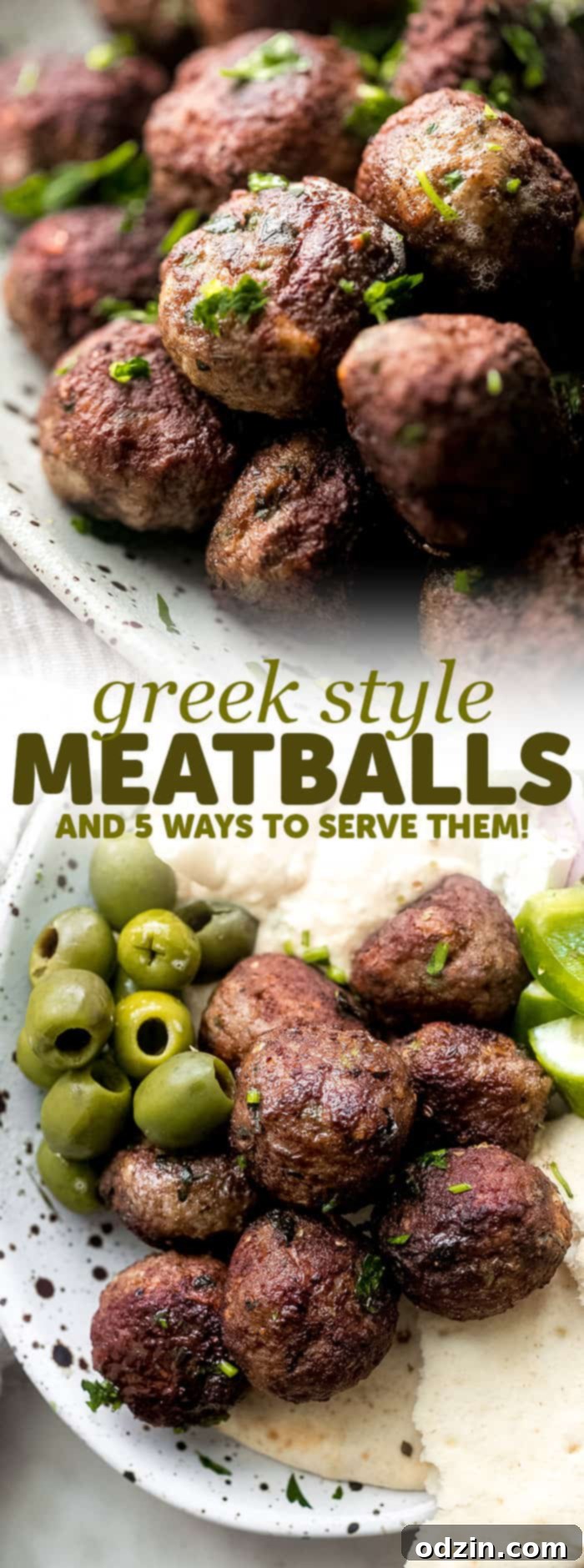
Authentic Greek Meatballs (Keftedes): Your Ultimate Guide to Flavorful & Juicy Perfection
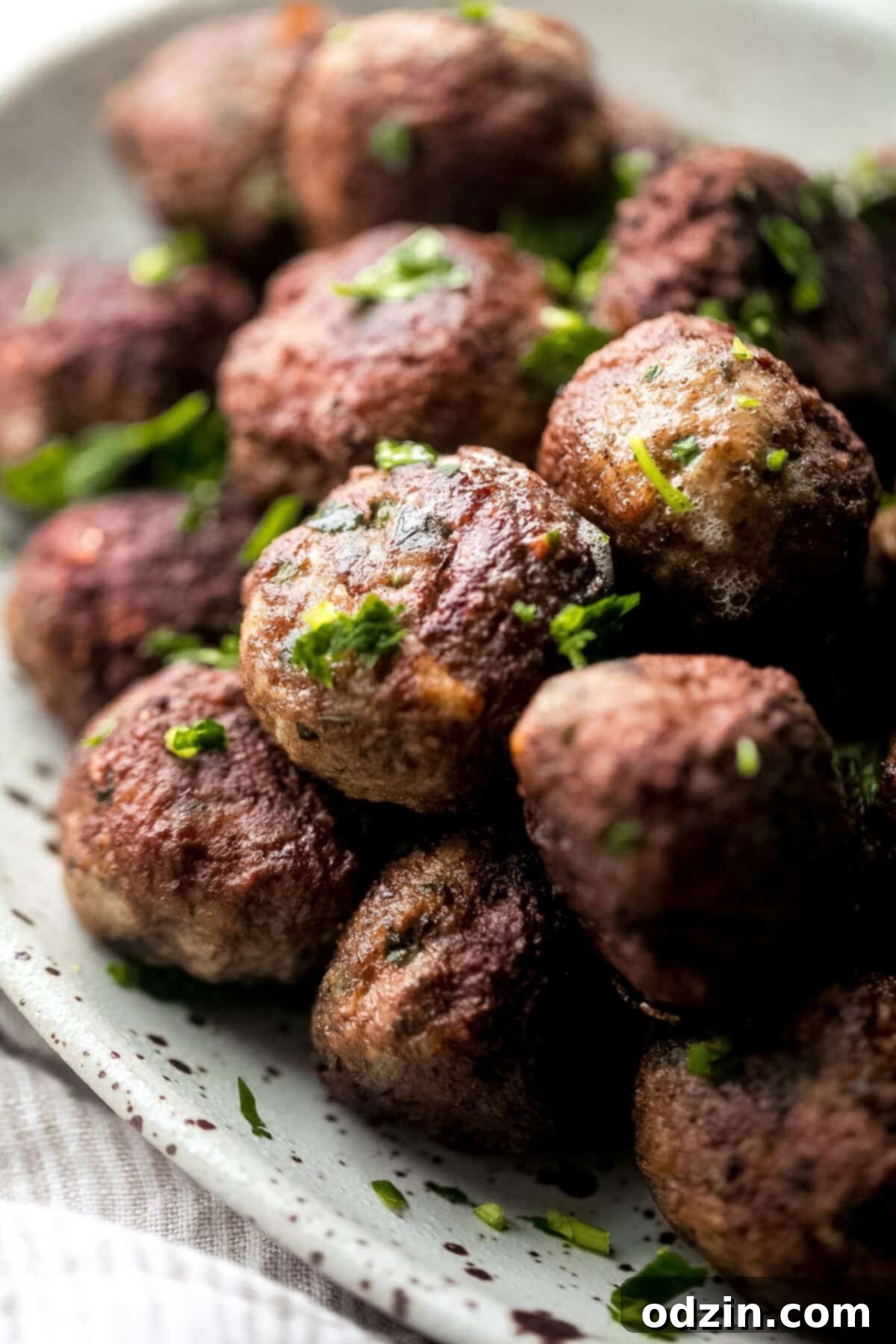
Discover how to create incredibly tender and aromatic Greek Meatballs, famously known as Keftedes. These delightful meatballs are infused with fragrant spices, packed with grated onions, fresh garlic, and vibrant parsley, making them exceptionally flavorful. They are perfect for stuffing into warm pitas, serving as part of a lavish mezze platter, or simply enjoying on their own, always best when generously topped with creamy tzatziki!

As the seasons shift and a noticeable crispness enters the air, my culinary instincts naturally gravitate towards hearty, comforting dishes that warm both body and soul. While Greek cuisine might not always be the first thought when considering traditional “comfort food,” these aromatic Keftedes undoubtedly hold a special place in that category. The enticing aroma of spices filling the kitchen is precisely what makes this meal a perfect choice for the autumn months. For me, fall marks the beginning of “meatball season,” a wonderful time to explore diverse meatball recipes from across the globe and add my own unique twist. The beauty of these Greek meatballs lies in their simplicity: if you can combine ingredients in a bowl and stir, you can effortlessly create this delicious dish.
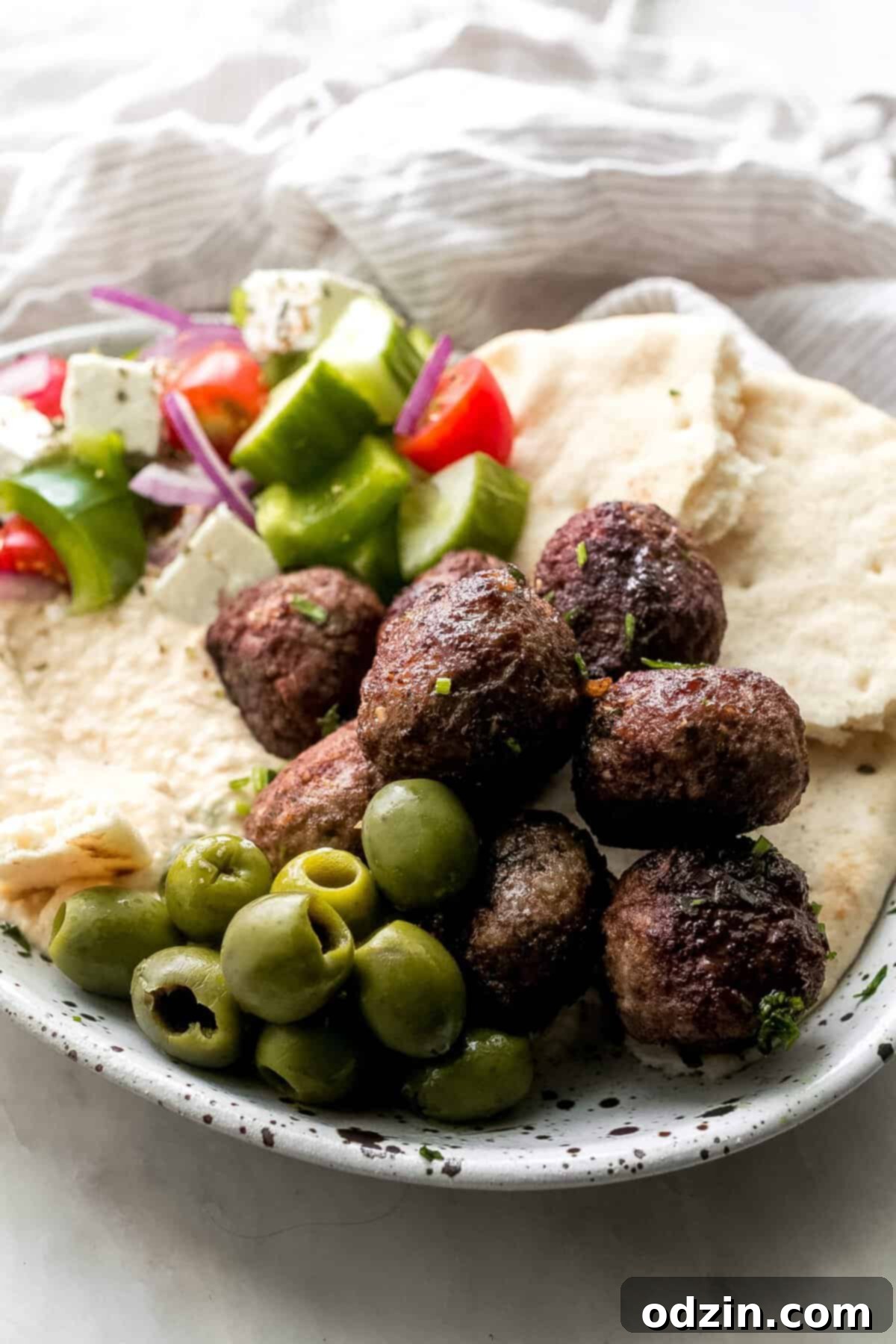
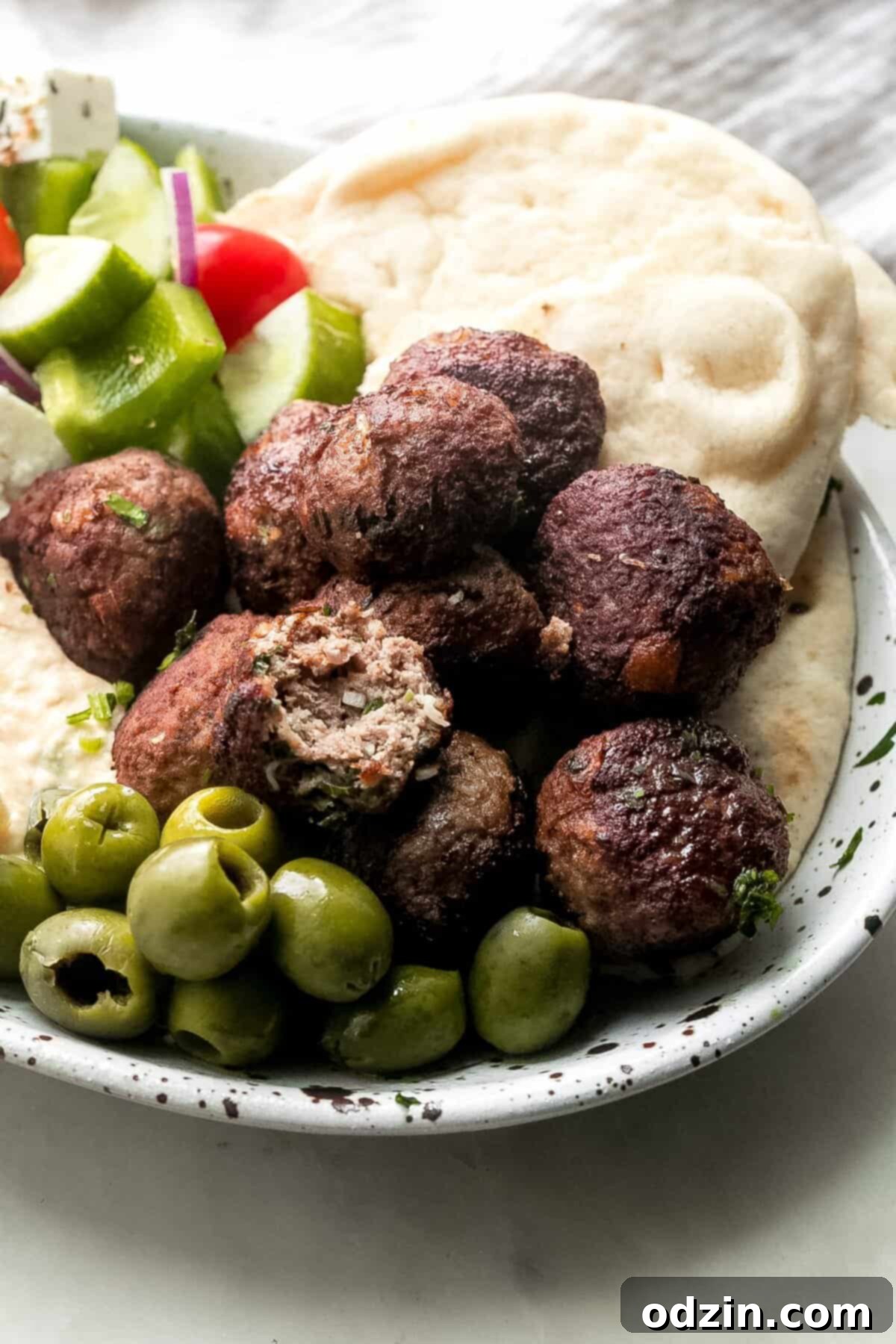
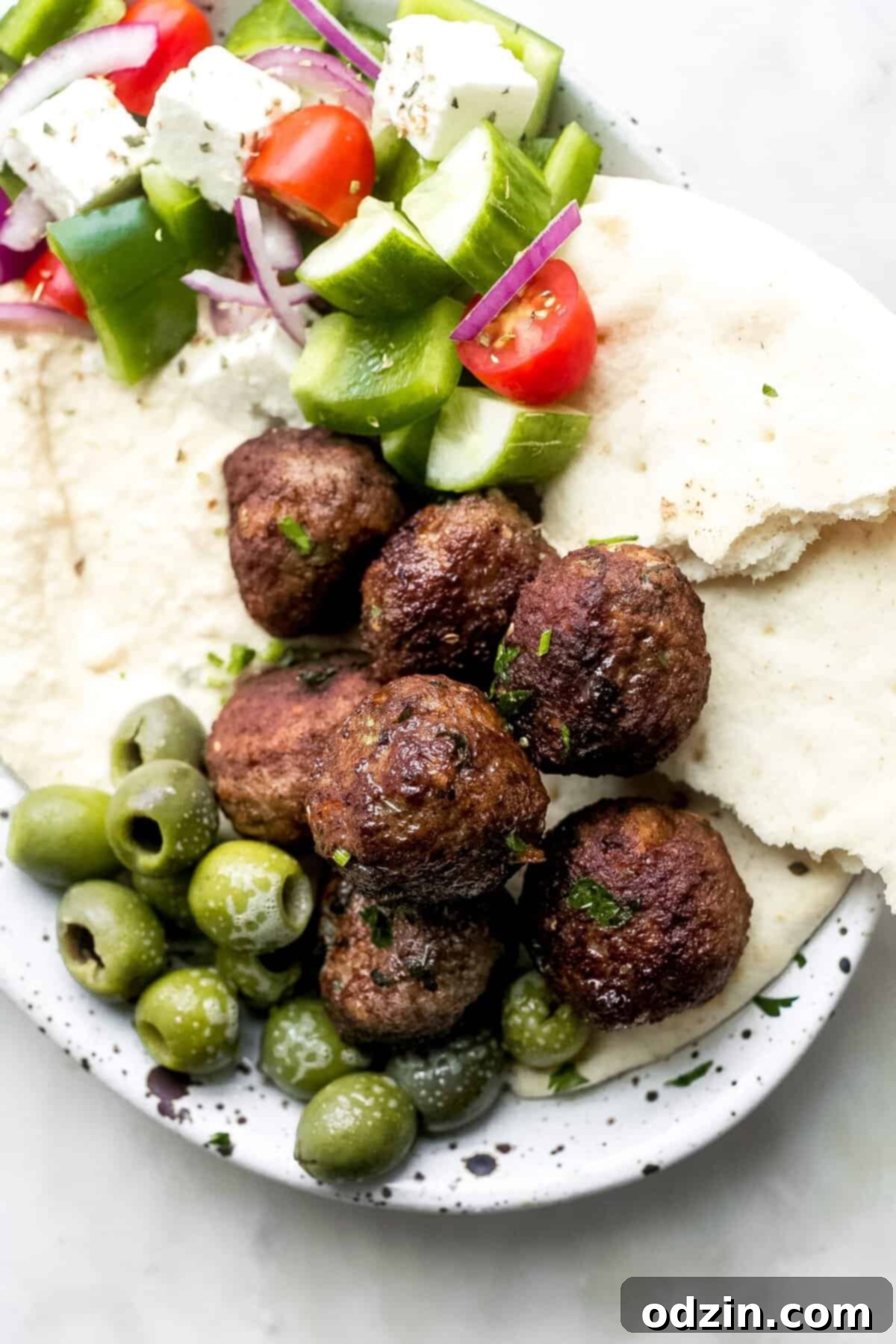
These Greek Keftedes are not only remarkably quick and easy to prepare, but their exceptional versatility in serving makes them an ideal choice for any occasion. You can opt for an expansive mezze platter, featuring creamy hummus, soft pita triangles, cooling homemade tzatziki, a fresh Greek salad, briny olives, and, of course, your perfectly cooked meatballs. Alternatively, for a more casual yet equally satisfying experience, simply roll these flavorful Greek meatballs into warm pita bread, top generously with tzatziki, and add thinly sliced onions and ripe tomatoes. Each presentation promises an authentic taste of Greece, guaranteed to delight your taste buds.
The Time-Honored Secret to Unbelievably Tender and Juicy Keftedes
Whenever I set out to formulate a new meatball recipe, there’s one fundamental principle that remains constant: my unwavering reliance on a brilliant, age-old trick passed down through my grandmother and mother. This secret ensures that every single meatball emerges from the pan incredibly tender and wonderfully moist. The magic ingredient? Just a couple of slices of ordinary bread, torn into small pieces and allowed to soak in a splash of milk for a few minutes. This simple “panade” technique works wonders, and I guarantee you’ll be genuinely surprised at the significant difference it makes in the texture and juiciness of your meatballs.
This method isn’t just a quaint tradition; it’s a clever culinary technique. The bread acts like a sponge, absorbing the milk and creating internal pockets of moisture within the meat mixture. This prevents the meatballs from becoming dense, dry, or tough during cooking, ensuring a light, succulent texture that’s bursting with flavor. I’m convinced that grandmothers worldwide deserve credit for Ross’s famous ‘moist maker’ sandwich, as the principle is remarkably similar! The bread pieces in our Keftedes effectively lock in moisture and contribute to a supremely tender bite. Beyond this ingenious bread trick, there’s another crucial element to sealing in those delectable juices and maintaining the tenderness of Greek Meatballs, which I’ll gladly share as we proceed through the recipe instructions.
It’s probably quite evident by now, but I am undeniably passionate about meatballs! A quick glance at the sheer variety of meatball recipes I’ve crafted will surely convince you. My culinary adventures have led me to explore everything from the classic, creamy Swedish meatballs and rich chicken parm meatballs, to inventive twists like gyro patties and elegant chicken piccata meatballs. I’ve also ventured into bolder flavors with Cajun-style ones, savory General Tso’s meatballs, sweet and spicy honey-chipotle chicken meatballs, delightful cheese-stuffed meatballs, fiery firecracker chicken meatballs, and creamy chipotle butter chicken meatballs. The list truly goes on, but these Greek Keftedes hold a special place, embodying a perfect blend of fresh herbs, fragrant spices, and satisfying texture.
What You’ll Need: Essential Ingredients for Flavorful Greek Meatballs (Keftedes)
Crafting these delectable Greek meatballs requires a thoughtful selection of ingredients that harmoniously combine to create their signature taste and texture. Each component plays a vital role in achieving that perfect balance of tenderness, juiciness, and aromatic spice:
- White Bread: This is the foundation of our moisture-locking technique. While white bread is traditionally used for its neutral flavor and soft crumb, whole wheat or brown bread can also be substituted. It’s essential for preventing dry, crumbly meatballs.
- Milk: Used to moisten the bread, this liquid activates the bread’s ability to retain moisture, ensuring the meatballs remain incredibly succulent throughout the cooking process.
- Grated Onions: Grating the onions, rather than finely dicing them, is a subtle but important technique. It allows the onion to meld seamlessly into the meat mixture, releasing its sweet and pungent flavors evenly without creating noticeable chunky pieces. Remember to gently squeeze out any excess liquid from the grated onion to prevent a watery mixture.
- Chopped Fresh Parsley: A cornerstone of Mediterranean cuisine, fresh parsley contributes a bright, herbaceous, and slightly peppery note that elevates the overall flavor profile of the Keftedes, adding essential freshness.
- Minced Garlic: Greek cooking wouldn’t be complete without garlic! Its pungent, savory depth is crucial for these meatballs. Adjust the quantity according to your personal preference for garlic intensity.
- An Egg: This acts as a crucial binder, helping all the ingredients coalesce and hold their spherical shape firmly during the rolling and frying stages.
- Aromatic Spices: This is where the magic of Greek flavor truly shines! A carefully balanced blend of salt, black pepper, warming ground cinnamon, earthy dried oregano, refreshing dried mint (double the amount if using fresh mint), and a hint of nutmeg creates the complex, distinctly Mediterranean aroma and taste of authentic Keftedes.
- Ground Beef and Lamb Blend: Traditionally, Keftedes often benefit from a combination of ground beef and ground lamb. The lamb imparts a richer, slightly gamey flavor and a more luxurious texture, beautifully complemented by the familiar taste of beef. However, the recipe is versatile enough that you can use all ground beef or all ground lamb if that’s what you prefer (check the notes in the recipe card for specific recommendations).
- All-Purpose Flour: This is used for dredging the meatballs before they hit the hot pan. It creates a thin, protective crust that helps to seal in the juices and develops a delightful golden-brown exterior.
- Oil, for Frying: Essential for achieving that perfect golden-brown crust and ensuring the meatballs cook evenly and thoroughly.
What if I’m Gluten-Free? Can I still enjoy these Keftedes?
Absolutely! Dietary restrictions shouldn’t prevent anyone from savoring these delightful Greek meatballs. If you follow a gluten-free diet, simply substitute the regular white bread with a couple of slices of your favorite gluten-free bread. Tear it into small pieces and soak it in milk just as instructed. The gluten-free bread will perform the same function as traditional bread, ensuring your meatballs remain wonderfully moist and tender. You’ll achieve the same fantastic flavor and texture, allowing everyone at your table to enjoy authentic Keftedes.
How to Make Greek Meatballs (Keftedes): A Detailed Guide
Creating succulent and flavorful Greek meatballs is a rewarding process that’s easier than you might think. By following these detailed steps, you’ll achieve perfect Keftedes every time, bursting with Mediterranean flavors and a tender, juicy texture:
- Prepare the Flavor Base and “Moist Maker”: Begin by taking a large mixing bowl. Tear the bread into very small pieces, aiming for roughly ¼ to ½-inch squares. Pour the milk over these bread pieces and press down gently with a spoon or your fingers to ensure the bread absorbs all the liquid; let it sit and soak for about 5 minutes. This vital step is your “moist maker” in action, softening the bread and setting the stage for incredibly tender meatballs. Next, add the grated onions (remembering to gently squeeze out any excess liquid), finely chopped fresh parsley, minced garlic, the large egg, and all the dried herbs and spices (salt, black pepper, ground cinnamon, dried oregano, dried mint, and nutmeg) to the bowl. Mix these ingredients thoroughly until they are well combined. Here’s a crucial chef’s trick for extra tender meatballs: always combine all the non-meat ingredients first. This ensures an even distribution of flavors and prevents you from overworking the meat later, which can lead to tough meatballs.
- Incorporate the Meat and Chill (Highly Recommended): Once your aromatic base is mixed, add the ground beef and lamb blend. Mix gently until the meat is *just* combined with the other ingredients. Be careful not to overmix, as this develops gluten and can make the meatballs rubbery. If your schedule allows, cover the meatball mixture and refrigerate it for a minimum of 1-2 hours, or even longer if possible. This resting period is invaluable as it allows all the beautiful flavors to meld and deepen, resulting in a more complex and delicious meatball. Additionally, chilling firms up the mixture, making it much easier to roll into uniform balls.
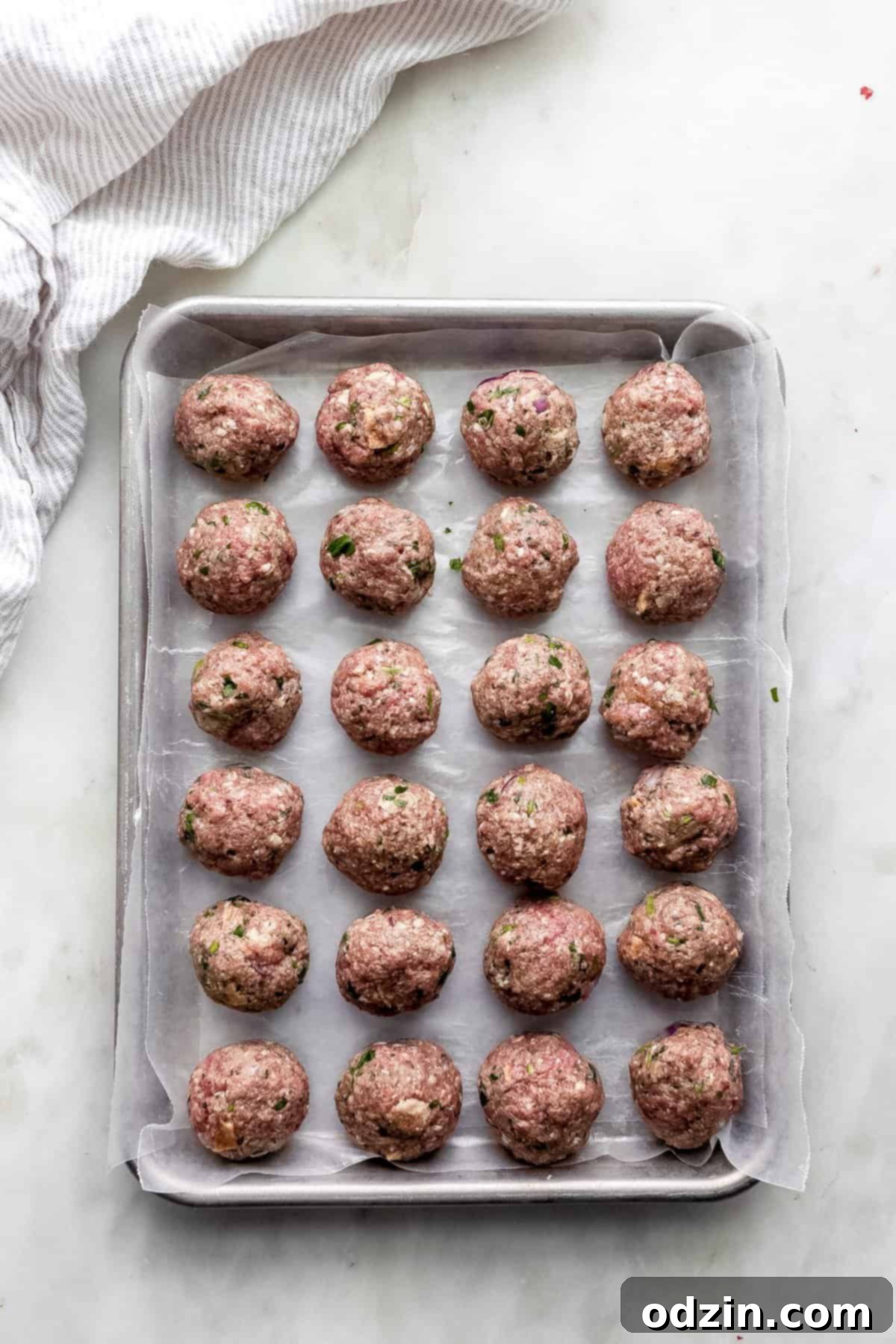
- Shape Your Perfect Meatballs: When you’re ready to cook, grab a measuring tablespoon or a small cookie scoop. Lightly spray it with cooking spray to prevent the mixture from sticking. Scoop out tablespoonfuls of the meat mixture, then gently roll each portion between your palms to form smooth, compact balls. You should expect to yield approximately 28-34 meatballs from this recipe. Place the freshly rolled meatballs on a clean surface, such as a baking sheet lined with parchment paper, while you prepare for frying.
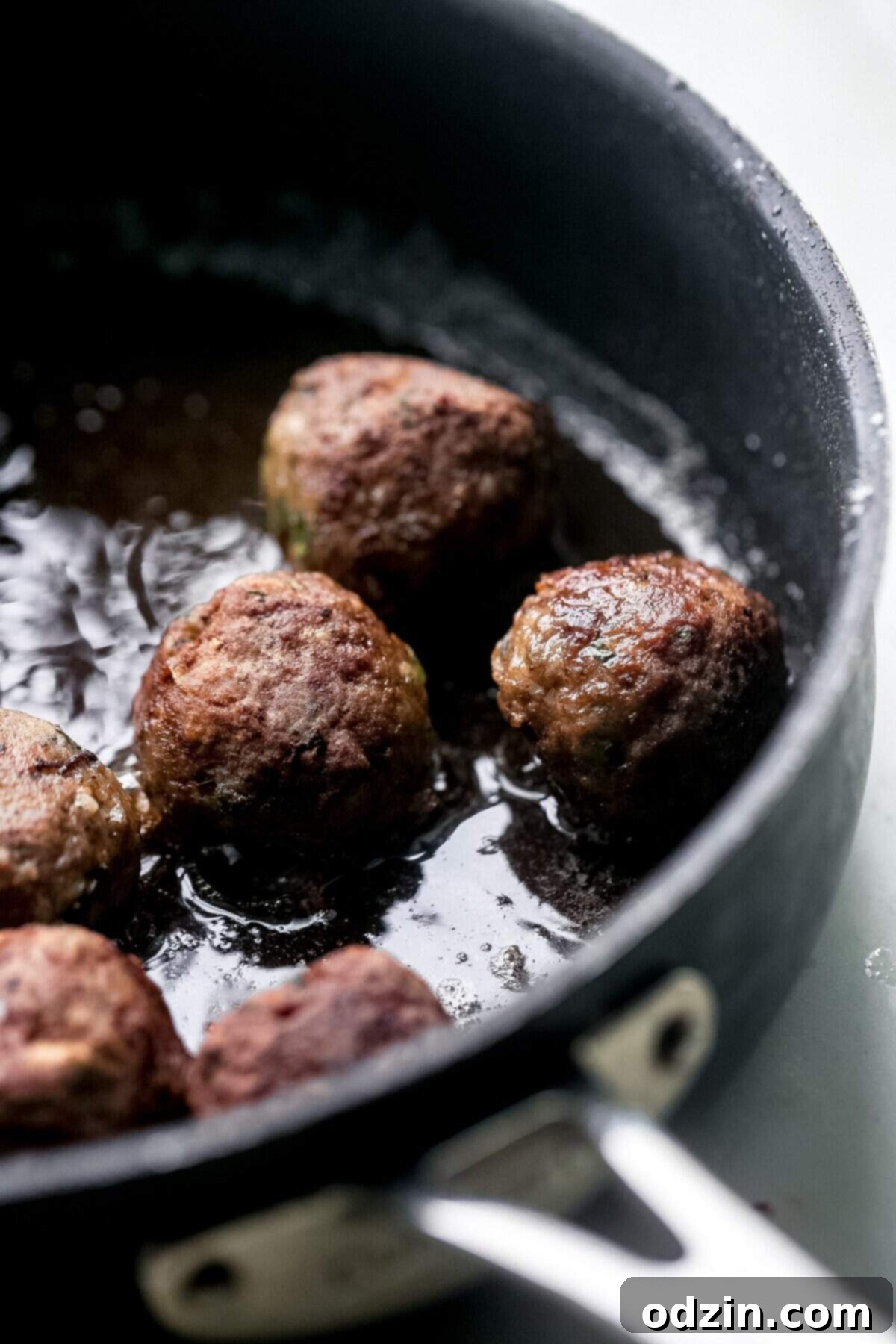
- The Flour Dredge and Frying Process: Pour the all-purpose flour into a small, shallow bowl. Heat a large frying pan over medium-high heat with enough oil to cover the bottom surface by about ¼ inch until it’s hot but not smoking. Take a batch of 8-10 meatballs (to avoid overcrowding), one at a time, and lightly dredge them in the flour, ensuring they are evenly coated. Gently shake off any excess flour. Carefully place the floured meatballs into the hot skillet, ensuring they have about 2 inches of space between them. Overcrowding the pan will cause the temperature to drop, leading to steaming rather than searing. Let them cook for roughly 4-6 minutes in total, flipping them every minute or two, so they achieve a beautiful golden-brown crust on all sides and are cooked through. Once done, remove the cooked meatballs to a plate lined with paper towels to drain any excess oil. Continue cooking the remaining meatballs in batches, replenishing oil if necessary, until all are perfectly browned and cooked.
What if the Meatball Mixture Starts Sticking to My Hands When Rolling?
A sticky meatball mixture is a common culinary challenge, but one that’s easily overcome! If you find the meatball mixture adhering too much to your hands as you try to roll them, simply wash your hands thoroughly, dry them completely, and then pour about a ½ teaspoon of a neutral cooking oil (like vegetable, canola, or olive oil) into the palm of one hand. Rub your palms together to lightly coat both hands. When you pick up the meatball mixture again, you’ll find that it sticks primarily to itself, allowing for much easier and cleaner rolling. This simple oil trick creates a non-stick barrier that makes the process far less frustrating!
For an even more streamlined approach, I find it incredibly helpful to set up an “assembly line.” Start by lining a baking sheet with wax paper or parchment paper. Then, use your scoop or tablespoon to portion out all of the meatball mixture onto the baking sheet. Once all the mixture is portioned, you can then wash and dry your hands, apply the oil method, and proceed to roll each portion into perfect spheres. This method is often much more efficient and less messy than scooping and rolling each meatball individually. For an added bonus, don’t hesitate to enlist a friend or family member to help with a portion of the work – cooking is always more fun when shared!
Why Do We Dredge Keftedes in Flour Before Frying?
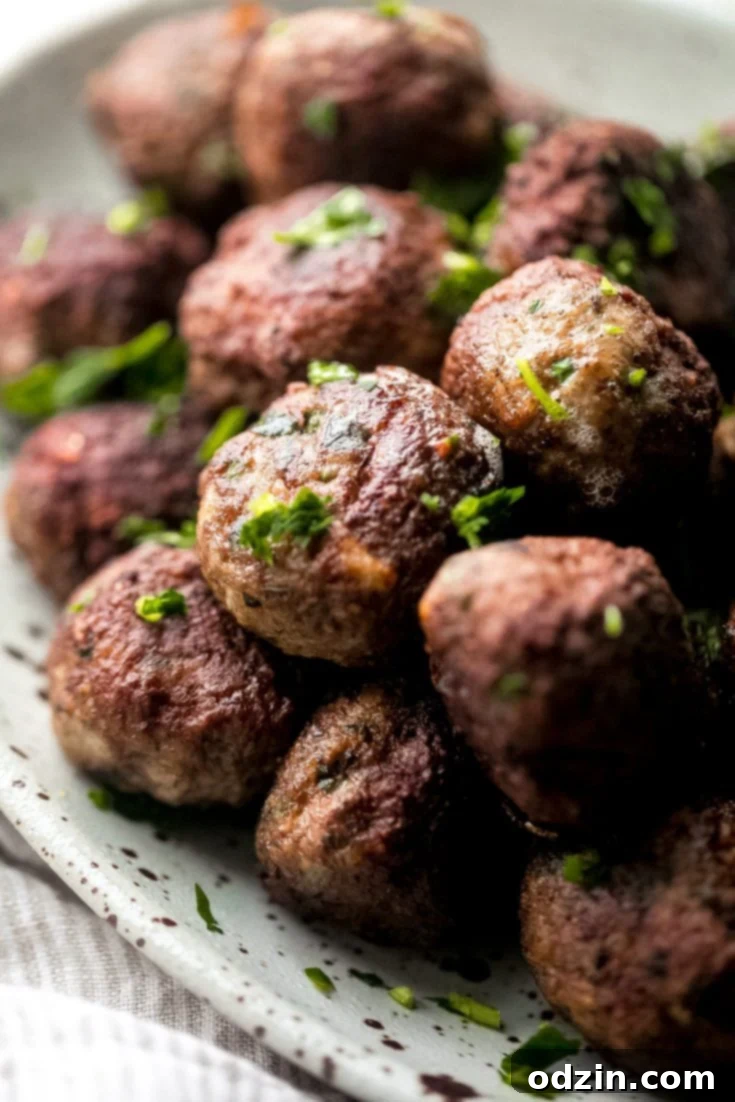
Dipping your Keftedes in flour before they enter the hot skillet serves a crucial two-fold purpose, significantly enhancing both the texture and moisture of the final product. Firstly, the thin layer of flour creates a protective barrier around each meatball. This barrier acts as a “moisture seal,” effectively locking in all the delicious juices and natural moisture within the meat during the frying process. This prevents the meatballs from drying out, ensuring they remain wonderfully tender and succulent. Secondly, as the floured exterior comes into contact with the hot oil, it rapidly cooks and develops into a beautiful golden-brown crust. This subtle crust adds a delightful textural contrast – a slight crispness on the outside yielding to a tender, juicy interior – making every bite a more complex and satisfying experience. It’s a simple step that yields impressive results!
Can I Make a Batch of Keftedes and Freeze Them for Later?
Absolutely! Greek meatballs are an excellent candidate for meal prepping and freezing, making them a convenient option for busy weeknights or unexpected cravings. Once your Keftedes are cooked to perfection and have had ample time to cool completely, they are ready for freezing. Simply transfer them into freezer-safe bags or an airtight container, ensuring they are well-sealed to prevent freezer burn. They will maintain their quality and flavor in the freezer for up to 3 months. When you’re ready to enjoy these delightful morsels, simply remove them from the freezer and allow them to defrost slowly in the refrigerator overnight. Once thawed, you can gently reheat them in a skillet over low heat, in a warm oven, or even in the microwave until they are heated through, and they’ll be just as delicious as when they were freshly made!
Creative and Delicious Ways to Serve Your Greek Meatballs
The beauty of Greek Meatballs (Keftedes) lies not only in their incredible flavor but also in their remarkable versatility. They can be the star of a meal or a wonderful accompaniment, adapting beautifully to various presentations and occasions. Here are some of my most cherished and recommended ways to serve these delightful meatballs, turning any meal into a Mediterranean feast:
- A Vibrant Greek Meatball Salad: For a lighter yet incredibly satisfying and wholesome meal, arrange your perfectly cooked Keftedes over a generous bed of fresh baby spinach. Complement them with diced ripe tomatoes, thinly sliced red onion, crisp cucumbers, and crumbles of salty feta cheese. Finish this refreshing salad with a generous drizzle of homemade creamy tzatziki sauce for a burst of authentic Mediterranean flavor.
- The Ultimate Mezze Platter Experience: Elevate your Keftedes to the centerpiece of an impressive Greek-style charcuterie board, commonly known as a mezze platter. Surround the meatballs with an array of traditional Greek accompaniments such as creamy homemade hummus, a fresh and vibrant tabouli salad, an assortment of briny olives, soft flatbread or warm pita triangles, an array of fresh sliced vegetables (think bell peppers, carrots, and more cucumbers), and a selection of savory crackers. This presentation is truly ideal for entertaining, offering a delightful spread for guests during holiday gatherings, dinner parties, or any festive get-together.
- Nourishing Grain Bowls: Construct hearty and balanced meal bowls by serving your Greek meatballs atop a base of fluffy quinoa or a fragrant vermicelli rice pilaf. Add some additional chopped greens, a handful of sweet cherry tomatoes, and a generous dollop of cooling tzatziki for a fulfilling dish that’s perfect for a wholesome lunch or a comforting dinner.
- Classic Pita Wraps: Embrace the authentic street food vibe by gently rolling these savory meatballs into warm, soft pita bread. Enhance the flavor and texture with a generous amount of creamy tzatziki, crisp lettuce, fresh slices of tomato, and thinly sliced red onions for a truly satisfying and classic Greek wrap. If you’re feeling adventurous and want to try making your own, my simple 2-ingredient homemade flatbread recipe is an excellent choice!
- Alongside a Fresh Greek Salad: For a timeless and perfectly balanced meal, serve your Keftedes as a fantastic complement to my invigorating marinated feta Greek Salad. The crisp, fresh flavors of the salad provide a wonderful counterpoint to the rich, aromatic meatballs, creating a harmonious and truly authentic Greek culinary experience that’s simple yet elegant.
Regardless of which delightful method you choose to serve these magnificent Greek Meatballs, my heartfelt hope is that they bring as much joy, warmth, and profound culinary comfort to your table as they consistently do to ours!
Greek Meatballs (Keftedes)
15 minutes
20 minutes
1 hour
1 hour 35 minutes
Learn how to make Greek Meatballs or Keftedes. These meatballs are scented with spices, loaded with grated onions and garlic and fresh parsley, so they’re flavorful and perfect to stuff inside pitas and top with tzatziki!
Ingredients
- 2 slices of white bread, torn into small pieces
- 3 tablespoons milk
- ¼ cup EACH: grated onions (squeeze out excess liquid) AND chopped parsley
- 4-6 cloves minced garlic (less if you don’t like garlic)
- 1 large egg
- 1 teaspoon EACH: salt AND dried mint (double if fresh)
- ½ teaspoon EACH: black pepper, ground cinnamon, AND dried oregano
- ⅛ teaspoon nutmeg
- 1 ¼ pound ground beef and lamb (see notes)
- ½ cup all-purpose flour
- Oil, for frying
Instructions
- PREP: In a large bowl, pour the milk over the bread and press down with a spoon or your fingers so that the bread soaks up all the milk; let sit 5 minutes. Add the grated onions, chopped parsley, minced garlic, egg, dried mint, salt, black pepper, ground cinnamon, dried oregano, and nutmeg to the bowl and mix until well combined. Then, add the ground meat and gently mix until *just* combined. If time permits, I suggest covering and refrigerating the mixture for 1-2 hours (or as long as you can) so the flavors develop further.
- MEATBALLS: Using a tablespoon measure or a cookie scoop, measure out meatballs, you’ll get anywhere in the ballpark of 28-34 meatballs. Roll them into balls and place on a clean surface until you’re ready to cook.
- COOK: Place the all-purpose flour in a small bowl. Heat a large frying pan with enough oil to cover the bottom surface. Dredge a batch of 8-10 meatballs in the flour one at a time, dust or shake off the excess flour, and place the meatballs in the skillet. Let cook for 4-6 minutes or until cooked through flipping them every couple of minutes to cook them all the way through and brown all sides evenly. Then, remove the cooked meatballs to a clean plate. Repeat with additional batches.
- SERVE: You can serve these Greek Meatballs in homemade naan bread, and serve along with my marinated feta salad and homemade hummus! You can even serve this over my Lebanese rice pilaf and drizzle with tzatziki!
Notes
- You can use all ground beef or ground lamb for this recipe but I like to use a combination of the two. I typically use ¾ pound ground beef and ½ pound ground lamb.
Have you made this recipe?
If you enjoyed this recipe, please consider leaving a ⭐️⭐️⭐️⭐️⭐️ rating and a comment below. You can also share a picture on Instagram with the hashtag #LITTLESPICEJAR, I’d love to see what you made!