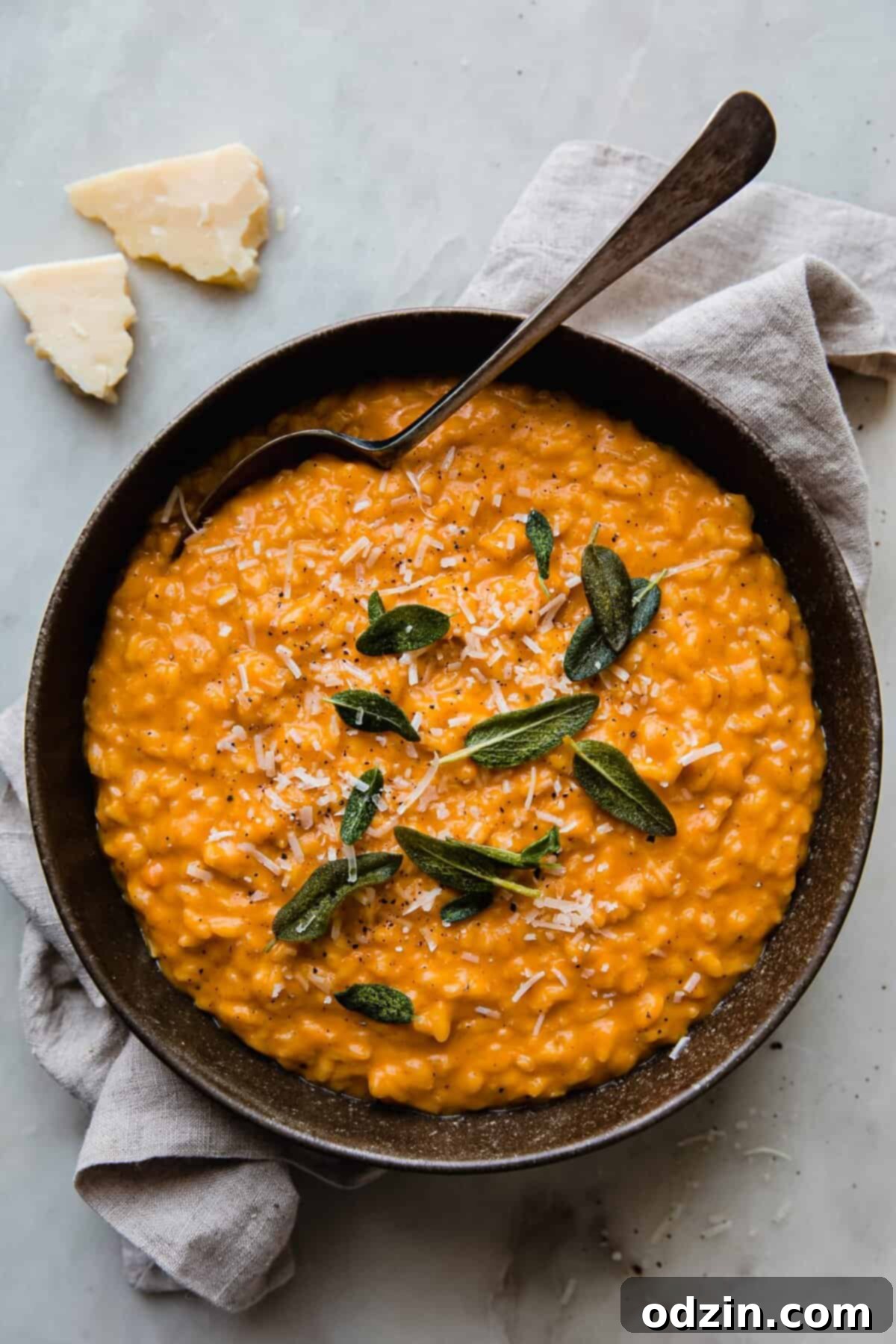
Creamy Roasted Squash Risotto: The Ultimate Fall Comfort Food Recipe
Embrace the flavors of autumn with this incredibly creamy and satisfying roasted squash risotto. Featuring tender honeynut or butternut squash, subtly spiced with a hint of cayenne and sweetened with maple syrup, this dish is a true celebration of the season. We’ll guide you through making this decadent risotto with Arborio rice, finishing it with a luxurious knob of butter and a generous sprinkle of shredded cheese for unparalleled buttery perfection. Get ready to create a truly unforgettable fall meal!
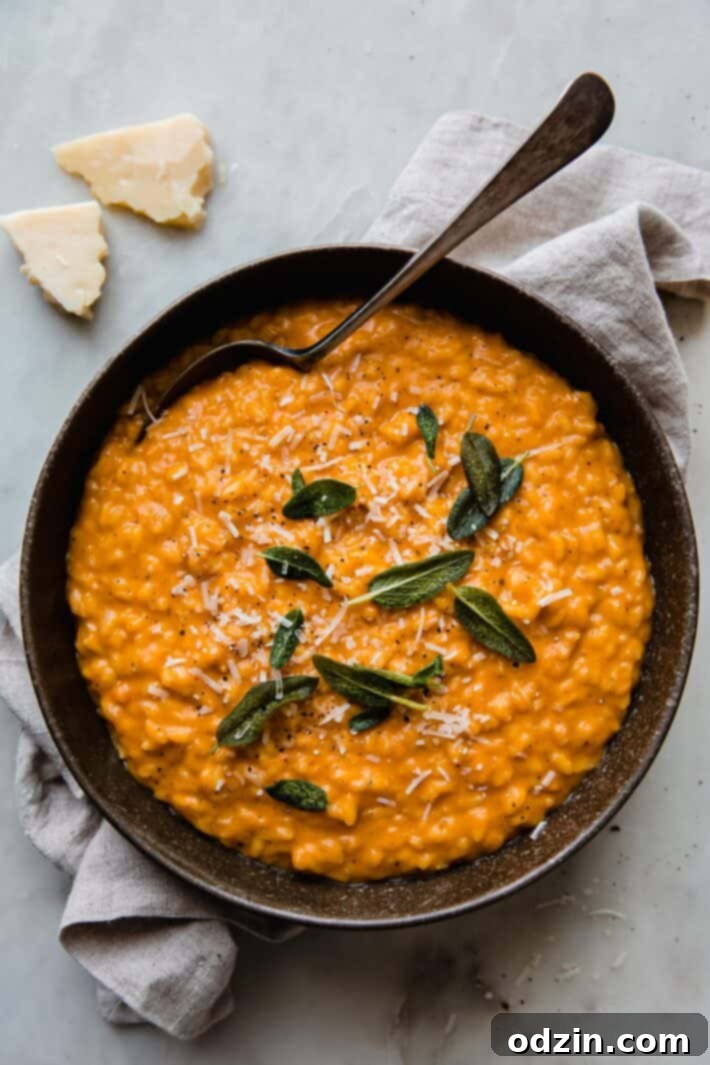
There are few dishes that capture the essence of fall quite like a warm, comforting bowl of roasted squash risotto. It’s a meal that feels like a cozy hug on a crisp autumn evening, rich in flavor and wonderfully creamy in texture. While the idea of making risotto might seem a bit intimidating, especially if you’re new to it, rest assured – it’s far more approachable than you think. This recipe is designed to walk you through each step with ease, ensuring you achieve perfect, restaurant-quality risotto every single time.
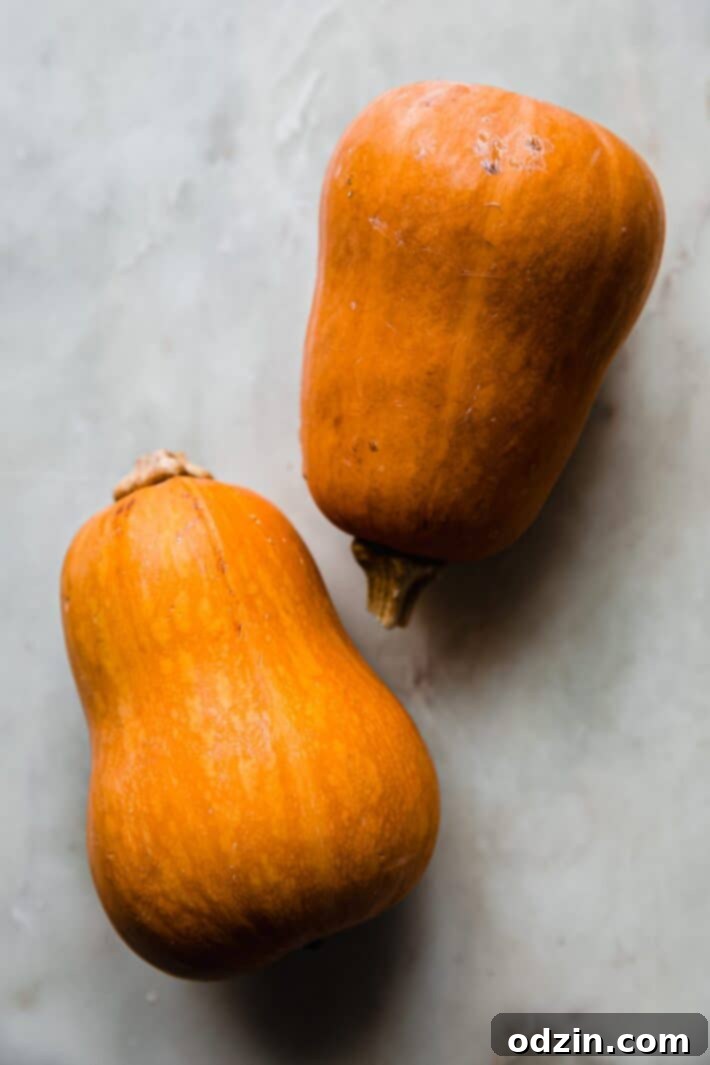
Our journey to this delectable roasted squash risotto begins with the star ingredient: beautifully roasted squash. I recently stumbled upon some exquisite honeynut squashes at my local farmers market, and I couldn’t resist the opportunity to incorporate their delicate sweetness into this dish. Honeynut squash, with its concentrated flavor and tender texture, is absolutely ideal for this recipe, but if it’s not readily available in your area, butternut squash makes an excellent and equally delicious substitute. The roasting process is simple yet crucial: squash halves are lovingly coated with a drizzle of olive oil, a tablespoon of pure maple syrup to enhance its natural sweetness, and a blend of salt, pepper, and a touch of cayenne for a subtle warmth. Once roasted to golden-brown perfection, becoming wonderfully tender and buttery, we’ll scoop out that luscious flesh, ready to be folded into our risotto. The result is a dish that is not just creamy and rich, but profoundly satisfying and bursting with autumnal flavors.
What is Risotto? Understanding This Northern Italian Classic
Risotto is a cornerstone of Northern Italian cuisine, a truly special dish characterized by its incredibly creamy texture, achieved through a unique cooking method. Essentially, it’s a short-grain rice dish cooked slowly in broth, with the liquid added gradually. The magic happens as the rice grains, typically Arborio, release their starches, thickening the broth into a luxurious, velvety sauce that coats each grain. Unlike many rice dishes where the grains remain separate, risotto aims for a rich, unified consistency, often described as a rice pudding-like texture, yet with a distinct al dente bite to the rice itself.
The process is more of an art than a science, involving consistent stirring, which is key to coaxing out the starch and preventing the rice from sticking. While the base is simple – rice, broth, and often onions – risotto is incredibly versatile. Traditional recipes frequently incorporate grated Parmesan cheese (or similar hard Italian cheeses like Pecorino Romano), a generous knob of butter for extra richness, and aromatics like onions and garlic. It’s naturally gluten-free and can be adapted with a myriad of seasonal ingredients, from mushrooms and seafood to, in our case, sweet and earthy roasted squash, making it a beloved comfort food around the world.
Essential Ingredients for a Perfect Roasted Squash Risotto:
Crafting the perfect roasted squash risotto relies on selecting quality ingredients that work harmoniously to create a symphony of flavors and textures. Here’s a detailed look at what you’ll need:
- Squash: Both honeynut squash and butternut squash are excellent choices for this recipe. Honeynut offers a slightly sweeter, more concentrated flavor, while butternut squash provides a classic, earthy sweetness. If using butternut, the flavor profile will shift slightly, leading to a delightful butternut squash risotto. The preparation begins by slicing the squash down the middle and removing the seeds and fibrous “guts.” By roasting the squash in its skin, we simplify the process and infuse it with more flavor and moisture, avoiding the hassle of peeling before cooking.
- Olive Oil: A good quality extra virgin olive oil is indispensable. It’s used for drizzling over the squash before roasting, frying the fresh sage leaves to a crispy perfection, and sautéing the aromatics that form the flavorful base of our risotto.
- Seasonings: We’ll use staple seasonings like kosher salt and freshly ground black pepper to enhance all the flavors. A pinch of cayenne pepper adds a subtle, warming heat that beautifully complements the squash’s sweetness—feel free to adjust or omit based on your preference. For an added layer of sophistication, a hint of saffron is included. While optional, if you have this prized spice, it lends a beautiful golden hue and delicate floral notes that truly elevate the dish.
- Maple Syrup: Just a small drizzle of pure maple syrup is added to the squash before roasting. This simple step helps to promote and caramelize the natural sugars within the squash, resulting in a deeper, richer sweetness that sings in the final risotto. Honey can also be used as an alternative.
- Stock or Broth: The broth is the lifeblood of any good risotto. You can choose between a high-quality vegetable broth for a vegetarian option or chicken broth for a richer, more robust flavor. I highly recommend opting for low-sodium stock. This allows you to meticulously control the salt content of your risotto, ensuring it’s perfectly seasoned without being overly salty. Remember, you can always add more salt at the end, but you can’t take it out once it’s in!
- Fresh Sage Leaves: These aromatic leaves are not just a garnish; they add a distinctive, earthy fragrance and flavor to the dish. We’ll gently fry them in olive oil until crisp, transforming them into a delightful crunchy topping. Frying the sage in the same oil that will later be used for the aromatics means those wonderful sage flavors will infuse directly into the base of the risotto, building layers of depth.
- Shallots: Shallots are a chef’s secret for adding a delicate, sweet, and pungent flavor without overpowering the other ingredients. Their milder, more refined taste compared to yellow onions truly makes a difference in the overall profile of this risotto. While minced yellow onions can be substituted, shallots truly give this risotto an exceptional taste.
- Garlic: Freshly minced garlic is a must for any savory dish. The quantity is flexible – use as little or as much as you like. I find about 4 cloves for this recipe strikes the perfect balance, providing a fragrant depth without overwhelming the delicate flavors of the squash and saffron.
- Arborio Rice: This short-grain Italian rice is the cornerstone of authentic risotto. Arborio rice is renowned for its high starch content, specifically amylopectin, which is crucial for achieving risotto’s signature creamy texture. As the rice is stirred and cooked, this starch is released, creating that luscious, velvety consistency. It’s important *not* to rinse Arborio rice, as this washes away the very starch we want to preserve for creaminess – a departure from traditional rice preparation in many other cultures!
- Shredded Cheese: A blend of cheeses adds complex nutty and savory notes. I typically use shredded Gruyère cheese, which melts beautifully and offers a sweet, earthy flavor, alongside grated Pecorino Romano, known for its sharper, saltier kick. These cheeses are folded in at the end to create a rich, emulsified finish. Parmesan cheese and Fontina are excellent substitutes if you have them on hand.
- Unsalted Butter: While I often advocate for salted butter in cooking, this recipe calls for unsalted butter. Given the natural saltiness of ingredients like chicken stock, seasoned squash, and two varieties of flavorful cheeses, using unsalted butter allows for precise control over the final seasoning, ensuring your risotto is perfectly balanced and not overly salty. It also contributes significantly to the risotto’s final lustrous texture and rich mouthfeel.
How to Make Creamy Roasted Squash Risotto: A Step-by-Step Guide
Creating a truly delicious squash risotto is a rewarding culinary experience. Follow these detailed steps for a perfect result:
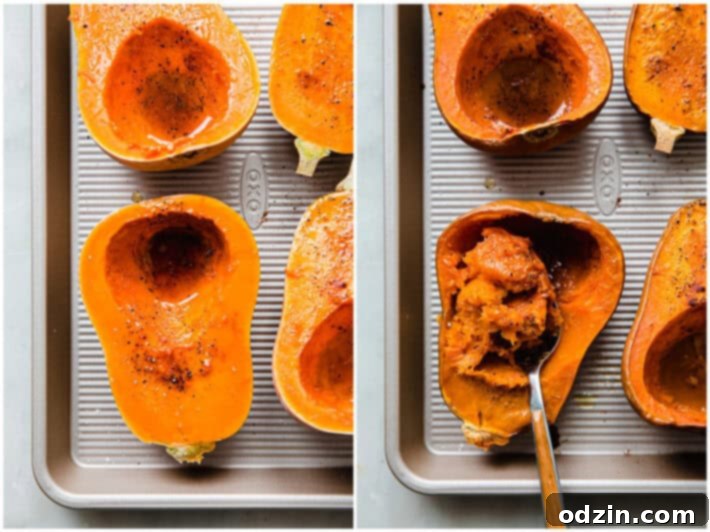
- Roast the Squash to Perfection: The initial step sets the stage for our risotto’s deep flavor. Begin by preheating your oven to 400ºF (200ºC). Carefully cut your honeynut or butternut squash in half lengthwise. Using a spoon, scoop out all the seeds and fibrous strands. Place the squash halves cut-side up on a baking sheet lined with foil or parchment paper for easy cleanup. Drizzle each half generously with about 1 tablespoon of olive oil, followed by a light coating of maple syrup. Season with kosher salt, freshly ground black pepper, and a pinch of cayenne pepper – feel free to skip the cayenne if you prefer no heat. Roast the squash for 30-40 minutes, or until it’s wonderfully tender. You can test for doneness by piercing the flesh with a fork; it should slide in with no resistance. Once roasted, remove from the oven and let it cool slightly until it’s comfortable enough to handle. Then, scoop out all that soft, golden flesh and set it aside.
- Prepare and Warm the Broth: While your squash is roasting, prepare your broth. Pour the vegetable or chicken stock into a medium saucepan. If using saffron, add a pinch to the cold stock now, allowing its flavors to infuse as the liquid warms. Heat the stock over medium heat until it’s just about to boil – you’ll see small bubbles forming around the edges. Once simmering, reduce the heat to low, ensuring the stock remains consistently warm throughout the risotto-making process. This consistent warmth is crucial as adding cold stock to hot rice can shock it, affecting the starch release and overall creaminess.
- Fry the Sage and Sauté Aromatics: In a sturdy, heavy-bottomed pot or Dutch oven (the kind you’ll be making the risotto in), add the remaining 2 tablespoons of olive oil over medium heat. Allow the oil to shimmer, indicating it’s hot enough. Carefully add the fresh sage leaves in a single layer. Fry them for about 30 seconds to 1 minute, watching closely until they become wonderfully crisp and aromatic. Using tongs, remove the fried sage leaves to a paper towel-lined plate to drain any excess oil; these will be used as a fragrant garnish. In the same pot with the now sage-infused oil, add the finely chopped shallots along with a generous pinch of salt. Sauté them for 3-4 minutes until they become softened and translucent, releasing their sweet aroma. Next, add the minced garlic and cook for another 30 seconds, just until fragrant, being careful not to burn it.
- Toast the Rice and Add Squash: Stir the dry Arborio rice into the shallot and garlic mixture in the pot. Toast the rice for 2-3 minutes, stirring constantly. This step, known as “toasting” or “tostatura,” helps seal the exterior of the rice grains, allowing them to absorb liquid more evenly and maintain an al dente core. After toasting, add the reserved roasted squash flesh to the pot, stirring it into the rice mixture for another 1-2 minutes, allowing the flavors to meld beautifully.
- Master the Risotto Technique: Now for the heart of the risotto process! Add 1 cup of the warm stock to the rice and squash mixture. Stir continuously with a wooden spoon, gently pushing the mixture around the pan. This constant stirring is vital; it helps the rice release its starches, creating that desired creamy texture. As the liquid slowly absorbs and evaporates, you’ll notice the mixture thickening. Set a timer for about 20 minutes from the first addition of stock. Once most of the liquid has been absorbed and the mixture looks thick and creamy, add another ½ cup of warm stock, stirring again. Continue this process, adding ½ cup of stock at a time, allowing each addition to be mostly absorbed before adding the next. The risotto will gradually transform into a luxurious, creamy consistency. You’ll know when to add more stock by the resistance you feel from the spoon – if it feels like a thick sauce, it’s time for more liquid. Keep stirring and adding stock until the timer goes off, or until the Arborio rice reaches your preferred al dente texture – it should be tender but still have a slight bite in the center. You might not use all the stock; I typically use about 5 cups.
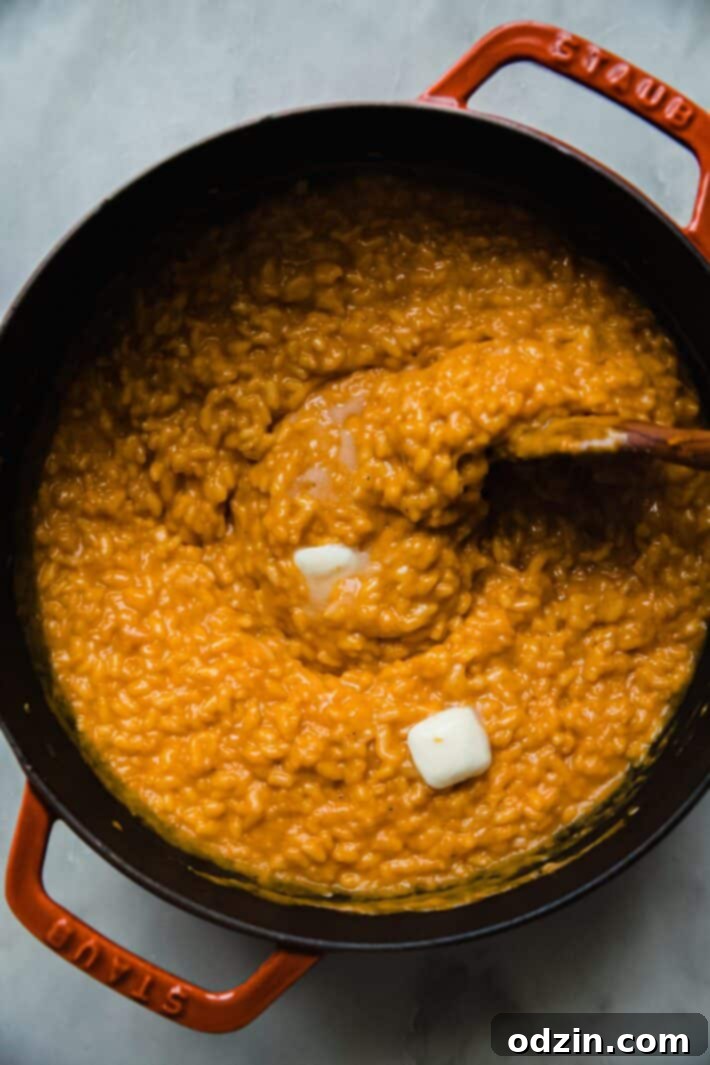
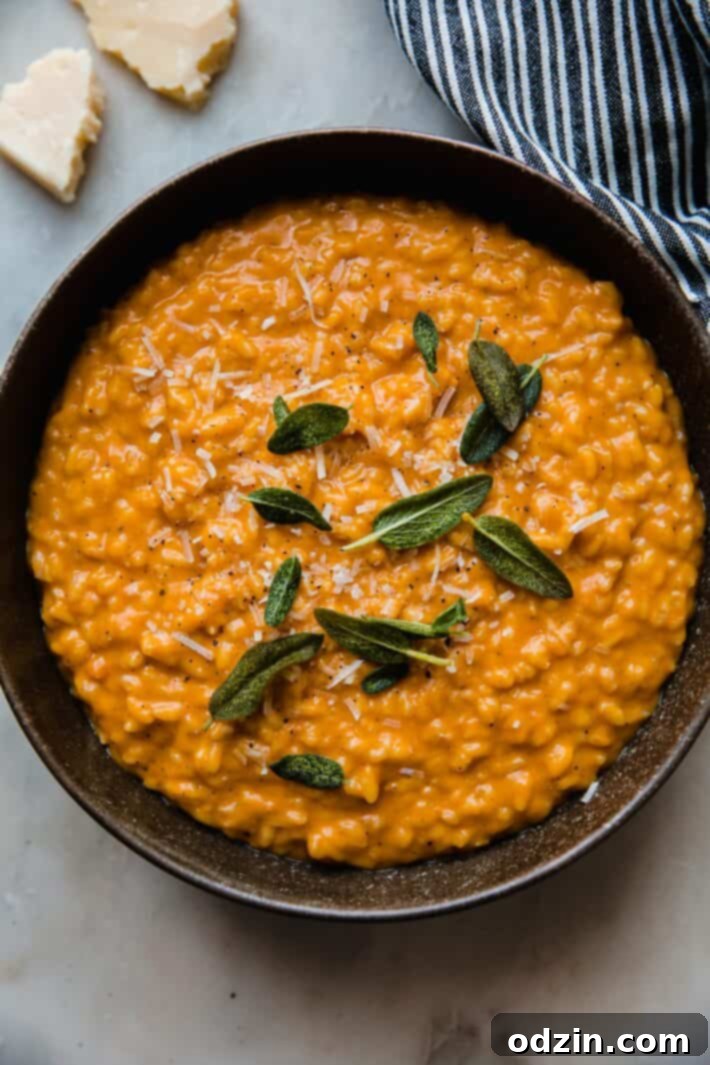
- Finish with Butter and Cheese: Once the risotto is perfectly cooked and wonderfully creamy, remove it from the heat. Stir in the shredded Gruyère and grated Pecorino Romano (or your chosen substitutes) until they are fully melted and incorporated, adding a rich, nutty flavor. Finally, add a generous knob of unsalted butter and stir it vigorously until it melts and emulsifies into the risotto. This final “mantecatura” step makes an incredible difference, adding a beautiful sheen, extraordinary richness, and an unparalleled velvety texture. Taste the risotto and adjust with more salt and pepper as needed. Serve immediately, garnished with additional shredded Parmesan cheese and the crispy fried sage leaves. The difference the butter makes in the final dish is truly transformative!
Tips for Making the Best Squash Risotto:
While making risotto requires attention, these tips will help ensure your dish is a resounding success and a joy to prepare:
- Always Prep Everything Ahead (Mise en Place): This is the golden rule for risotto, and truly, for most successful cooking. The French call it “mise en place,” and it means “everything in its place.” Before you even turn on the stove, have all your ingredients measured, chopped, and ready to go – your roasted squash scooped, broth warm, shallots minced, cheese grated. Risotto demands your constant attention once the rice is in the pan, so you won’t have time to scramble for ingredients. Prepping ahead saves you from potential disasters and makes the whole process much more enjoyable and stress-free.
- Embrace Patience and Enjoy the Process: Risotto is not a dish that can be rushed. The gradual absorption of the broth by the Arborio rice is essential for developing that signature creamy texture. Accept that the rice dictates the pace; it will take its sweet time. Instead of feeling impatient, view the constant stirring as a meditative act. Put on some music, listen to a podcast, or simply enjoy the aroma filling your kitchen. The patience you invest will be richly rewarded with an exceptionally creamy and flavorful dish.
- Create a Relaxing Kitchen Environment: Since you’ll be at the stove for a good 20-30 minutes, make the experience pleasant. As mentioned, put on some good music or your favorite podcast. Pour yourself a glass of wine or your preferred beverage. Grab a comfortable wooden spoon, and once the rice has been added and the stock begins, commit to staying by the stove. This focus ensures even cooking and perfect creaminess. The act of making risotto can be surprisingly therapeutic when approached with the right mindset!
- Maintain Warmth of Broth: One often overlooked tip is the importance of keeping your broth consistently warm, just at a gentle simmer, throughout the cooking process. Adding cold broth to hot rice will shock the grains, interrupting the starch release and potentially leading to a gluey or inconsistent texture. A small saucepan on a neighboring burner, kept on low heat, is ideal for this.
- Taste and Adjust Seasoning Frequently: Don’t wait until the very end to taste your risotto. Taste the rice after several additions of broth to gauge its doneness and flavor development. This allows you to adjust seasoning (especially salt) incrementally, ensuring a perfectly balanced final dish. Remember, the cheeses and butter you add at the end will also contribute saltiness, so build your seasoning gradually.
FAQs About This Delicious Squash Risotto Recipe:
Here are answers to some common questions you might have about making this roasted squash risotto:
- Will butternut squash roast in the same amount of time as honeynut squash? Generally, yes, but it largely depends on the size of the squash. Smaller honeynut squashes (around one pound each) will typically roast in about 30 minutes at 400°F (200°C). Larger butternut squashes, especially those weighing 2-3 pounds or more, might take closer to 40-50 minutes, or even an hour, to become fork-tender. Always test for doneness by piercing the thickest part of the flesh with a fork; it should slide in easily.
- What kind of pan do you suggest using for risotto? You have a few great options for making risotto. A wide, heavy-bottomed Dutch oven is fantastic because it retains heat beautifully and offers ample surface area for even cooking and stirring. A large, deep skillet or a sauté pan with high sides can also work very well. I’ve found that when using a Dutch oven, I sometimes need to pay extra attention to the heat setting, oscillating between medium-low and medium, to ensure the broth doesn’t absorb too rapidly and gives the rice enough time to release its starch properly. The key is a pan that distributes heat evenly and allows for vigorous stirring without spilling.
- Will short-grain brown rice work instead of Arborio rice for this recipe? While Arborio rice is the traditional choice due to its high starch content, which is vital for risotto’s creamy texture, short-grain brown rice might offer a different, perhaps earthier, result. However, this is not a direct substitution without additional recipe testing. Brown rice typically requires more liquid and a longer cooking time, and its starch release properties are different, meaning the final texture might not be as characteristically creamy as traditional risotto. If you’ve successfully made risotto with short-grain brown rice in the past and are comfortable adapting cooking times and liquid amounts, it could potentially work, but expect a different texture profile. For a classic, foolproof creamy risotto, Arborio is highly recommended.
- Can I make this risotto ahead of time? Risotto is best enjoyed immediately after it’s prepared when it’s at its creamiest peak. As it cools, the rice continues to absorb liquid and can become quite stiff. However, you can prepare the roasted squash ahead of time (roast, scoop, and store in the fridge for up to 3-4 days). You can also have your broth warmed and aromatics prepped. If you do have leftovers, see the notes section in the recipe card for reheating instructions using a splash of extra stock – it works beautifully to revive the texture!
- What wines pair well with squash risotto? For a dish as rich and earthy as squash risotto, consider a white wine with good acidity and some body. A dry Pinot Grigio, a lightly oaked Chardonnay, or even a Vermentino would be excellent choices. If you prefer red, a light-bodied Pinot Noir with its earthy notes could also complement the squash beautifully without overpowering the delicate flavors of the risotto.
If you like this creamy roasted squash risotto, you might also enjoy these comforting recipes:
- Easy Weeknight Instant Pot Risotto
- Mushroom Parmesan Shrimp Risotto
- Thai Butternut Squash Red Curry
- Creamy Curried Butternut Squash Soup
- Stuffed Butternut Squash with Curried Couscous Salad
- 19 Thanksgiving Sides + Everything You Need to Host Thanksgiving

Roasted Honeynut Squash Risotto
15 minutes
1 hour
1 hour 15 minutes
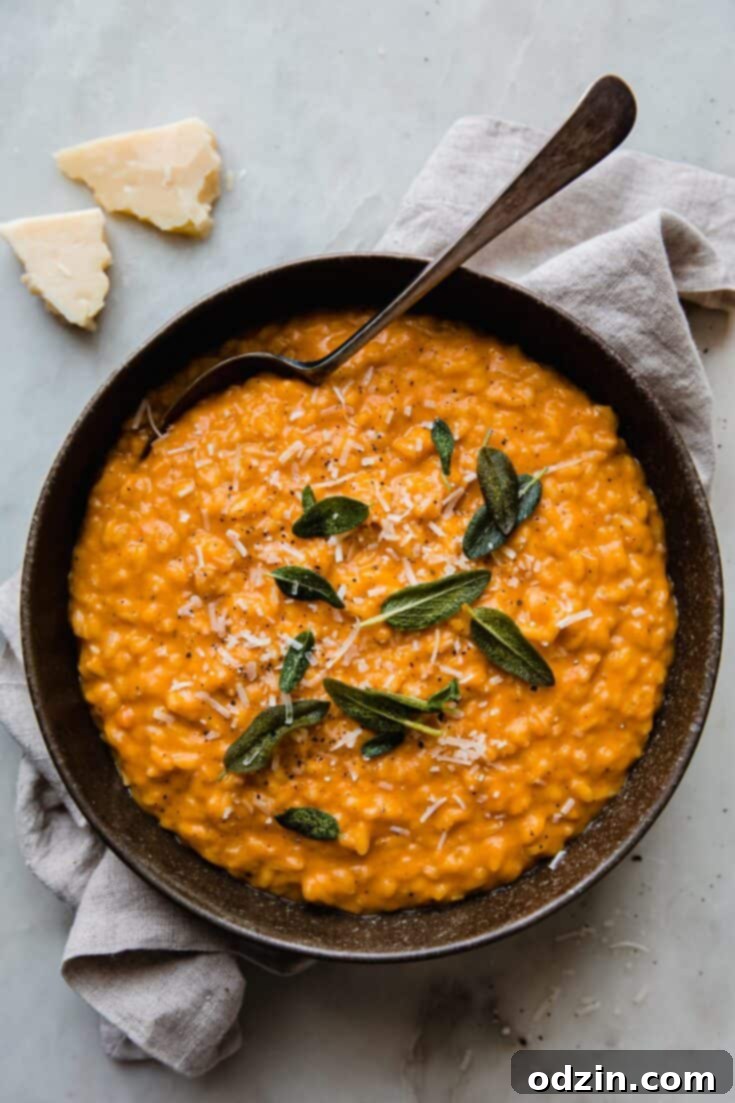
This creamy, hearty squash risotto is perfect for fall! Roast honeynut or butternut squash with a sprinkle of cayenne and a drizzle of maple syrup. Then we’ll saute it with arborio rice to make squash risotto. Finish with a knob of butter and shredded cheese for buttery perfection!
Ingredients
- 2 lbs. Honeynut squash (or sugar pumpkin/butternut squash)
- 3 tablespoons olive oil, divided
- kosher salt AND black pepper
- ⅛ teaspoon cayenne pepper
- 1 tablespoon maple syrup (or honey)
- 6 cups vegetable or chicken stock
- ⅛ teaspoon saffron (optional)
- 10-12 fresh sage leaves
- ½ cup shallots, finely chopped
- 4 cloves garlic, minced
- 1 ½ cup Arborio rice
- ½ cup EACH: shredded gruyere AND grated pecorino romano (see notes)
- 2 tablespoons unsalted butter
Instructions
- ROAST SQUASH: Position a rack in the center of the oven and preheat the oven to 400ºF. Cut the squash in half and remove the seeds using a spoon. Place on a baking sheet lined with foil or parchment. Drizzle the squash with 1 tablespoon olive oil, and sprinkle with kosher salt, black pepper, and cayenne pepper. Drizzle with maple syrup. Roast the squash for 30-40 minutes or until fork-tender, start on the next step while the squash roasts. When squash is tender, allow it to rest until it’s cool enough to handle, then scoop out the flesh and reserve for later.
- STOCK: In a medium saucepan, heat together the stock and saffron (if using) over medium heat until just boiling, then lower the heat to low so that it just simmers. You want the stock to be warm when added to the rice.
- SAUTE: Add 2 tablespoons of olive oil to a dutch oven or saucepan over medium heat until shimmering. Add sage leaves in a single layer. Keep an eye on them until they crisp up, about 30 seconds. Remove to a paper towel-lined plate; save for later. Add the shallots to the pan and cook them with a big pinch of salt for 3-4 minutes then add the garlic and let cook 30 seconds before stirring in the arborio rice. Allow the rice to toast for 2-3 minutes, stirring often, then add the squash flesh and continue to cook for another 1-2 minutes.
- RISOTTO: Add 1 cup of stock and push the mixture around in the pan with a wooden spoon. Set a timer for 20 minutes as soon as you add the stock. When most of the liquid has evaporated from the pan, add another ½ cup of stock, stir and continue this process until the timer goes off. Test the rice to see if it needs to be cooked longer, you can let it go for another 5 minutes or until the arborio rice has cooked to your liking. You may not end up using all the stock; I needed 5 cups.
- FINISH: Stir in the gruyere and grated parmesan until combined then finish with the butter. Taste and adjust with more salt and pepper as needed. Serve topped with more shredded Parmesan and the fried sage.
Notes
- Cheese: Fontina works well as a substitute for gruyere cheese. Parmesan can also be used in place of the pecorino romano!
- Leftovers: If you anticipate leftovers, I suggest hanging on to any remaining stock (in the refrigerator.) I reheat a splash of stock in a skillet until simmering, then add the amount of risotto to reheat and allow it to simmer in the stock until the rice soaks it all up the liquid and warms through; works beautifully!
Recommended Products
- Arborio Rice
- Soup Ladle
- Wooden Spoon Set
- Quarter Pans
- 3-Quart Saucepan
- Casserole Dish
Have you made this recipe?
If you enjoyed this recipe, please consider leaving a ⭐️⭐️⭐️⭐️⭐️ rating and a comment below. You can also share a picture on Instagram with the hashtag #LITTLESPICEJAR, I’d love to see what you made!